
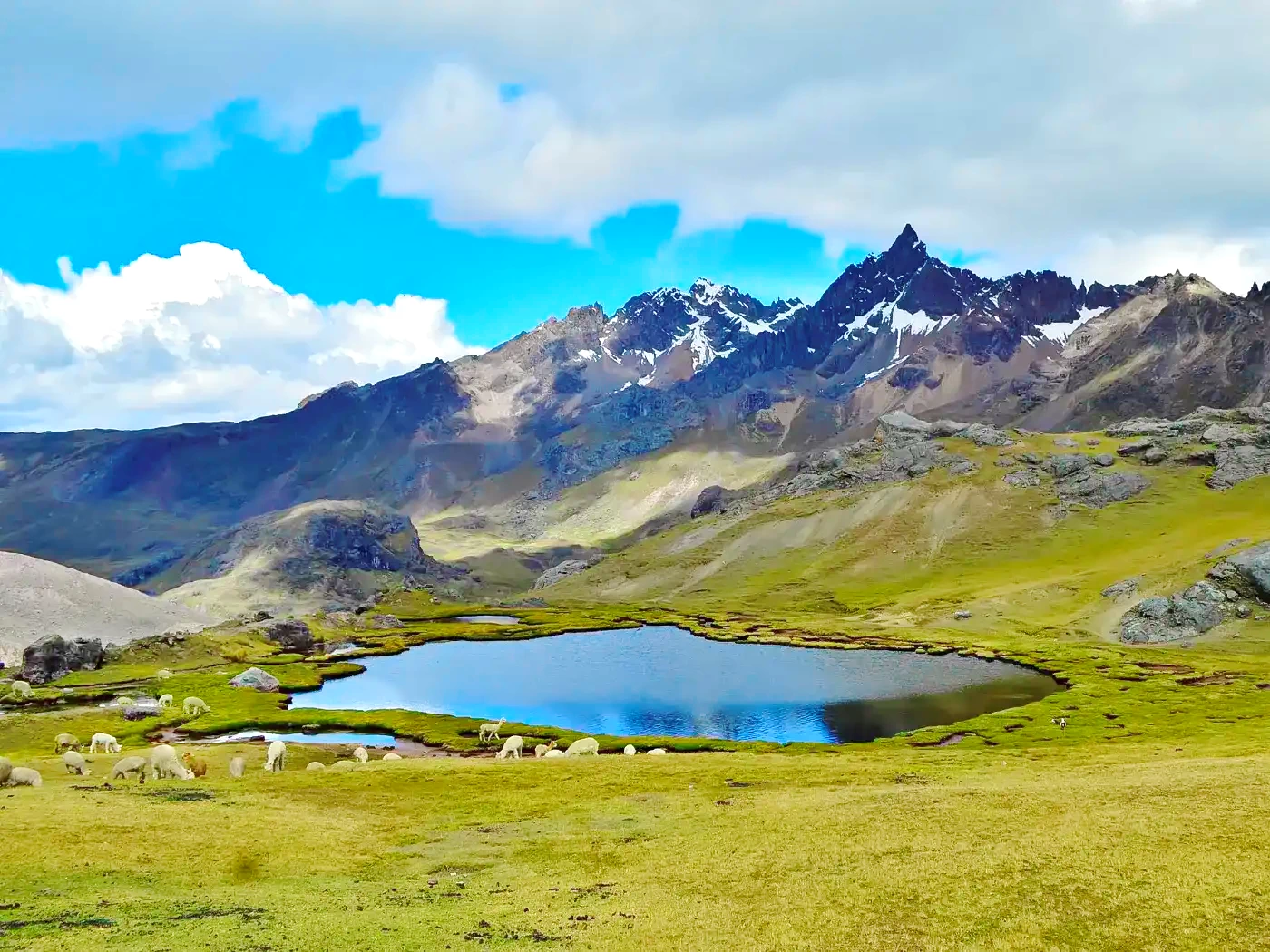
The Seven Lagoons of Ausangate circuit is not a single lagoon seen from different angles: there are seven different bodies of water, each with its own Quechua name, color, and history. Knowing them before you go gives the hike a different meaning, because you stop seeing “beautiful lagoons” and start recognizing each one and understanding why it has its name.
How many lagoons are visited
As its name suggests, the circuit goes through seven lagoons. They were all formed by the melting snow and ice of Ausangate Mountain and are fed by its glaciers, which explains why their waters remain cold all year and why their colors depend so much on the minerals in the terrain as well as the daylight.
One clarification: the names and the order may vary slightly depending on the operator and the guide. Some sources include lagoons such as Yanacocha or Oqecocha instead of others, but the most commonly cited and recognized group consists of Pucacocha, Patacocha, Alqacocha, Qomercocha, Orco Otorongo, China Otorongo, and Azulcocha.
General route
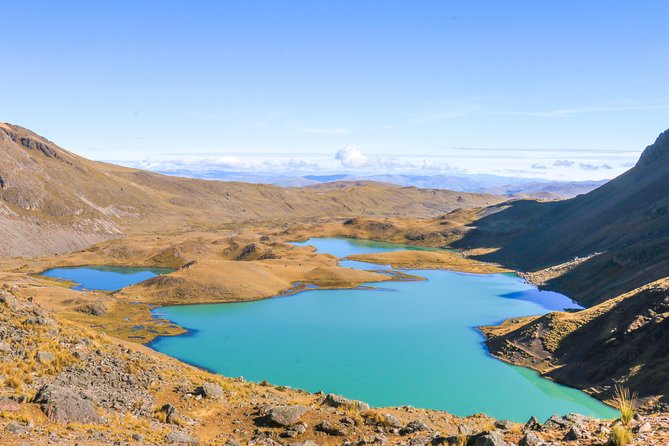
The circuit is circular: it begins and ends in the community of Pacchanta, and goes around the surroundings of Ausangate Mountain, passing by the seven lagoons in sequence. At first, the trail runs almost flat over puna terrain and gravel, and as you gain elevation, the bodies of water begin appearing one after another.
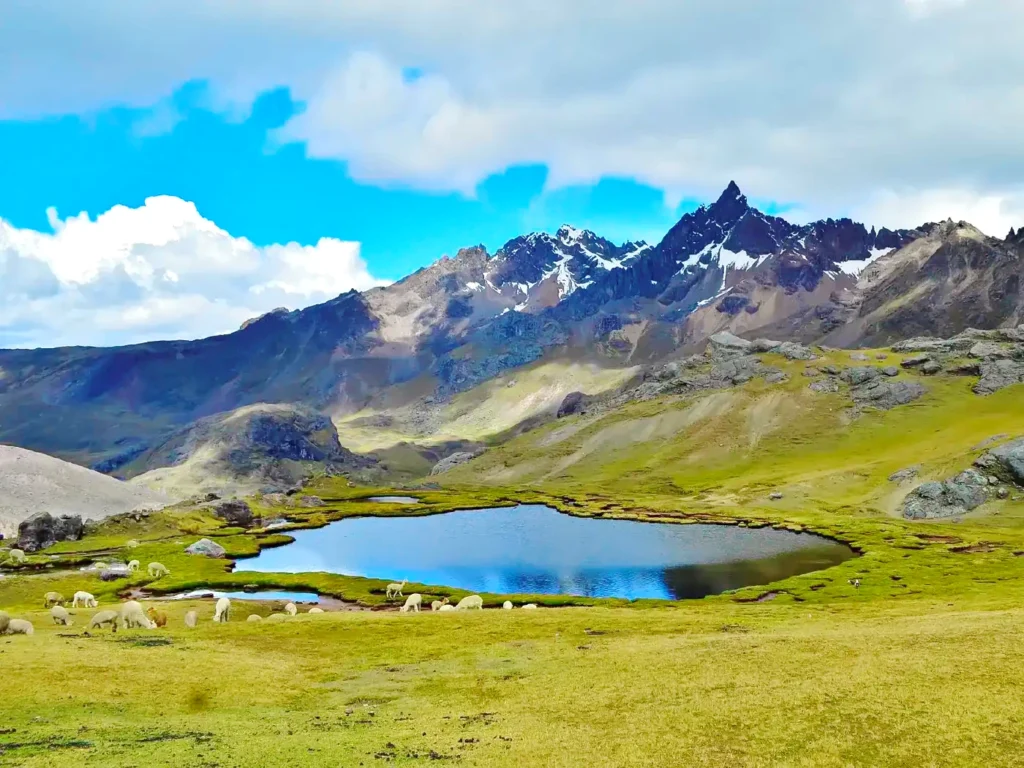
Along the route, you are accompanied by alpacas, llamas and, with some luck, a condor flying over the peaks. Each lagoon offers a different view of the mountain and the Vilcanota mountain range, so the hike feels more like a succession of natural viewpoints than a monotonous stretch.
First lagoon
The first is usually Pucacocha, whose name in Quechua means “red lagoon.” It is also known as the chocolate lagoon because of the reddish or brownish tone of its waters, caused by the minerals in the terrain. Its contrast with the landscape makes it striking from the very beginning.
For many local communities, Pucacocha also has sacred value, associated with life and the water that flows down from Ausangate. It is the gateway to the circuit and the first stop where hikers begin to understand what this route is all about.
Second lagoon
Next comes Patacocha, a lagoon whose name is related to the idea of “above” or “upper area,” because of the altitude where it is located, close to the mountain. It is one of the highest on the circuit, which is why Ausangate can be seen more clearly from its shores than from the first lagoon.
Its waters stand out for being clearer and more transparent. Because it is somewhat hidden behind the terrain formations, sometimes you do not see it until you are almost right next to it, which makes it a small surprise along the route.
Third lagoon
The third is Alqacocha. Sources translate its name in different ways: some as “two-colored lagoon” because of its chromatic duality, others with different references. It is located in a high area of the circuit, where the cold begins to feel stronger.
It is one of the most serene lagoons on the route, with an almost perfect reflection of the mountains in its waters when the day is calm. Because of that peaceful atmosphere, many hikers use it as a place to rest and contemplate before continuing.
Fourth lagoon
Then comes Qomercocha, which in Quechua means “green lagoon.” The name fits it well: its waters display an intense turquoise or emerald color, the result of the minerals and algae present in it. It is located around 4,600 to 4,666 m above sea level.
It is one of the favorites on the route because it offers one of the best views of the entire area, with the mountain in the background and the green water in the foreground. For many photographers, it is one of the lagoons that best captures the magic of the circuit.
Fifth lagoon
The fifth is Orco Otorongo, whose name refers to the otorongo, the jaguar of the jungle, in its “male” version (orco). It is said that, when seen from above, its outline resembles the silhouette or spotted coat of this feline, a sacred animal in the Andean worldview.
It is a lagoon full of symbolism. Together with the next one, it forms a pair that represents Andean duality, a concept that the guide usually explains at this point along the route and that adds a cultural layer to the beauty of the landscape.
Sixth lagoon
Very close to the previous one is China Otorongo, the “female otorongo” (china means “female” in Quechua). It complements Orco Otorongo and together they embody the Andean idea of duality: masculine and feminine, two sides of the same element.
According to local tradition, its waters are described as somewhat darker or more turbulent than those of its male counterpart. Surrounded by rock formations, it has a mystical atmosphere that sets it apart within the circuit.
Seventh lagoon
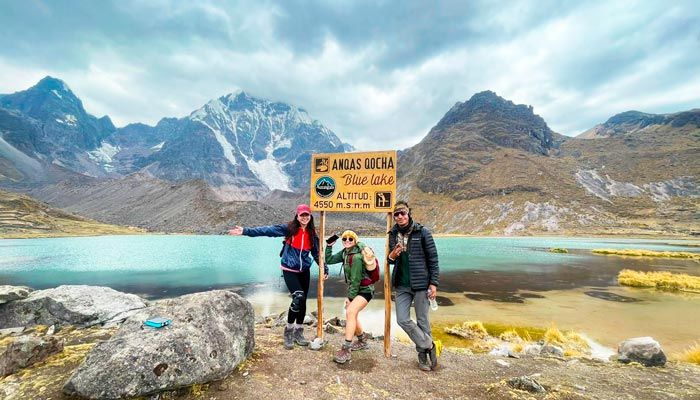
The route usually ends with Azulcocha, whose name means “blue lagoon.” It is known for the intense, deep blue tone of its waters, which reflect the Andean sky, and many consider it the deepest and one of the most photographed of all.
Because it is often the last lagoon on the circuit, it serves as the finishing touch to the route: a good place to stop, breathe, and take in the view for a moment before beginning the descent back to Pacchanta. It is worth remembering that, depending on the direction in which the guide does the circuit, Azulcocha may also be one of the first to appear.
Characteristics and colors
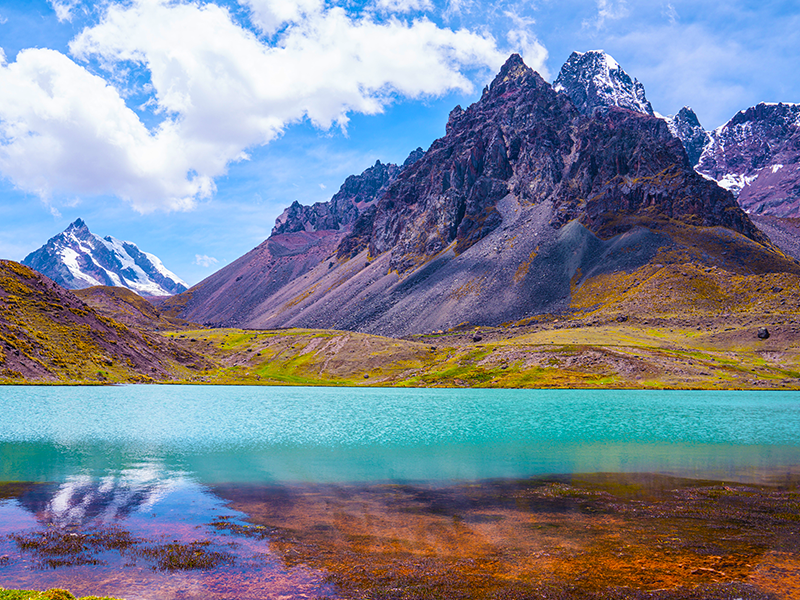
The main attraction of the circuit is that no lagoon looks like the previous one. Pucacocha has reddish or chocolate tones; Qomercocha has emerald green tones; Azulcocha has deep blue tones; Patacocha stands out for its transparency. That palette is no coincidence: it depends on the dissolved minerals, the depth of each lagoon, and the way the light hits them depending on the time of day.
That same factor causes the color to change throughout the day and with the weather. A lagoon that looks bright turquoise in the mid-morning sun may appear more muted under a cloudy sky. That is why it is best to arrive early, when the light favors the most vivid colors.
Order in which they are visited
The order is not fixed. Since it is a circular circuit, the guide can follow it in either direction depending on the weather conditions, the state of the terrain, and the time, always trying to take advantage of the best light at the main viewpoint. That is why the same lagoon may appear as “first” in one blog and “last” in another.
What remains constant is that the route begins and ends in Pacchanta and passes by all seven along a trail without complicated intersections. Rather than memorizing an exact sequence, it is better to follow the guide and enjoy each lagoon as it appears.
Which lagoon is the most impressive
For lovers of vibrant color, Qomercocha with its emerald green usually takes the prize. For those looking for the deepest blue, Azulcocha is the favorite. And for those who appreciate dramatic contrast, Pucacocha with its reddish tone is hard to beat.
The Otorongo lagoons, for their part, stand out not so much because of their color but because of the history and symbolism they carry. In practice, the “most impressive” one ends up being whichever one you see with the best light on the day of your visit.
What makes these lagoons unique
What sets this circuit apart is the combination of three things: the variety of colors within a relatively small area, the constant backdrop of Ausangate Mountain, and the cultural significance of each name. They are not just lagoons: they are part of the Andean worldview, connected to the figure of Apu Ausangate as the protector of water and the land.
Added to that is the living puna environment, with alpacas, llamas, and the community of Pacchanta, which manages and takes care of the circuit. Walking among these seven lagoons means traveling through a natural landscape and, at the same time, a territory with centuries of meaning for the people who live at the foot of the mountain.
Experience the route with Incredible Peru Tours
Knowing the names is one thing; exploring the seven lagoons with someone who knows how to read them is another. At Incredible Peru Tours, we take you through the complete circuit with guides who know each lagoon, its meaning, and the best spots to appreciate and photograph them with Ausangate in the background.
We take care of all the logistics, from pickup at your hotel to the Pacchanta hot springs at the end of the day, so you only have to focus on walking and enjoying the experience. If you want to experience this adventure without missing any detail, check out our 7 Lagoons of Ausangate tour and we will organize your excursion.
Frequently asked questions
How many lagoons are visited on the Ausangate route?
Seven, all formed by the melting snow and ice of Ausangate Mountain. The most commonly cited are Pucacocha, Patacocha, Alqacocha, Qomercocha, Orco Otorongo, China Otorongo, and Azulcocha.
Why do they have different colors?
Because of the minerals dissolved in each lagoon, their depth, and the way the light hits them depending on the time of day. The color can change between a sunny morning and a cloudy afternoon.
In what order are they visited?
There is no fixed order. It is a circular circuit that the guide follows in one direction or the other depending on the weather and the light, always beginning and ending in Pacchanta.
What do their names mean?
They are Quechua names related to color or shape: Pucacocha (red), Qomercocha (green), Azulcocha (blue), and the Otorongo lagoons because of their connection to the jaguar. Some meanings vary depending on the source.
Which lagoon is the most beautiful?
It is subjective. Qomercocha stands out for its green color, Azulcocha for its deep blue, and Pucacocha for its reddish tone. The best one is usually whichever you see with the best light that day.
Can you swim in them?
No. They are very cold glacial lagoons and have cultural value for the community, so the circuit is only for walking and enjoying the scenery.


