
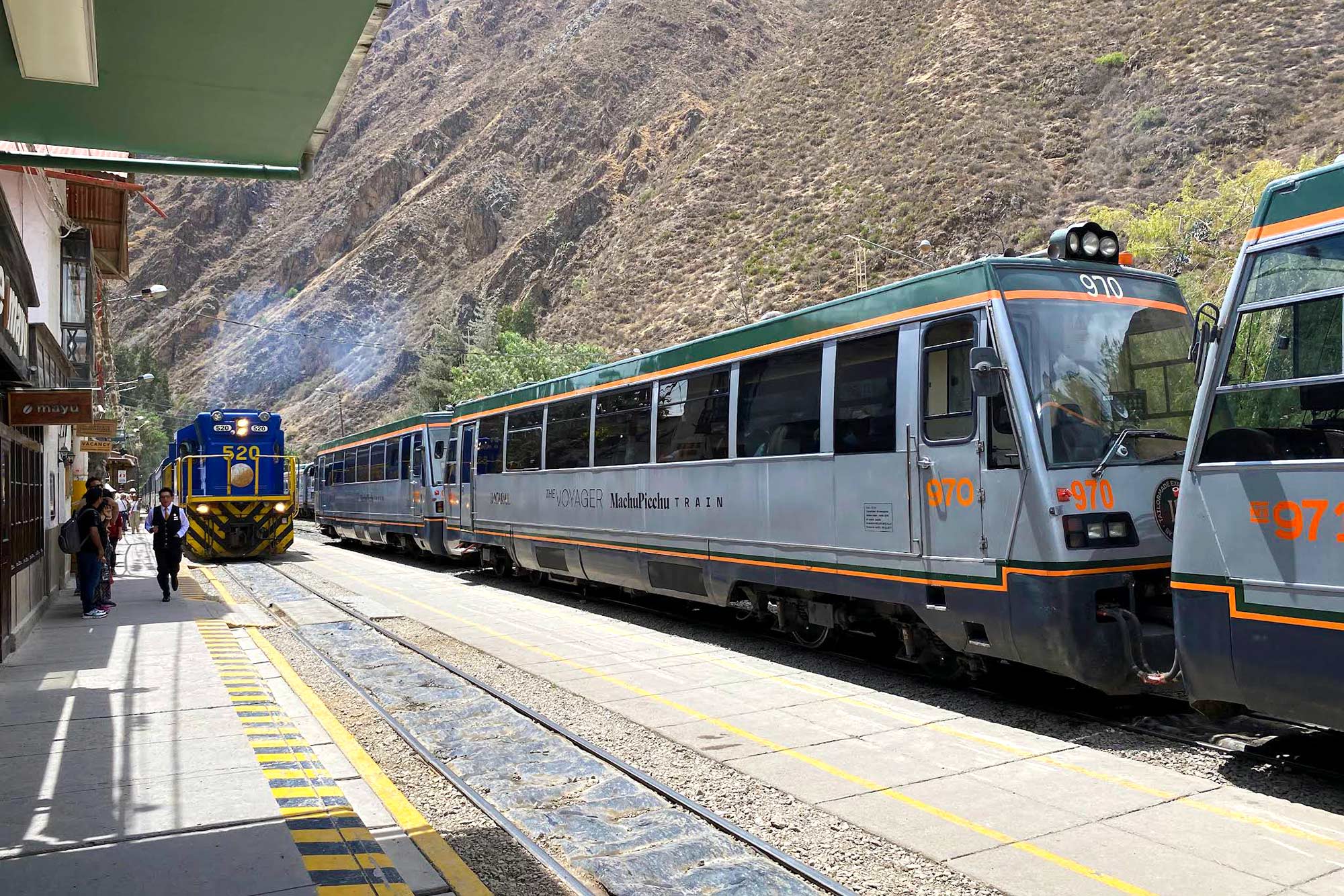
The train is the only motorized means of transportation that reaches Aguas Calientes, the base town for Machu Picchu. There is no road access to the Urubamba Valley in that section, and that lack of a road is precisely what has helped preserve the natural surroundings of the site. Choosing the wrong train service can mean arriving with barely enough time, paying much more than necessary, or finding no tickets available for the date you need. This guide explains what options are available, the real differences between them, and how to choose the best one for your itinerary.
Who Operates the Train to Machu Picchu
In 2026, there are two train operators covering the route to Aguas Calientes: Peru Rail and Inca Rail. Both depart from the same main stations, offer different service categories, and cover the same route through the Sacred Valley and the Urubamba Canyon. The difference between the two is not about absolute quality, but rather the specific features of each service and ticket availability on each date.
Peru Rail is the longest-running operator on the route and the one with the highest number of daily departures. Inca Rail is the newer operator and has fewer daily departures, although some of its service categories compete directly with Peru Rail in terms of quality.
Peru Rail Services: From Basic to Panoramic
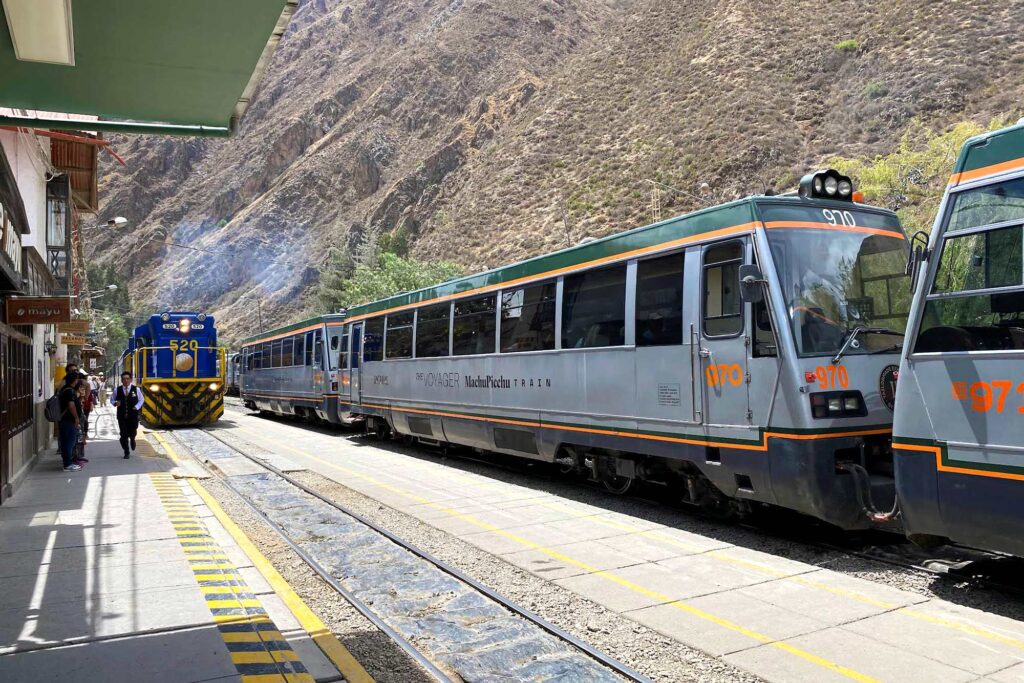
Expedition: This is Peru Rail’s most affordable service and the one most commonly used by budget travelers and trekking groups that include the return train in their package. The cars are comfortable, have large windows, and the journey through the Urubamba Canyon is just as spectacular on this service as it is on the more expensive ones. The price per person in standard class usually ranges from $60 to $90 each way, depending on the season and how far in advance the ticket is purchased. This is the option that Incredible Peru Tours includes in our Salkantay Trek and Inca Trail packages when the train is included in the tour price.
Vistadome: The Vistadome adds panoramic ceiling windows to the basic Expedition service, allowing passengers to see the valley landscape above them during the journey. It also includes snacks and drinks on board. The price is usually 20% to 40% higher than the Expedition. For travelers taking the outbound or return journey during the brightest hours of the day, those ceiling windows offer real photographic value. For a late return train from Aguas Calientes, when there is little daylight available, the difference is less noticeable.
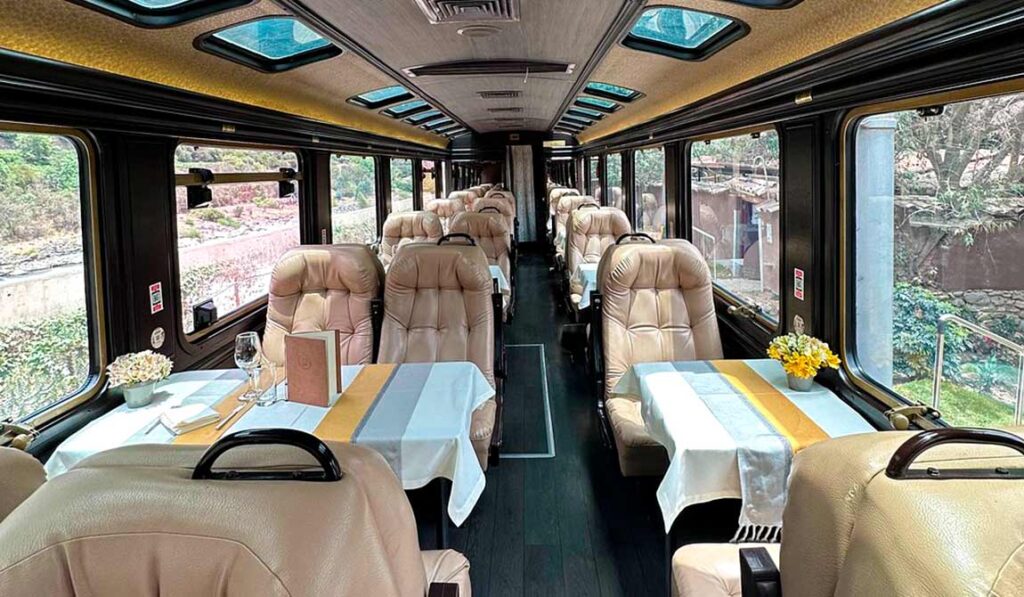
Hiram Bingham: This is Peru Rail’s luxury service, operated with Orient Express-style cars, including a gourmet Peruvian dinner, open bar service, and live entertainment. The price is several times higher than the Expedition and is designed for travelers who see the train experience itself as part of the attraction of the trip. It departs from Poroy Station in Cusco instead of Ollantaytambo, which adds extra time to the journey but offers the advantage of departing directly from the city without needing a previous transfer to the Sacred Valley.
Inca Rail Services: An Alternative with Its Own Identity
Voyager: This is Inca Rail’s standard service, comparable in price and comfort to Peru Rail’s Expedition. It has large windows and comfortable seats, following the same route through the Urubamba Canyon. The main difference from the Expedition is logistical: Inca Rail has fewer daily departures, which means that during high season the most convenient schedules may sell out earlier than those of Peru Rail.
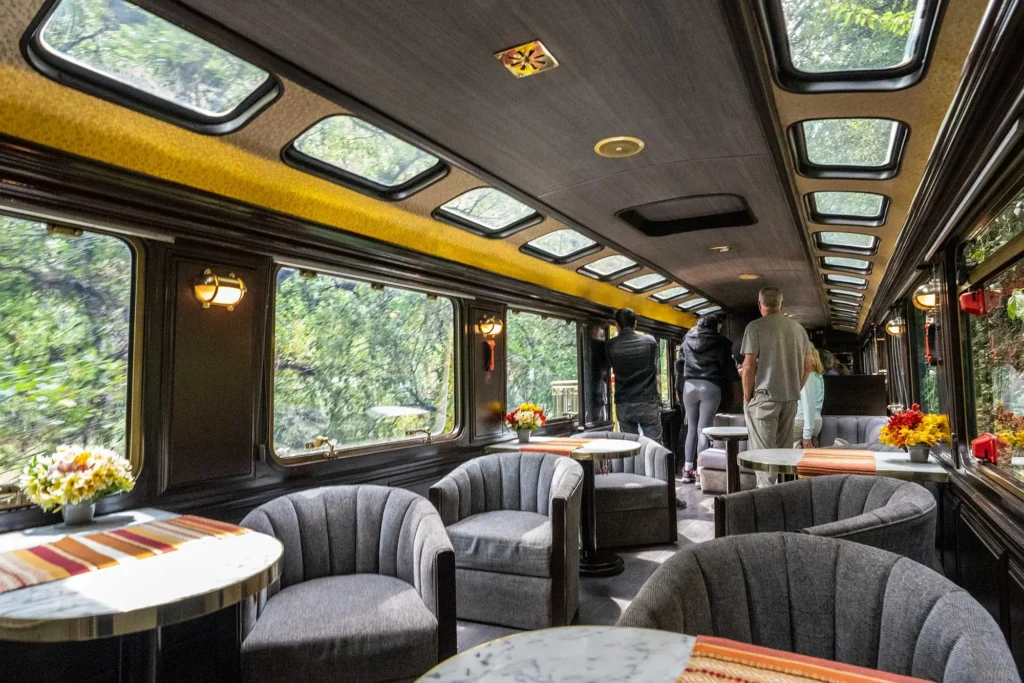
360°: Inca Rail’s 360° service is the most visually striking option: it has a full glass roof that offers a 360-degree view of the landscape throughout the journey. The onboard experience is noticeably different from any other service available on the route. The price is higher than the Voyager and comparable to Peru Rail’s Vistadome. For travelers who place great value on the visual experience of the journey, the 360° offers photo opportunities that the other services cannot match.
The Privateer: This is Inca Rail’s luxury service, with a private car available for groups, onboard meals, and personalized service. It is designed for groups that want the privacy and service level of a charter experience without the prices of the Hiram Bingham.
Where the Train Departs From: Cusco, Poroy, or Ollantaytambo
Most trains to Aguas Calientes do not depart directly from the center of Cusco, but from Ollantaytambo, approximately 90 kilometers from Cusco by road. This means that before taking the train, travelers need a bus or taxi transfer from Cusco to Ollantaytambo, which takes between one and a half and two hours depending on traffic. Trekking agencies include this transfer in the package price. Travelers organizing the trip independently should factor it into their itinerary.
Peru Rail’s Hiram Bingham is the exception: it departs from Poroy Station, about 20 minutes from Cusco by taxi. For travelers who prefer to depart directly from the city without the long transfer to Ollantaytambo, this is the only service that allows it, although at a considerably higher price.
From Ollantaytambo, the journey to Aguas Calientes takes approximately one and a half hours. From Poroy, the total journey takes a little over three hours. The route through the Urubamba Canyon in the final section, with densely vegetated mountains closing in over the river and the railway line, is one of the most impressive landscapes of the trip regardless of the departure point.
How Much the Train to Machu Picchu Costs in 2026
Prices vary depending on the operator, service category, season, and how far in advance the ticket is purchased. As a general reference for 2026, prices each way are approximately:
- Peru Rail Expedition: between $60 and $90 per person.
- Peru Rail Vistadome: between $80 and $120 per person.
- Peru Rail Hiram Bingham: between $450 and $500 per person, including dinner and onboard service.
- Inca Rail Voyager: between $60 and $95 per person.
- Inca Rail 360°: between $90 and $130 per person.
The lowest prices usually correspond to the low season and bookings made well in advance. During high season, especially in July and August, prices increase and the most convenient schedules may sell out if not booked several weeks ahead of time.
The Alternative to the Train: Walking from the Hydroelectric Station
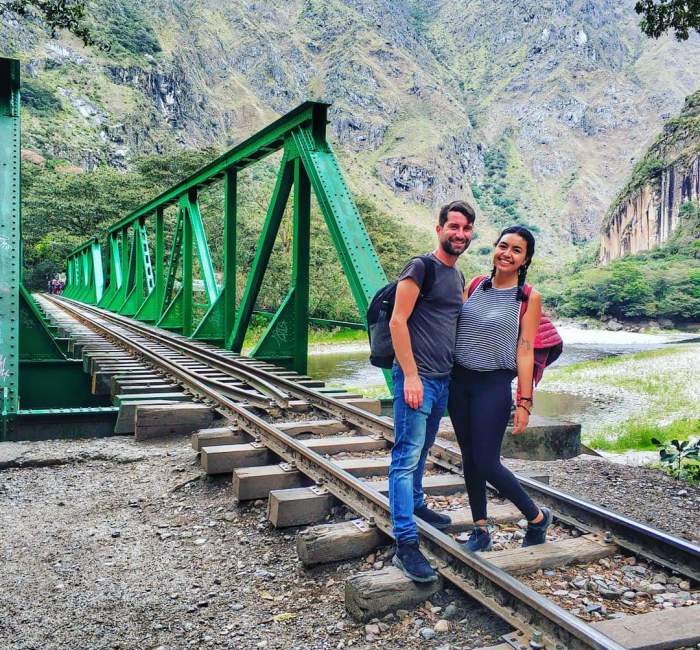
There is an alternative to the train that some travelers on a very tight budget use: taking a bus from Cusco to Santa Teresa, walking from there to the hydroelectric station along a trail of approximately two hours, and then following the train tracks on foot from the hydroelectric station to Aguas Calientes in another two hours of flat walking. It is a route of approximately four hours of total walking that reaches Aguas Calientes without the cost of a train ticket.
This option is commonly used by groups with plenty of time and a very limited budget. It is not the most comfortable or the fastest option, but it is perfectly viable from a logistical point of view. The trail alongside the train tracks is flat, does not require special equipment, and offers views of the canyon that the train passes through at a higher speed. Some Salkantay Trek groups combine the fourth day with this section, walking along the tracks as part of the natural route of the trek.
How and When to Book the Train
Train tickets can be booked directly through the official Peru Rail and Inca Rail websites, through authorized travel agencies, or through the trekking operator if the train is included in the package. Booking in advance during high season is important: the 5:30 or 6:00 a.m. departures from Ollantaytambo, which allow travelers to arrive in time for the first Machu Picchu entry slot, sell out earlier than midday departures.
The ticket is linked to each traveler’s name and document number. In some service categories, it is possible to change the travel date with enough advance notice, but the conditions vary depending on the operator and category. Checking the change and cancellation policy before confirming payment is the step most people skip and later regret when their itinerary changes for unexpected reasons.
Do you want to reach Machu Picchu by trekking the Inca Trail or the Salkantay Trek and need us to coordinate the return train as part of the package? At Incredible Peru Tours, we manage train tickets with the most suitable schedule for each group’s arrival and include them in the tour price so you do not have to handle any additional reservations.


