
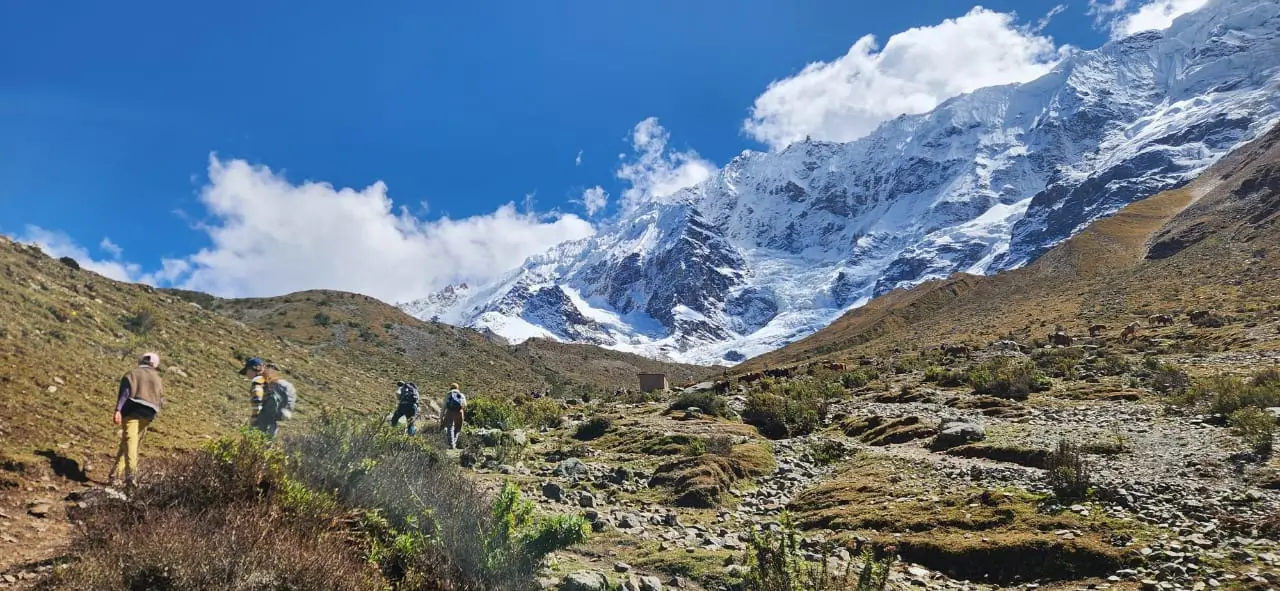
In 2008, National Geographic Traveler magazine included the Salkantay Trek on its list of the twenty-five most highly rated treks in the world. It wasn’t a courtesy mention or an inclusion based on proximity to Machu Picchu. It was the recognition of a route with its own identity, with a variety of landscapes and ecosystems that few routes on the planet pack into five days, and with a level of on-the-ground experience that has since grown steadily in reputation among travelers from around the world.
Today the Salkantay Trek is the most popular alternative to the Classic Inca Trail for those who want to reach Machu Picchu on foot without the limited permits of the historic trek. But reducing it to its role as an “alternative” means missing the most interesting part of what it actually is. This guide explains what the Salkantay Trek is in its entirety, where its name comes from, how it was developed as a tourist route, what its main characteristics are, and why those who complete it tend to remember it as something very different from what they expected.
Where the name comes from and what it means for those who trek it
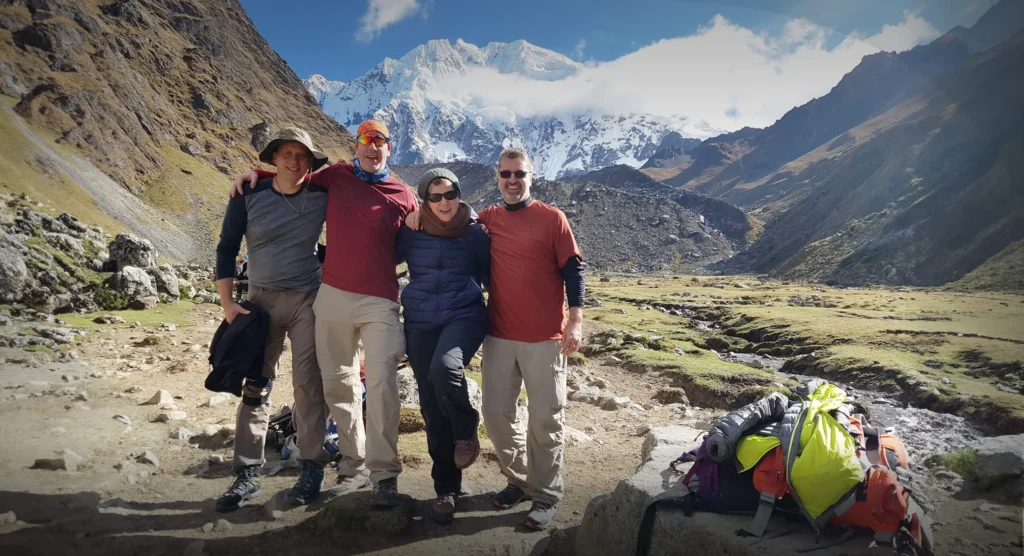
The trek’s name comes directly from the Salkantay snowcapped peak, the second highest mountain in the Cusco department at 6,271 meters above sea level. In Quechua, salqa refers to the wild, to what belongs to the territory beyond human control, and the full name is commonly translated as “untamed mountain” or “the sovereign.” For the Quechua-speaking communities in the surrounding valleys, Salkantay is an Apu, a sacred mountain with power over the weather, the crops, and the well-being of those who live at its base.
The trek takes that name not only because it passes alongside the snowcapped peak but because the pass that bears its name, the Salkantay Pass at 4,630 meters, is the heart of the route. Crossing that pass with the mountain literally overhead, with glaciers just a few hundred meters away and the high-altitude wind hitting you head-on, is the experience that defines the route and the one that most people who have completed it remember most vividly years later.
History of the Salkantay Trek as a tourist route
The route known today as the Salkantay Trek was not designed by any official agency or inaugurated on a specific date. It took shape gradually during the 1980s and 1990s, when growing restrictions on access to the Inca Trail and the sustained increase in international interest in trekking in the Peruvian Andes led local guides and operators to explore alternative routes that would also reach Machu Picchu.
The trails that make up the trek existed long before tourism arrived in the area. They are herding and communication paths between communities that local populations had used for generations to move between the Urubamba and Apurimac valleys and the Santa Teresa area. What tour operators did was connect those sections into a coherent multi-day route, add camping spots, establish the Salkantay Pass as the central element of the journey, and design the logistics needed for groups of travelers from different parts of the world to complete the route with support.
The inclusion on National Geographic Traveler’s list in 2008 was the turning point that made the Salkantay Trek an internationally recognized destination. Since then, demand has grown steadily and the number of operators offering this route in their catalog has multiplied. Today it is the second most requested trek in the Cusco region, behind only the Classic Inca Trail.
How many days it takes and what the route looks like
The standard version of the Salkantay Trek lasts five days and covers between 70 and 75 kilometers depending on the specific variant chosen by the operator. There is also a four-day version that compresses some stages, although the most complete and least demanding experience per day is the five-day option.
The route departs from the town of Mollepata or directly from the Soraypampa base camp, which is reached by vehicle from Cusco in a drive of approximately three hours. From Soraypampa, the first day is an acclimatization hike with the option of climbing up to Humantay Lake, the glacial lake at 4,200 meters whose turquoise waters reflect the snowcapped peak on windless days. It is an optional stop, but one that the vast majority of groups include because of the sheer magnitude of the scenery.
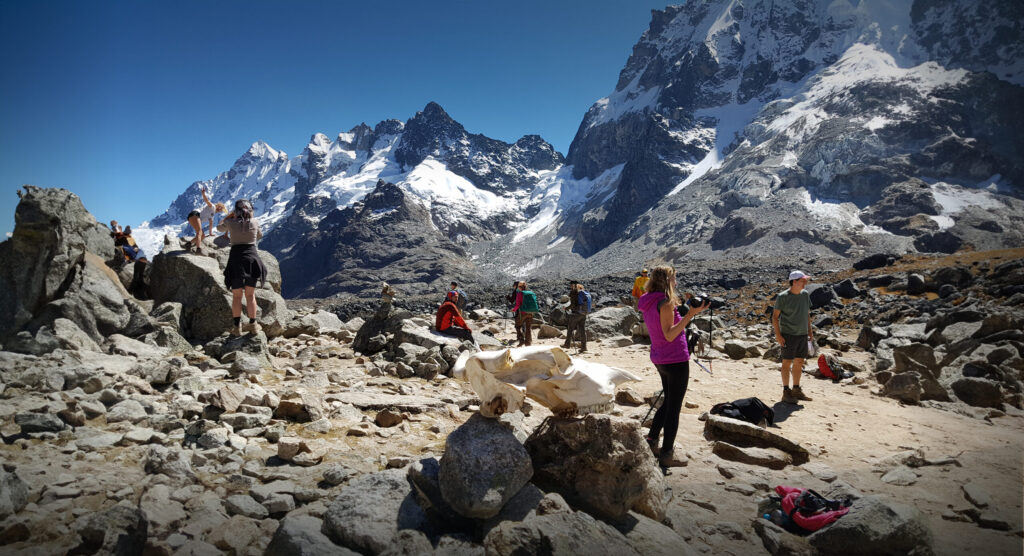
The second day is the most demanding and the most spectacular of the entire route. It begins before dawn with a several-hour hike up to the Salkantay Pass at 4,630 meters, with the snowcapped peak growing progressively on the horizon as the trail gains elevation. Crossing the pass is the climactic moment of the entire trek. From there, the descent toward the Chaullay campsite begins the transition from high glacial mountain terrain to the subtropical vegetation of the lower valleys, one of the most dramatic ecosystem shifts you can experience on foot in such a short time.
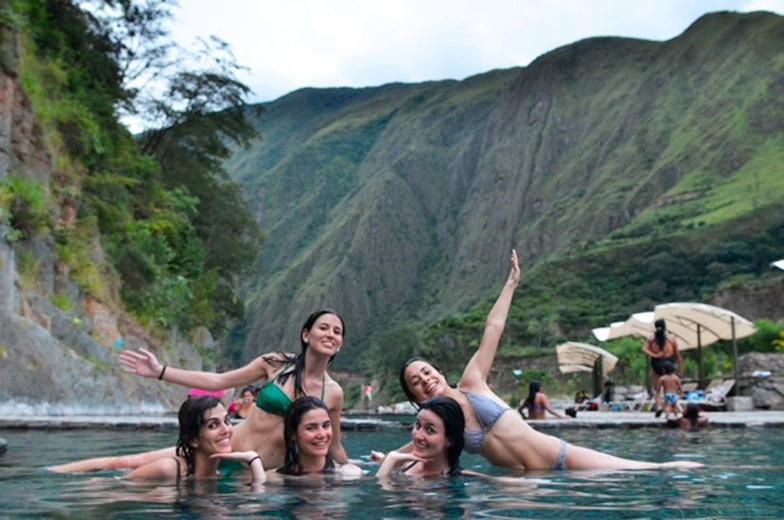
The third and fourth days continue the descent through the coffee, cacao, and tropical fruit growing areas of the Santa Teresa valley, with the temperature rising gradually and the vegetation becoming denser and more lush. The Santa Teresa section includes the chance to relax in the Cocalmayo hot springs at the end of the day, one of the most appreciated moments of the entire route after days of physical effort. The fourth day ends at the hydroelectric station or in Aguas Calientes depending on the variant.
The fifth day is the visit to Machu Picchu, with access by bus from Aguas Calientes or on foot from the hydroelectric station if the itinerary includes it. The return to Cusco is by train from Aguas Calientes that same afternoon.
The ecosystems along the route: why everything changes in five days
One of the most talked-about features of the Salkantay Trek is the variety of ecosystems it crosses in such a short time. This is not a route that stays in one type of landscape for several days: it is a progressive descent from high glacial mountain terrain to the subtropical cloud forest zone, involving radical changes in temperature, vegetation, wildlife, and climate with each passing day.
The first and second days take place in the puna zone, the high Andean mountain ecosystem with ichu grasslands, glacial lakes, condors at the highest points, and temperatures that can drop several degrees below freezing on camp nights. It is an open, stark landscape of a scale that flattens the observer’s sense of perspective.
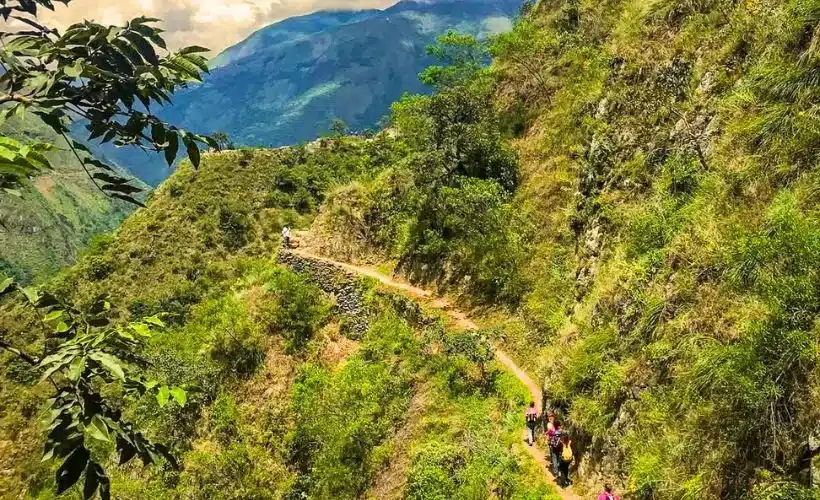
After crossing the Salkantay Pass, the landscape begins to change noticeably with every hour of descent. First come the high-altitude shrubs, then the ferns, then taller trees, and finally the dense vegetation of the cloud forest with orchids, bromeliads, and a humidity that contrasts radically with the dryness of the pass. By the third day, when the trail reaches the coffee and tropical fruit growing valleys, the transformation is so complete that it is hard to believe the same path that runs through there crossed a glacier above 4,600 meters less than 24 hours earlier.
That vertical transition over just a few days is what makes the Salkantay a biologically extraordinary route, comparable in ecosystem variety to journeys that on other continents would require weeks of travel.
Real difficulty: what the body faces on each day
The Salkantay Trek is generally classified as a high-difficulty trek, a category that deserves some nuance. The factor that most defines that classification is the altitude on the second day, with the pass at 4,630 meters as the highest point. For someone arriving without prior acclimatization, that section can be extremely demanding. For someone who has spent two or three previous days in Cusco at 3,400 meters, the same section is tough but manageable at a proper pace.
The total distance of the route, between 70 and 75 kilometers over five days, is not in itself what takes the biggest toll. What tires you out the most on the Salkantay are the hours of downhill hiking on the second and third days, with steep descents over uneven terrain that test the knees and quads in a way that the uphill sections do not. Arriving at the Chaullay campsite at the end of the second day with fresh legs depends largely on having used trekking poles from the moment you leave the pass and on having descended with the short, controlled steps that the slope demands.
Prior acclimatization of at least two nights in Cusco is the basic recommendation for any participant profile, no exceptions. For people over 55 or with a history of altitude sensitivity, three nights in the city before starting the route is the most prudent option.
What a standard Salkantay Trek package includes
Packages from authorized agencies for the Salkantay Trek typically include transportation from Cusco to the starting point and the return from Aguas Calientes, a guide for all days of the trek, porters or muleteers with mules to carry camping gear and food, tents and sleeping pads, all meals during the route, and the entrance ticket to Machu Picchu on the last day. Some agencies also include the entrance fee to Humantay Lake and the visit to the Santa Teresa hot springs as part of the base package.
What the standard package typically does not include is a personal sleeping bag, which can be rented from the agency or brought by the trekker, personal expenses in the towns along the way, tips for the support team, and the return train from Aguas Calientes, which in some packages is billed separately.
Why National Geographic included it among the best in the world
The reason behind that 2008 mention is not hard to understand when you break down the characteristics of the route. Few treks in the world combine a mountain pass above 4,600 meters next to an active glacier, a complete transition between ecosystems spanning from the puna to the cloud forest, a visit to one of the most important archaeological sites on the planet at the end of the route, and the possibility of doing it all in five days without the need for technical mountaineering equipment.
That combination of relative accessibility with real spectacle is what sets the Salkantay apart from other high-mountain treks that are equally impressive but require technical experience or exceptional physical fitness. The Salkantay is extraordinary and within reach of a wide range of people if they prepare properly. That is not common among the world’s most highly rated mountain routes, and it is exactly what has made it what it is today.
Want to do the Salkantay Trek with all the logistics taken care of and guides who know every kilometer of the route? At Incredible Peru Tours we operate the Salkantay in its four- and five-day versions with full field equipment, a specialized cooking team, and the level of support that a route of this caliber deserves.


