

The question of when is the best time to do the Salkantay Trek has a short answer and a real answer. The short one is: during the dry season, from May to October. The real answer is more nuanced, because the Salkantay crosses such different ecosystems that the same rain that makes the pass more difficult turns the coffee valleys into something visually extraordinary. Understanding these differences before setting your dates allows you to choose based on criteria rather than following a generic recommendation that does not consider what each traveler is looking for in the experience.
This guide walks through the calendar month by month with specific information about what each period offers, what makes it more challenging, and what does not change regardless of when you travel.
how the weather works on the Salkantay: why it is not the same along the entire route
The Salkantay Trek connects, in five days, glacial high mountains with the subtropical Santa Teresa valley. These two climate extremes do not respond the same way to the seasons. What means snow or heavy rain at the pass translates into lush vegetation and more saturated colors in the coffee valleys on the third day. Talking about the Salkantay weather as if it were uniform along the entire route is a mistake that leads to incorrect expectations.
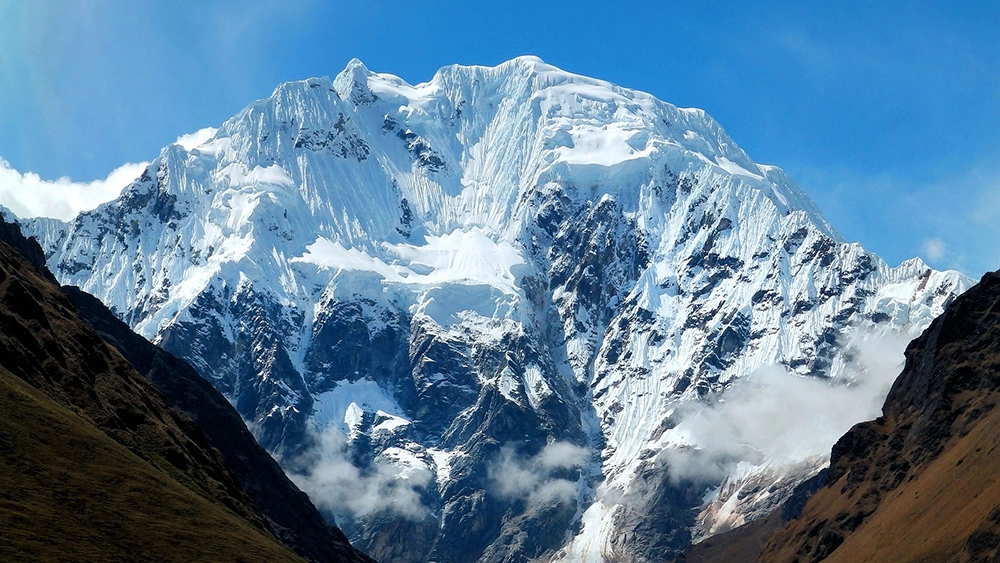
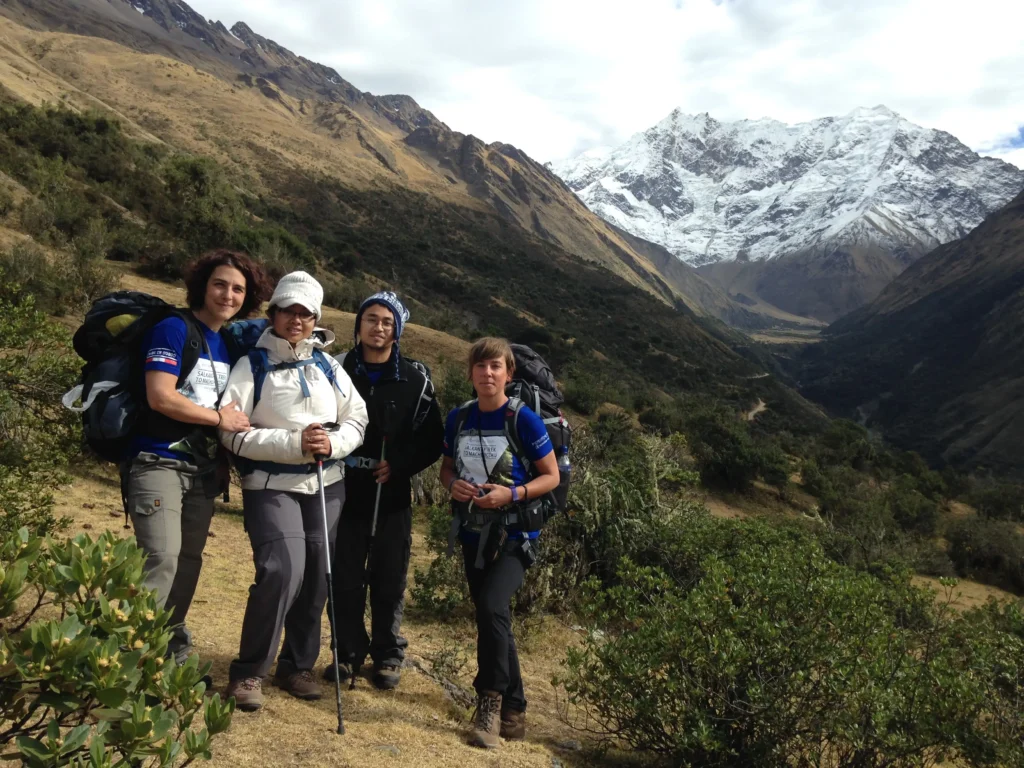
The most weather-sensitive point on the route is Salkantay Pass, at 4,630 meters. At that point, wet-season precipitation increases the risk of snow, reduced visibility, and stronger winds. The visual experience of the glacier from the pass depends directly on the sky: a clear day at the pass produces views that justify the trip on their own. A cloudy day can mean crossing without visibility, which does not prevent completing the trek but completely changes what you take away from the experience.
The valleys on the second and third days, at altitudes between 2,000 and 2,800 meters, respond differently. Rain in that zone creates dense vegetation, stronger waterfalls, and a level of green that the dry season cannot offer. For many people who have done the Salkantay in different seasons, the valley section during the wet season is visually superior to that of the dry months.
dry season (May to October): the most predictable conditions
The dry season is the most recommended time for the Salkantay Trek, for reasons that have more to do with predictability than with absolute beauty. Between May and October, most days along the route are clear, the trail is dry and firm, and visibility at the pass is the most consistent of the year. For someone doing the trek for the first time and wanting the highest chance of seeing the glacier clearly from the pass, these months are the safest choice.
Nights at the Soraypampa base camp are especially cold during this season, with temperatures that can drop several degrees below freezing even in July and August. This dry cold is easier to manage with the right gear than the damp cold of the rainy months, but it requires a sleeping bag rated for sub-freezing temperatures.
The number of trekkers reaches its peak between June and August, which coincide with summer vacations in the Northern Hemisphere and the highest tourist demand in the Cusco region. Campsites and domes at the most requested points of the trek can be full during these months, and booking several months in advance is necessary to secure availability on your preferred dates.
month by month in the dry season: what makes each one different
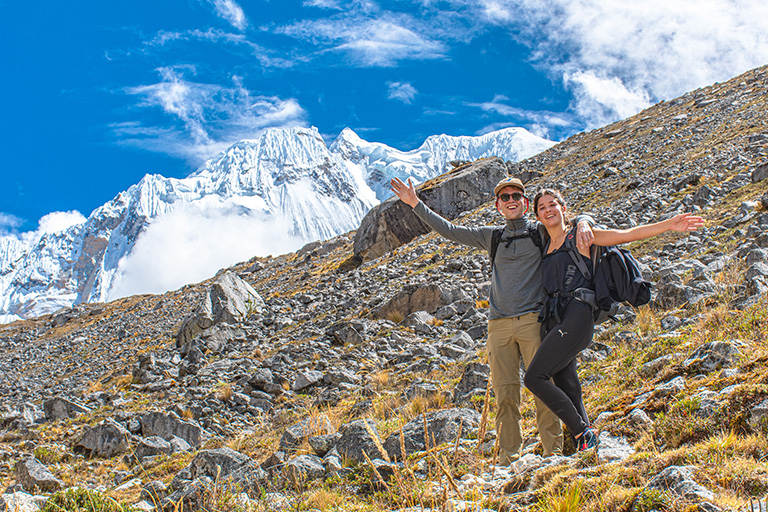
May is one of the best months of the year for the Salkantay Trek and the one most often recommended by experienced guides. The last rains of the wet season have left the valleys at their greenest and freshest, the sky is clear most days, and the number of trekkers has not yet reached peak levels. Prices also reflect this transition: they are more affordable than in July and August without any change in service quality.
June offers full climate stability and the added attraction of Inti Raymi, the Inca Festival of the Sun celebrated in Cusco on June 24, which brings an additional flow of visitors to the region. For those who want to combine the Salkantay Trek with Inti Raymi, this month allows both in the same trip with proper planning.
July and August are the busiest months and the most reliable in terms of weather. Nights are the coldest of the year at base camp, days are consistently sunny, and the views from the pass on clear days are the ones most often seen in photos of the trek. The trade-off is the higher number of groups on the trail and the need to book well in advance.
September and October are transition months toward the wet season and are considered by many experienced trekkers to be the most balanced of the year. Crowds decrease compared to peak months, prices drop slightly, the weather remains stable most days, and the valleys begin to regain the green that the dry season had reduced. The first rains in October are usually short and predictable, mostly in the afternoons, and rarely affect the trek significantly if you start early each day.
wet season (November to March): what the rain gives and what it takes away
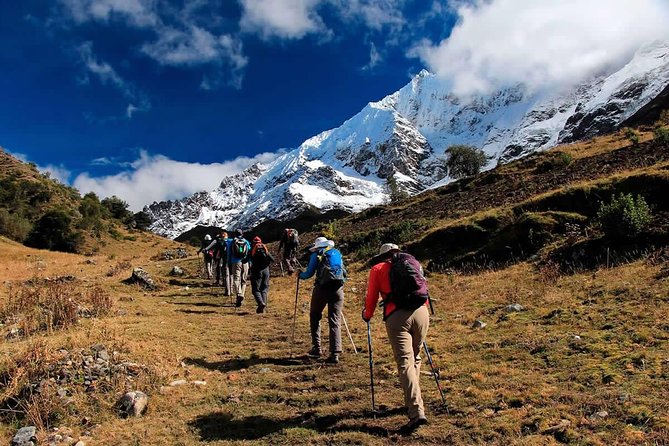
The rainy season has a worse reputation among Salkantay trekkers than it deserves, for similar reasons to the Inca Trail during this period. Rainfall in this area follows a fairly consistent seasonal pattern: the heaviest rain is usually concentrated in the afternoons and evenings, while mornings often offer more stable windows for hiking.
What the wet season gives to the Salkantay Trek that the dry season cannot is vegetation at its most vibrant. The coffee valleys on the third day in January have a level of color intensity and density that the dry months cannot produce. Waterfalls that in August are thin streams become powerful flows in December. Wildflowers along the trail are in full bloom. For travelers who value this type of scenery, the wet season offers a richer visual experience.
What the rain takes away is consistency at the pass. During peak rainfall months, there are days when Salkantay Pass is completely covered by clouds and the glacier is not visible. Crossing without visibility is still physically valid, but the visual experience is lost. For those doing the trek specifically for that iconic view, the wet season introduces uncertainty.
month by month in the wet season: real differences
November starts the wet season with still-moderate rainfall and many clear days. It is a transition month with lower demand, more affordable prices, and a quieter, more intimate trekking experience.
December brings more rain but still offers usable mornings. Christmas and New Year weeks see a temporary increase in travelers, which can raise accommodation prices in Cusco and Aguas Calientes.
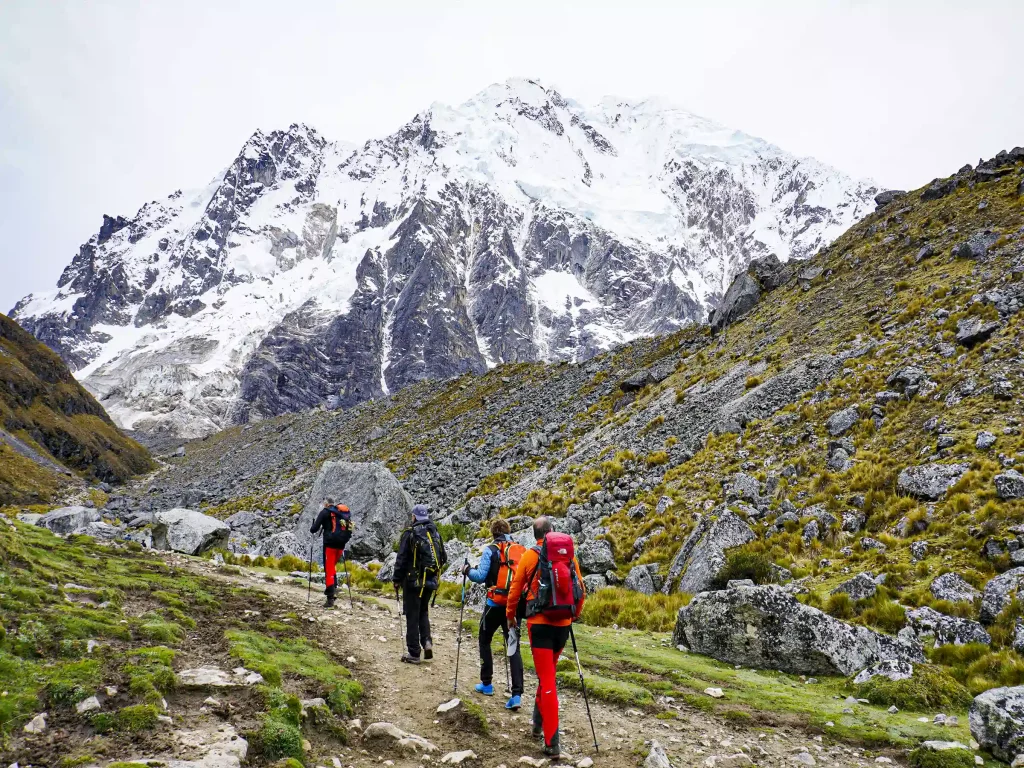
January and February are the rainiest months. The pass may have fresh snow, requiring good waterproof boots and full cold-weather gear. Unlike the Inca Trail, the Salkantay Trek remains open year-round with no closures. Vegetation is at its most lush during this time.
March marks the end of the rainy season. Rain begins to decrease in the second half of the month, and clear days become more frequent. Vegetation remains vibrant, and the trail is less crowded. It is one of the best months for combining green landscapes with better chances of clear skies.
the Salkantay Trek does not close in February: a key advantage over the Inca Trail
This point deserves special mention. The Inca Trail closes completely in February for maintenance and safety. The Salkantay Trek does not: it is open all year with no official restrictions.
For travelers visiting in February who want to reach Machu Picchu on foot, the Salkantay Trek is the best alternative available. It is not a second-choice option: it is a route with its own identity, offering low crowds and lush scenery. Those who arrive at the pass prepared for the conditions can experience a version of the trek with a level of solitude that is impossible in July.
what is really the best time: a criteria-based answer
If your main goal is to see the Salkantay glacier clearly from the pass and get the most striking photos, the dry season from May to October—especially May, September, and October—offers the best chances.
If your goal is fewer crowds, lower prices, and greener landscapes, November, March, and early December are the best options.
If you are traveling in February and originally wanted to do the Inca Trail, the Salkantay Trek is the strongest alternative and a highly rewarding experience.
What does not change regardless of the month is the essence of the trek: the effort of the second day, the pass crossing, the ecosystem transition, and the arrival at Machu Picchu. The season changes the conditions, but not the core experience.
Do you have fixed travel dates and want to know if they are suitable for the Salkantay Trek? At Incredible Peru Tours, we guide each group based on real monthly conditions and what they want from the experience.


