
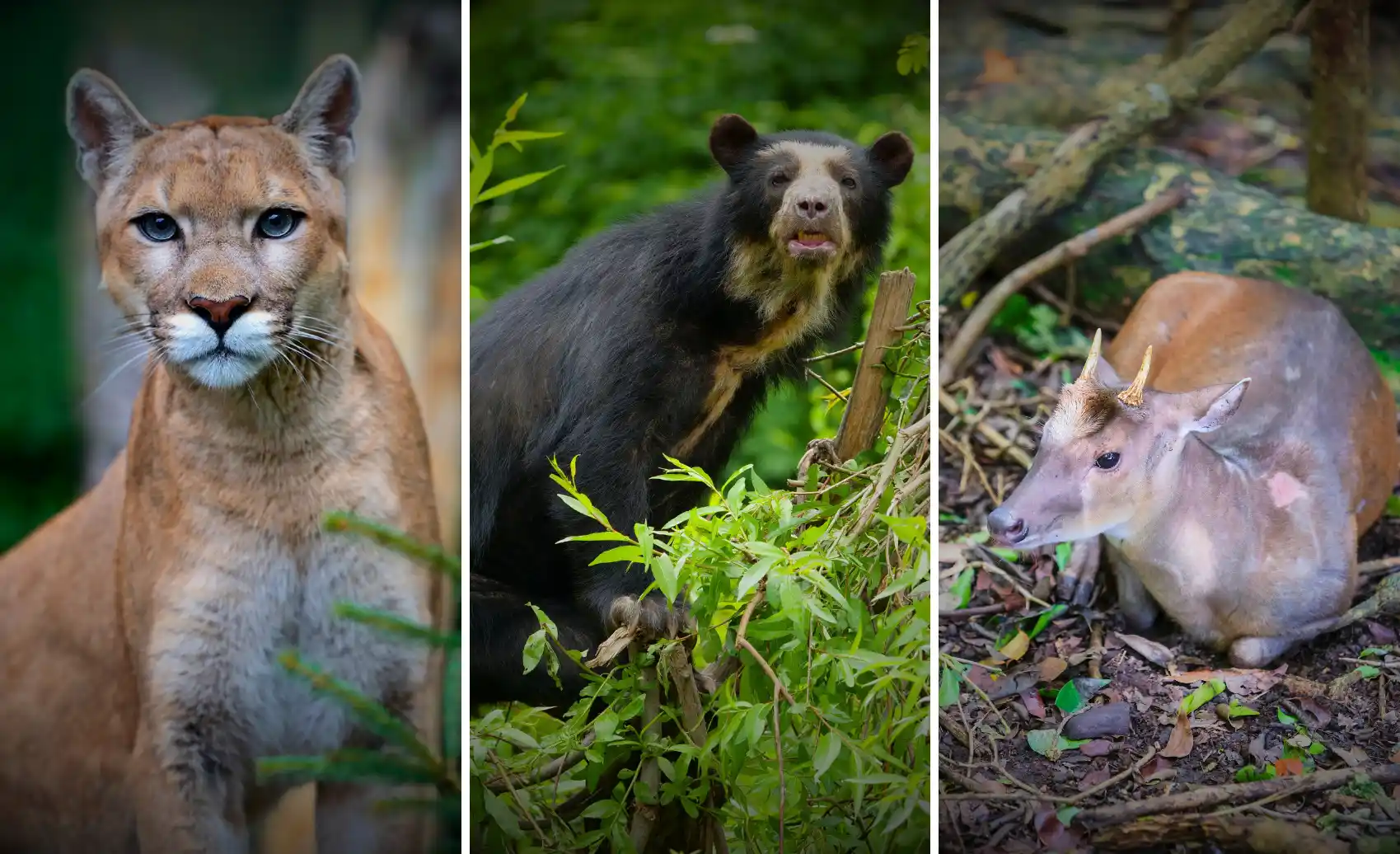
The Salkantay Trek is not just a route to Machu Picchu. It is a biological corridor that, over five days, crosses several of the richest and most distinct ecosystems in the Peruvian Andes. From the glacial puna of the base camp to the subtropical valleys of Santa Teresa, the route passes through areas where plant and animal life changes dramatically within just a few hours of hiking. For anyone with an eye trained to observe the surroundings while walking, each section of the Salkantay offers something different that is not repeated anywhere else along the route.
This guide describes the characteristic flora and fauna of each stage of the route, organized by ecosystem and altitude, with information on the most representative species and the best times of day to observe them.
the glacial puna (3,900 to 4,630 meters): life at the extreme
The puna ecosystem surrounding the Soraypampa base camp and Salkantay Pass may look like the most austere part of the route, but it is also the one that surprises attentive observers the most. At over 4,000 meters above sea level, with nighttime temperatures dropping below freezing and intense solar radiation during the day, life has developed adaptation strategies with no equivalent in any lower-altitude ecosystem.
The most characteristic plant in this area is ichu grass (Stipa ichu), the golden grass that covers the puna slopes with a pale yellow color that becomes almost luminous when lit from the side by the afternoon sun. Ichu is not just part of the scenery: it is the main forage resource for the llamas and alpacas that graze in these valleys, and its deep root system is what keeps the puna soil cohesive against wind erosion and snowmelt.
Among the rocks in the highest sections grows yareta (Azorella compacta), a bright green cushion plant that can take hundreds of years to reach the size of a soccer ball. Its compact, dense form allows it to retain internal heat even when outside temperatures drop sharply. It is one of the oldest plants in high-mountain Andean ecosystems and one of the hardest to spot unless you know how to recognize it.
In the area around Humantay Lake, you can also find wildflowers with unexpectedly intense colors for that altitude: chinchircuma (Mutisia acuminata), with its orange and pink petals, and several species of deep blue gentian growing among the rocks of the glacial cirque. These flowers are the result of an adaptation that concentrates pigments to attract pollinators during very short blooming periods.
As for fauna, the most iconic animal of the Andean puna and the hardest to see clearly is the Andean condor (Vultur gryphus). With a wingspan of up to three meters, it is the largest flying bird in the Western Hemisphere and one of the most representative animals in the entire Cusco region. Sightings around Salkantay are not frequent, but they are not exceptional either: thermals rising from the slopes of the snow-capped mountain create columns of warm air that condors use to glide effortlessly for hours. The early morning and late afternoon offer the highest chances of spotting one.
The vicuña (Vicugna vicugna), the slimmest and most agile of the four South American camelids, appears with some frequency in the high-altitude grasslands on the first and second days. Its coat is a light cinnamon color with white markings on the chest, and its silhouette against the green backdrop of ichu grass creates one of the cleanest visual contrasts in the puna landscape. Unlike domestic llamas, vicuñas are wild and quickly move away from the trail when they detect human presence, so observing them from a distance is always better than trying to get closer.

the transitional cloud forest (3,000 to 3,900 meters): the visible shift
On the descent from the pass toward the intermediate valleys, the vegetation begins to change noticeably with every stretch downhill. Starting at around 3,500 meters, the ichu grasslands are gradually replaced by the first high-altitude shrubs and brush, and between 3,000 and 3,500 meters, the transitional cloud forest appears, one of the most biodiversity-rich ecosystems in the Andes.
In this section of the second day’s descent, mosses and lichens begin to cover the rocks and the trunks of the first trees with a density that reflects the constant humidity of the area. The most characteristic tree at this elevation is polylepis (Polylepis sp.), known locally as queñua, with its reddish, fibrous bark that peels off in layers and its unmatched ability to survive at extreme altitudes. The polylepis forests that survive in the more protected Salkantay valleys are among the most threatened ecosystems in the Andes due to the area’s long history of deforestation.
In the densest vegetation zones at this elevation, the spectacled bear (Tremarctos ornatus) has a documented presence, although direct sightings are extremely rare. It is the only bear native to South America and one of the most elusive mammals in Andean ecosystems. Tracks in the trail’s mud and markings on tree trunks are the most common signs of its presence in the area. A guide experienced on the route can identify these signs and explain this animal’s habitat range in the different sections of the trek.
The birds at this elevation are especially striking for those who pay attention during the descent. The resplendent quetzal (Pharomachrus mocinno) is present in the region’s cloud forests, although spotting one requires a lot of patience and some luck. More common is the Andean cock-of-the-rock (Rupicola peruvianus), Peru’s national bird, with its vivid orange plumage standing out against the green of the forest, and during mating season it performs visual displays that are hard to forget if you get the chance to witness them.
the subtropical forest and coffee valleys (1,800 to 2,800 meters): the greatest biodiversity
The third and fourth days of the Salkantay Trek pass through the biologically richest zone of the entire route. At altitudes between 1,800 and 2,800 meters, in the valleys descending toward Santa Teresa, warm temperatures, high humidity, and a diversity of microhabitats create the conditions for a level of biodiversity that rivals any tropical rainforest zone on the continent.
Orchids are the most representative plant family in this stretch. The Sacred Valley region and its southern tributaries are home to more than three hundred different orchid species, many of them endemic to this specific altitudinal band. Along the third day’s trail, it is common to find orchids growing directly on tree bark or among the rocks along the path, ranging in size from tiny flowers just a few millimeters across to large plants with blooms several centimeters wide. The wet season, from November to March, is the peak flowering period and offers the greatest visible diversity of these plants.
Bromeliads, with their rosettes of stiff leaves that collect rainwater inside and create small self-contained ecosystems, cover the tree branches in the densest vegetation sections of the third day. Some of these water reservoirs inside the rosette hold insect eggs and larvae, small amphibians, and even miniature freshwater crabs that complete their life cycle without ever needing to reach the ground. They are microecosystems within another ecosystem, and observing them up close reveals a complexity that the scale of the landscape does not suggest.
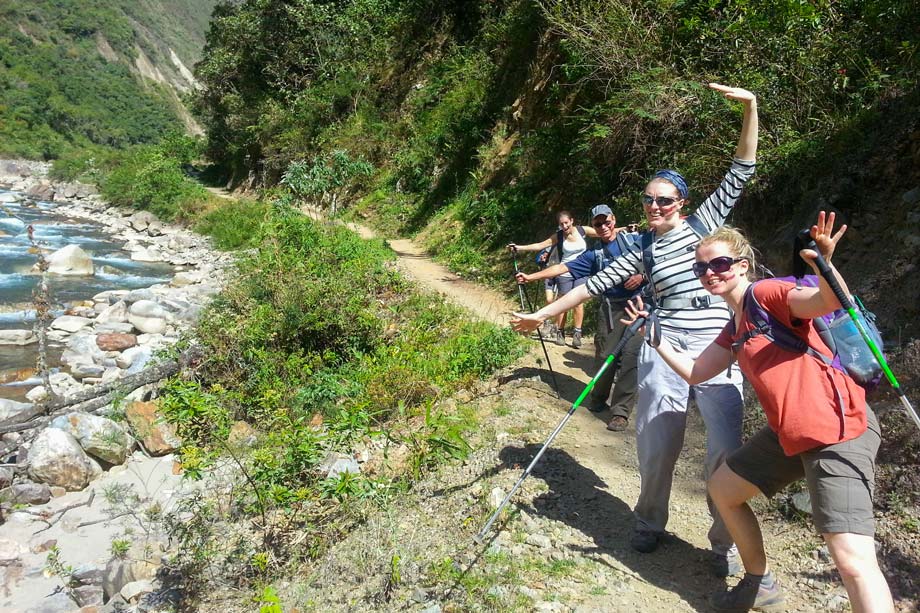
Tree ferns, with fronds that can reach several meters in length, appear in the valley’s most humid and shaded sections and create a visual atmosphere of primeval forest that contrasts sharply with the austerity of Soraypampa base camp on the first day. Some of the species growing in these valleys are almost identical to those found in the Carboniferous fossil record more than 300 million years ago. That evolutionary continuity, visible in a shrub by the side of the trail, is one of those facts that changes the way you see the landscape once you know it.
As for fauna in the subtropical section, butterflies are the most visible and abundant animals. In the sunny stretches of the third day’s trail, blue morpho butterflies (Morpho sp.) frequently appear, their iridescent metallic-blue wings creating one of the most striking images of the trek for anyone seeing them for the first time. Butterflies from the Heliconidae family, with their red-and-black patterns against a dark background, are equally common and easy to photograph because they tend to rest with their wings open on sunlit leaves along the edge of the trail.
Toucans (Ramphastos sp.) are heard before they are seen in these valleys: their characteristic call, similar to a hoarse, repetitive grunt, announces their presence in the tallest trees before the eye can locate them among the foliage. When they do appear, the contrast between the large, brightly colored bill and the compact black body creates an impression that no nature book can fully convey. Sightings are more frequent in the early morning, when these birds move among the valley’s fruit trees in search of food.
Mitred parakeets (Aratinga mitrata) appear in noisy groups in the higher sections of the third day. Their flocking flight, together with calls that can be heard from far away, adds a sound element to the landscape that did not exist during the first days of the route, in the silence of the puna. The acoustic transformation of the trek, from the near-total silence of the pass to the rich soundscape of the subtropical valleys, is one of the most striking changes on the Salkantay Trek and one of the least mentioned in conventional guidebooks.
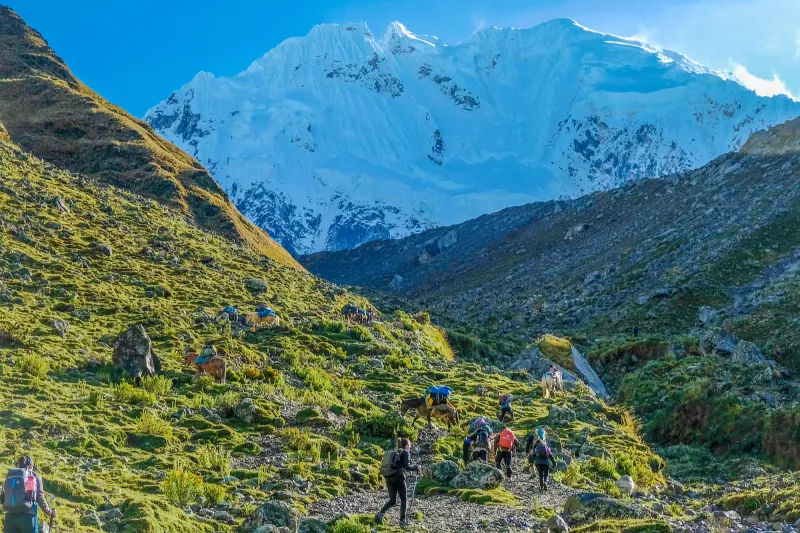
the Urubamba River edge (day four): a corridor of life
On the fourth day of the route, with the trail following the riverbank toward Aguas Calientes, the trek takes on its own biological identity. The Urubamba River corridor in this stretch is one of the richest areas for birdlife in the entire Cusco region, with species associated with water and the rocky banks that do not appear anywhere else along the route.
The Amazon kingfisher (Chloroceryle amazona) is common along the riverbanks, with its characteristic still posture on a branch above the water before diving down to catch fish. The torrent duck (Merganetta armata) is another species that appears fairly regularly in the faster-flowing sections of the Urubamba, swimming with an astonishing skill in the current given the strength of the river in this area.
Plum-crowned parrots (Pionus tumultuosus) fly over the canyon in small groups during the early hours of the fourth day. Their calls are amplified by the canyon walls and reach the trail before the birds become visible. The density of vegetation on the canyon walls means that many of the species present in this area are more easily heard than seen, making this stretch especially interesting for anyone used to identifying birds by song.
tips for better observing flora and fauna along the route
- Walk quietly through forest sections. Most animals along the route detect human presence mainly by sound. A group that hikes without speaking loudly and without music has exponentially better chances of direct sightings than a noisy one.
- The early morning hours concentrate the greatest bird and mammal activity. The early departures from camp on the second and third days coincide with the time of peak wildlife activity in all the ecosystems along the route.
- Ask your guide to identify the plants and animals along the way. Guides with experience on the Salkantay know the most representative species in each section. Taking advantage of that knowledge during the hike adds a dimension to the route that no book can provide.
- Bring lightweight binoculars if the weight allows. For birdwatching in the subtropical valleys and in the fourth-day sections beside the river, binoculars make the difference between seeing a dot of color on a distant branch and seeing the detailed plumage of an Andean cock-of-the-rock.
- Do not pick plants or feed any animals. The balance of these ecosystems is more fragile than it seems, and uncontrolled interactions between visitors and local wildlife have consequences that build up with the number of groups passing through each season.
Would you like to hike the Salkantay Trek with a guide who knows the flora and fauna of each section and can turn every sighting into an experience with context? At Incredible Peru Tours, we select guides specialized in the route who combine the region’s historical and cultural knowledge with a deep understanding of the natural environment along the trail.


