The Salkantay Trek does not have the nominative permit system used on the Inca Trail, but it does require a series of documents. If any of them are missing, you may face specific problems at certain points along the route, especially when entering Machu Picchu on the last day. This guide tells you exactly what documents you need, when you need them, and in what format they should be available.
Your passport: the only essential document at all times
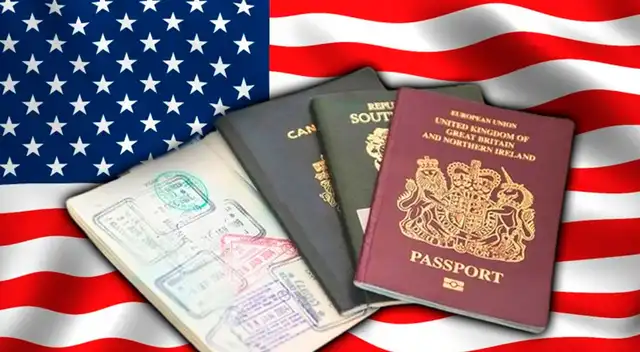
Your original passport is the most important document for the Salkantay Trek and the only one that must physically stay in your daypack during the five days of the route, not in the luggage bag carried by the porters. The reason is simple: the access control at Machu Picchu on the last day verifies each visitor’s identity against the entrance ticket, and that ticket is linked to the passport number of the person who purchased it. If your passport is not available at that moment, entry to the site may be denied.
A photocopy of your passport is not valid as a substitute at the Machu Picchu entrance control. A photo of your passport on your phone is not valid either. The original document is required. This is an important detail to keep in mind from the beginning of the five-day trekking logistics: your passport does not go in the porters’ luggage bag, it is not left at the hotel in Aguas Calientes while you go up to the site, and it is not kept in the luggage you left behind in Cusco.
To protect your passport during the trek, keeping it inside a waterproof bag in your daypack is the simplest and most effective precaution. Strong plastic zip bags serve this purpose without adding significant weight or bulk.
The Machu Picchu entrance ticket: format and offline availability
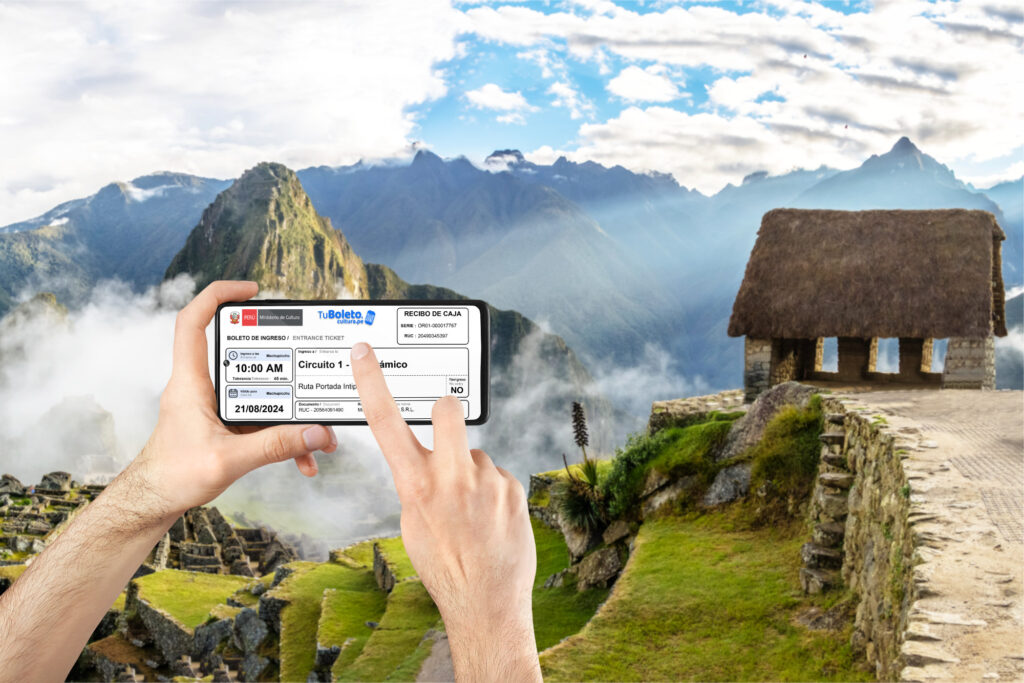
The Machu Picchu entrance ticket is the second most critical document for the trek. It is linked to your passport number, as well as to the selected circuit and entry time. In Salkantay Trek packages booked with an agency, the agency manages this ticket as part of the service and provides it to the participant before the visit to the site.
The most practical format for the ticket is the QR code downloaded offline on your phone and saved in your photo gallery as a screenshot, so it is available without an internet connection. The signal in Aguas Calientes and at the site entrance is not always stable, and depending on a connection to show the ticket at the control point can create problems at the worst possible moment.
If you carry the ticket printed on paper, keeping it in the same waterproof bag as your passport protects the document from moisture during the previous trekking days. A wet and unreadable Machu Picchu ticket on the fifth day of the trek is a completely avoidable problem with this precaution.
Travel insurance: not an access document, but a critical document
Travel insurance is not a document that any Salkantay Trek checkpoint verifies at any point along the route. However, it is the document whose absence can have the most serious consequences if a medical emergency occurs on the trail. Emergency evacuation from the Salkantay Pass area, which is the farthest section from medical infrastructure on the entire route, can be very expensive without insurance.
At Incredible Peru Tours, we ask all participants to confirm their travel insurance before the trek departure. We do this not as an access requirement, but as a responsibility toward the safety of every person who goes on the trail with us. Travel insurance that covers high-altitude trekking, evacuation from remote areas, and medical assistance without altitude limits is the minimum adequate coverage for the Salkantay Trek.
Carrying your insurance policy downloaded offline on your phone or printed on paper inside your daypack, with the insurance company’s emergency phone number clearly visible, is the right preparation so the activation process can be as fast as possible if needed.
The voucher or package confirmation from the agency
The booking confirmation for your package with the operating agency is a useful document, although it is rarely mandatory at checkpoints along the route. Its practical use is as a contact reference in case you need to communicate with the agency during the trek or upon arrival in Aguas Calientes, and as a backup document if there is any discrepancy regarding the services included in the package.
Having the agency name, contact number, and assigned guide’s name available on your phone or on paper in your backpack makes emergency communication with the agency easier from any point along the route where there is signal.
Specific documents for discounts: students and Peruvian citizens
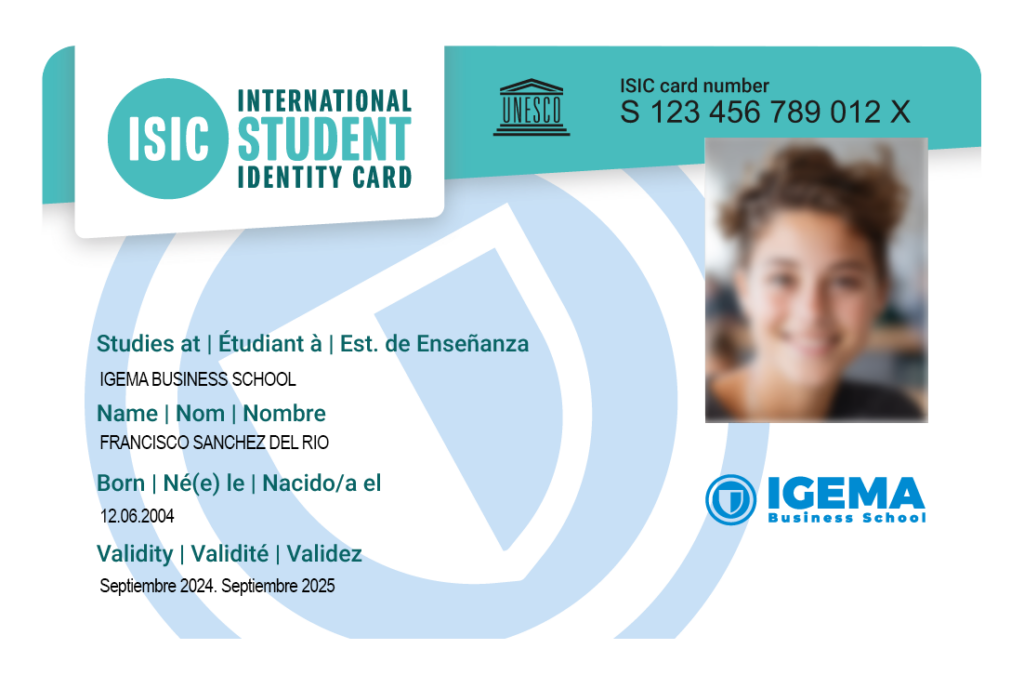
The Machu Picchu entrance ticket has reduced rates for students with a valid university ID card and for Peruvian citizens with a DNI. If your Salkantay Trek package includes a Machu Picchu ticket with a student discount, your university ID card must be available at the site entrance control to verify your discount eligibility.
The card must be issued by the educational institution itself and include a photo, full name, and expiration date. The ISIC card is no longer valid for this discount due to recent changes in the Ministry of Culture’s policy. If the discount was applied to the ticket but the card is not available at the entrance control, the park ranger may deny entry with that ticket and require the purchase of a full-price ticket.
For Peruvian citizens, the original DNI is the document that grants access to the national rate at the site entrance. A photocopy of the DNI is not valid at that control point.
Medical documents: when to carry them and in what format
Participants with relevant medical conditions, such as a history of cardiovascular problems, diabetes, severe allergies, or specific medication, benefit from carrying a basic medical summary on paper inside their backpack during the trek. This document, with information about existing conditions, regular medication and dosages, and an emergency contact number in the country of origin, allows local medical personnel to act with the correct information in case of an emergency.
For participants who carry specific medication, a medical prescription in English or Spanish is useful in case they go through customs controls with medications that require documentation in some countries. If the medication includes substances that some countries classify as controlled, the original medical prescription is a document that can help avoid problems at transit airports before arriving in Peru.
Documents you do NOT need for the Salkantay Trek
Unlike the Inca Trail, the Salkantay Trek does not require an official permit from Peru’s Ministry of Culture for the mountain route. There is no permit document to process and no paperwork required before starting the trek beyond the booking with the operating agency. This lack of regulated bureaucracy is one of the clearest logistical advantages of Salkantay compared to the Inca Trail.
No medical certificate of physical fitness is required for the route either, although a preventive medical consultation is recommended for higher-risk profiles. No special visa is needed to access the Salkantay area beyond the standard Peru tourist visa that applies to citizens of most countries.
Document management before leaving Cusco: checklist
The night before starting the Salkantay Trek, these are the five most important document checklist items:
- Original passport in your daypack, inside a waterproof bag, not in the porters’ luggage bag.
- Machu Picchu ticket downloaded offline on your phone as a screenshot in your photo gallery.
- Insurance company phone number and travel insurance policy number accessible on your phone.
- Contact number for Incredible Peru Tours or the operating agency saved on your phone for emergency communication.
- University ID card in your daypack if your Machu Picchu ticket has a student discount applied.
Do you have questions about which documents you need for the Salkantay Trek, or would you like us to coordinate your Machu Picchu ticket as part of the package? At Incredible Peru Tours, we manage all access documents for the route and inform each group about what to bring and in what format before departure. Send us your dates, and we will prepare the complete information before you book anything.