

There are famous hikes in the world. And then there is the Inca Trail. For many travelers, the four-day route that connects the Sacred Valley with Machu Picchu is the most complete and emotionally intense trek they have ever done. Not because it is the longest or the most technically demanding, but because it combines, in a way that cannot be replicated, the beauty of the Andean landscape, the historical depth of the sites it passes through, and the final reward of arriving at Machu Picchu through the Sun Gate at sunrise, after four days of walking the same trail the Incas walked more than five hundred years ago.
In this guide, you will find everything you need to know to plan, prepare for, and fully enjoy the Classic 4-Day Inca Trail: the day-by-day itinerary, the real level of difficulty, permits, gear, the best times of year to go, and the tips that make the difference between an extraordinary experience and a simply good one.
What the classic inca trail is and why it is different from other treks
The Classic Inca Trail is a section of the Inca road network, the Qhapaq Ñan, that runs from Kilometer 82 of the Cusco Aguas Calientes railway line to the citadel of Machu Picchu, crossing three mountain passes and several archaeological sites from the imperial era. The total distance is approximately 43 kilometers, divided into four days of hiking with overnight camping.
What makes this trek unique is not the distance or the altitude alone. It is the combination of elements that you rarely find together anywhere else in the world: walking on original stones from the Inca Empire, sleeping under the stars in the Andes, passing through completely different ecosystems in four days high-altitude grasslands, cloud forest, and the edge of the jungle and ending at one of the most impressive archaeological sites on the planet, not by bus, but on foot along the same route the Incas themselves used.
That historical and geographical context is what makes the Inca Trail more than a physical challenge. It is a fully immersive experience in a civilization and a landscape unlike any other in the world.
Day-by-day itinerary: what to expect each day
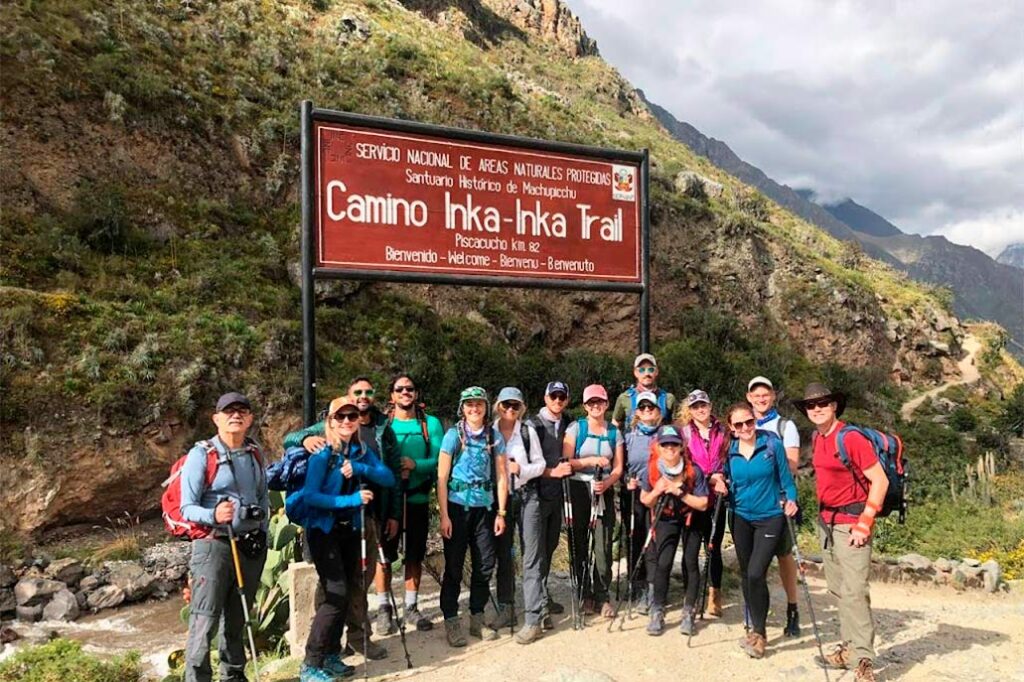
Day 1 Km 82 to Wayllabamba (12 km, 3 to 4 hours of hiking)
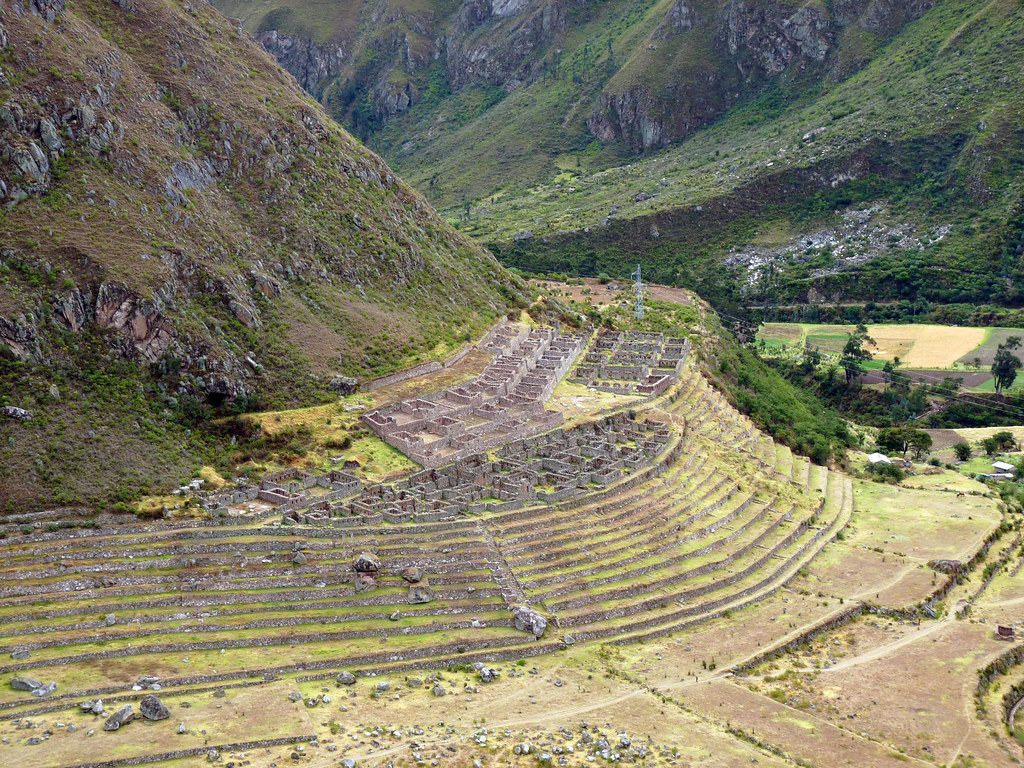
The first day is the gentlest of the trek. The route begins at Kilometer 82, where buses drop off the groups after an early departure from Cusco. From there, the trail follows the bottom of the Urubamba River valley with a gradual incline, passing local communities, farmland, and the first sections of original Inca stone trail. Throughout the day, hikers pass the archaeological sites of Llactapata, Huayllabamba, and Tres Piedras. The first night’s campsite is set up in Wayllabamba, at 3,000 meters above sea level, where the temperature already begins to drop sharply after sunset.
Day 2 Wayllabamba to Pacaymayo (12 km, 7 to 8 hours of hiking)
The second day is the hardest of the trek, and it is good to know that in advance so it does not catch you by surprise. The day begins with a steady climb of several hours to Warmiwañusca Pass, known as Dead Woman’s Pass, at 4,215 meters above sea level. It is the highest point of the entire route and the most physically demanding, especially if acclimatization is not yet complete. The ascent is long but technically straightforward: it is all about pace, breathing, and patience.
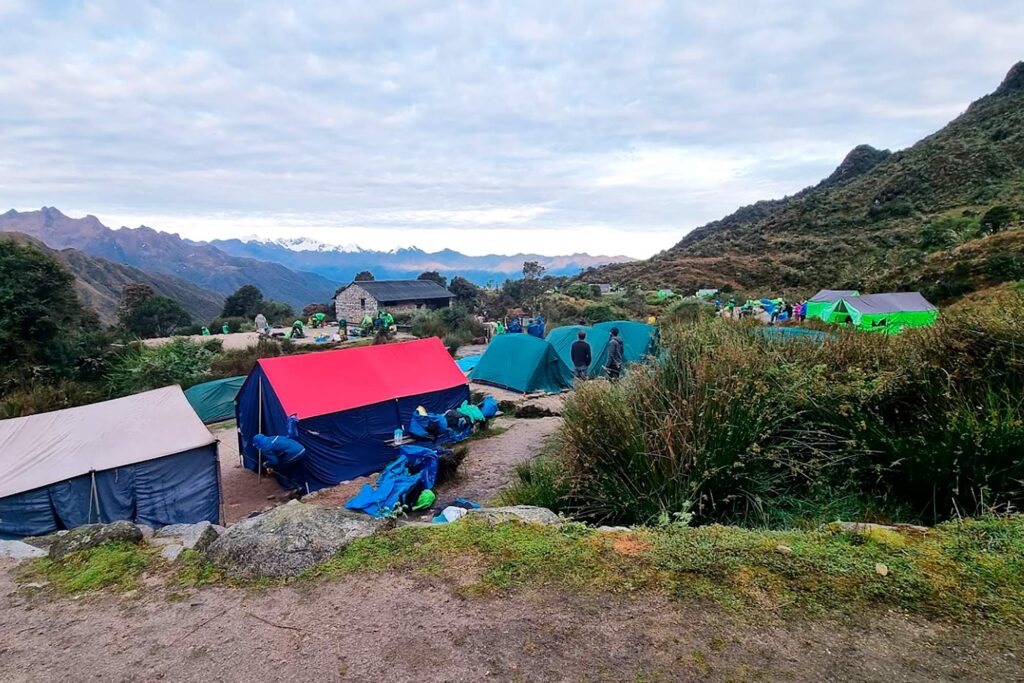
From the top of Dead Woman’s Pass, if the weather allows, the views are breathtaking for reasons that are no longer only physiological. The descent leads to the Pacaymayo campsite, at 3,600 meters, where the porters already have the tents set up and dinner ready. That second sunset on the Inca Trail, with your body exhausted and the landscape all around you, is one of the moments people remember for years.
Day 3 Pacaymayo to Wiñay Wayna (16 km, 7 to 8 hours of hiking)
The third day is the most varied and, for many, the most beautiful. It begins with another climb to Runkuraqay Pass, the second pass at 3,950 meters, and continues over more rolling terrain than the previous day. Throughout the day, hikers pass the archaeological sites of Runkuraqay, Sayacmarca, Chaquicocha, and Phuyupatamarca, each with distinct architectural features and scenic settings. From Phuyupatamarca onward, the trail descends steeply along an Inca staircase with several hundred steps into the cloud forest, where the vegetation changes dramatically: giant ferns, wild orchids, bromeliads, and humidity that wraps around everything.
The final campsite is at Wiñay Wayna, next to the archaeological site of the same name, one of the best-preserved architectural complexes on the entire route, with its cascading agricultural terraces and ceremonial water fountains still functioning today. The last night of the trek in Wiñay Wayna is special: there is anticipation, fatigue, and a very particular sense of calm.
Day 4 Wiñay Wayna to Machu Picchu (4 km, 1 to 2 hours of hiking)
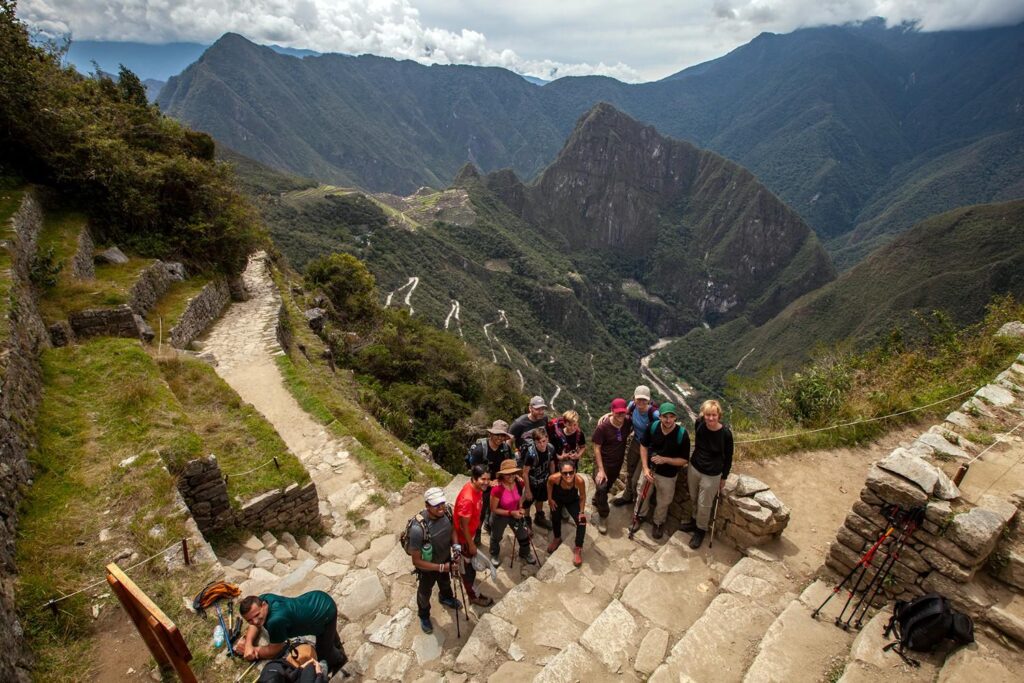
The final stretch is short but emotionally the most intense. Departure is before dawn, with headlamps, in order to reach the Sun Gate, Inti Punku, at the moment the sun begins to illuminate the citadel. When the mist lifts and Machu Picchu appears down below for the first time, after three and a half days of hiking, group reactions vary: some people stop in silence, some pull out their cameras without quite knowing what to photograph first, and some simply cry. All of those reactions are completely normal.
From Inti Punku, the trail descends along the hillside to the main entrance of the archaeological site, where the guided tour of the citadel begins. After the visit, the group takes the bus down to Aguas Calientes and boards the train back to Cusco in the afternoon.
The real difficulty of the inca trail: are you fit enough to do it?
The Classic 4-Day Inca Trail is classified as a moderate to challenging trek. It does not require technical mountaineering experience or specialized equipment, but it does demand above-average physical fitness and, above all, proper acclimatization to the altitude.
The factor people underestimate most is not the distance or the elevation gain: it is the altitude. Hiking for hours above 3,500 meters with a backpack is significantly more demanding than doing the same at sea level. Your body works harder, gets tired faster, and takes longer to recover. That is why trekking operators recommend spending at least two days in Cusco before starting the trail, doing light physical activities so your body can adapt gradually.
On the second day, with the ascent to Dead Woman’s Pass, physical condition matters more than at any other point on the route. Those who arrive well acclimatized and with prior training regular hikes and cardiovascular activity in the weeks leading up to the trip usually make the climb without major difficulty. Those who underestimate this day suffer more than necessary.
In general terms, if you walk regularly, do not have heart or respiratory problems, and acclimatized well in Cusco, the Inca Trail is within your current physical ability.
Permits and regulations: how to book the Inca Trail
Access to the Classic Inca Trail is strictly regulated by Peru’s Ministry of Culture. A maximum of 500 people per day are allowed on the trail, including trekkers, guides, porters, and cooks. In practice, this means the number of actual trekking spots is considerably smaller: around 200 to 250 trekkers per day across all groups.
Permits cannot be purchased individually: they must be processed through an authorized tour operator registered with the Ministry of Culture. This means you cannot hike the Inca Trail on your own; it is mandatory to go with an agency that assigns you a certified official guide.
Permits sell out well in advance. In high season, from May to August, spots for the most requested months can be gone four or five months ahead of time. If you already have fixed travel dates in mind, booking cannot wait. In low season, availability improves, but reserving at least six to eight weeks in advance is still the prudent choice.
The Inca Trail closes completely during the month of February for maintenance and because of wet-season conditions. There are no exceptions to this closure.
What an inca trail tour includes and what you need to bring
Inca Trail trekking packages with authorized agencies usually include: the Inca Trail permit, the Machu Picchu entrance ticket, a certified official guide, porters who carry the camping gear and food, tents and sleeping pads, all meals during the trek, and return transportation from Aguas Calientes to Cusco by train. Some agencies also include transportation from Cusco to Kilometer 82.
What you need to bring as a trekker includes your personal daypack with clothing and daily-use items, your sleeping bag the nighttime cold on the Inca Trail can drop below 0°C at the highest campsites broken-in trekking shoes, waterproof clothing, sunscreen, trekking poles if you regularly use them, and any personal medication, including something for altitude sickness.
The weight of your personal backpack during the trek should not exceed 7 to 8 kilograms. The porters carry the camping gear and food, but your daypack is the responsibility of each trekker.
The best time of year to hike the inca trail
The dry season, from May to September, is the most popular and the most recommended time for the Inca Trail. Days are sunny, nights are cold but clear, the trails are dry, and visibility at the mountain passes is excellent. June, July, and August are the months with the highest demand and when permits sell out the fastest.
The wet season, from November to March, has its own appeal: vegetation is at its most lush, there are fewer groups on the trail, and prices are lower. The risk is the rain, which can make the trails slippery and reduce visibility at scenic viewpoints. With proper waterproof gear, the Inca Trail in the wet season is absolutely enjoyable, although it does require more preparation.
April and October are the transition months between both seasons and, for many travelers, offer the ideal balance: fewer people than in peak season, more stable weather than in the heart of the rainy season, and a landscape that is still green and vibrant.
- Acclimatize for at least two days in Cusco before starting. This is the advice guides repeat most often and the one rushed travelers ignore the most. Two days in Cusco with light activity make a huge difference on the second day of the trek.
- Book as far in advance as possible. In high season, waiting means risking not getting a permit. If you have fixed dates, book four or five months ahead.
- Choose your agency carefully. Not all authorized agencies offer the same service quality, guides, or porter conditions. Do your research, read recent reviews, and ask about porter conditions before booking.
- Train before you travel. Regular hikes with a backpack in the weeks before your trip, stair climbing, and cardio activity prepare your body for what is ahead.
- Do not underestimate the nighttime cold. A sleeping bag rated for at least -5°C is essential, especially for the campsites on the second and third nights.
- Bring cash for tips. Inca Trail porters do an extraordinary job under very demanding physical conditions. Tipping at the end of the trek is a concrete way to show your appreciation.
- Respect the group’s pace, but listen to your body. If on the second day you feel serious symptoms of altitude sickness, tell your guide immediately. There are emergency descent routes, and your guide is trained to manage them.
Are you ready to hike the Inca Trail and arrive at Machu Picchu through the Sun Gate? At Incredible Peru Tours, we organize the Classic Inca Trail with certified guides, well-paid porters, and close attention to detail that turns every day of the trek into a memorable experience. Send us your dates, your group size, and the type of service you are looking for, and we will secure your permit before availability runs out.


