
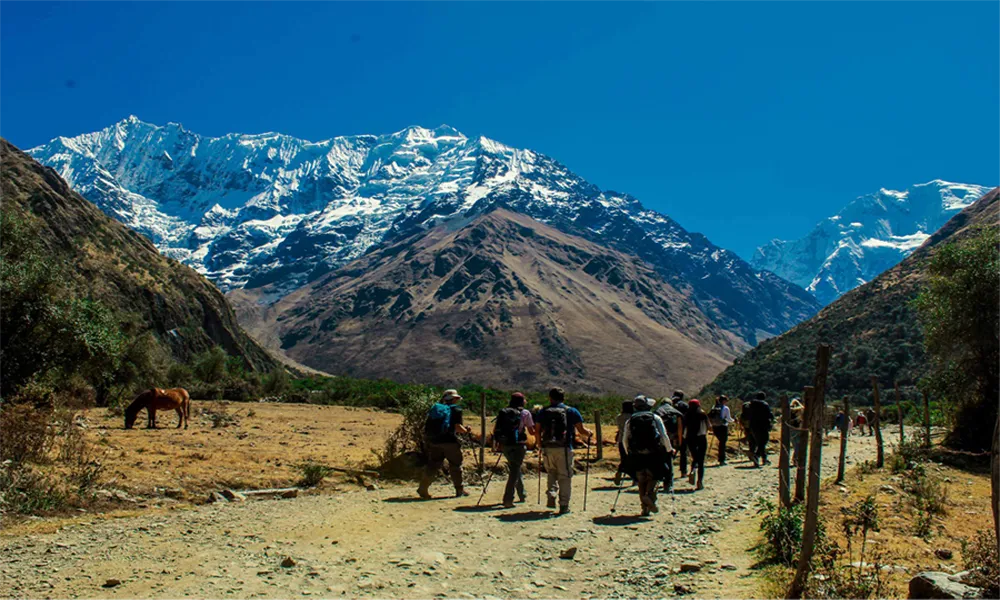
The Salkantay Trek does not have just one version. Depending on the agency, the itinerary, and the time available, the same route can be offered in three, four, or five days, with differences that go beyond duration and directly affect the on-the-ground experience. It is not just about compressing or extending the same content: each version has a different pace, a different level of daily demand, and a type of landscape that receives more or less attention depending on how many days are allocated to each section.
Choosing the right version without understanding those differences means risking finishing the trek with the feeling that something was missing or that the most worthwhile sections were rushed through. This guide clearly explains what each version includes, what is sacrificed in the shorter ones, and which traveler profile each option makes sense for.
The core that all versions share
Regardless of the duration chosen, there is one element that no version of the Salkantay Trek omits because it is the heart of the route: crossing Salkantay Pass at 4,630 meters, with the snowcapped mountain of the same name dominating the horizon. That pass and the descent that follows into warmer valleys define the identity of the trek and set Salkantay apart from any other route to Machu Picchu.
They also share the endpoint: the visit to the Inca citadel on the final day, with access from Aguas Calientes by bus and a guided tour through the archaeological site. And they share the starting point: the base camp at Soraypampa, at 3,900 meters, reached by vehicle from Cusco in approximately three hours.
What changes between versions is how much time is spent on the sections between those fixed points, how many additional days are added to explore Humantay Lake, the coffee valleys, or the river trail, and at what pace the most demanding day of the trek is approached.
Salkantay Trek in 3 days: the most compressed version
The three-day version is the shortest that operators regularly offer, and also the one that makes the most concessions in terms of enjoying the landscape. The itinerary compresses into three days what the standard version spreads over five, which means longer hiking days, less time to stop at points of interest, and a higher level of physical demand per day than any other variant.
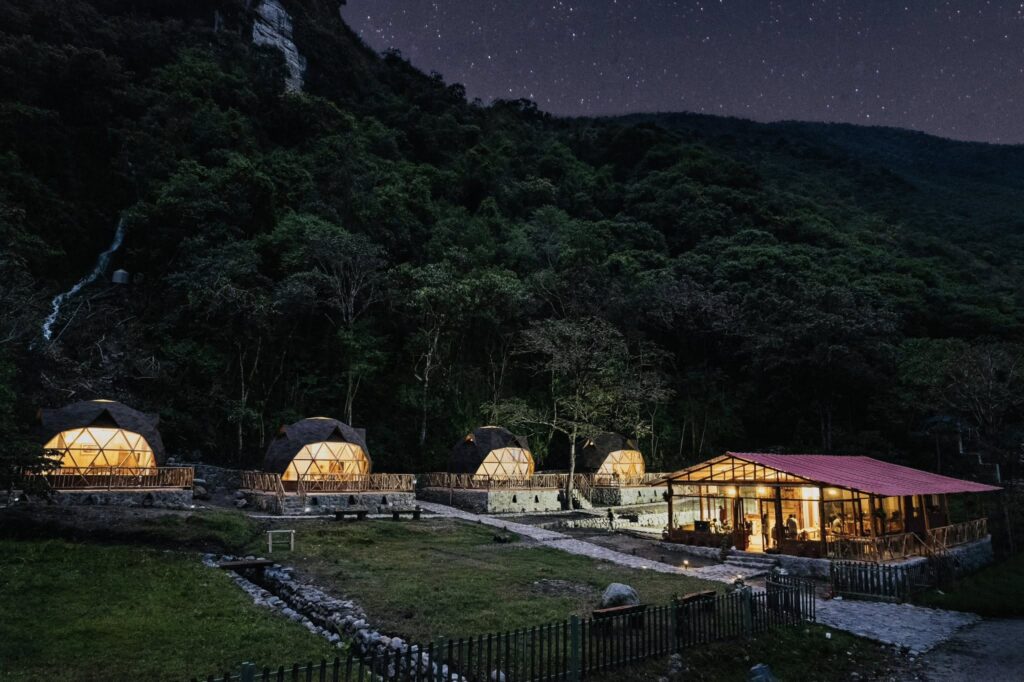
The first day includes the transfer from Cusco to Soraypampa, the hike up to Humantay Lake, and the first night at Ecolodge Majestic Sky Domes by IPT. The second day covers crossing Salkantay Pass and descending to an intermediate point in the valley, with a distance and elevation gain that, in five hours of hiking, concentrates the effort that in other versions is spread over two more gradual days. The third day covers the remaining stretch to Aguas Calientes and the visit to Machu Picchu.
For those who only have three days available and have the Salkantay Trek on their list as a non-negotiable experience, this version makes the most of the time available. But it is important to arrive with adjusted expectations: the pace is faster, there is less room to stop along intermediate sections, and arriving at Machu Picchu on the third day may coincide with a level of physical fatigue that reduces the energy needed to fully enjoy the visit.
The three-day version makes sense for people with previous experience in high-altitude trekking, good physical condition, and prior acclimatization in Cusco. For someone doing this type of trek for the first time, the three-day pace can feel excessive.
Salkantay Trek in 4 days: the middle ground
The four-day version is the one most operators offer as a more affordable alternative to the five-day itinerary, and it is also the one that generates the most mixed opinions among those who have done it. It works well for some traveler profiles and feels rushed for others, depending on how much each person values the quality of time spent in the intermediate sections.
The four-day itinerary is typically structured as follows: the first day covers the transfer to Soraypampa and the hike to Humantay Lake. The second day, after spending the night at Ecolodge Majestic Sky Domes by IPT, continues toward Salkantay Pass and descends to the camp at Chaullay or La Playa, covering the same terrain as the five-day version but without the additional stop in the coffee valley section. The third day continues to Aguas Calientes along the river. The fourth day is the visit to Machu Picchu.
What is lost compared to the five-day version is mainly the third day of the extended itinerary, which in the original plan is dedicated to the Santa Teresa valleys, with their coffee plantations, the Cocalmayo hot springs, and a more relaxed pace through the subtropical landscape. In the four-day version, that section is covered more quickly or directly combined with the second day’s descent, resulting in longer days and less time to observe the surroundings.
The four-day version is best suited for travelers with limited time who prioritize crossing Salkantay Pass and reaching Machu Picchu over fully exploring the intermediate valleys. It also works well for people with prior trekking experience who are comfortable with more intense days and do not need a slower pace to enjoy the journey.
Salkantay Trek in 5 days: the version that does justice to the route
The five-day version is the one most experienced Salkantay guides recommend when time allows, and the reason is not arbitrary. The Salkantay Trek is not just the pass crossing and the descent into the valley: it is the full transition between five different ecosystems that, over five days, can be experienced at the pace each one deserves. Compressing that transition into fewer days means rushing through sections that, in the extended version, become experiences with their own identity.
The five-day itinerary adds to the pass and valley days a full day dedicated to the Santa Teresa section, with time to explore the coffee plantations, stop at the Cocalmayo hot springs in the afternoon, and reach camp without the pressure of a longer day. This additional day also allows the body to recover part of the effort from the second day before tackling the final stretch to Aguas Calientes.
The fifth day, visiting Machu Picchu, comes with a more manageable level of physical fatigue than in shorter versions, which translates into better focus and enjoyment inside the archaeological site. Arriving on the final day less exhausted is not a luxury it is part of the experience you are paying for.
The five-day version is the most suitable for those doing Salkantay for the first time, for people without prior multi-day trekking experience, for groups with varying fitness levels, and for anyone who wants to come away with the memory of having enjoyed every section of the route, not just completed it.
The camp vs lodging variable: something that changes the experience
Regardless of the chosen duration, there is another variable that operators offer across all versions and that significantly changes the experience: staying in campsites or in accommodations in the villages along the route.
Camping is the most immersive option. Sleeping in a tent with the natural surroundings directly around you, without walls separating you from the landscape, creates a connection with the route that lodging in guesthouses or small hotels cannot replicate. Nights at Soraypampa base camp with Salkantay visible from the tent entrance, or at camps in the transition valleys with the sound of the river as background, are part of the full trekking experience in a way that participants in lodging-based versions sometimes describe as something they missed, even when staying in places like Ecolodge Majestic Sky Domes by IPT.
Lodging in the villages along the route is the more comfortable option: a bed, a bathroom with hot water, and a more controlled nighttime temperature than camping. For groups with older participants or specific rest needs, that comfort has a direct impact on energy levels for the following days. It is not a lesser option—it is simply a different way to experience the same route.
Some mixed versions combine one or two nights of camping with the rest in lodging, allowing travelers to experience both styles without fully committing to either. It is an option worth asking about if the group has divided preferences on this point.
How many days of acclimatization each version requires
Prior acclimatization in Cusco is necessary for any version of the Salkantay Trek, but the recommended number of days varies depending on the chosen itinerary length.
For the three-day version, where the daily effort is greater and the body has less time to recover between days, the minimum recommended acclimatization is two full nights in Cusco before departure. One night is not enough for a route that concentrates so much effort in so little time.
For the four-day version, two nights in Cusco are also the minimum reasonable recommendation. If there is the possibility to add a third night, the experience on the second day improves noticeably.
For the five-day version, two nights are sufficient for most healthy individuals without a history of altitude sensitivity. Three nights are recommended for people over 55, for those with high blood pressure, or for those who have experienced altitude sickness on previous trips at similar elevations.
Summary: which version fits which traveler profile
- 3 days: For travelers with high-altitude trekking experience, excellent physical condition, solid prior acclimatization, and strictly limited time. Not recommended for first-time multi-day trekkers or those without proper acclimatization.
- 4 days: For travelers with some mountain experience, good physical condition, and a preference for a more dynamic pace than the five-day version. Suitable for those who prioritize crossing the pass and reaching Machu Picchu over a slower exploration of the intermediate valleys.
- 5 days: For any traveler profile with enough time available. It is the version that does justice to the variety of the route, allows arrival at Machu Picchu with proper energy levels, and delivers the most complete and integrated trekking experience. It is the general recommendation for first-time Salkantay trekkers.
Do you have questions about which version of the Salkantay Trek best fits your available time, physical condition, and what you are looking for in the experience? At Incredible Peru Tours, we operate all three versions of the route and guide each group toward the most suitable option before confirming any booking.


