
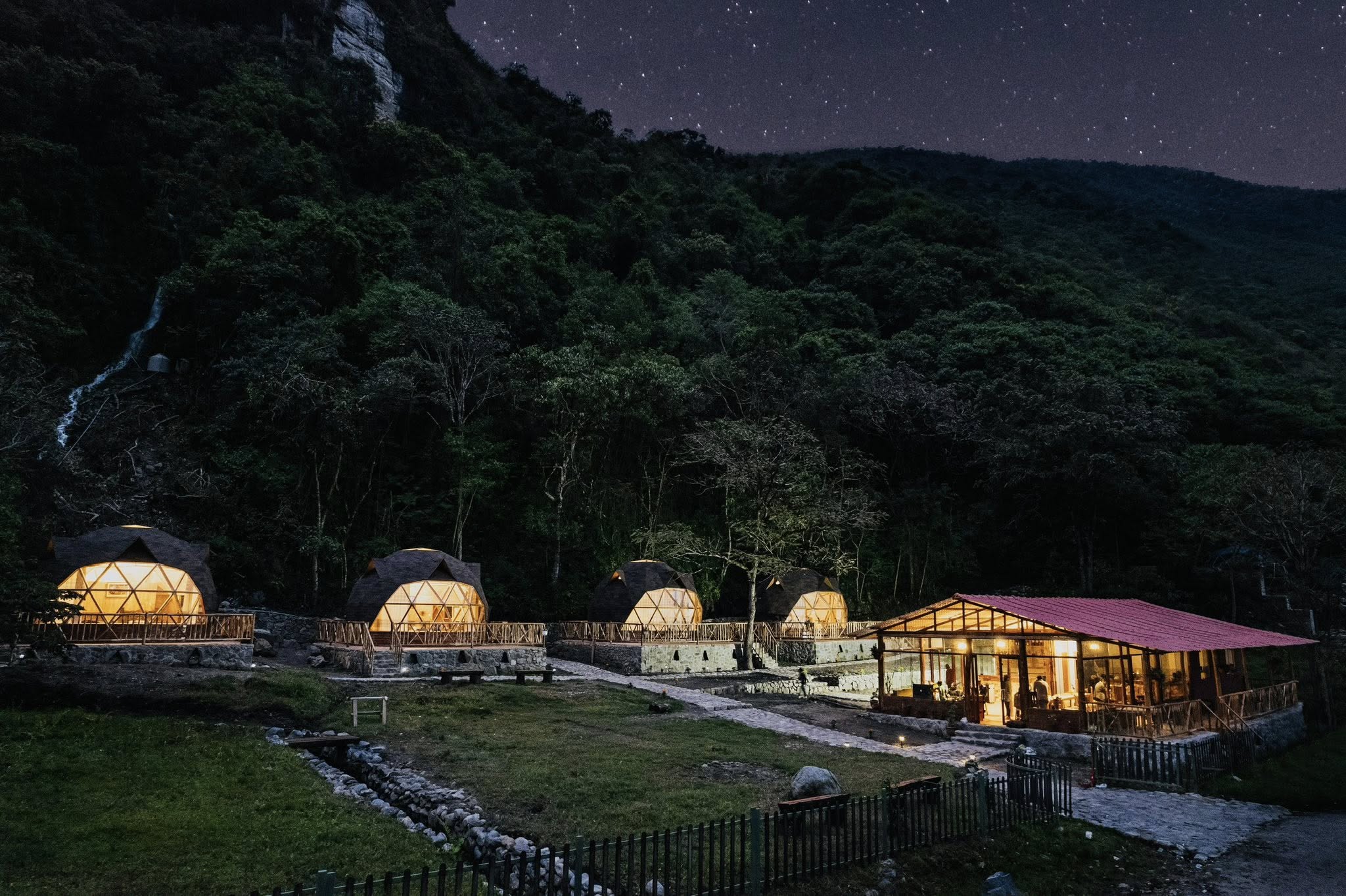
Doing the Salkantay Trek does not have to mean sleeping in a basic tent on the cold mountain ground. In recent years, a handful of operators have installed a series of domes and glamping shelters along the route that completely change the nighttime experience of the trek without altering a single meter of the daytime journey. The same crossing of Salkantay Pass, the same glacier, the same sunrise from 4,630 meters. But at the end of the day, a real bed, quality bedding, and a view of the snowcapped mountain from a transparent dome that turns the starry sky of the high Andes into the ceiling of your room.
For certain traveler profiles, that combination is not a luxury: it is the only way the Salkantay Trek makes sense. This guide explains exactly what the Salkantay domes are, where they are located, what they include, and who this type of experience is best suited for.
What the Salkantay domes are and how they work
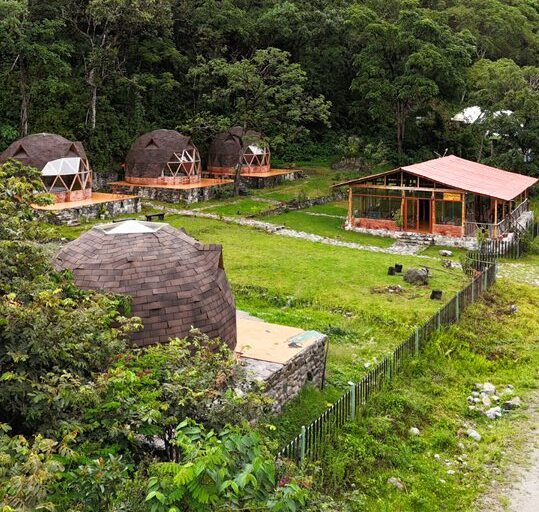
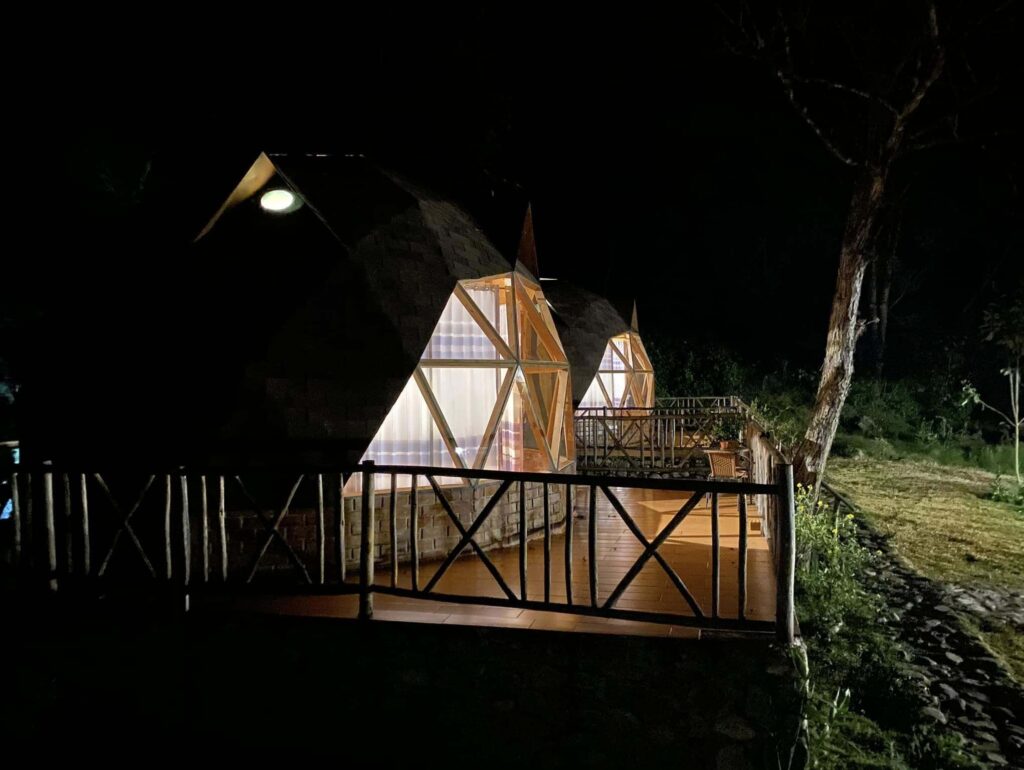
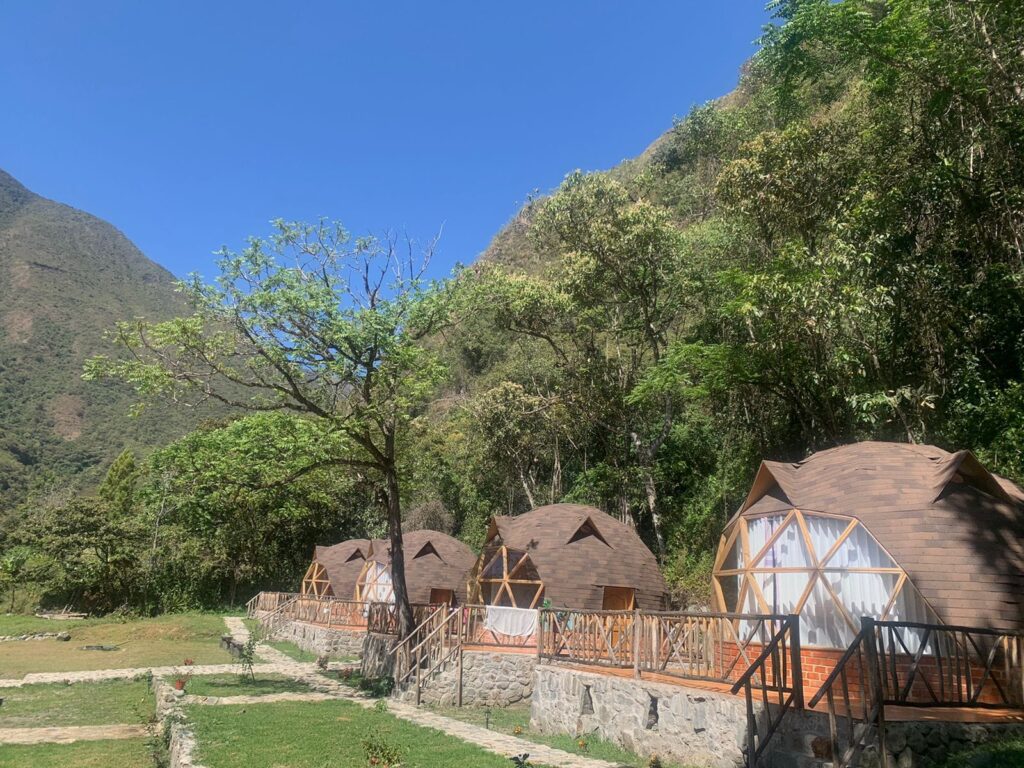
The Salkantay domes are glamping structures installed at strategic points along the route, designed to provide comfortable accommodation in the mountains without the drawbacks of a conventional tent. The main structure is a geodesic or semi-spherical dome with transparent panels at the top that allow you to see the night sky and surrounding landscape from inside the room. The interior is equipped with a double bed or twin beds depending on configuration, warm bedding suitable for high-mountain temperatures, interior lighting, and in some cases basic heating.
The most established dome complexes along the route are located in the areas with the greatest scenic value of the trek: near the Soraypampa base camp with direct views of the Salkantay snowcapped mountain and Humantay Lake, and in the intermediate valleys during the descent, surrounded by subtropical vegetation and the sound of the river at night. The location of each complex was chosen specifically to maximize the visual experience from inside the domes, especially at night and at sunrise.
Services at the dome complexes typically include meals in a covered dining area, bathrooms and hot showers, and in some cases common areas with views of the surroundings to relax between days. It is not the level of a city hotel, but it far exceeds what any standard camping tent offers at the same points along the route.
The experience of sleeping under the stars of the high mountains
The main reason domes have gained popularity among certain travelers is not just the comfort of the bed, although that matters too. It is the experience of lying inside a transparent structure with the Andean high-mountain sky directly above you.
At over 3,900 meters above sea level, in an area with no noticeable light pollution and with cleaner air than most people have ever breathed, the night sky has a density of stars that many travelers describe as the first time they truly see the Milky Way with their own eyes. From inside a dome with a transparent roof, that experience does not require stepping out into the cold night or waiting for your eyes to adjust to the darkness: it happens from the comfort of your bed, with proper warmth and without having to move.
At sunrise, the spectacle repeats with light. When the sun begins to touch the glaciers of Salkantay and the snowy summit changes color within minutes, those staying in the domes closest to the mountain have that view from their pillow. It is the kind of moment that cannot be precisely planned but, when it happens, becomes one of the clearest memories of the entire trip.
Domes in the Soraypampa section: the coldest and most spectacular night
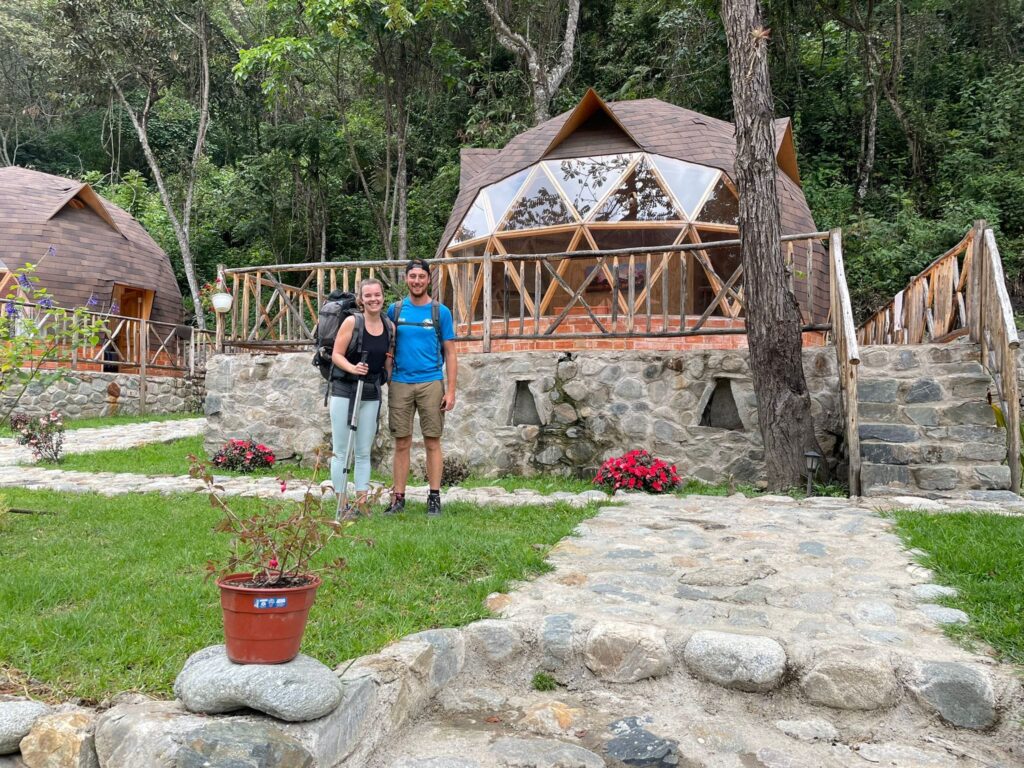
The complex Andean Cabins Eco Lodge Mama Andrea, located in Soraypampa, is one of the most attractive accommodation points along the route and one of those offering the most dramatic views of the Salkantay snowcapped mountain. Situated in the valley at 3,900 meters above sea level, it allows you to observe the north face of the mountain from the transparent panels of the domes when the sky is clear. It is also the highest point of the route and therefore where the lowest nighttime temperatures are recorded: at any time of year, nights in Soraypampa can drop several degrees below freezing.
The Andean Cabins Eco Lodge Mama Andrea at this point are equipped with bedding designed for these temperatures, and the dome structure creates a greenhouse effect that keeps the interior significantly warmer than a conventional tent. Even so, travelers who are highly sensitive to cold or have difficulty sleeping in low temperatures should consult the agency before booking to confirm that the dome equipment matches their personal tolerance.
Humantay Lake is about a 45-minute hike from Soraypampa, making Andean Cabins Eco Lodge Mama Andrea an ideal starting point to visit the lake either in the afternoon of arrival or early the next morning before beginning the ascent to Salkantay Pass.
Domes in the intermediate valleys: warmth, vegetation, and rest
The dome complexes installed in the transition valleys between the high mountains and the subtropical zone offer a completely different experience from Soraypampa. At altitudes between 2,000 and 2,800 meters, nighttime temperatures are significantly warmer, vegetation surrounds the domes with a lush green density that contrasts sharply with the base camp landscape, and the sound of the river in the valley replaces the silence of the high mountains as the nighttime atmosphere.
In these intermediate areas, some operators have installed domes with private terraces overlooking the canyon or valley, and in some cases with jacuzzis or outdoor soaking tubs that combine the warmth of the water with the cool mountain night air. This is the most luxurious end of glamping on the Salkantay, and while it is not within every budget, for those who include it in their itinerary, it often becomes one of the most memorable experiences of the trek.
Who the Salkantay domes are designed for
The glamping option on the Salkantay is not designed to replace camping but to offer a real alternative for those for whom traditional camping is not suitable for different reasons.
For couples who want to combine mountain adventure with nighttime comfort, domes are the most suitable option available. The experience of sharing a view of the snowcapped mountain from a double bed has a romantic dimension that no camp, no matter how well organized, can offer.
For travelers over 50 or 55 with lower tolerance to cold nights or with more demanding rest needs than a camping mat allows, domes make the difference between a trek that can be enjoyed and one that can only be endured. Sleep quality in high mountains has a direct impact on physical performance the next day, and that impact is especially significant on the second day of the Salkantay, the most demanding of the route.
For those traveling to the Andes for the first time without prior mountain camping experience, domes reduce the adaptation curve to field conditions without removing the immersion in the natural environment that is the main value of the trek.
And for anyone who simply prefers to sleep well in any context and is willing to pay for it without reducing even slightly the demands of the daytime trek, domes are exactly the right answer.
Price: what is the difference compared to standard camping
The price of dome packages is higher than that of standard camping packages, and that difference reflects the real cost of maintaining glamping infrastructure in remote high-mountain locations accessible only on foot. Installation, maintenance, equipment transport, and service staff at these locations involve logistical costs that do not exist in a conventional tent camp.
The price difference varies depending on the operator, the level of dome equipment, and the services included in each complex. As a general reference, dome packages can cost between 40% and 80% more than the equivalent camping package, depending on the category and the number of glamping nights included.
For those evaluating whether that difference is worth the investment, the most useful question is not whether domes are “better” than camping, but whether nighttime comfort has real value in their travel experience. For those who sleep poorly in cold conditions and know it will affect their performance the next day, the investment in domes is worthwhile in terms of overall experience quality. For those who sleep well in any condition and value the immersion of camping over comfort, standard camping makes perfect sense.
How to book and what to check before confirming
The Salkantay domes cannot be booked individually: they are part of full packages that include guide, meals, and transportation from Cusco, just like standard camping packages. When booking, it is important to verify the following points with the agency to avoid surprises on the trail.
The first is the temperature equipment of the domes in the Soraypampa section. Each operator has different specifications regarding the level of insulation provided by the structure and the bedding included. Asking what temperatures the domes are designed for and whether the equipment is sufficient for the expected conditions on your travel dates is something worth confirming before booking.
The second is the number of dome nights included in the package. Some operators combine one or two nights in domes with the rest in standard camping. Others offer domes at all overnight points along the route. Knowing exactly where you will stay in domes and where in tents allows you to adjust your expectations for each night of the trek.
The third is the cancellation policy in case of extreme weather conditions. Domes are exposed to mountain weather just like any other field accommodation, and in situations of very strong winds or heavy snow, the operator may need to relocate guests to alternative facilities. Understanding that policy before confirming avoids misunderstandings if conditions require a change of plan.
Do you want to experience the Salkantay Trek with dome accommodation and the level of service that type of experience deserves? At Incredible Peru Tours, we offer Salkantay packages with glamping at the best locations along the route, with guides specialized in the trek and all logistics coordinated from Cusco.


