
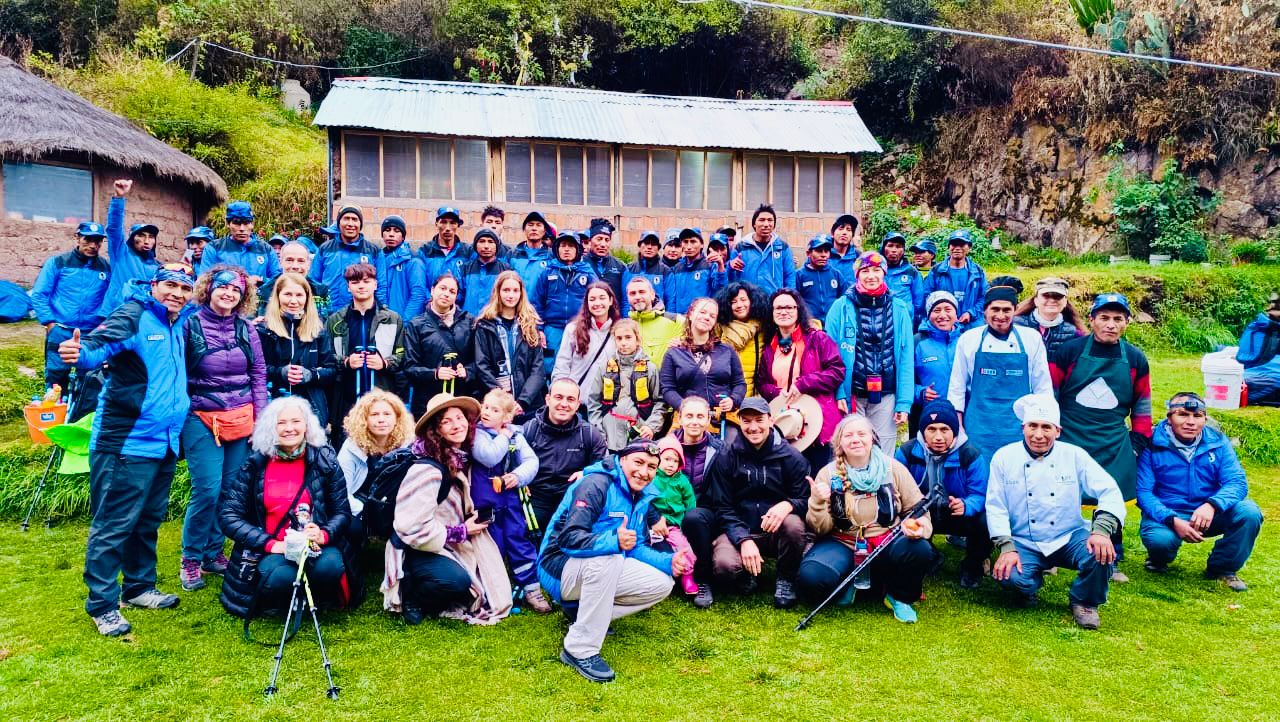
Anyone who does the Salkantay Trek with an organized agency hikes with a daypack weighing between 5 and 8 kilograms during the walking hours. The full camping equipment, tents, sleeping pads, portable kitchen, food for five days, and the cook’s equipment are carried by other people who move along the same trail with loads between 15 and 25 kilograms and, on most days, reach the campsite before the group they are supporting. These people are the porters and muleteers of the Salkantay Trek, and this guide explains who they are, what they do exactly, and why their work is the most decisive yet least visible part of the journey.
The difference between porters and muleteers on the Salkantay Trek
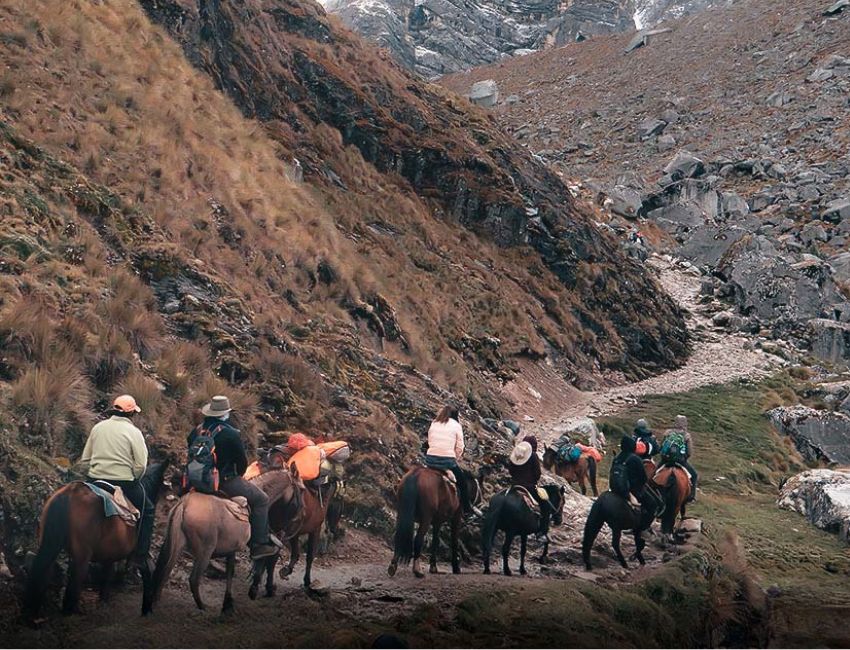
On the Inca Trail, all equipment is carried by porters on foot because the historic Inca path does not have sections accessible to pack animals. The Salkantay Trek follows a different logistical logic: part of the route, especially the initial sections and some areas of the intermediate valleys, is accessible to mules and horses. This has led many operators to use muleteers with pack animals instead of, or in addition to, porters on foot.
Muleteers are the handlers of the mules or horses that transport equipment along the sections where the terrain allows it. They are not cowboys or shepherds: they are specialists in managing pack animals in high-altitude Andean environments, with knowledge of animal behavior in those conditions that has taken them years to develop. The relationship between a muleteer and his mule has a dimension of mutual trust that becomes visible on the most difficult stretches of terrain, when the animal makes decisions about where to place its hooves and the muleteer respects those decisions because he knows the animal understands its own limits better than anyone.
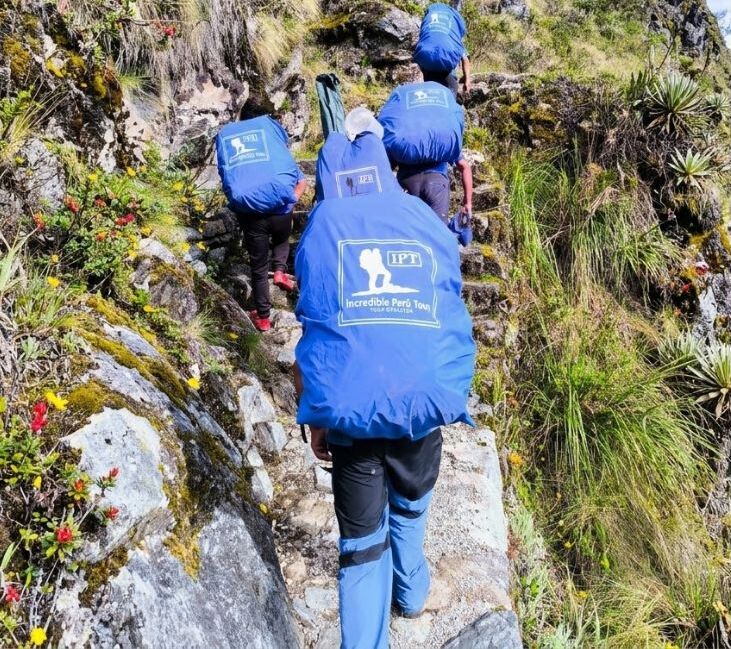
Porters on foot on the Salkantay Trek mainly work on the higher-altitude or more technical sections where mules cannot or should not carry loads. Some operators combine muleteers for the lower sections and porters for the high-mountain sections, transferring the load between the two teams at transition points.
What they carry and how much it weighs
The equipment carried by the Salkantay Trek support team includes everything that makes camping and feeding the group possible throughout the five-day route. Two- or three-person tents, insulated sleeping pads, sleeping bags if provided by the agency, the dining and kitchen tent, portable gas stoves with their fuel canisters, complete cooking utensils, food for all meals over the five days, purified water or the means to purify it, and the personal equipment of the cook and the porters themselves.
The maximum weight per porter on the Salkantay Trek is not regulated by law in the same way as on the Inca Trail, where the Porter Law sets a limit of 20 kilograms per person. However, responsible operators voluntarily apply similar criteria, limiting individual loads to between 20 and 25 kilograms for porters and distributing the weight among enough team members so that no one carries more than what is reasonably manageable in high-altitude conditions.
In lower-priced Salkantay Trek packages, cost reductions are often reflected in fewer people on the support team, which means a heavier load per individual. That is one of the specific questions that we at Incredible Peru Tours recommend asking any operator before booking: how many people make up the support team for the number of participants in the group.
Who the Salkantay porters and muleteers are
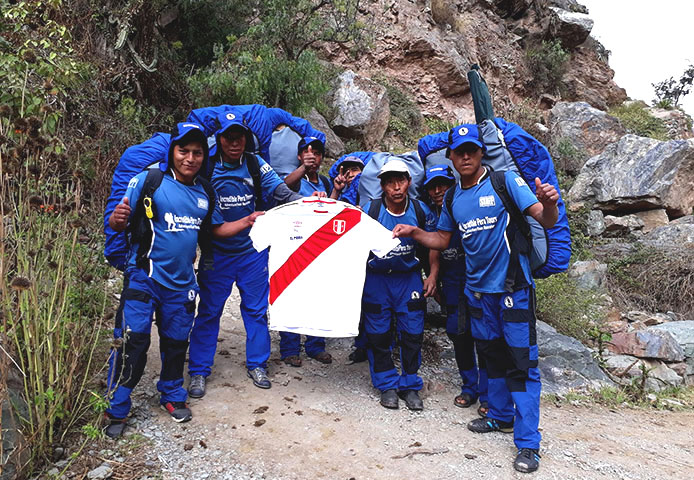
Most Salkantay Trek porters and muleteers come from Quechua-speaking communities in the Sacred Valley and areas surrounding the route. They are mostly men between 20 and 50 years old, with a physical ability to adapt to altitude and mountain load-carrying work that is difficult to fully understand from the perspective of a traveler hiking with only a daypack.
For many of them, working on the Salkantay Trek is the most significant source of income during the tourist season. Sacred Valley communities have mixed economies where subsistence farming, local trade, and work in the tourism sector coexist in ways that vary depending on the family and the time of year. The highest-demand season for Salkantay, from May to August, partly overlaps with the most active agricultural period, which means some porters combine both activities by alternating weeks in the fields with weeks on the trail.
Muleteers have an additional relationship with the land that porters on foot do not always have: they are the owners or caretakers of the pack animals, which means that working on the Salkantay Trek not only generates income but also supports their families’ livestock activity. A muleteer who works regularly on the Salkantay Trek is directly financing the raising of mules and horses, which represent family capital accumulated over years.
What the support team does while the group hikes
The work dynamic of the Salkantay Trek support team follows a rhythm that participants rarely see in full because it happens alongside the trek itself and, to a large extent, before the group reaches the next point.
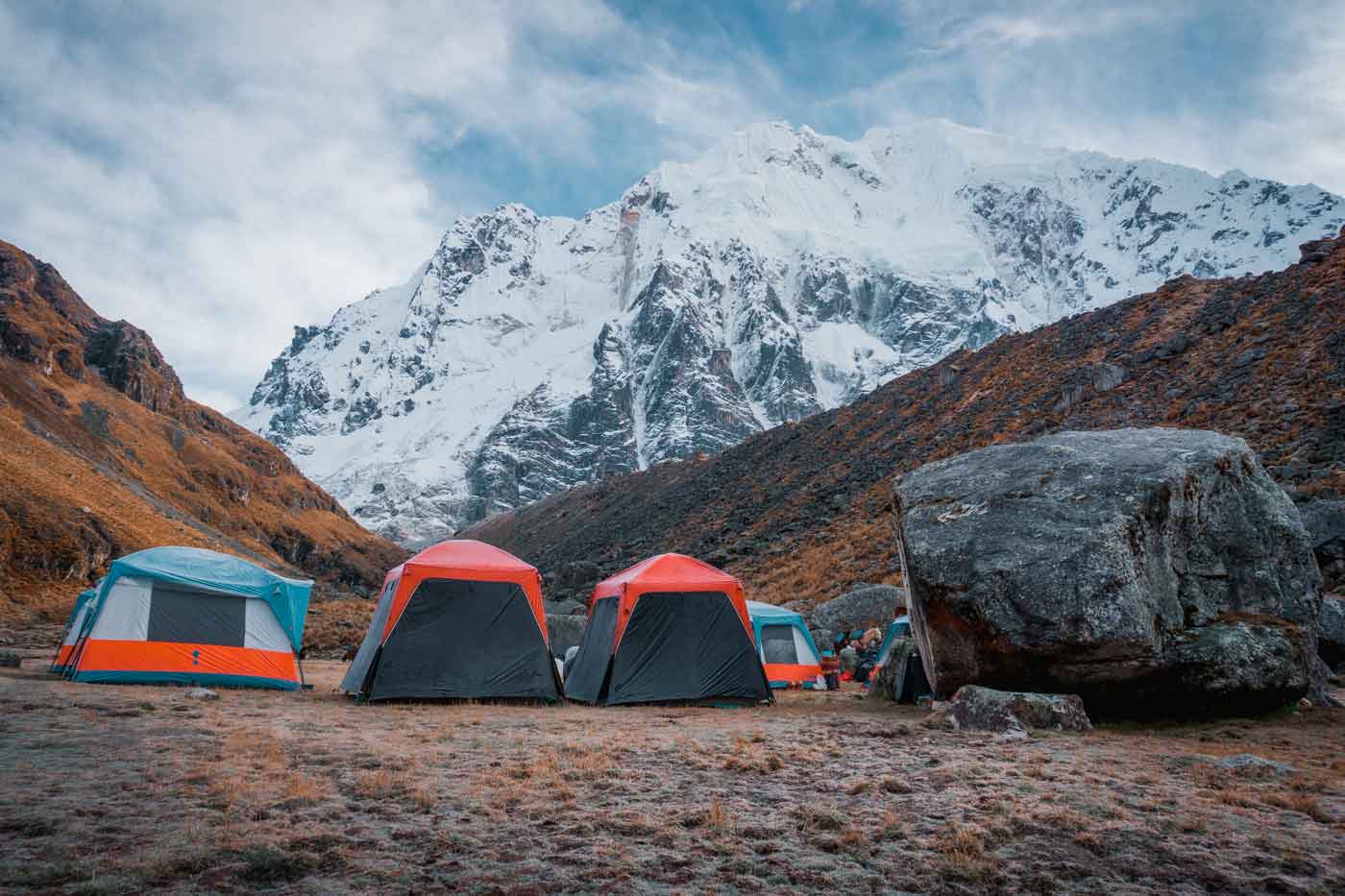
On a typical day of the trek, the support team wakes up before the group, takes down the campsite, distributes the loads, and heads toward the next point on the itinerary while the group is still having breakfast or just starting to walk. On sections where muleteers can move faster than the group on foot, they arrive at the destination campsite early enough to set up the tents, install the kitchen, and have food ready by the time the group appears on the horizon.
That timing is one of the elements of the service that most impresses Salkantay Trek participants, especially on the second day when the group arrives exhausted at the Chaullay campsite and finds the tents already set up, hot water ready, and dinner being prepared. The contrast between the effort the group has just made and the efficiency of the team that arrived first and already has everything organized creates an impression that needs no explanation.
Working conditions: what distinguishes a responsible operator
The Salkantay Trek does not have the specific labor regulation of the Inca Trail, where the Porter Law establishes minimum wages, maximum load weight, and mandatory accident insurance. This lack of regulation means that working conditions for support teams vary more widely among Salkantay operators than on the Inca Trail, and that the responsibility of choosing an operator who treats their team well falls more heavily on the traveler booking the service.
A responsible operator on the Salkantay Trek pays wages within or above the market range, provides accident insurance for the team during working days, does not exceed reasonable load limits per person, includes transportation for the team back to their communities at the end of the trek, and provides meals for the team during the trekking days. These conditions have a cost that a responsible operator includes in the package price, and that an operator who does not meet them uses to offer a lower price.
At Incredible Peru Tours, we work with the same teams of porters and muleteers on a recurring basis, which allows us to maintain long-term relationships with people we know by name and whose families know our agency. That continuity is not just a business practice: it is the way tourism can have a real and sustained impact on the economies of the communities that make the trek possible.
How to interact with the support team during the trek
For many Salkantay Trek participants, porters and muleteers are people who appear from time to time on the trail carrying more than seems humanly reasonable and who are already at the campsite before the group arrives. The language barrier, which in many cases is not only Spanish but Quechua as the team’s first language, can limit the interaction to a gesture of thanks and little more.
However, the guide is the bridge that makes a richer interaction possible if the participant is interested. Guides with years of experience on the Salkantay personally know many of the team’s porters and muleteers, know their families, and can provide context about the communities they come from, transforming the five-day experience from something purely logistical into something with a real human dimension.
One of the interactions most remembered by participants in Incredible Peru Tours groups is the informal tipping ceremony at the end of the route, when the guide introduces each member of the team individually, mentions something specific they did during the trek, and the group has the opportunity to thank them directly. That moment, brief and without protocol, closes the trek with a dimension that photographs of Machu Picchu do not capture, but that for many participants is just as memorable as the archaeological site.
Do you have questions about the Salkantay Trek support team or about the working conditions under which we operate at Incredible Peru Tours? Write to us before booking, and we will inform you about the team that works with us, their conditions, and how we make sure the trek has a positive impact on the communities that make it possible.


