

After two days in the high mountains, crossing the Abra de Salkantay with the cold of the pass and the long hours of steep descent that leave their mark on your legs, arriving at the Cocalmayo hot springs at dusk on the third day creates a contrast that few travel experiences can match. The natural hot water at nearly thirty degrees Celsius, the pools beside the river, the sound of the current, and the subtropical vegetation enclosing the space from every side are the sequence of images that many Salkantay Trek participants remember as clearly as the snowy pass itself.
This guide explains everything you need to know about the Cocalmayo hot springs: where they are, how to get there from the route, what they offer, how much they cost, and why this point on the trek deserves more attention than it usually receives in route descriptions.
Where the Cocalmayo hot springs are and how to get there from the trail
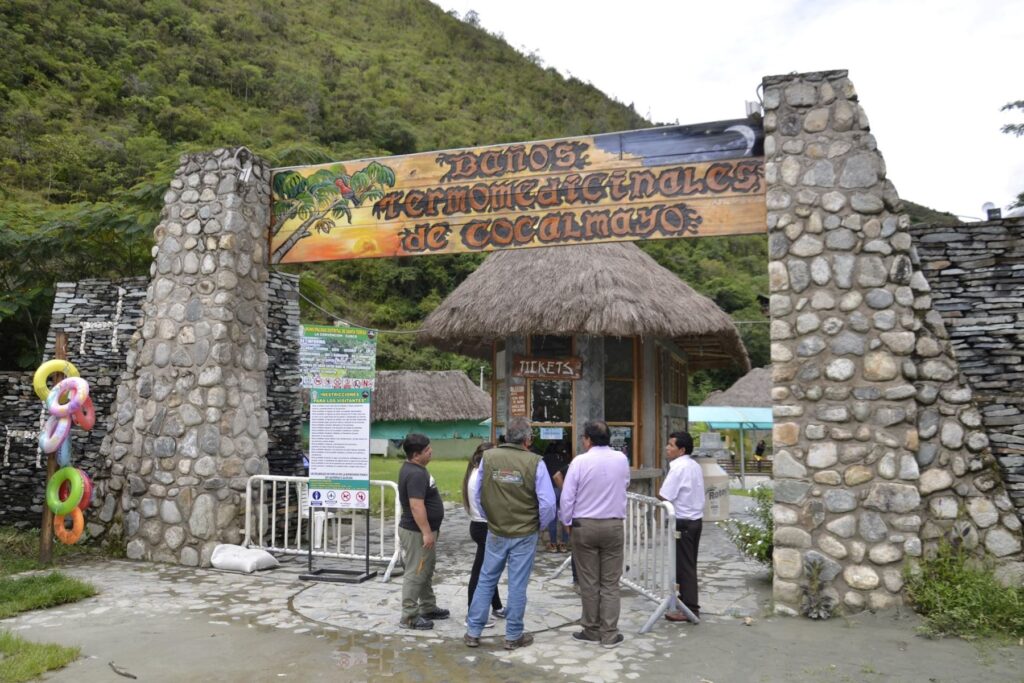
The Cocalmayo hot springs are located in the district of Santa Teresa, in La Convención Province, in the Cusco region, at about 1,580 meters above sea level. The complex sits on the bank of the Santa Teresa River, at a point where the valley opens up slightly and the subtropical vegetation creates a naturally private setting around the facilities.
From the Salkantay Trek trail, the hot springs are a short distance from the point where the third day of the route reaches the Santa Teresa area. Depending on the agency’s specific itinerary and the exact point where the day’s hike ends, access to the hot springs can be on foot in just a few minutes or by a short mototaxi ride from the center of town. Most Salkantay Trek operators include the stop at Cocalmayo in the third-day itinerary, either as part of the package or as an optional add-on for a very small extra cost.
Access to the complex has an entrance fee that varies slightly depending on the season and the type of visitor, but in all cases it is very affordable. Some Salkantay Trek packages include it directly in the price of the trek. If it is not included, it is paid at the entrance to the complex in cash, in Peruvian soles.

What the facilities are like and the water temperature
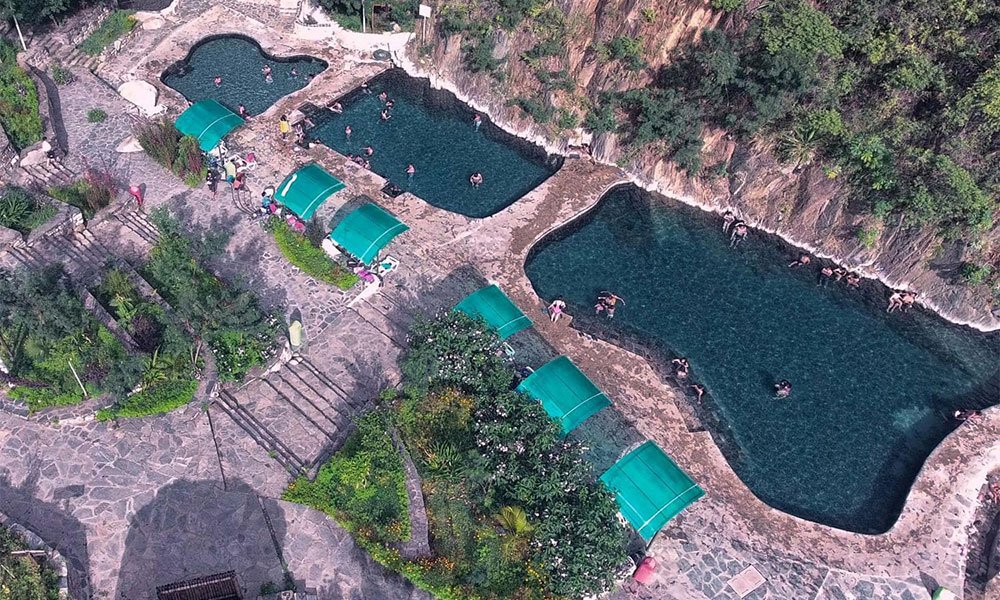
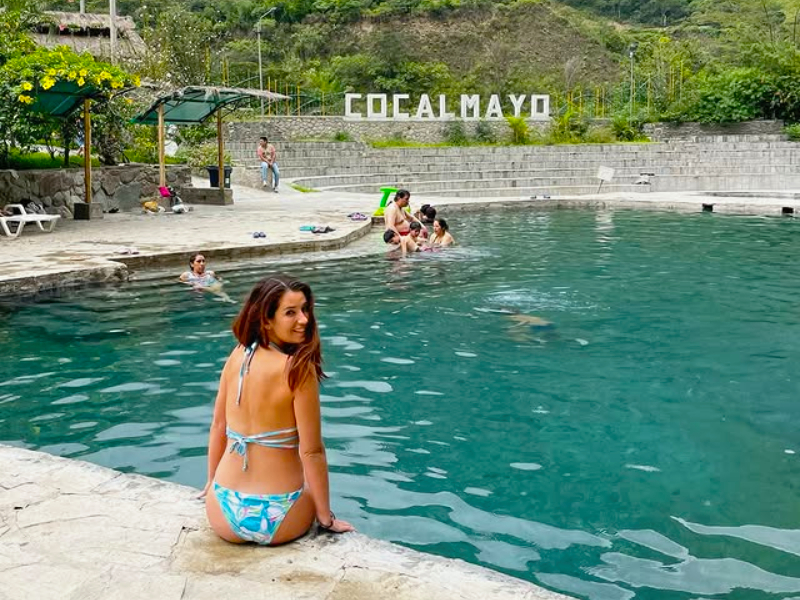
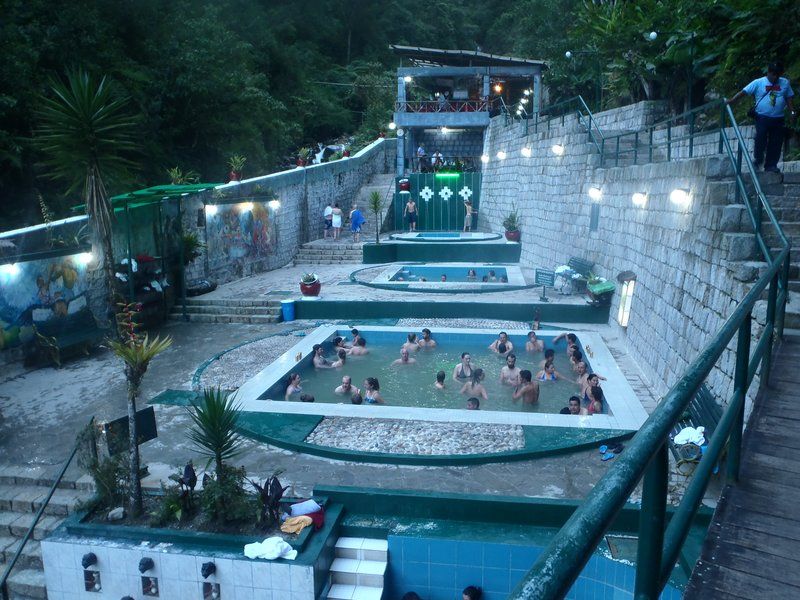
The Cocalmayo complex has several pools of different sizes built at different levels along the riverbank, with a design that takes advantage of the natural slope of the land to create a tiered layout for the facilities. The pools are fed by thermal springs that emerge in the area at a source temperature above forty degrees Celsius and usually stabilize in the pools between 27 and 35 degrees Celsius depending on the flow and the specific pool.
The contrast in temperature between the different pools is one of the most appreciated features of the complex. The smaller, better-insulated pools maintain the highest temperatures, while the larger ones with greater exposure to the river stay at more moderate temperatures. Alternating between pools of different temperatures after days of effort on the Salkantay has an effect on the muscles and circulation that goes beyond simple relaxation: it is a form of active recovery that the body appreciates with noticeable effectiveness the next day.
The facilities include changing rooms, cold and hot showers, and a bar and dining area where you can get drinks and snacks. The quality of the facilities is that of a well-maintained rural tourism complex, not a luxury spa, and that is exactly what fits the spirit of the setting and of the route that comes before it.
The time of day: why the afternoon is the perfect hour
Most Salkantay Trek groups arrive at the Cocalmayo hot springs in the middle of the afternoon, usually between 3:00 and 5:00 pm, which is exactly when the experience has the most value. At that hour, the sun still partially lights the canyon, and the contrast between the warmth of the water, the afternoon air, and the sound of the river creates an atmosphere that simply does not exist in the same way early in the morning.
The last rays of sunlight on the pool water and the vegetation surrounding the complex create a warm light that makes the moment photographically very special, with that kind of sunset light that makes photos turn out well almost regardless of the framing. It is a detail that Salkantay participants with a photographic sensibility tend to value especially after two days in which the altitude and physical effort did not always leave time for slow observation.
The hot springs also operate at night during some periods of the year, with artificial lighting throughout the complex. That nighttime experience, with the sound of the river amplified by the darkness and the contrast between the heat of the water and the cool subtropical night air, has its own appeal, although it is different from the late afternoon experience with natural light.
Why this moment matters more than it seems in the context of the trek
The stop at Cocalmayo is not just a physical break between the third and fourth day of the Salkantay. It is also a psychological transition that closes the most demanding chapter of the route and prepares the mind for the final day toward Aguas Calientes and the visit to Machu Picchu the following day.
There is something about the combination of hot water, well-earned fatigue, and natural surroundings that creates a calm that is difficult to achieve in any other context. The conversations that happen in the pools of Cocalmayo at the end of the third day of the Salkantay, when the group has shared the effort of the second day and the descent into the valleys, have a quality and ease that the setting encourages in a way that is hard to explain but easy to recognize once you experience it.
For participants doing the Salkantay Trek in private service, that moment at Cocalmayo can have an additional dimension of intimacy that shared groups do not always allow. Sharing that pause with the people you chose to bring on this trip, in that setting and after that route, creates the kind of memory that is not planned in advance but becomes one of the most lasting of the entire trip.
What to bring to make the most of the visit
Getting ready for Cocalmayo is simple, but it does require having packed the right items for the trek from the beginning. The most basic item, and the one most often forgotten, is swimwear. It always appears as a recommended item in Salkantay Trek gear lists, but in practice some participants arrive at Cocalmayo without it and have to go in wearing sports clothes, which works but limits the experience.
A compact microfiber towel is the second item that makes a difference: it takes up almost no space in the backpack, weighs less than two hundred grams, and allows you to dry off properly before putting on your change of clothes to continue to the campsite or accommodation. Conventional cotton towels absorb well, but they are heavy and take up space that it is not reasonable to dedicate to that purpose in a backpack for a five-day trek.
Bringing a clean change of clothes for after the hot springs is a small detail that noticeably improves comfort for the rest of the day. Arriving at the third day’s accommodation in fresh clothes after spending time in the pools closes the day with a feeling of recovery that no conventional shower can replicate exactly.
Cocalmayo vs. Aguas Calientes: two hot springs with different personalities
Travelers doing the Salkantay Trek also visit Aguas Calientes when they reach the end of the fourth day, and that town has its own hot springs with the same name, which are the best known in the region because of their easy access from the train station. The comparison between the two complexes is inevitable for anyone who knows them both.
The hot springs in Aguas Calientes are larger, easier to access, and more crowded. They are in the center of a town with constant tourist traffic, and at certain times of day they have a level of occupancy that reduces the relaxation experience. The infrastructure is more developed and the services are more varied, but the natural atmosphere surrounding Cocalmayo does not exist in Aguas Calientes, which is surrounded by buildings and urban services.
Cocalmayo is smaller in scale, has an untouched natural setting, and a clientele made up mostly of trekking participants passing through the area, which gives it a more intimate and less crowded character than the hot springs in the base town for Machu Picchu. Both have value in the context of the trip, but the moment when Cocalmayo appears, at the end of the warmest and most demanding third day of the Salkantay, gives it an emotional advantage that the hot springs of Aguas Calientes simply cannot have because they come at a different point in the route.
Practical information for the visit
The Cocalmayo hot springs usually open from 5:00 in the morning until 9:00 or 10:00 at night, although schedules may vary during lower seasons or due to facility maintenance. It is recommended to confirm the schedule with the agency before departure in order to adjust the planning for the third day of the trek.
The entrance fee for foreign travelers is affordable, and in many Salkantay Trek packages it is included directly in the price of the route. If it is not included, it is paid in cash at the entrance. There is no card payment option at the complex or in the immediate surroundings, so bringing Peruvian soles in cash from Cusco is necessary for any small expense in the towns along the route, including this one.
The nearby facilities, including a few small restaurants and shops in Santa Teresa, make it possible to eat something after the hot springs before continuing to the third day’s accommodation. Trout from the Santa Teresa River, prepared grilled or in garlic sauce in one of those local dining spots, is a good option to end the day with something nutritious and representative of the valley’s local cuisine.
Do you want to do the Salkantay Trek with the stop at Cocalmayo fully integrated into the itinerary and with all the time needed to enjoy it without rushing? At Incredible Peru Tours, we coordinate each day of the route so that moments of rest carry the same weight in the experience as the most demanding ones.


