
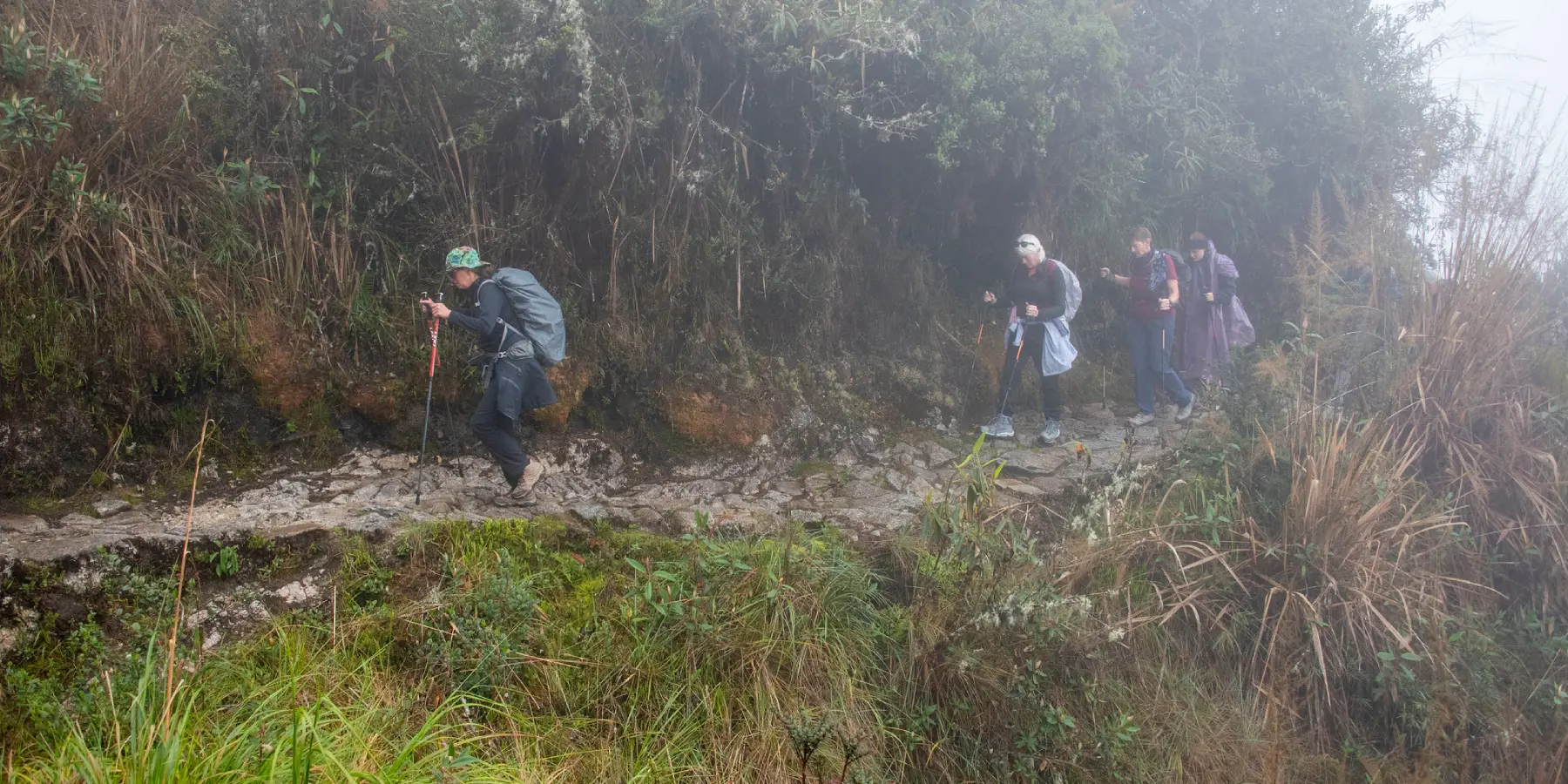
The question always comes from the same place: the dates are already fixed, the flight is booked, and the only available month falls right in the wet season. Is it worth doing the Inca Trail in the rain, or is it better to wait? The answer most travel sites give is always the same: better in the dry season. That is only half true. And half-truths, when you are planning one of the most important experiences of your trip, are not very useful.
This guide is not written to discourage you or to convince you at all costs. It is written to give you the real information you need to make an informed decision about whether the Inca Trail in the wet season makes sense for you, your group, and the kind of experience you are looking for.
What “rainy season” really means on the Inca Trail
Rainy season does not mean constant rain twenty-four hours a day, seven days a week. That is the most widespread misunderstanding and the one that leads the most travelers to rule out this time of year without really understanding it. The actual weather pattern in the Inca Trail area during the wet months from November to March works in a much more nuanced way.
Mornings, especially the first hours of the day, are usually the most stable. Departure from camp before 7:00 am is often done under overcast skies or low fog, but rarely in heavy rain. As the morning progresses, the temperature rises and the sky may clear for varying periods. The heaviest rainfall tends to concentrate in the middle hours of the afternoon and during the night, precisely when the group is already at camp and the hiking day has ended.
This is not a weather guarantee: there are days when it rains from dawn, and there are consecutive weeks with exceptional conditions. But the general pattern favors the mornings, and Inca Trail treks are designed to take advantage of that: early departures are not an arbitrary custom but a weather strategy that works year-round, and especially in the wet season.
What the rain does to the Inca Trail landscape
There are images of the Inca Trail in the dry season that are known all over the world: blue sky, golden stones in the sun, snow-capped peaks in the background. They are beautiful. But there is another Inca Trail that almost no one photographs because very few people see it: the one from November to March, when the vegetation surrounding the trail reaches an intensity that no editing filter can reproduce.
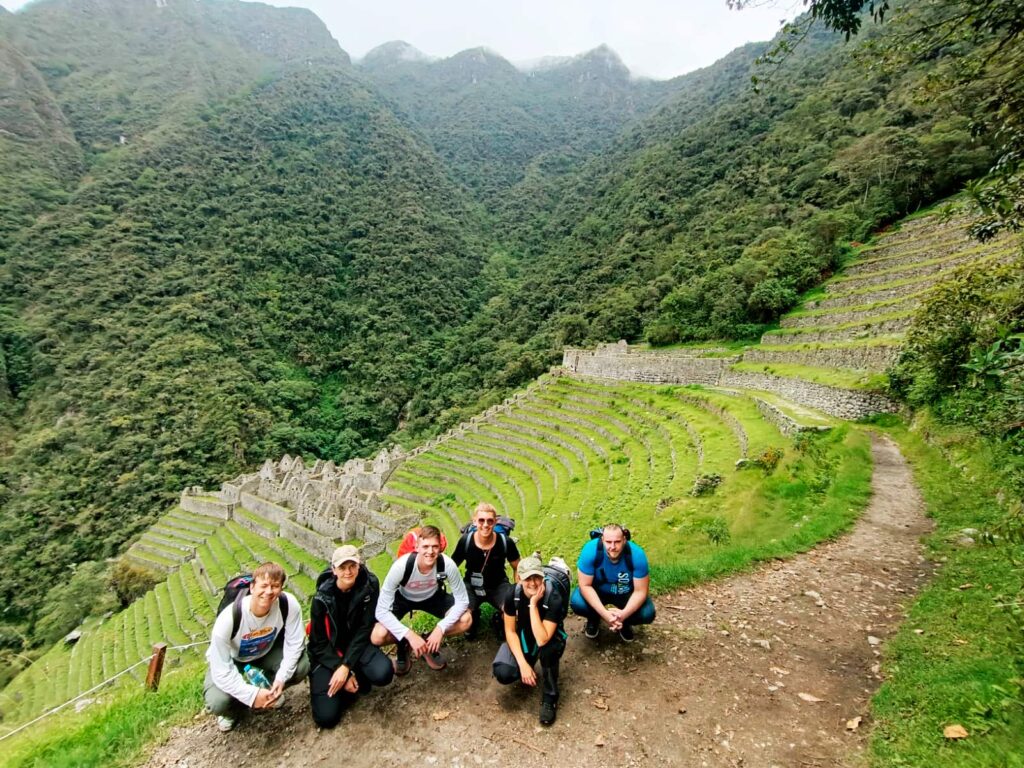
The wild orchids that give Wiñay Wayna, the most important archaeological site on the final stretch, its name bloom precisely at this time. The mosses covering the Inca stones shine with a color saturation that the dryness of winter completely dulls. The streams that in August are barely a thread of water between the rocks, in January run with enough volume to hear them from the trail before reaching them. The low fog that wraps sunrise over Machu Picchu from the Sun Gate, so iconic in site photography, is also a direct result of the moisture of this season.
For anyone traveling with a camera or simply with visual sensitivity, the Inca Trail in the wet season offers a completely different palette from summer. It is neither better nor worse: it is another landscape on the same trail, and it has its own kind of beauty that many travelers who have done the route in both seasons describe as wilder, deeper, and harder to forget.
The real risks you need to know
That said, there are specific risks of the wet season on the Inca Trail that deserve honest attention and cannot be minimized just to make the article sound more optimistic than reality justifies.
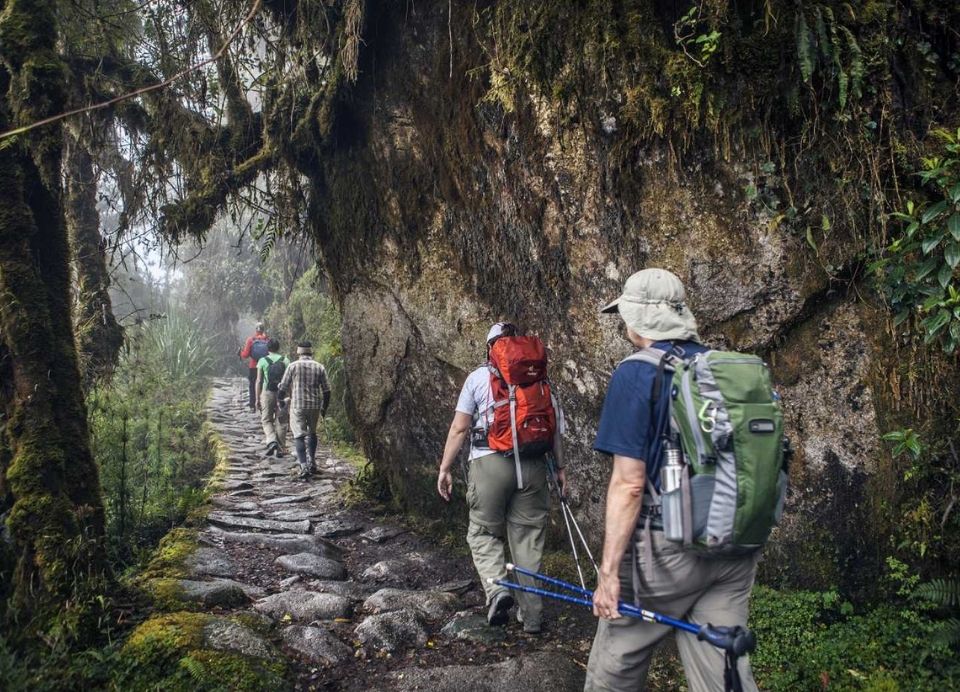
The terrain becomes more demanding. Wet Inca stone and sections of muddy ground can make some parts of the trail considerably more slippery than in dry conditions. The descending stairways between Phuyupatamarca and Wiñay Wayna, which already require attention in the dry season, demand footwear with real grip, trekking poles, and a more cautious pace in the rainy season. It is not an impossible risk, but it is one that must be respected.
Visibility at the mountain passes can be zero. Warmiwañusca Pass, the highest point of the Classic Inca Trail at 4,215 meters, can be completely covered by clouds on the wettest days. Reaching the summit of Dead Woman’s Pass and seeing nothing beyond a few meters of fog is a real possibility that must be accepted. For those whose main photography goal is that panoramic view from the highest point, the wet season means accepting that it may not be available on the day they cross that section.
Damp cold is harder to manage than dry cold. The nights at the second- and third-day campsites are milder in absolute temperature than in July or August, but the humidity in the air makes that difference less noticeable than the thermometers suggest. Technical clothing that retains warmth even when wet merino wool or quick-drying synthetic fibers is essential. Cotton, in these conditions, is a problem.
What specific advantages going in the wet season has
Beyond the landscape, doing the Inca Trail in the rainy season has logistical and economic advantages that are very real and, for certain traveler profiles, decisive.
Entry permits are available in a way that does not exist in high season. In July or August, getting a spot on the Inca Trail with less than four months of advance notice is almost impossible. In November or January, the same reservation can be arranged in weeks, sometimes in days. For travelers with flexible itineraries or those who make travel decisions on short notice, that availability is a concrete advantage that completely changes how accessible the route is.
Package prices also drop noticeably outside the high season. Agencies operating the Inca Trail during the wet months offer more competitive conditions precisely because demand is lower. For the traveler who wants to maximize service quality within a given budget, the rainy season allows access to package categories that in July would be out of range.
The solitude on the trail is another element that travelers who have done the route in both seasons mention consistently. The Inca Trail in August can feel like an organized procession: groups leaving at the same time, full campsites, and the constant presence of other trekkers at scenic viewpoints. In the wet season, there are entire sections of the route where the group does not cross paths with anyone for hours. For those who value the feeling of being in an authentic territory rather than in a crowded tourist attraction, that difference is considerable.

The gear that changes everything in this season
The difference between a memorable experience and a miserable one on the wet Inca Trail is not the weather: it is the gear. With the right equipment, the same rainy days that can ruin one person’s trek are perfectly manageable for another. These are the items that do not allow compromises:
- Technical-quality rain jacket, not a plastic poncho: A rain jacket with a breathable membrane, Gore-Tex or equivalent, keeps water out without creating interior condensation. The disposable ponchos sold in Aguas Calientes can handle a short downpour but fail in prolonged rain or wind. For four days on the trail, it is not an expense you can skip.
- Waterproof trekking boots with grippy soles: A Vibram sole or similar is what makes the difference on wet stone and mud. A running shoe with a smooth sole on a soaked Inca stairway is a combination with direct consequences. Footwear should be broken in before the trip.
- Gaiters: They cover the space between the boot and the pants and keep mud and water from getting in from below. They are light, inexpensive, and completely underrated by travelers seeing them for the first time.
- Waterproof backpack cover: The backpack should stay covered at all times when it rains. Camera, documents, change of clothes, and sleeping bag cannot get wet. An integrated cover or a dry bag inside solves the problem.
- Merino wool or synthetic thermal base layers: The first layer is the most important. It must stay dry on the inside even if it gets wet on the outside, and dry quickly for the next day’s hike.
- Trekking poles: In the wet season they stop being optional. The support they provide on slippery descents significantly reduces the risk of falls and also relieves the knees on long stairways.
What people who have already done it say: the real experience
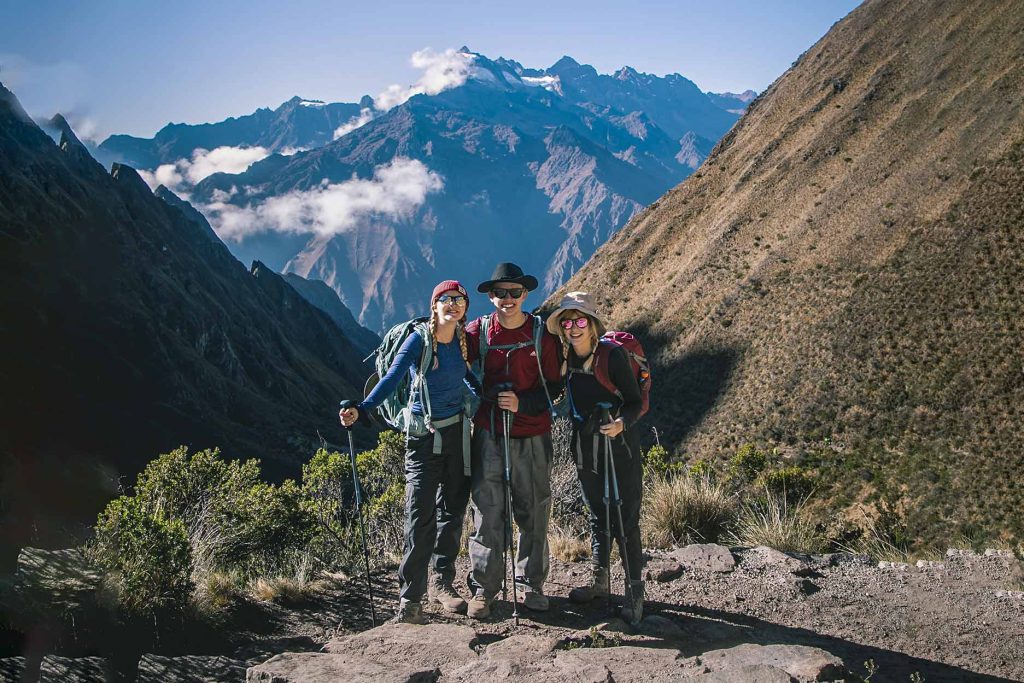
Testimonials from our travelers with Incredible Peru Tours who have completed the Inca Trail in the wet season share a fairly consistent pattern. Most describe the experience as more difficult than expected in terms of dealing with the weather, but also as more authentic and intimate than the stories they had read from those who did it in July. The feeling of being alone on the trail, seeing the Wiñay Wayna archaeological site without lines or crowds, and reaching the Sun Gate with fog moving around them appears again and again in those stories as something that could not have been bought in high season at any price.
What also repeats, almost without exception, is the importance of gear. Those who arrived with a good rain jacket, technical boots, and an adaptable attitude describe the same days that ruined the experience of those who arrived with cotton clothing and athletic shoes. The Inca Trail in the wet season does not forgive lack of preparation, but it generously rewards those who arrive with what they need.
Verdict: is it worth it or not?
It is worth it under three conditions.
First: that you arrive with the right gear, with no compromises on the items that matter most.
Second: that you have the open mindset to accept that the weather may change the conditions of the day and that this is not a failure but part of the journey.
Third: that you value solitude, green landscapes, and the wilder dimension of the trail as much as or more than clear skies and guaranteed panoramic views.
If those three conditions are met, the Inca Trail in the rainy season is not a second option: it is an experience with its own identity that, for many travelers, feels more powerful, more honest, and harder to forget than the summer version. The trail is the same. The Inca stone, the same. The arrival at Machu Picchu through Inti Punku, exactly the same. What changes is everything around it, and that, depending on who you are as a traveler, may be exactly what you were looking for.
Do you have dates in the wet season and want to know whether your specific window is viable for hiking the Inca Trail? At Incredible Peru Tours, we know the month-by-month weather patterns and can guide you with real information before you make any decision. Write to us with your dates and we will review together whether the route makes sense for your group.


