
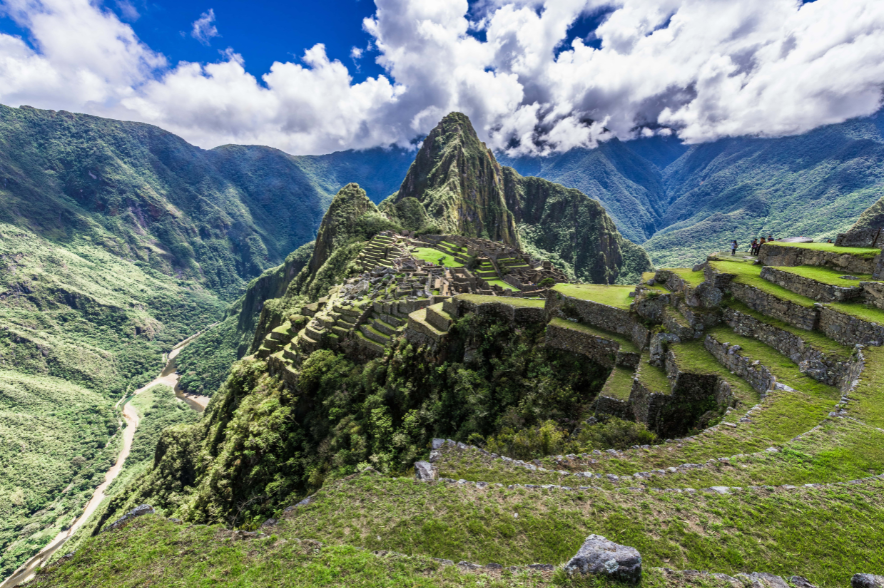
At Machu Picchu, you cannot walk freely throughout the entire citadel: your ticket assigns you a circuit and route, which determines where you can take your photos. If you dream of capturing the classic postcard view, with the citadel below and Huayna Picchu in the background, you need a circuit that takes you to the upper section. If you prefer photographing the temples and Inca stone walls up close, another circuit will be a better choice.
In this guide, we’ll show you what photos you can take on each of the three available circuits and how to make the most of the new 2027 schedules to reach each viewpoint with good lighting.
Circuit 1: The Highest Views of Machu Picchu
Circuit 1, known as the Panoramic Circuit, offers the most elevated viewpoints. All its routes lead up to the upper platform near the Guardhouse, so any of them will give you that classic postcard photo. What changes from one route to another is the additional viewpoint you can visit afterward.
The Guardhouse: The Classic Postcard View
From this stone building at the top of the agricultural terraces, you can see the entire citadel with Huayna Picchu rising behind it. This is the image featured in almost every travel guide. You’ll reach it after climbing stairs for about 30 minutes from the entrance, and the route allows only a short stop at the viewpoint, so have your camera ready before you arrive.
Machu Picchu Mountain (Route 1-A)
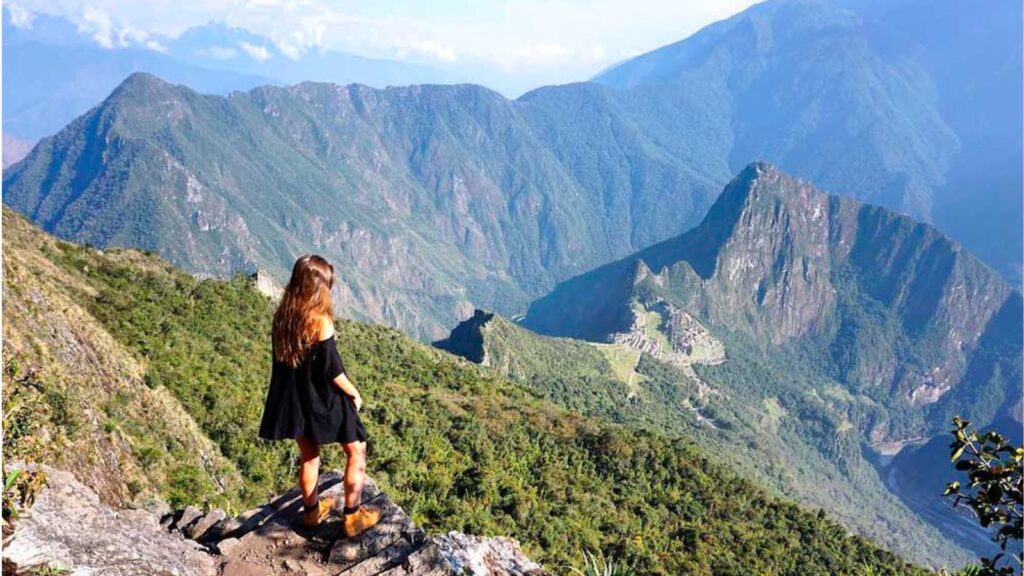
From the summit, at approximately 3,082 meters (10,112 feet) above sea level, the citadel looks small among the surrounding mountains, while the Urubamba River winds along the bottom of the canyon. This is the widest panoramic view you can capture of the sanctuary. In 2027, you must enter the trail by 10:00 a.m., so plan your hike to reach the summit after the clouds have started to clear.
Intipunku and the Inca Bridge (Routes 1-C and 1-D)
The Sun Gate gives you the same view enjoyed by travelers arriving along the Inca Trail: the citadel straight ahead in the distance, after a round-trip hike of approximately 2 hours. If you like the idea of experiencing that unforgettable arrival, the 2-day Short Inca Trail ends right at this point.
The Inca Bridge, on the other hand, reveals a section of trail carved into a rock face, with a steep drop below. It’s a completely different photo, without the citadel, and often surprises visitors who have already seen the classic postcard countless times. Both routes are available depending on the season, so check their availability on TuBoleto before purchasing your ticket.
Circuit 2: The Classic Postcard View and Temples in One Route
Circuit 2, known as the Classic Circuit, is the most popular because it combines an elevated viewpoint with a walking tour through the interior of the citadel. Tickets for this circuit sell out earlier than those for other circuits, especially between June and August.
Platform Below the Guardhouse (Route 2-A)
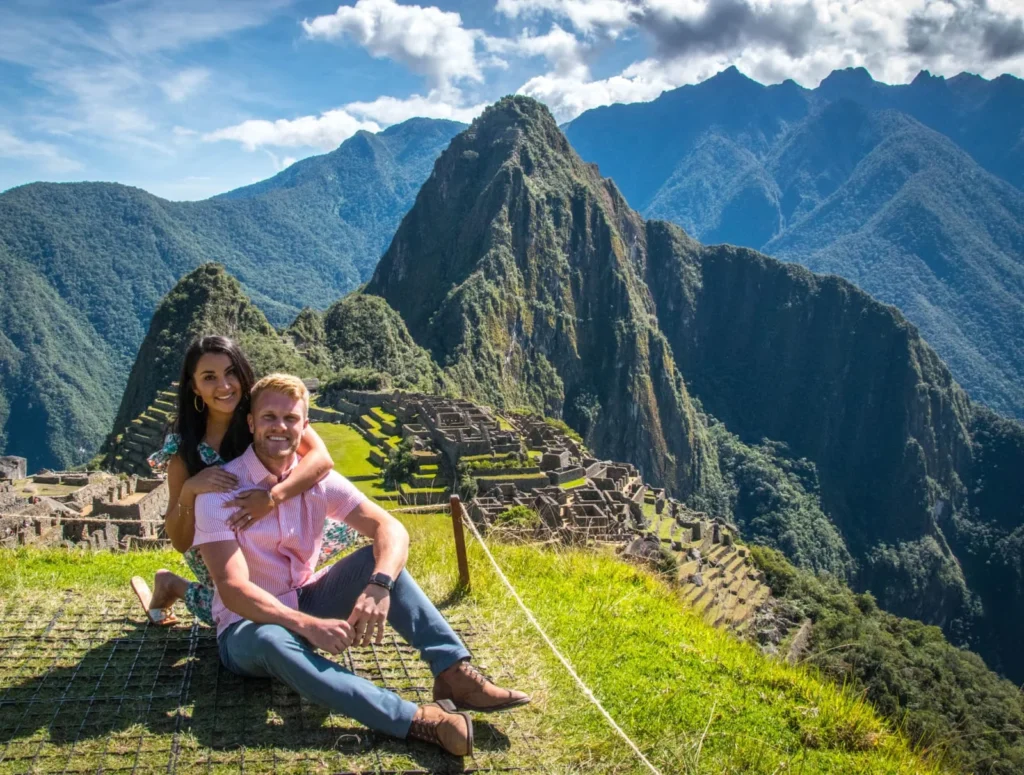
Route 2-A begins with a detour toward the agricultural terraces near the Guardhouse. From there, you can take a photo very similar to the classic postcard, just from a slightly lower position, with the citadel and Huayna Picchu in the same frame. If getting the classic photo is your priority and you also want to explore the temples, this is the route you’re looking for.
Lower Terraces (Route 2-B)
Route 2-B does not climb to the Guardhouse area. Instead, it offers a lower perspective of the agricultural terraces, where the stone terraces fill the foreground and the citadel appears closer. This viewpoint works especially well for vertical photos and portraits.
Inside the Citadel
Both routes take you through the religious and urban sectors. These are the places most worth photographing:
- Temple of the Sun: its curved wall of polished stone looks best in the side lighting of mid-morning.
- Temple of the Three Windows: frame the mountains through the stone openings.
- Intihuatana: the carved stone at the top of a terraced pyramid, overlooking the neighboring mountains.
- Main Plaza: the green open space with Huayna Picchu in the background, often with llamas grazing nearby.
Circuit 3: Huayna Picchu and the Buildings of Inca Royalty
Circuit 3, known as the Royalty Circuit, explores the lower section of the citadel, so it does not include the classic postcard viewpoint from the Guardhouse. However, it makes up for this with photo opportunities that few visitors experience: views of the citadel from the opposite side and close-up details of the buildings once used by the Inca elite.
Huayna Picchu Summit (Route 3-A)
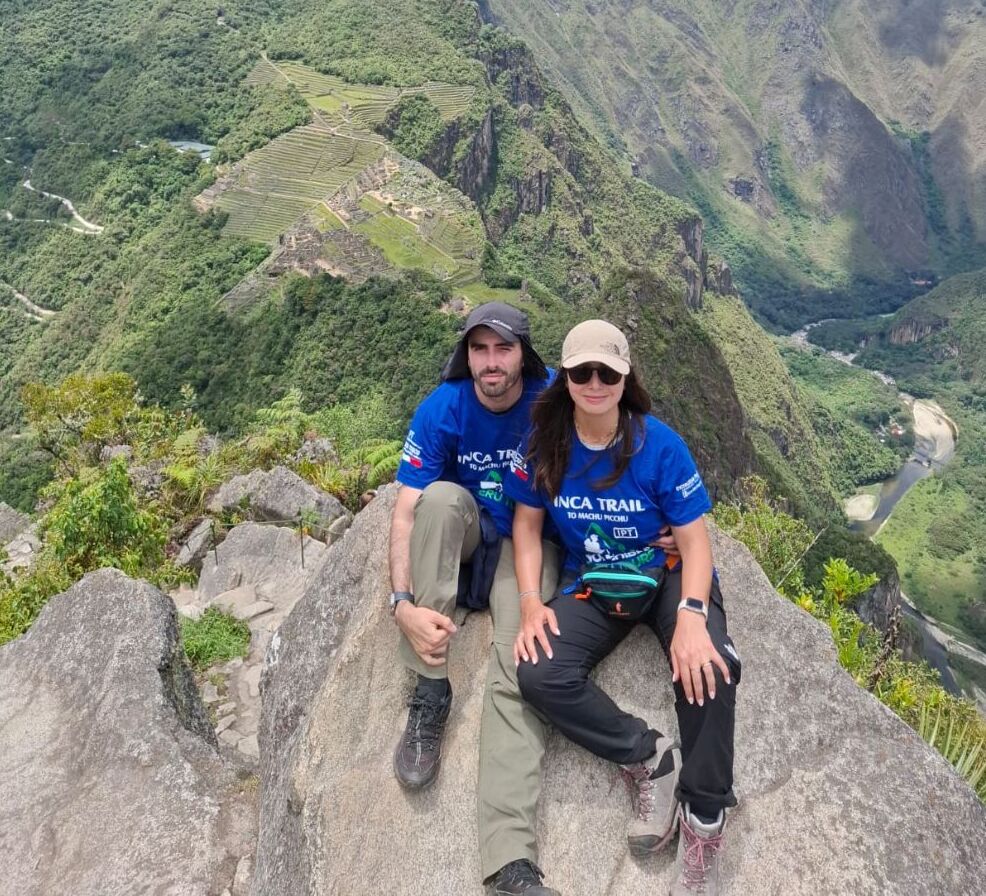
From the top of Huayna Picchu, at approximately 2,720 meters (8,924 feet) above sea level, you can see the entire citadel from above, with Machu Picchu Mountain behind it and the winding bus road zigzagging down the hillside. It’s the classic postcard view in reverse, and for many visitors, the best photo of the sanctuary. With mountain entry allowed until 10:00 a.m. in 2027, an early entry time gives you more time at the summit to wait for the clouds to clear.
Temple of the Condor and House of the Inca (Route 3-B)
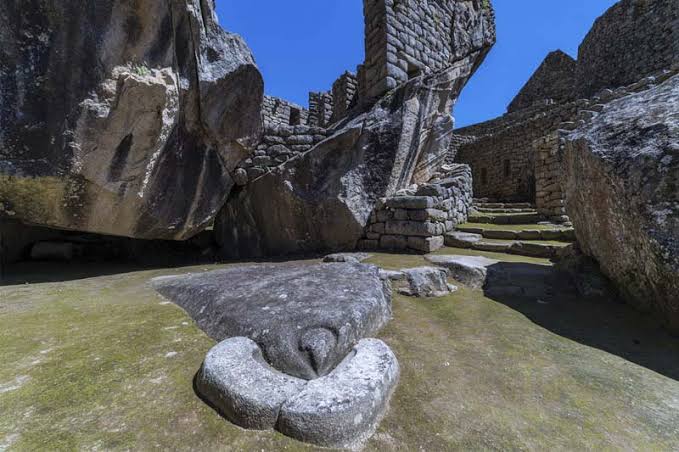
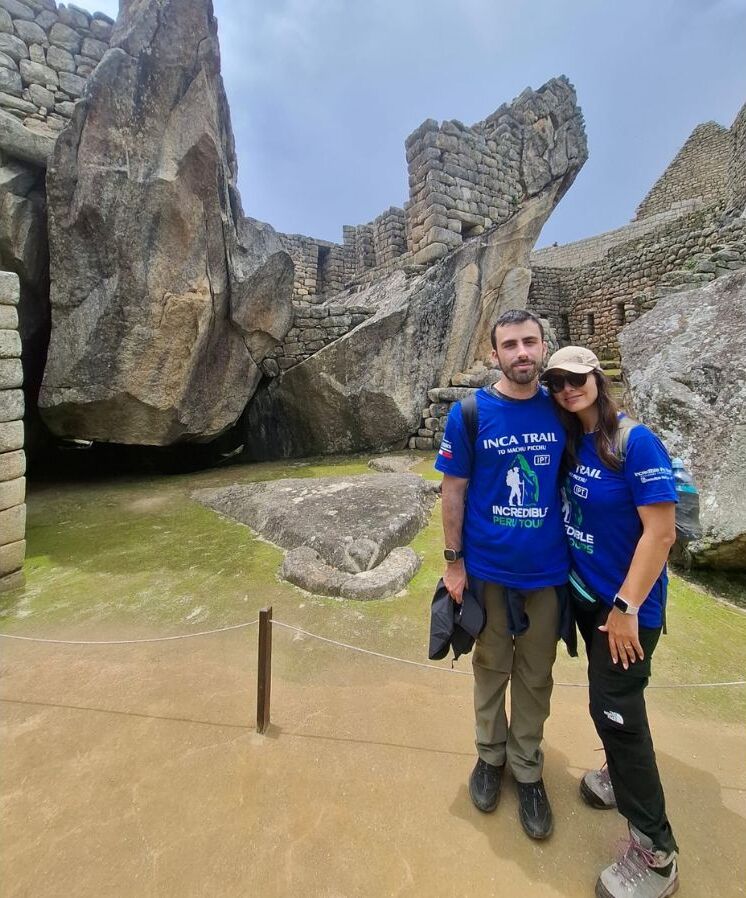
At the Temple of the Condor, natural rock formations resemble wings, while a carved stone on the ground represents the bird’s head. The best photo is taken from a low angle, close to ground level. The House of the Inca and the water fountains offer excellent opportunities for detailed photographs: perfectly fitted stone walls, carved water channels, and trapezoidal doorways.
Great Cavern and Huchuy Picchu (Routes 3-C and 3-D)
The Great Cavern takes you to the Temple of the Moon, a natural cave containing finely carved Inca stone walls. Lighting is dim, so increase your camera’s ISO sensitivity or use your phone’s night mode. Remember that this route is only available during peak season.
Huchuy Picchu is the small peak located in front of Huayna Picchu. The climb is short, and from the top, you get a close view of the citadel at nearly eye level, without the physical demands of climbing a larger mountain.
Which Circuit Should You Choose Based on the Photo You Want?
If you already know what kind of photo you want to take, this table will help you choose the right ticket.
| Photo You Want | Circuit and Route | What You’ll See |
|---|---|---|
| The classic postcard view from above | Circuit 1 (any route) | The entire citadel with Huayna Picchu in the background, viewed from the Guardhouse |
| The postcard view and the temples up close | Circuit 2, Route 2-A | A view similar to the classic postcard and a tour through the Temple of the Sun and Intihuatana |
| The widest panoramic view of the sanctuary | Circuit 1, Route 1-A | The citadel appearing small among the mountains and the Urubamba River |
| The citadel from the opposite side | Circuit 3, Route 3-A | Machu Picchu from the summit of Huayna Picchu |
| The arrival view from the Inca Trail | Circuit 1, Route 1-C | The citadel in the distance from the Sun Gate |
| Stone details and temples of Inca royalty | Circuit 3, Route 3-B | Temple of the Condor, House of the Inca, and water fountains |
Tips for Photographing Machu Picchu in 2027
Lighting and weather are just as important as your chosen circuit when it comes to the quality of your photos. With the new 2027 schedules, which limit mountain entry to 10:00 a.m., planning your entry time becomes an essential part of capturing the perfect shot.
Choose Your Entry Time with the Morning Mist in Mind
Early in the morning, the citadel is often covered by clouds that gradually lift as the morning progresses. An early entry gives you the opportunity to capture mist drifting between the peaks, while a mid-morning visit offers a better chance of clear skies. If you don’t want to leave it to chance, a one-day Machu Picchu tour with a coordinated entry time takes that decision off your hands.
Make the Most of Each Season
Between May and September, the dry season brings clearer skies and vibrant colors. From November through March, rain is more frequent, but the agricultural terraces become greener, and the mist gives the citadel a mysterious atmosphere.
Bring Only What You Can Use
Tripods, selfie sticks, and drones are not allowed, so your smartphone or a lightweight camera will be your best companions. Bring an extra battery, since there are no places to charge your devices inside the sanctuary, and protect your equipment with a waterproof cover during the rainy season.
Frequently Asked Questions
Which Circuit Offers the Classic Machu Picchu Photo?
Circuit 1, on any of its routes, takes you up to the Guardhouse, where the classic postcard photo is taken. Route 2-A of Circuit 2 provides a very similar view from a slightly lower platform.
Does Circuit 3 Offer Good Photo Opportunities?
Yes, although it does not include the classic postcard view from above. Route 3-A lets you see the citadel from the summit of Huayna Picchu, while Route 3-B allows you to photograph the Temple of the Condor and the House of the Inca up close.
How Long Can I Stay at a Viewpoint?
The route follows a one-way path, and sanctuary staff manage the flow of visitors, so stops at the viewpoints are brief. Have your camera ready before you arrive to make the most of your time there.
What Time of Day Has the Best Lighting for Photos at Machu Picchu?
By mid-morning, the mist has usually cleared, and the side lighting highlights the stone walls. The early morning hours are ideal if you’re looking for photos with clouds drifting between the mountains.
Can I Use a Drone or Tripod at Machu Picchu?
No. Drones, tripods, and selfie sticks are not permitted inside the sanctuary.


