
Arriving at the capital of the Inca Empire is a dream for thousands of travelers. Its cobblestone streets, living history, and the mystique of the Andes are incomparable. However, there is one factor that worries many before landing: altitude sickness Cusco.
Don’t let fear paralyze you. While altitude is a real challenge, with the right information and proper preparation, it is entirely manageable. In this article, we will explain what it is, how to prevent it, and the best local secrets so that your only concern is enjoying the landscapes that Incredible Peru Tours has prepared for you.
What is “Soroche” and why does it happen?
Altitude sickness, locally known as “soroche,” is the body’s physical response to a lack of oxygen at high altitudes. As you go higher, atmospheric pressure decreases, and there is less oxygen available in each breath.
Cusco is located at a considerable altitude, forcing your body to work harder to oxygenate the blood. It doesn’t matter if you are an Olympic athlete or a sedentary person; altitude affects everyone differently. The key is not physical fitness, but progressive adaptation.
Recognizing the main altitude sickness symptoms
It is vital to listen to your body. Symptoms usually appear between 6 and 12 hours after arriving at high altitude. The most common altitude sickness symptoms include:
- Headache: Usually throbbing.
- Fatigue or weakness: A feeling of extreme tiredness when walking just a few steps.
- Nausea and loss of appetite: The digestive system slows down.
- Difficulty sleeping: Insomnia or light sleep.
- Shortness of breath: Especially during physical exertion.
If you feel these symptoms, do not be alarmed; it is your body’s way of asking for calm.



Key strategies to avoid altitude sickness in Cusco
To enjoy your vacation without setbacks, prevention is your best ally. Here is how to prepare your body.
1. The Golden Rule: Trekking acclimatization
If you plan to do demanding hikes like the Inca Trail or the Rainbow Mountain, trekking acclimatization is mandatory.
We recommend spending at least 2 to 3 days in the city of Cusco or the Sacred Valley (which is at a lower altitude) before starting any long route. During these days, take short walks and rest plenty. This allows your body to produce more red blood cells to transport oxygen efficiently.
2. Constant Hydration
At high altitudes, the air is dry, and rapid breathing dehydrates you without you realizing it.
- Drink 2 to 3 liters of water per day.
- Avoid alcohol and tobacco, especially during the first 48 hours.
3. Smart Eating
Digestion is slower at altitude.
- Opt for carbohydrate-rich meals (rice, pasta, potatoes) that will give you energy.
- Avoid saturated fats and heavy red meats during your first dinner.
- Eat light and early in the evening.
Medication and Natural Aids
Many travelers ask us about using altitude sickness pills. There are pharmaceutical options such as Acetazolamide (Diamox) or the famous “Sorojchi Pills.” These can be very effective in preventing symptoms if taken before ascending.
Important Note: Always consult with your doctor before taking any medication, as they may have contraindications.
The Millenary Remedy: Coca Leaf
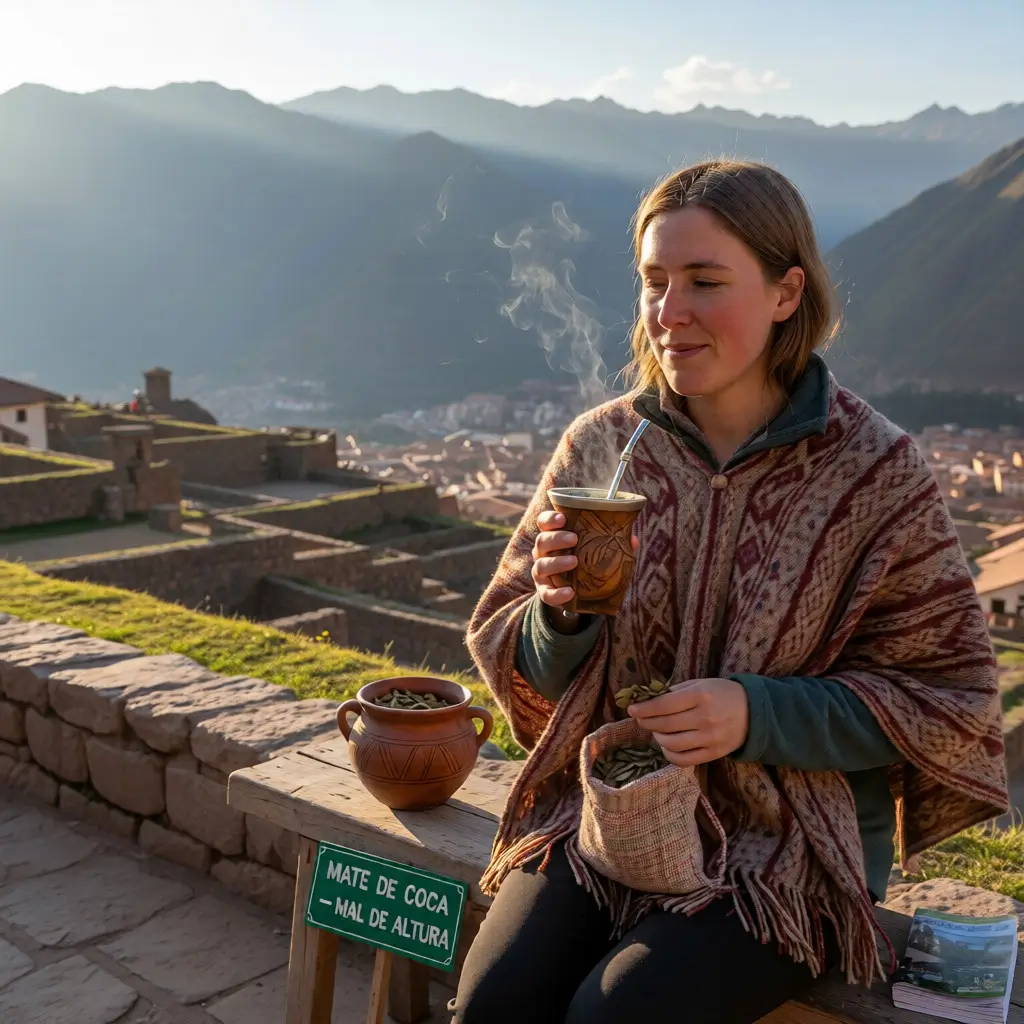
You cannot leave Peru without trying the natural remedy of the Incas. Coca tea (mate de coca) or chewing the leaves directly helps oxygenate the blood and combat fatigue. You will find it as a courtesy in almost all hotels and on our tours.

Value Data: Altitudes and Weather
To plan better, keep these technical facts about the most popular destinations in mind:
- Cusco City: 3,399 m.a.s.l. (11,152 ft)
- Machu Picchu: 2,430 m.a.s.l. (7,972 ft) – Yes, it is lower than Cusco!
- Rainbow Mountain: 5,200 m.a.s.l. (17,060 ft) – Requires maximum acclimatization.
- Sacred Valley (Urubamba): 2,871 m.a.s.l. (9,419 ft) – Ideal place to start.
- Best Season: The dry season (May to October) offers sunny days, though nights are cold.
- Oxygen: In Cusco, there is approximately 30% less oxygen than at sea level.
Expert Tips from Incredible Peru Tours
We have been guiding travelers through the Andes for years, and these are our “hacks” that make the difference:
- Land and descend: If possible, upon arriving at the Cusco airport, transfer directly to the Sacred Valley to sleep your first nights. You will sleep better and your body will adapt gently.
- Walk like an Inca: On treks, adopt a slow and steady pace. Do not try to run. “Slow but steady” is our guides’ mantra.
- Oxishot at hand: Carry a small portable oxygen can (Oxishot) in your daypack. It is affordable and can save you from an intense headache on the Rainbow Mountain.
- Breathe through your nose: Cold air through your mouth can dry out your throat and lungs. Try to inhale deeply through your nose.
Conclusion
Visiting the Andes does not have to be a painful experience. Altitude sickness Cusco is a real condition, but entirely preventable if you respect your body’s timing and follow these recommendations. Acclimatization, hydration, and a positive attitude are the keys to conquering the peaks.
At Incredible Peru Tours, our priority is your safety and well-being. Our guides are trained in first aid and carry oxygen on all routes to ensure your only concern is getting the perfect photo.


