Cusco does not have just one major festival. It has an ecclesiastical calendar, a civic celebration month in June, and pilgrimages that depart from the city. Anyone booking a hotel “in June because of Inti Raymi” should also consider Corpus Christi, Holy Week, and the train to Machu Picchu.
This guide organizes the year month by month. Fixed dates can already be marked on the calendar, while movable celebrations change every year; the dates below correspond to 2027.
Corpus Christi falls on May 27, not in June. Cusco’s Jubilee Month and Inti Raymi are separated by almost a full month, so they should not be planned as a single festival period.
What changes in the city during festivals
During processions, the Plaza de Armas is very different from the usual setting for a city tour. There are grandstands, bands, candles, and closed streets. The Half-Day Cusco City Tour continues to operate on most days. Sacsayhuaman on June 24 is a different situation, as the archaeological site hosts the main Inti Raymi ceremony and its grandstands.
Hotels in the historic center and train tickets become more expensive during Holy Week in late March and during the second half of June. Travelers putting together a circuit through Lima, the coast, Cusco, and Machu Picchu, such as the 12-Day Unique Peru Tour, should first secure their Machu Picchu date and then check which festival overlaps with their itinerary.
February’s Candelaria Festival belongs to Puno, not Cusco, so it is not included in this calendar.
Movable dates
| Festival | Date | Where |
|---|---|---|
| Palm Sunday | March 21 | Historic center |
| Holy Monday (Lord of the Earthquakes) | March 22 | Cathedral and Plaza de Armas |
| Holy Thursday / Good Friday | March 25 and 26 | Historic center |
| Easter Sunday | March 28 | Historic center |
| Qoyllur Rit’i | Third and fourth week of May (before Corpus Christi) | Sinakara Sanctuary, Ocongate |
| Arrival of the Corpus Christi saints | May 26 | From local parishes to the Cathedral |
| Corpus Christi | May 27 | Plaza de Armas and Cathedral |
| Corpus Christi Octave | June 3 | Historic center |
Easter Sunday falls on March 28. Corpus Christi takes place 60 days later, on Thursday, May 27.
January and February
January 6. Bajada de Reyes in Ollantaytambo marks the end of the Christmas season in several towns throughout the Sacred Valley.
Carnival (February). Compadres, comadres, yunza celebrations, and water games take place in neighborhoods and communities. In Cusco city, the celebration is more informal than in Puno. Museums generally remain open.
March and April: Holy Week and the Taytacha
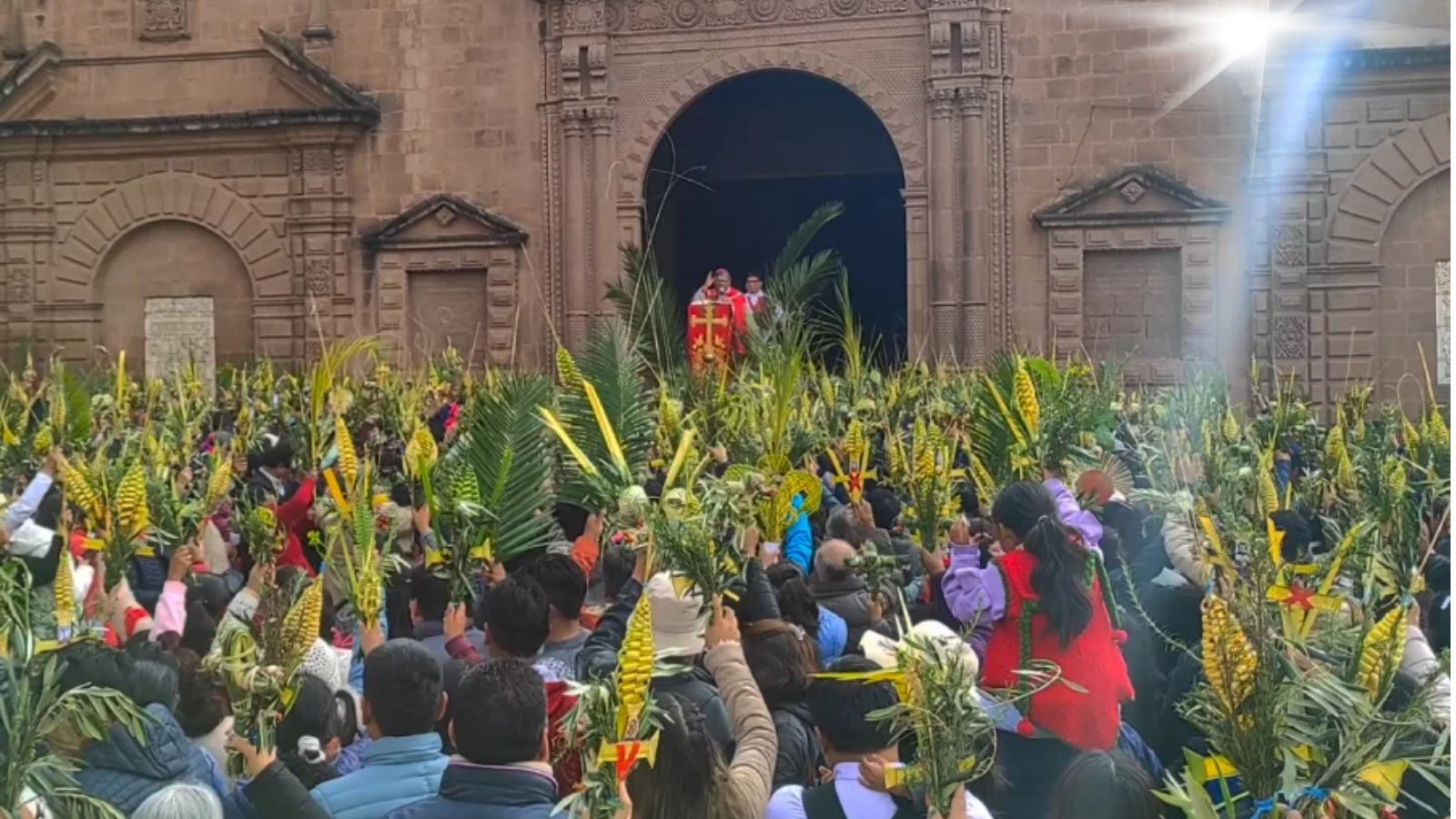
Holy Week arrives early in 2027, during March. On Holy Monday, March 22, the image of the Lord of the Earthquakes leaves Cusco Cathedral, crosses the Plaza de Armas, and later returns. This is an important religious devotion for the city rather than a staged performance. The Cathedral’s main nave is not visited as a regular ticketed attraction during the procession.
On Thursday the 25th and Friday the 26th, the historic center changes pace considerably. By Saturday the 27th and Easter Sunday the 28th, the Plaza de Armas gradually returns to its usual rhythm.
Travelers who want to visit the interior of the Cathedral without crowds should schedule that visit for another day during their stay. Those combining Holy Week with Machu Picchu should book train tickets and admission well in advance, as March already sees increased visitor movement.
May: Cruz Velacuy, Sinakara, and Corpus Christi
May 3, Cruz Velacuy. Crosses are honored on hillsides, in chapels, and throughout local neighborhoods. Celebrations include Mass, flowers, and traditional bands. The festival is best experienced in a neighborhood or nearby town rather than in the Plaza de Armas at midday.
Qoyllur Rit’i. This pilgrimage leads to the Sinakara Sanctuary, located at more than 4,600 meters (15,000 feet) above sea level near the base of Ausangate. It brings together traditional dance nations, camps, and extremely cold nighttime temperatures. The pilgrimage takes place during the second half of May, shortly before Corpus Christi. It is not a half-day excursion. Travelers should spend two or three nights acclimatizing in Cusco beforehand, bring proper mountain clothing, and travel with an operator familiar with the sanctuary.
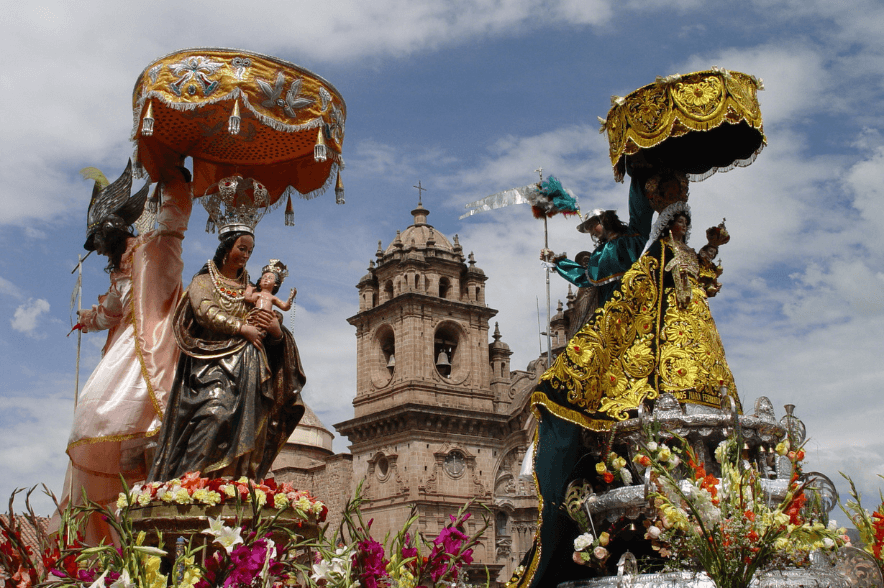
Corpus Christi (May 27). Fifteen sacred images from different parishes enter the Cathedral on Wednesday, May 26, remain there overnight, and take part in the main procession on Thursday. The Octave of Corpus Christi takes place on June 3. During the celebration, chiriuchu, one of Cusco’s most traditional dishes, is widely served throughout the city. Balcony seats overlooking the procession should be booked several days in advance by travelers who want to watch from a seated viewpoint.
May brings together Cruz Velacuy, Qoyllur Rit’i, and Corpus Christi, making it the busiest festival month of the year after June. Inti Raymi has not yet begun.
June: Cusco’s Jubilee Month and Inti Raymi
June remains Cusco’s main civic celebration month, with parades, student dance performances, and ceremonial offerings in the Plaza de Armas. The Corpus Christi Octave on June 3 closes the ecclesiastical cycle that begins in May. The event that fills Sacsayhuaman takes place on June 24.
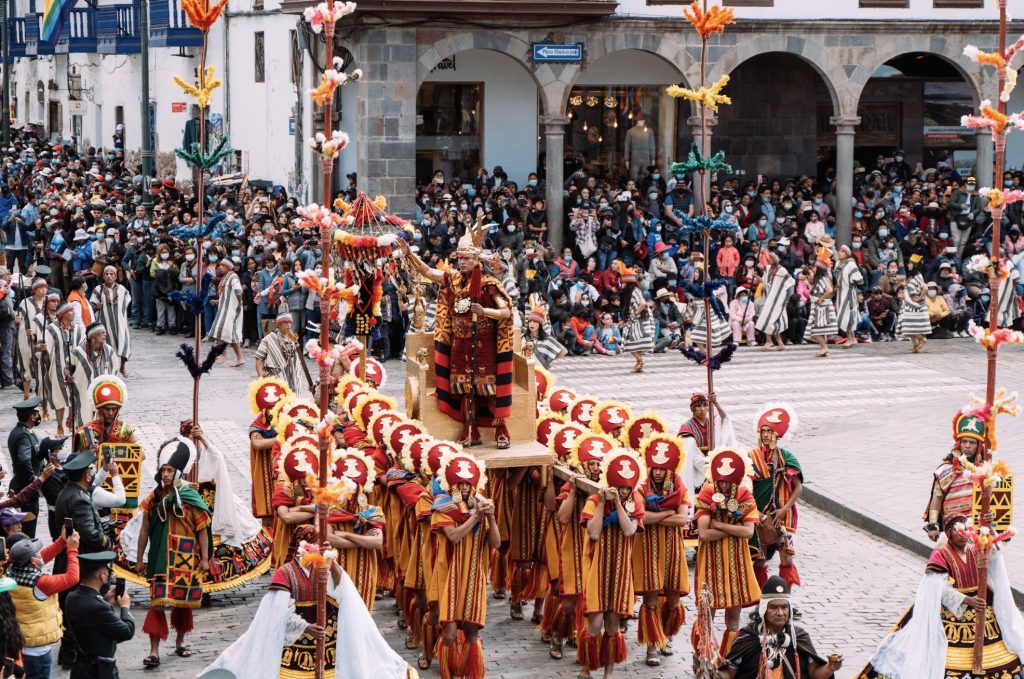
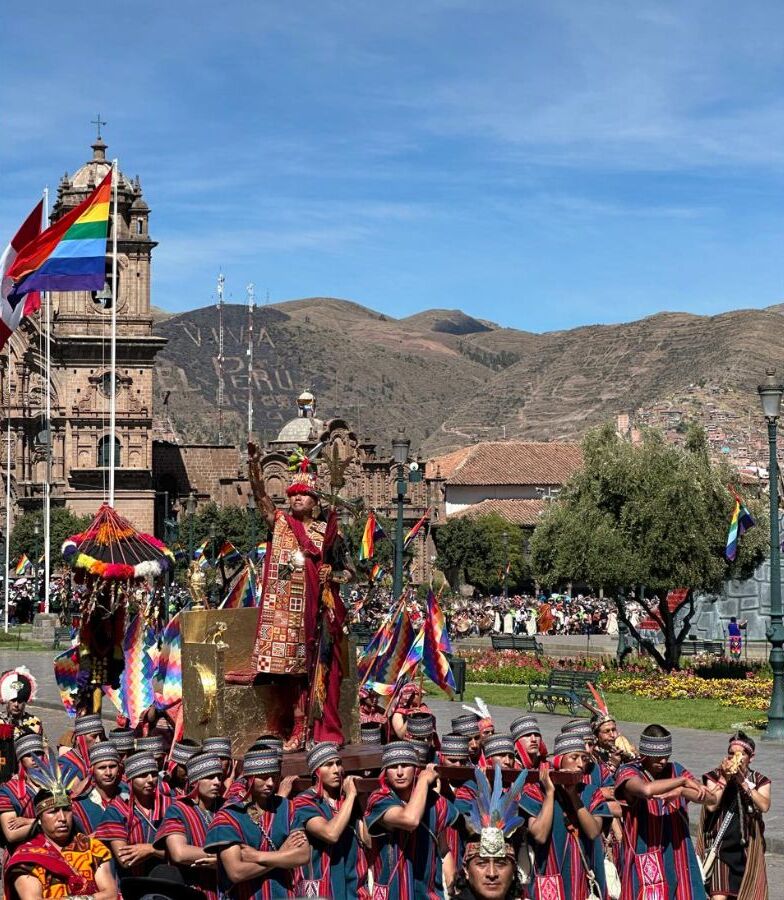
June 24, Inti Raymi. This contemporary reenactment of the ancient Festival of the Sun is divided into three main ceremonies: the first takes place at the Qoricancha esplanade at around 9:00 a.m., followed by a ceremony in the Plaza de Armas, and finally the main performance at Sacsayhuaman. Seating in the Sacsayhuaman grandstands requires a separate ticket. On this day, the Qoricancha does not operate as a regular interior sightseeing visit.
Almost four weeks separate Corpus Christi from June 24. Travelers can plan a trip specifically around Inti Raymi without overlapping with the procession of the fifteen saints. The reverse is also possible: visit Cusco for Corpus Christi in late May and travel to Machu Picchu in early June, before the busiest period surrounding June 24.
The light and sound show at Sacsayhuaman, when scheduled, is a separate ticketed nighttime performance rather than part of Cusco’s traditional ritual calendar. Availability should be confirmed locally during the week of the visit.
July: Paucartambo
July 16, Virgen del Carmen. The town of Paucartambo, approximately three to four hours by road from Cusco, fills with traditional dance groups such as the saqras, chunchos, and qhapaq qolla during three days of celebrations. Local accommodations sell out quickly. Many visitors travel there and back on July 16, although spending one night in Paucartambo provides a much better experience of the festival.
It should not be combined with a Sacred Valley tour on the same day. Paucartambo is a separate excursion with its own travel times and return schedule.
August and September
August 1, Pachamama Day. This date marks the beginning of the month dedicated to Mother Earth. Traditional offerings, known as pagos, are performed in communities, at some hotels, and on mountain slopes. Small ceremonies may also take place in the city, although the most authentic rituals are usually held in rural communities, farmland, and family settings.
Lord of Huanca (September 14, preceded by a novena). The sanctuary is located in San Salvador, in the province of Calca, within the Pachatusan ravine. The celebration includes pilgrimages, Masses, and cold overnight conditions for those who remain near the sanctuary. It is reached by a separate road from the Sacred Valley and is not a regular stop on a Pisac tour. On September 14, both the access road and sanctuary become extremely crowded.
October through December
Festival activity in Cusco’s historic center decreases during October and November. This is one of the easiest periods for combining a city tour, the Sacred Valley, and train travel without major street closures caused by religious processions.
December 24, Santurantikuy. This traditional Christmas market fills the Plaza de Armas with Nativity figures, religious carvings, and Andean retablos. Vendors begin setting up during the day, and the square becomes increasingly crowded toward evening. On December 25, the atmosphere in the historic center is centered more around Mass and family celebrations.
Which dates are worth planning your trip around
| If the main reason for your trip is… | Date to plan around | Extra days in Cusco |
|---|---|---|
| Inti Raymi with grandstand seating | June 24 | 3 to 4 days for acclimatization; Corpus Christi has already ended |
| Corpus Christi and chiriuchu | May 26–27 | 2 |
| Lord of the Earthquakes | March 22 | The full Holy Week period or just Holy Monday |
| Virgen del Carmen | July 15–17 | 1 night in Paucartambo |
| Qoyllur Rit’i | Second half of May | This requires dedicated time rather than a free day |
| Pachamama or Lord of Huanca | August 1 / September 14 | These can be added to an itinerary already based in Cusco |
For travelers visiting Machu Picchu during these same weeks, it is best to secure entrance tickets and train reservations before booking a hotel specifically for its view of a procession.
How to plan the year if you only have four days in Cusco
Four days are not enough to comfortably include both Qoyllur Rit’i and Paucartambo. They are enough for one city festival combined with a city tour and the Sacred Valley, or for Inti Raymi plus Machu Picchu. Trying to experience both Inti Raymi and Machu Picchu comfortably on June 24 itself is not practical.
There are three clearly defined festival periods in 2027:
- March 21–28: Holy Week.
- May 20–27: Qoyllur Rit’i and Corpus Christi.
- June 24: Inti Raymi and Cusco’s Jubilee Month.
At Incredible Peru Tours, both city tours and longer multi-day itineraries need to be coordinated with train schedules. When planning the trip, it is more useful to provide the exact arrival date and the festival you want to experience rather than simply requesting “June in general.”


