
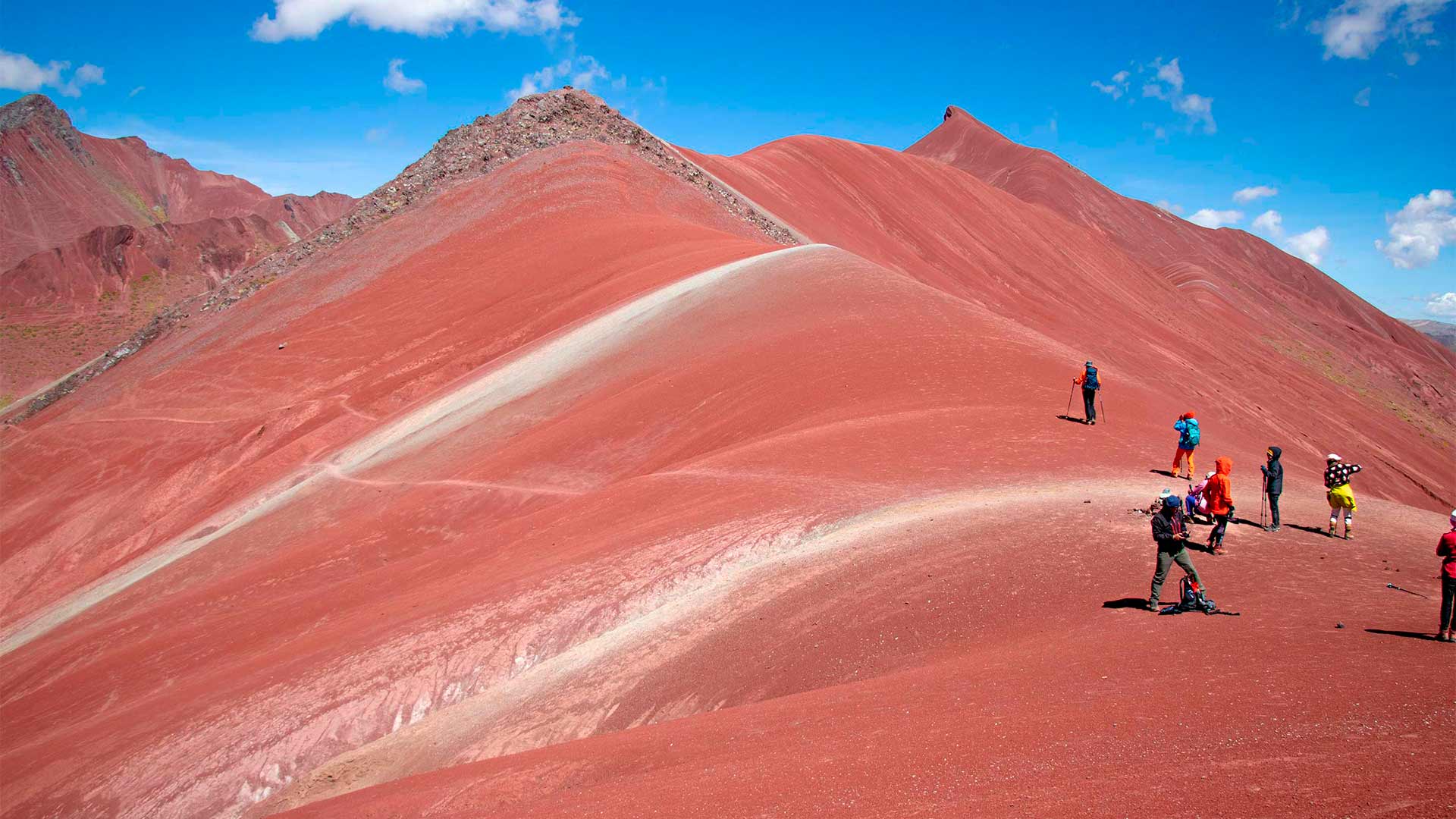
The difficulty of the Red Valley hike is considered moderate to challenging. The main difficulty is not only the distance, but also the altitude of more than 5,000 meters above sea level, the lower oxygen level, the slopes, and the accumulated fatigue after visiting Rainbow Mountain.
The perceived level of effort varies according to previous acclimatization, physical condition, weather, and personal pace. A person who is well adapted to Cusco may complete the route with controlled breaks, while a traveler who has just arrived from a low-altitude city may find the hike much more demanding.
How difficult is the Red Valley hike?
The route to the Red Valley should not be assessed only by the number of minutes spent walking. It takes place in a high-mountain environment where breathing requires more effort, even when moving slowly or walking along a seemingly short section.
The early-morning cold, wind, ascents and descents, uneven ground, and fatigue from the previous visit to Vinicunca can make the route more demanding than expected. Therefore, it should be planned as part of a full day of physical activity and not as an effortless additional walk.
Difficulty level of the route
The Red Valley hike is normally classified as moderate to challenging. A person with good physical condition and acclimatization can complete the section without requiring technical mountaineering experience, provided that they maintain a slow and steady pace.
This assessment is not the same for every traveler. People with low levels of physical activity, respiratory difficulties, knee discomfort, or limited adaptation to altitude may find it challenging, even if the trail does not add a great distance.
Why altitude increases the difficulty
Walking above 5,000 meters above sea level means that less oxygen is available than in Cusco and, even more so, than in cities located close to sea level. This can cause the body to become tired more quickly and breathing to accelerate even on a gentle slope.
It is common to need frequent breaks to catch your breath. Stopping for a few minutes, breathing calmly, and drinking water can help you continue more comfortably. Trying to maintain the same pace as another member of the group is a common mistake.
Terrain difficulty
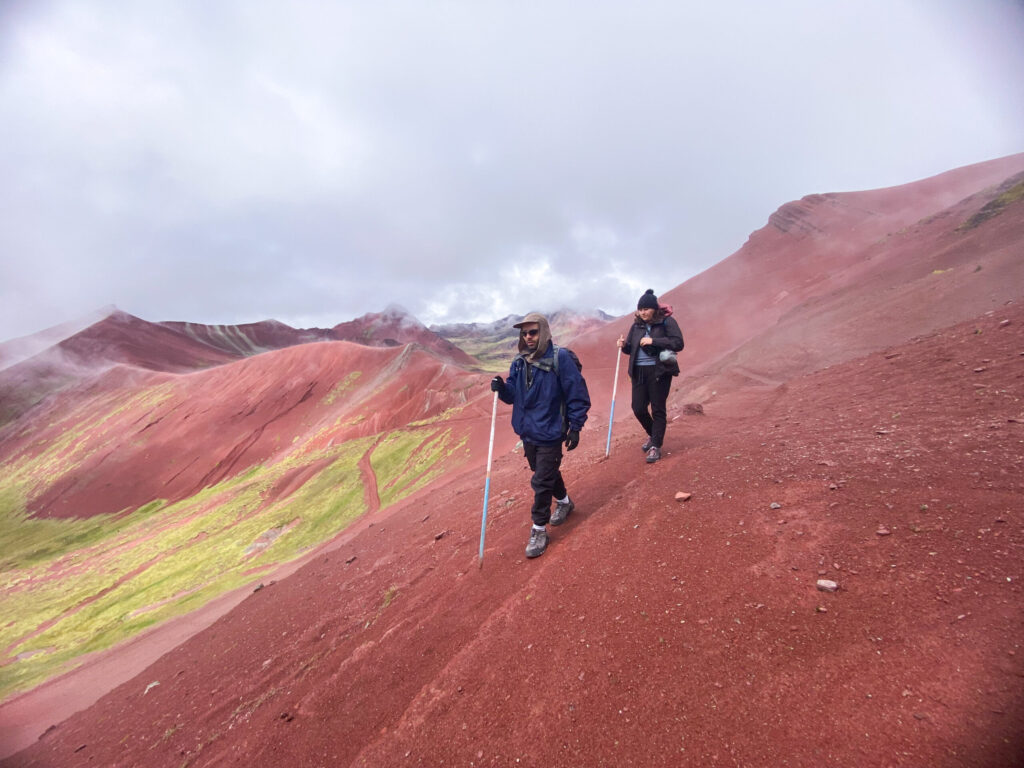
The route is a natural mountain trail, not a paved path. It may include slopes, sections of compacted soil, loose stones, and uneven areas that require attention while walking, especially during the descent.
Depending on the weather, the terrain may have mud, puddles, or slippery surfaces. Footwear with good grip reduces the risk of slipping and allows you to place your feet more securely on uneven sections.
Distance and duration of the hike
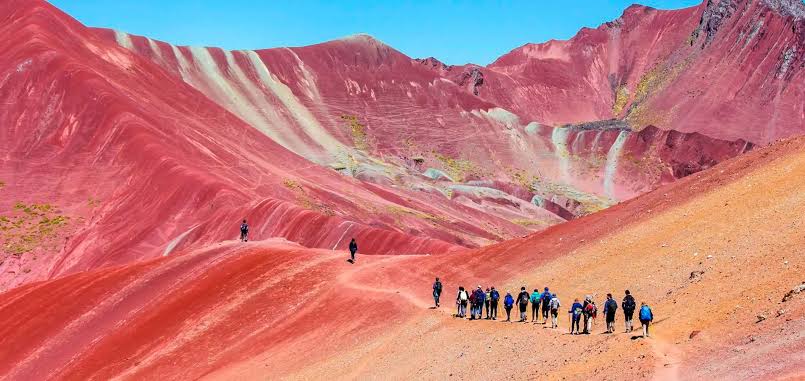
The distance and duration of the route may vary according to the access point, the route selected by the operator, trail conditions, and the group’s pace. Not all travelers arrive at the same starting point or complete exactly the same circuit.
Rather than focusing only on the number of minutes, it is advisable to save energy for the return. Breaks to breathe, take photographs, or wait for the group are also part of the actual duration of the excursion.
Hiking time from Vinicunca
From Rainbow Mountain to the Red Valley viewpoint, the section usually takes approximately 20 to 30 minutes. This estimate assumes continuous progress, but it may increase if the traveler needs to stop because of the altitude.
The time also varies according to trail conditions. On days with wind, rain, or snow, moving safely may require a slower pace and greater caution on inclined sections.
Return time
The return may take around 40 minutes or longer, depending on the route used, terrain conditions, and the breaks taken. Although some sections are downhill, they are not always easy because of loose stones and accumulated fatigue.
It is advisable not to calculate the return as though it were automatic or effortless. After spending several hours away from Cusco, fatigue may affect balance, concentration, and walking speed.
Accumulated effort during the excursion
The difficulty should be assessed by considering the entire day. The Red Valley is normally visited after the ascent to Vinicunca, so the body has already made a considerable effort before beginning this additional section.
Those who decide to add it should assess how they feel when they reach Rainbow Mountain. If there is severe exhaustion, a strong headache, or shortness of breath that does not improve with rest, it is preferable to prioritize safety and not continue.
Red Valley altitude
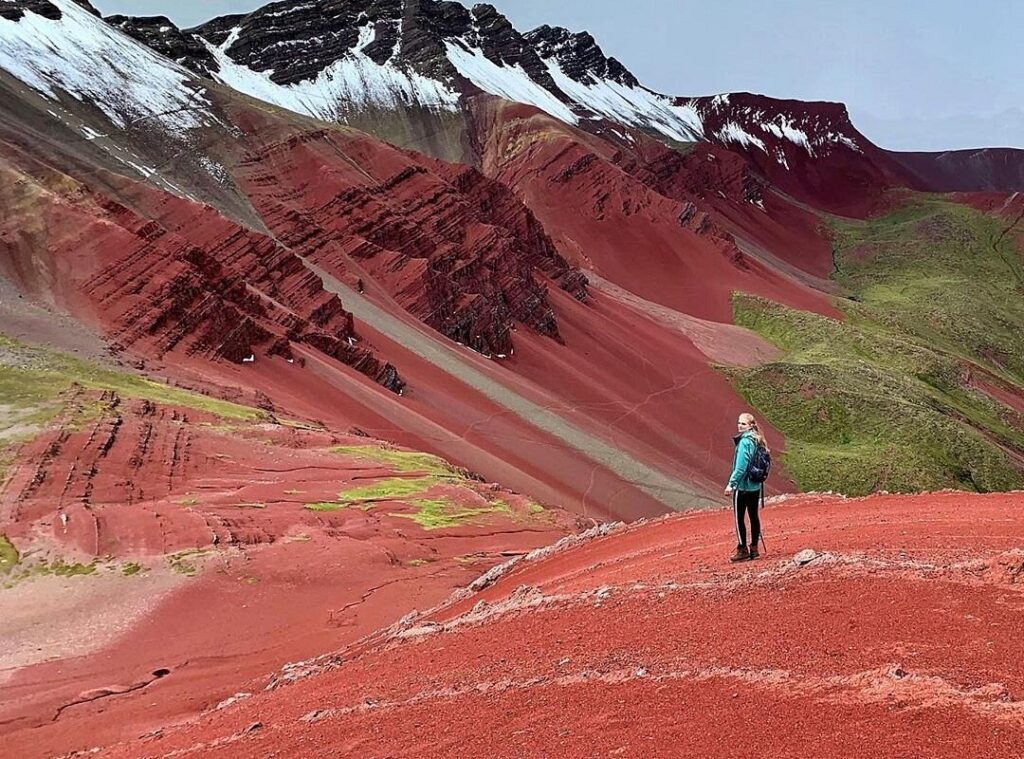
The route through the Red Valley takes place at an altitude of more than 5,000 meters above sea level. This is the factor that most strongly affects physical effort, since the body receives less oxygen with each breath.
Even active travelers may feel slower than usual. Preparation does not mean walking quickly, but arriving properly acclimatized, recognizing personal limits, and giving the body time to adapt to the pace of the route.
Elevation of the Red Valley viewpoint
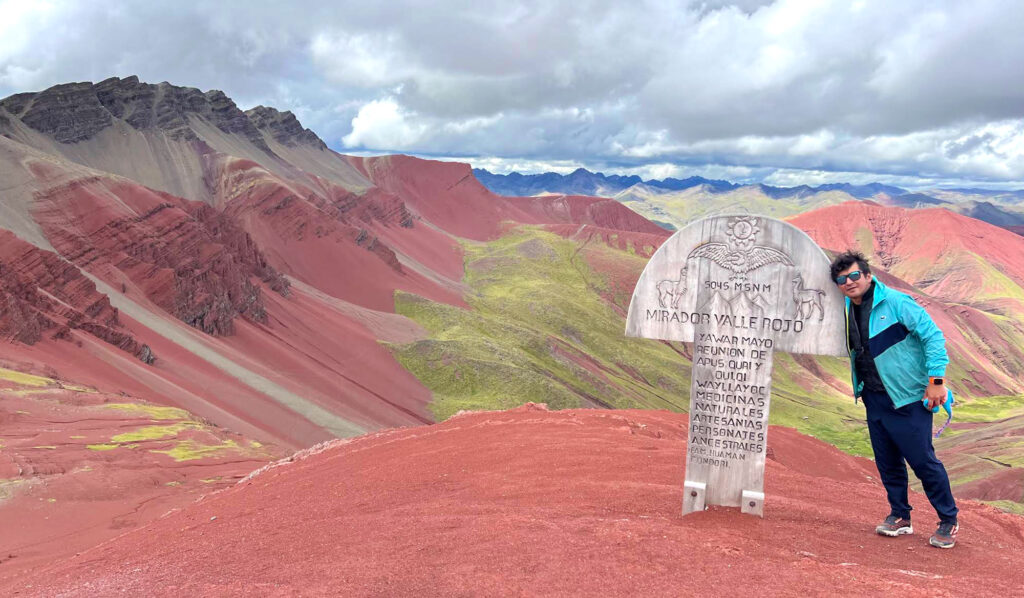
The Red Valley viewpoint is located at approximately 5,200 meters above sea level, although the figure may vary slightly depending on the exact point along the route and the measurement used. It is higher than the usual elevation of the main Vinicunca viewpoint.
At this altitude, the availability of oxygen is clearly lower than in the city of Cusco, which is located at approximately 3,400 meters above sea level. For this reason, a short hike may feel more demanding than the distance shown on a map would suggest.
Effects of walking at high altitude
Some travelers may experience significant fatigue, headaches, dizziness, nausea, or shortness of breath. These symptoms may be related to altitude and should be taken seriously, especially if they increase during the route.
When experiencing any discomfort, it is advisable to stop, inform the guide, and rest. If the symptoms worsen, the traveler should not continue or force the body to reach the viewpoint. The safest decision may be to begin the return accompanied by another person.
Is the Red Valley or Vinicunca more difficult?
For many people, the main ascent to Vinicunca represents the greatest effort because of the slope and altitude. However, the Red Valley may feel equally or more difficult for some travelers because it is completed after fatigue has already accumulated.
The section toward the Red Valley is usually shorter, but it should not generally be considered easy. The answer depends on how each person reacted during the ascent to Rainbow Mountain, their acclimatization, and the conditions on the day.
Difficulty of the ascent to Vinicunca
The ascent to Vinicunca usually contains the most demanding part of the excursion. Its slopes, thinner air, and the duration of the hike require the body to work continuously until reaching the viewpoint.
It is common for travelers to move slowly and take short breaks. Maintaining your own pace, without trying to follow those who walk faster, helps manage energy more effectively for the rest of the day.
Difficulty of the section toward the Red Valley
The trail toward the Red Valley extends the hike and adds further effort after Vinicunca. It may include inclined and uneven areas, making leg fatigue and the lower availability of oxygen more noticeable.
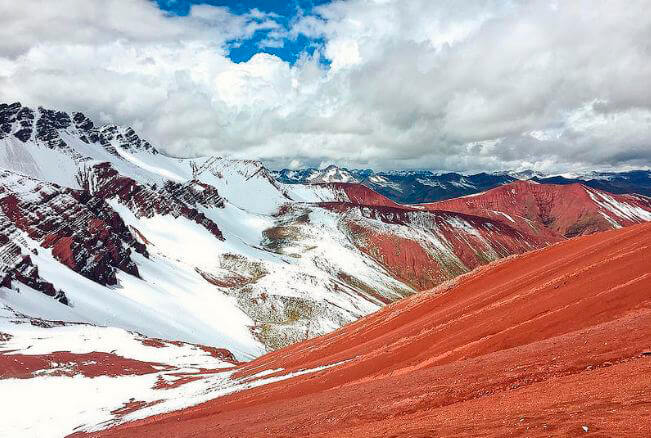
One advantage is that this route normally offers views of a wider landscape with reddish tones and, on many days, fewer visitors than the main viewpoint. The decision to add it should be based on the energy available and the guide’s instructions.
Is previous hiking experience necessary?
It is not necessary to be an experienced mountaineer to visit the Red Valley. Even so, it is recommended to have suitable physical condition, good acclimatization, and the ability to walk for several hours in a high-altitude environment.
Previous experience helps travelers understand their own pace and use footwear or trekking poles correctly, but it does not replace the body’s adaptation to altitude. An active person who is not acclimatized may feel worse than someone who is less physically trained but prepared with enough time.
Recommended physical condition
It is advisable to be capable of completing long walks and climbing slopes without experiencing significant physical problems. Before the trip, walking, performing moderate cardiovascular exercise, and strengthening the legs may be useful, always according to each person’s condition.
Running or intense sports training is not required. The most useful preparation is having basic endurance, stability when walking on uneven surfaces, and the ability to stop without frustration when the body requires it.
Recommended experience
Having completed previous hikes, especially in high-altitude areas, can make the experience easier. It helps travelers recognize signs of fatigue, manage their water intake, and maintain a cautious pace on slopes.
However, a previous high-altitude hike does not guarantee that discomfort will not occur. The body’s response to environments above 5,000 meters above sea level may vary between trips, so it remains necessary to acclimatize and pay attention to any symptoms.
Importance of acclimatization
Acclimatization is one of the most important factors for completing the route safely and comfortably. Spending a few days in Cusco allows the body to begin adapting before facing an excursion at a much higher altitude.
Arriving in Cusco and visiting Vinicunca or the Red Valley the following day may increase the likelihood of feeling unwell. There is no method that completely eliminates the risk, but gradual adaptation reduces the physical demands for many travelers.
How many days to acclimatize in Cusco
It is recommended to remain in Cusco for at least one or two days before taking the excursion. During the first few hours, it is preferable to rest, stay hydrated, and avoid intense physical activity, as well as very heavy meals or excessive alcohol consumption.
A practical alternative is to begin with relaxed visits within Cusco or less demanding routes. This allows the traveler to observe how their body responds before planning a hike above 5,000 meters above sea level.
How to know if you are properly acclimatized
A positive sign is feeling comfortable while taking simple walks around Cusco, climbing stairs at a moderate pace, and resting without severe headaches, dizziness, or unusual shortness of breath. This does not guarantee complete adaptation, but it provides a useful reference.
If altitude-related symptoms persist or increase in the city, it is not advisable to assume that they will improve during the excursion. In that case, it is recommended to change the plan and consult a healthcare professional if there are concerns about physical condition.
Preparation for the Red Valley hike
Proper preparation can reduce the perceived difficulty and help travelers walk more safely. The goal is not to eliminate the effort caused by altitude, but to manage it through practical decisions before and during the route.
The most common mistakes are starting too quickly, carrying insufficient warm clothing, not drinking enough water, and wearing shoes without adequate grip. Preparing the equipment the night before prevents problems during an excursion that usually begins early in the morning from Cusco.
Walking slowly and taking breaks
It is advisable to maintain a steady, short, and controlled pace. Walking quickly at the beginning may cause early exhaustion, so it is better to save energy for the slopes and the return journey.
Breaks are not a sign of inability. Stopping for a few minutes when necessary helps restore breathing and allows travelers to continue more safely. It is not advisable to compete with other visitors or attempt to arrive first.
Hydration and food
Carrying water helps compensate for some of the dehydration that may occur because of the cold, wind, and physical effort. It is preferable to drink small sips regularly instead of waiting until you feel very thirsty.
It is also useful to carry light foods that provide energy, such as fruit, nuts, or simple energy bars. Before walking, it is advisable to avoid excessively heavy meals, since they may increase discomfort if altitude-related nausea occurs.
Suitable clothing and footwear
Hiking shoes with good grip and firm soles are recommended. The footwear should have been worn previously to avoid blisters or discomfort during a route where changing shoes is not normally a practical option.
Clothing should include warm layers, wind protection, and a waterproof garment. The weather can change quickly, so setting out with only one light layer or without rain protection may make the route more difficult.
Trekking poles
Trekking poles can provide stability on slopes and sections with rocks or loose soil. They also help distribute some of the effort between the legs and arms, especially during descents.
To be useful, they should be adjusted to a comfortable height and used without blocking the path of other visitors. They do not replace a cautious pace or suitable footwear, but they can provide greater security for people with limited stability.
Who should avoid this hike?
Not everyone responds to altitude in the same way. Before including the Red Valley in an itinerary, it is advisable to consider personal health, acclimatization level, and the actual ability to walk in a demanding environment.
The decision should be individual and responsible. If there is a medical history or uncertainty about how the body may respond to altitude, a professional assessment before the trip is the most prudent option.
- People with medical conditions
- Children and older adults
- Travelers without acclimatization
How does the difficulty change according to the weather?
The weather can change quickly in this area and considerably alter trail conditions. A manageable route on a dry morning may become slower and more slippery if rain, fog, or hail appears.
Before setting out, it is advisable to check the forecast as a reference and prepare clothing for different conditions. Even so, the actual mountain weather may be different, so the guide’s safety instructions should always take priority.
Difficulty during the dry season
During the dry season, conditions are generally better for walking, with less mud and greater visibility on many days. This may make it easier to progress along the trail, although it does not reduce the effects of altitude.
Mornings may have very low temperatures and strong winds. Therefore, the absence of rain does not mean that travelers can set out with insufficient clothing or without protection for the hands, head, and face.
Difficulty during the rainy season
During the rainy season, mud, puddles, and wet surfaces may make the terrain slippery. Rain may also increase the sensation of cold and cause progress to become slower.
Fog, hail, or snow may reduce visibility and change the excursion plan. Under these conditions, it is even more important to wear suitable footwear, waterproof clothing, and accept route changes if the guide considers them necessary.
Tips for visiting Vinicunca and the Red Valley
Visiting Vinicunca and the Red Valley with transportation and a guide makes it easier to organize the schedule, route, and return to Cusco. One organized alternative is the Rainbow Mountain + Red Valley Tour, which combines both attractions in an excursion from Cusco.
Before booking, it is advisable to confirm what the service includes, the pickup point, the time available at each location, and the expected conditions for the day. It is also useful to ask how the return is handled if a traveler is unable to continue walking.
Follow the guide’s instructions
The guide understands the group’s usual pace, changes in the weather, and the general conditions of the route. Following their instructions regarding breaks, routes, and schedules helps prevent delays or unsafe decisions.
It is also necessary to respect the return times. Remaining too long at a viewpoint may affect the group’s logistics and increase exposure to cold or changing weather conditions during the afternoon.
Do not continue when experiencing severe symptoms
If severe symptoms appear, such as a strong headache, significant dizziness, shortness of breath that does not improve with rest, vomiting, or extreme weakness, the traveler should immediately inform the guide. The discomfort should not be minimized because of a desire to complete the hike.
Forcing the body may worsen the situation and make the return more difficult. The priority is to descend or return by following the safety instructions, even if this means not reaching the Red Valley.
Frequently asked questions
These answers help travelers assess whether the route is suitable for their physical preparation and the time available during a visit to Cusco.
Conditions may vary because of the weather, the route used, and each person’s response to altitude, so the figures should be considered approximate references.
Is the Red Valley hike difficult?
It is considered a moderate to challenging hike, mainly because of the altitude above 5,000 meters above sea level and the accumulated effort after visiting Vinicunca.
The additional distance is not very long, but the lower oxygen level, slopes, and natural terrain may increase the feeling of fatigue.
How long do you walk to reach the Red Valley?
From Rainbow Mountain to the Red Valley viewpoint, the section usually takes approximately 20 to 30 minutes.
The time may vary according to the traveler’s pace, the necessary breaks, trail conditions, and the weather on the day.
Can I visit the Red Valley without experience?
Yes, it is possible for healthy, properly acclimatized travelers with suitable physical condition to walk for several hours and climb slopes.
Technical experience is not required, but travelers should move calmly, use appropriate equipment, and respect their body’s limits at high altitude.
Can you reach the Red Valley on horseback?
The availability and extent of horse services may vary according to the date, local community, weather, and route conditions. It is advisable to confirm this with the operator in advance.
Even when the service is available, it will probably be necessary to walk along certain sections. It should not be assumed that the horse reaches every viewpoint or area of the Red Valley.
What happens if I cannot complete the hike?
The body should not be forced to complete the route. The correct action is to inform the guide as soon as excessive fatigue or altitude-related symptoms appear.
The return should be completed by following the safety instructions and the group’s plan. Prioritizing health is more appropriate than attempting to reach a specific point on the trail.
Is it worth adding the Red Valley to the route?
It may be worthwhile for travelers who are properly acclimatized, have enough energy, and are interested in seeing broader reddish landscapes that are generally less crowded.
If the ascent to Vinicunca has already been very demanding or there are altitude-related symptoms, it is preferable not to add this section. The visit should be adapted to the traveler’s actual condition on the day.


