
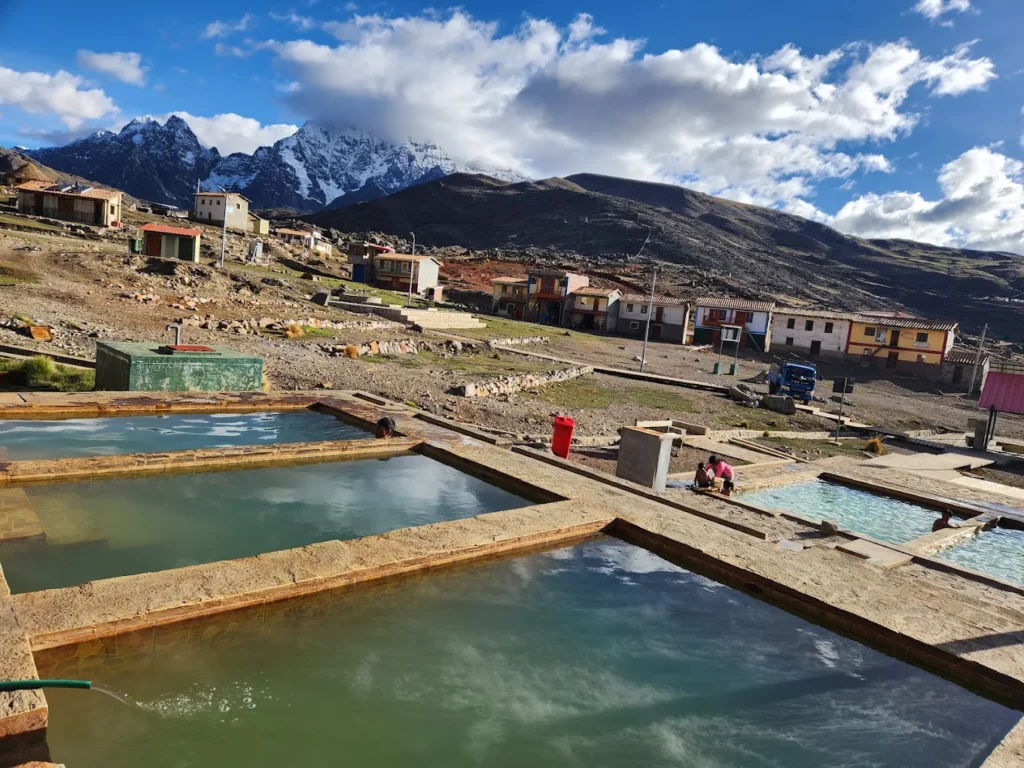
At the foot of the snow-capped Ausangate, more than 4,300 meters above sea level, a small village holds one of the best-kept secrets of southern Peru. The Pacchanta hot springs welcome hikers looking to rest after exploring the trails surrounding the sacred mountain. These natural hot-water pools are set against a landscape of glacial peaks, grazing alpacas, and clear skies.
Where Are the Pacchanta Hot Springs Located?
Location and Elevation
Pacchanta belongs to the district of Ocongate, in Quispicanchi Province, Cusco Region. The village sits at around 4,300 meters above sea level, right on the slopes of Ausangate. Its location makes it the last inhabited settlement before entering the trekking routes toward the mountain range’s lakes.
The Village of Pacchanta and Its Surroundings
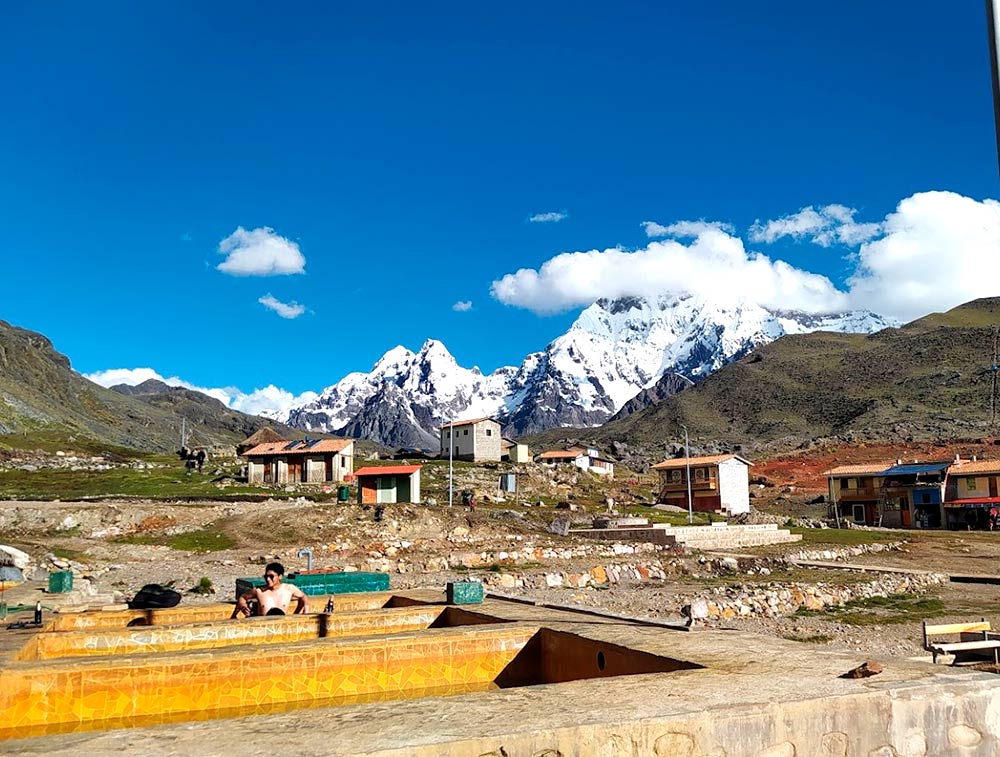
The village is home to families dedicated to raising camelids and assisting visitors. Adobe houses are scattered around grasslands where alpacas and llamas coexist with passing hikers. From the village, you can enjoy a direct view of the southern face of Ausangate, with its glaciers reflected in the water during the early hours of the day.
How to Get to the Pacchanta Hot Springs
Route from Cusco
The journey begins in Cusco along the paved road leading toward Puerto Maldonado. The route passes through Urcos and then Ocongate, where many travelers make a brief stop. The paved section makes most of the journey easier.
From Tinki to Pacchanta
After Ocongate, you reach Tinki, the town that serves as the gateway to the Ausangate area. From Tinki to Pacchanta, the terrain changes: the road becomes an unpaved track and climbs through an increasingly open landscape. This final section can be traveled by four-wheel-drive vehicle or on foot, depending on the season and road conditions.
Transportation Options and Travel Times
The full trip from Cusco takes between four and five hours by private car. Vans and minibuses operate along the Cusco–Tinki route, and from there travelers can hire local transportation or walk the final section. Those who prefer greater comfort can choose a private service that takes them directly to the village.
What the Hot Spring Pools Are Like
Water Temperature and Mineral Properties
The water rises from underground at a comfortably warm temperature, making it pleasant to stay immersed even when the air outside is cold. Its composition contains minerals that, according to local tradition, help relieve muscle fatigue. For anyone who has just completed a day of hiking, the restorative effect is immediate.
The Pools Facing the Snow-Capped Ausangate
The main attraction of the site is the view. The pools face the glacier, allowing you to relax in the warm water while looking at the snow-covered mountain in the background. The contrast between the steam rising from the pools and the frozen peaks defines the experience.
Available Services and Facilities
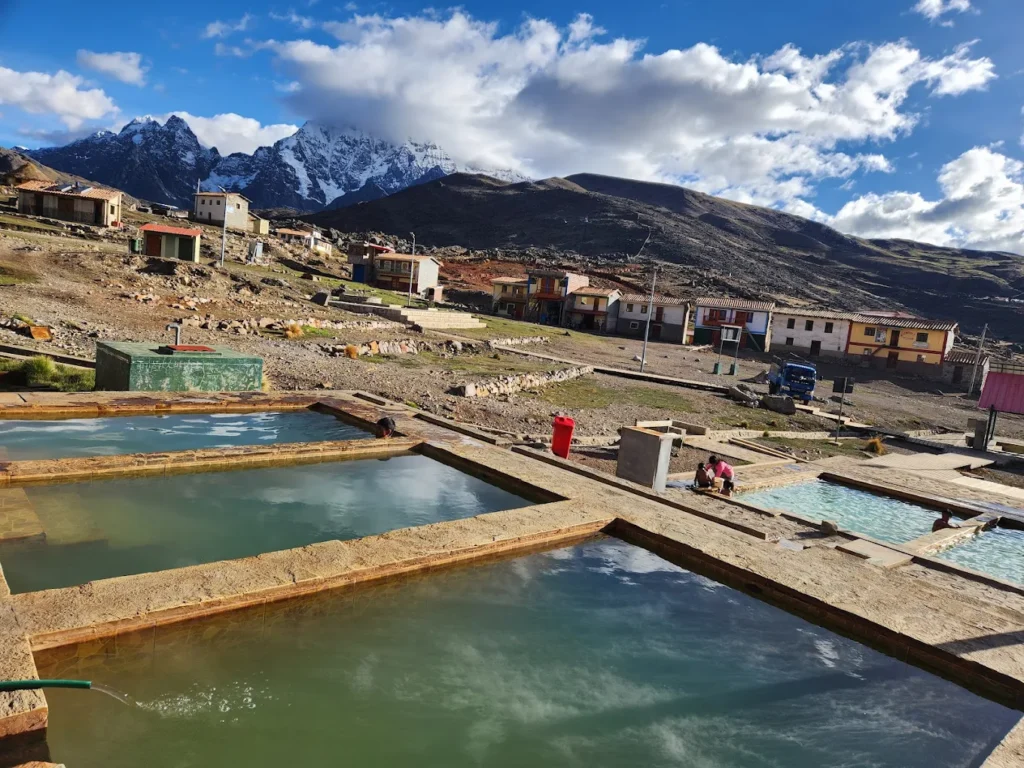
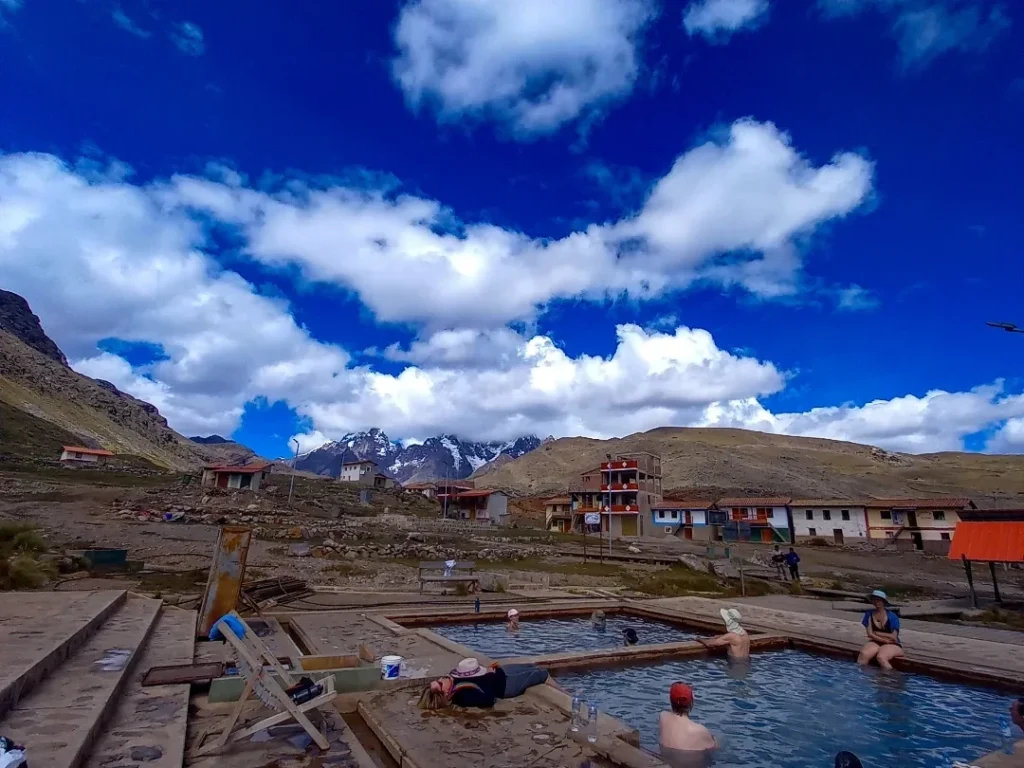
The complex has several pools of different sizes, basic changing rooms, and areas where visitors can leave their clothes. The infrastructure is simple, in keeping with the rural character of the site. Some local families offer basic accommodations and meals for those who decide to stay overnight.
What to Bring When Visiting the Hot Springs
Recommended Clothing and Accessories
It is a good idea to bring a swimsuit, towel, sandals, and warm clothing for after your bath. A hat and gloves are useful because, as soon as you get out of the water, the temperature can feel much colder. It is also recommended to carry a bottle of water and sunscreen.
High-Altitude Considerations
At this elevation, the body functions with less oxygen, so movements should be slow and steady. Entering and leaving the water calmly helps prevent dizziness. Staying hydrated before and after bathing also helps the body cope better with the altitude.
How Much Does Admission Cost?
Access to the pools has a modest fee that is paid directly at the site and is usually used by the community to maintain the facilities. Accommodation and meal prices are arranged separately with local families. It is a good idea to bring cash in Peruvian soles, as there are no banking services in the area.
Best Time to Visit Pacchanta
Dry Season and Rainy Season
The months from April through October have the clearest days, with a greater chance of seeing the snow-capped mountain without clouds. Rainfall increases between November and March, which can make conditions on the final unpaved road more difficult. For a smoother visit, the dry season is the safest option.
Recommended Times of Day
Early morning offers the clearest views of the glacier and fewer visitors. Late afternoon also has its charm, with warm light illuminating the peaks. If the plan includes trekking, many visitors save their time in the hot springs for the return trip as a reward.
What Else to Do in Pacchanta
Starting Point for the Seven Lakes
The village is the natural starting point for the route to the Seven Lakes of Ausangate, one of the most celebrated circuits in the region. Many visitors combine the hike with a soak in the hot springs on the same day. The proximity of both attractions makes Pacchanta an ideal base.
Hike to the Ausangate Viewpoint
In addition to the route to the lakes, there are short trails leading to viewpoints where Ausangate can be appreciated in all its grandeur. These are accessible options for visitors with less time or energy. The effort is rewarded with sweeping panoramic views of the mountain range.
Recommendations for a Safe Visit
Acclimatize Beforehand
Spending at least two days in Cusco before traveling up to Pacchanta reduces the risk of altitude-related discomfort. The body needs this time to adjust to the lower oxygen levels. Traveling directly from the coast without prior acclimatization is not recommended.
Health Precautions in the Area
Anyone with heart or blood pressure problems should consult a doctor before traveling. It is advisable to carry a basic first-aid kit and, if tolerated, medication for altitude sickness. If any symptoms persist, the safest course of action is to descend to a lower elevation.


