
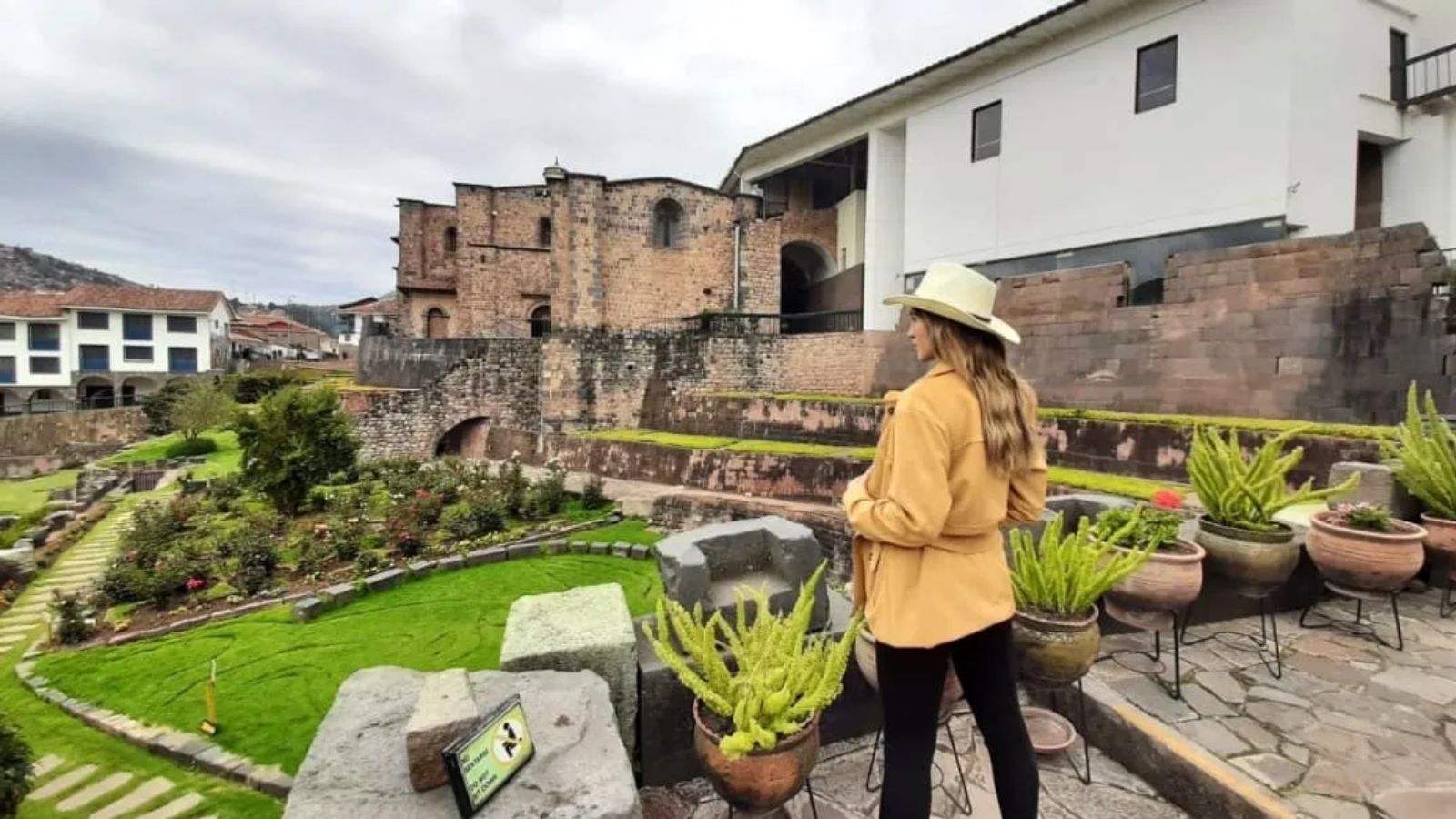
The Santo Domingo Convent is one of the most fascinating places in Cusco because it brings together two worlds in a single building: the colonial church and cloister of the Dominican Order stand on the walls of Qorikancha, the most important temple of the Inca Empire. It is located in the historic center, just a few blocks from the Plaza de Armas.
In this guide, you’ll learn about its history, what to see during your visit, and some tips to make the most of your experience.
History of the Santo Domingo Convent
Before the arrival of the Spanish, Qorikancha stood on this site. It was the main temple dedicated to Inti, the Sun God. It was the religious center of Tahuantinsuyo, and according to chroniclers, its walls were covered in gold.
From Inca Temple to Colonial Convent
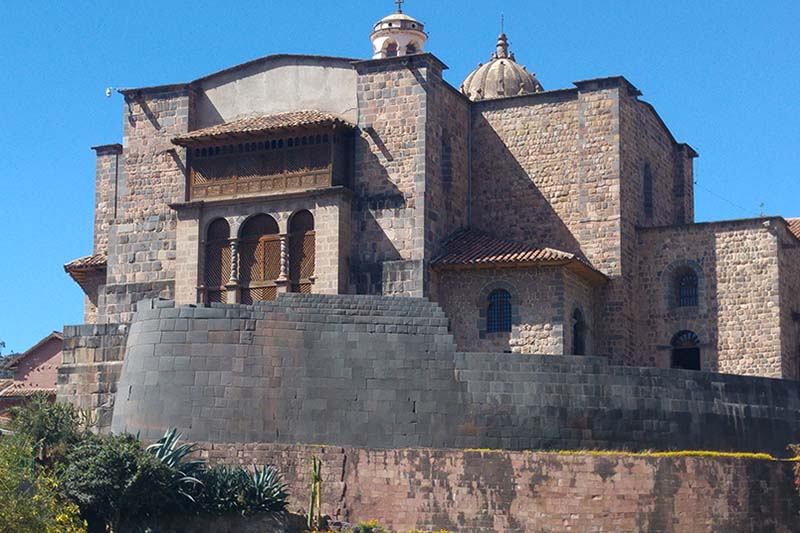
After the Spanish conquest, the temple passed into the hands of the Dominican Order, which used its sturdy walls as foundations to build its church and convent. This gave rise to one of the most striking architectural combinations in the Americas, where Inca stonework and colonial art coexist just a few feet apart.
The Earthquakes That Revealed the Inca Walls
The earthquakes that struck Cusco in 1650 and 1950 severely damaged the colonial structure, while the Inca walls remained standing. After the 1950 earthquake, restoration work uncovered several Inca chambers that are now part of the visitor route.
What to See at the Santo Domingo Convent
The visit combines Inca and colonial spaces. These are the highlights you shouldn’t miss.
The Inca Chambers
Several Inca chambers remain around the cloister. According to tradition, they were dedicated to the Moon, the stars, the rainbow, and lightning. Their polished stone walls, with blocks that fit together without mortar, trapezoidal doorways, and niches, showcase the finest examples of Inca architecture.
The Colonial Cloister
The central courtyard is surrounded by two levels of stone arches and decorated with colonial paintings. It is one of the most photogenic corners of Cusco, especially because of the contrast between the arches and the Inca walls visible around them.
The Curved Wall
From El Sol Avenue and the garden, you can see the famous curved Inca wall that supports the rear section of the church. Its perfectly rounded shape and precisely fitted stones make it one of the city’s most recognizable landmarks.
The Church and Bell Tower
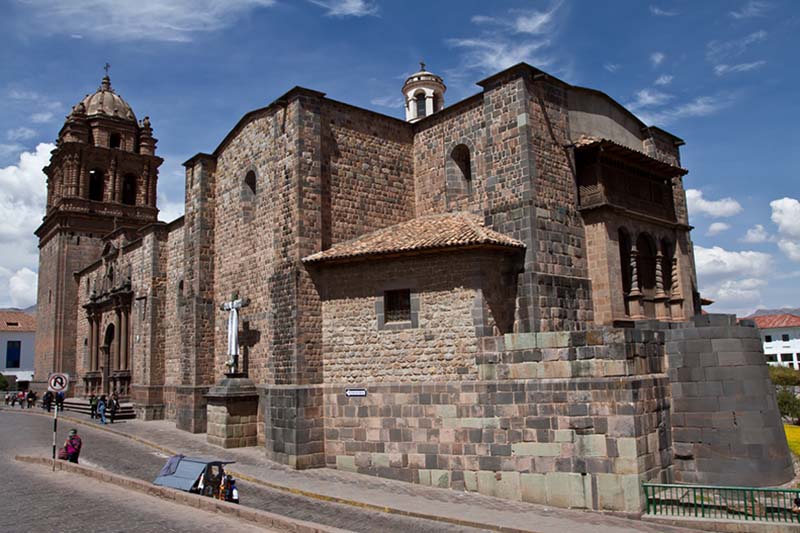
The Santo Domingo Church is still in use and preserves altars and religious artwork. Its Baroque bell tower stands out against the skyline of the historic center and is best appreciated from Santo Domingo Square.
Practical Information for Your Visit
The convent is located in Santo Domingo Square, between El Sol Avenue and Santo Domingo Street, about a five-minute walk from the Plaza de Armas.
Admission and Opening Hours
Admission to the convent is not included in the Cusco Tourist Ticket and must be paid separately at the entrance. It is open every day, although on Sundays it only welcomes visitors in the afternoon. Since admission fees and opening hours may change, it’s best to confirm them before your visit.
How Much Time Do You Need?
A relaxed visit takes between one hour and an hour and a half. If you want to better understand each area, it’s worth hiring one of the official guides who offer their services at the entrance.
Tips for Enjoying Your Visit
- Go early in the morning to explore the cloister with fewer visitors and better lighting for your photos.
- Dress respectfully, as the church is still an active place of worship.
- Complement your visit with the Qorikancha Site Museum, located beneath the garden along El Sol Avenue, which displays archaeological artifacts from the area.
- If you prefer a guided visit that includes other city attractions, you can include the convent in a Half-Day Cusco City Tour.
Frequently Asked Questions About the Santo Domingo Convent
Are the Santo Domingo Convent and Qorikancha the Same Place?
They share the same location. Qorikancha was the Inca temple, while the Santo Domingo Convent is the colonial structure built on top of its walls. Today, both can be visited together on a single tour.
Does the Cusco Tourist Ticket Include the Santo Domingo Convent?
No. Admission is paid separately at the convent itself. The Cusco Tourist Ticket only includes the Qorikancha Site Museum, located in the lower part of the garden.
Can You Visit the Convent on Sundays?
Yes, but only in the afternoon. The tourist route remains closed on Sunday mornings.
Why Did the Inca Walls Withstand the Earthquakes?
The Incas carved stones to fit together precisely, built walls with a slight inward slope, and used trapezoidal doors and windows. These techniques gave their structures great stability during earthquakes.


