
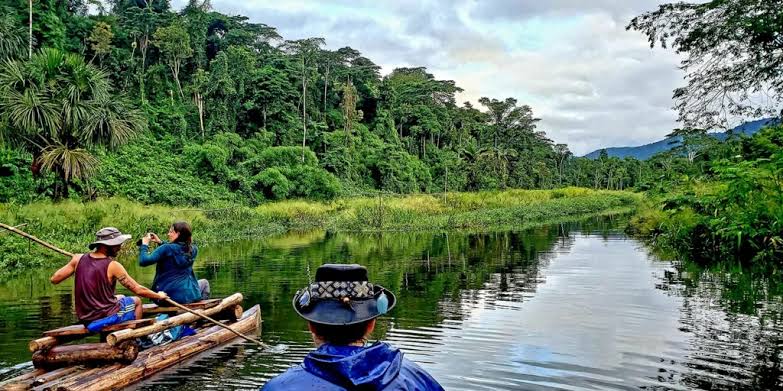
Many travelers arrive in Cusco with the idea of “doing the jungle” and discover that the decision is not so simple. Tambopata and Manu are both in the same region, Madre de Dios, but one can be explored in just a few days with short transfers, while the other is almost a separate journey in itself. Before booking, it is worth knowing how much time each one requires and what you can expect to find there.
First, the basics: a national reserve and a national park are not the same thing
Tambopata is a national reserve. This means that, in addition to protecting the forest, it allows sustainable activities such as tourism and Brazil nut harvesting by local families. It was created in 2000 and covers around 274,690 hectares south of the Madre de Dios River.
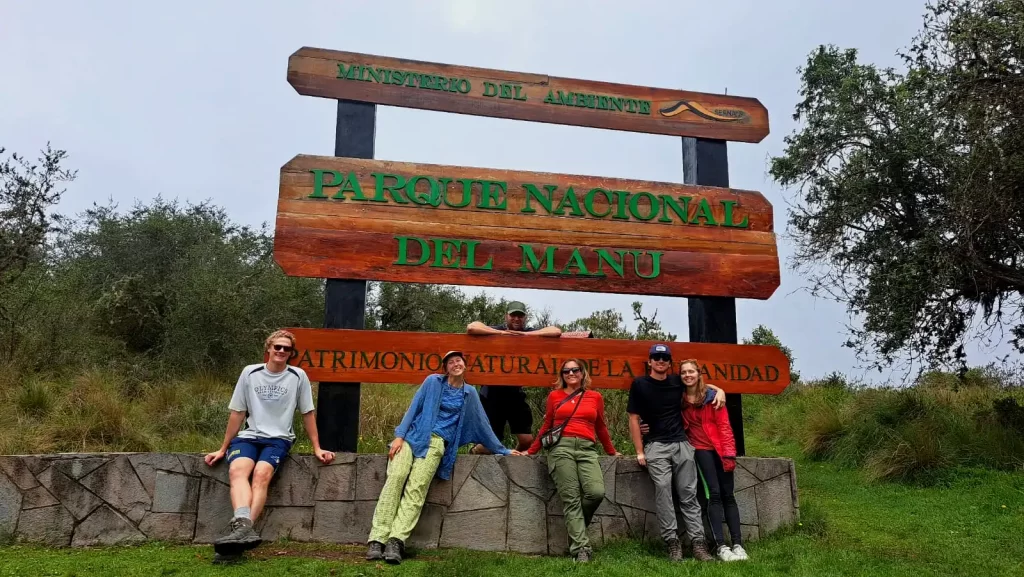
Manu, on the other hand, is a national park with stricter rules and is also recognized as a World Heritage Site. Much of its territory is closed to tourism, and only a limited area can be visited, always with authorized operators. This difference explains almost everything else: why Manu is less disturbed and why reaching its deeper areas takes much more time.
What a trip to Tambopata is like, day by day
To give you a realistic idea, this is the pace of a typical four-day program.
Day 1. You fly from Cusco or Lima to Puerto Maldonado. You are picked up at the airport, stop by the operator’s office to leave your large luggage, and then continue by boat to the lodge. In the afternoon, you take a short introductory walk and, after dark, go out by boat to look for caimans with a flashlight.
Day 2. You wake up very early to visit a clay lick, a clay wall where parrots and macaws come down to feed. Then you explore forest trails with your guide and, in the afternoon, climb an observation tower to see the forest from above.
Day 3. You visit an oxbow lake, such as Sandoval Lake, and explore it by canoe in search of giant river otters, herons, and monkeys along the shoreline. At night, you go on a walk to look for frogs, insects, and spiders that do not appear during the day.
Day 4. One final early-morning outing, breakfast, and then a boat ride back to Puerto Maldonado to catch your flight.
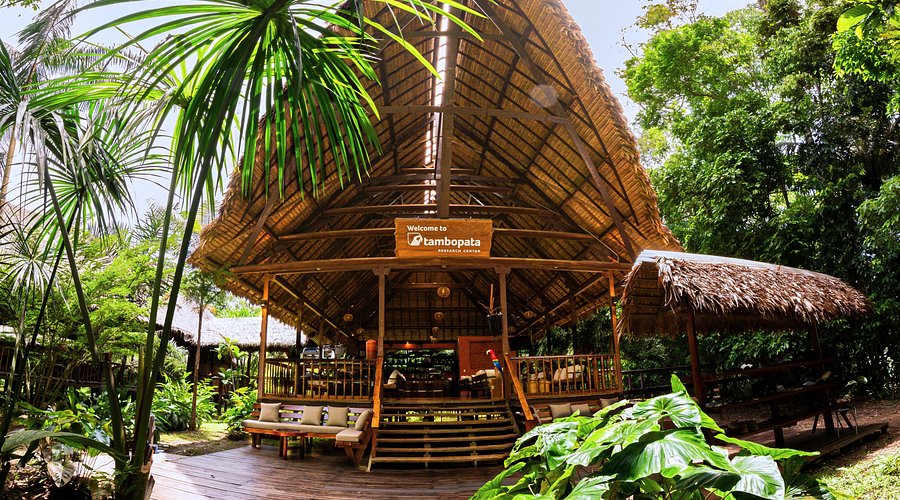
Three, four, or five days in Tambopata?
With three days, you can get a good first impression of the rainforest, but the first and last days are taken up almost entirely by transfers. In practice, you are left with just one full day.
With four days, you gain a second full day, and that makes a real difference. Wildlife sightings in the rainforest are never guaranteed: they depend on rainfall, the time of day, and luck. More outings mean more opportunities.
With five days or more, you can stay at lodges located farther upriver, away from the city’s area of influence, where the forest receives fewer visitors and the clay licks are larger.
Manu: a journey that begins in the mountains
You do not reach Manu by plane. You leave Cusco by road, pass through Paucartambo, cross high-altitude areas, and begin descending through the cloud forest into the rainforest. Along this route, it is common to see the Andean cock-of-the-rock, Peru’s national bird, as well as a variety of orchids and ferns that you will not find in Tambopata. You then continue by boat along the Alto Madre de Dios River and later the Manu River.
This descent is precisely what makes Manu unique: on a single journey, you pass through several ecological zones. The trade-off is time. Programs of three to five days remain in the cloud forest and buffer zone; to enter the area of the park where tourism is permitted, you generally need a week or more.
The key question: how much time can you give to the rainforest?
If you have between three and five days in your itinerary for the rainforest, the answer is almost always Tambopata. It lets you make better use of each day and combines easily with Cusco and Machu Picchu, because the flight to Puerto Maldonado is short.
If you can dedicate seven days or more exclusively to nature, Manu offers something Tambopata does not: the transition from the mountains to the Amazon lowlands and a much less disturbed forest.
Five situations and the option that fits best
You are traveling through Peru for two weeks and want to see a bit of everything. Tambopata, four days.
You are traveling as a family with children. Tambopata. Transfers are shorter and lodges offer more comforts.
You are a birdwatcher or nature photographer. Manu, because of the diversity of ecosystems along a single route.
You have already visited another part of the Amazon. Manu, if you are looking for something different from what you have already experienced.
You are arriving at the end of a long trek such as the Inca Trail or Salkantay. Tambopata. After several days of hiking, you will appreciate flying in and following a more relaxed pace.
What changes depending on the season
Between May and October, there is less rain, the trails are firmer, and river levels drop, exposing beaches where birds and caimans rest. From November to April, the forest is at its greenest, but there is more mud, more mosquitoes, and some trails may close. In Manu, the rainy season has a greater impact because the road from Cusco can be cut off by landslides.
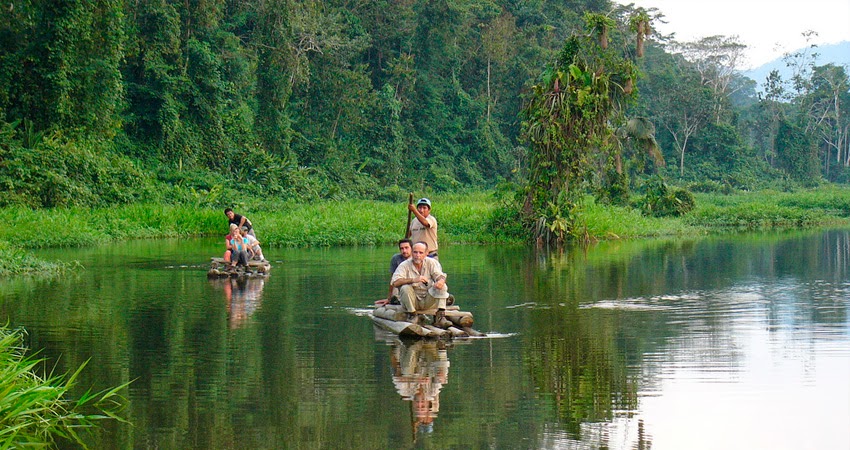
What to bring to Tambopata or Manu
Bring lightweight, quick-drying long-sleeved clothing in light colors to help protect you from mosquitoes. Pack insect repellent with DEET, a headlamp, a rain poncho, binoculars, and a waterproof bag for your phone and camera. If you are going to Manu, add a warm jacket: on the first day of the road journey, you will pass through cold high-altitude areas before descending into the rainforest.
Frequently asked questions
Can I visit Tambopata in two days?
Two-day programs do exist, but most of the time is spent on transfers. We do not recommend them if your main goal is to see wildlife.
Is it safe to travel to the rainforest in southern Peru?
Yes, as long as you travel with an authorized operator and follow your guide’s instructions in the forest and on the river.
Do I need a vaccine to visit Tambopata or Manu?
The yellow fever vaccine is often recommended for travel to the Amazon. Check with a healthcare provider before your trip.
Which animals are you most likely to see?
Macaws, parrots, monkeys, caimans, and a wide variety of birds. Large cats such as jaguars are seen only rarely.
Can I visit Manu and Tambopata on the same trip?
Yes. Some longer programs travel downriver all the way to Puerto Maldonado, but they require many days and careful planning.


