
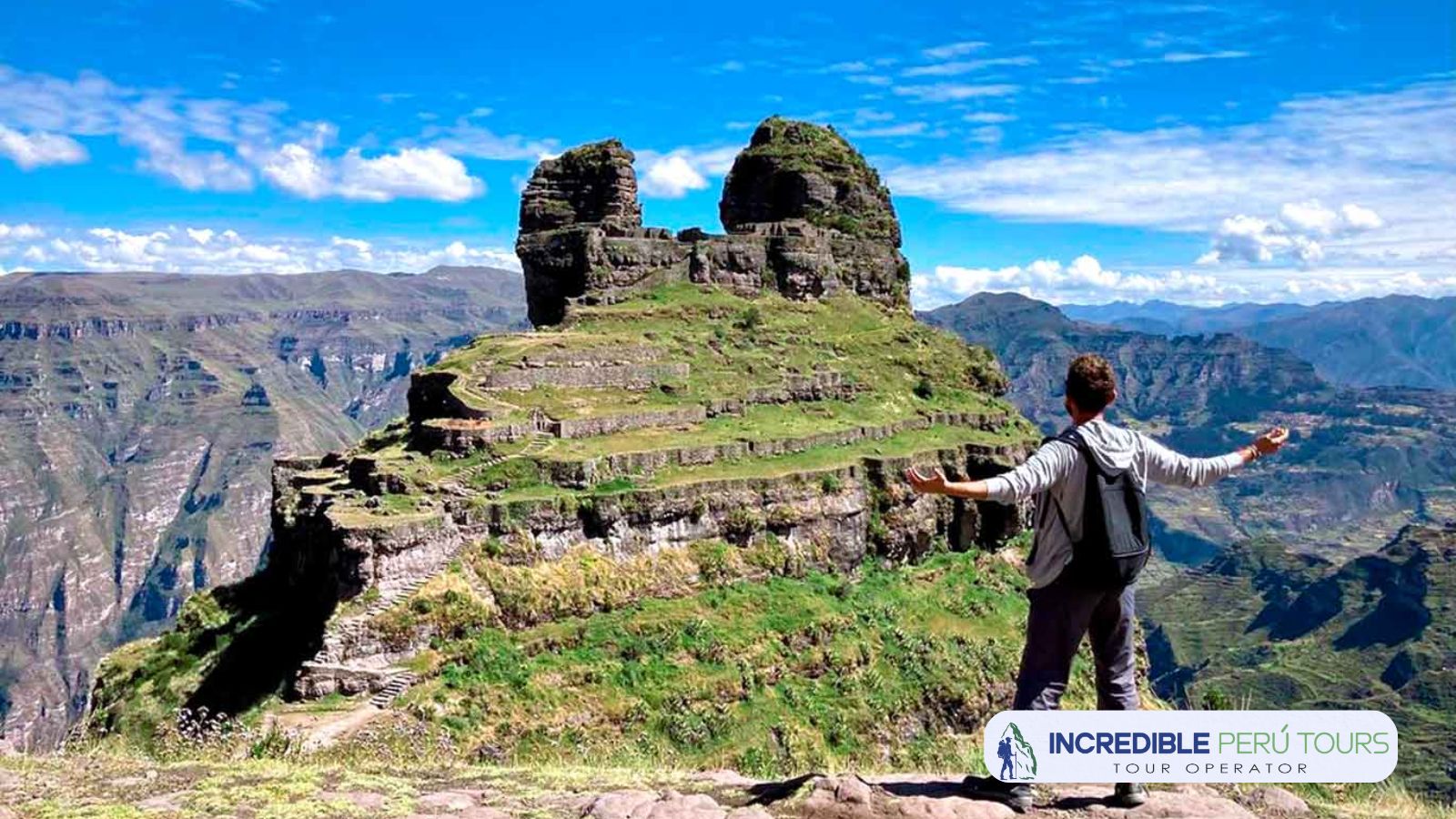
Perched on a rocky ridge more than 4,000 meters above sea level and crowned by two rock formations that resemble horns pointing toward the sky, Waqrapukara is one of the most enigmatic structures in southern Peru. Its name, shape, and location have inspired stories for centuries. The site combines human craftsmanship with dramatic geology in a little-visited corner of Cusco.
What the Name Waqrapukara Means
The name comes from Quechua and translates as “horn-shaped fortress.” It combines waqra (horn) and pukara (fortress or defensive enclosure). The name accurately describes the site’s profile: two twin rock formations rising above the structure and giving it such a distinctive silhouette.
In the Andean worldview, place names often refer to a site’s appearance or function. Here, the choice is clear because these two natural rock towers can be seen from a distance and became part of the memory of those who named the place.
History of the Site
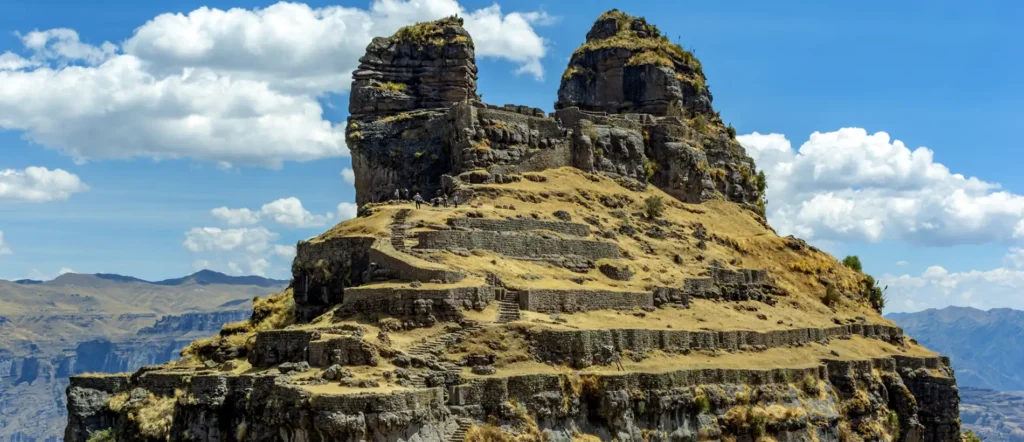
Studies indicate that the site was occupied by the Canchi culture before the expansion of the Tahuantinsuyo. This people controlled the area and took advantage of the ridge’s strategic position, both for ceremonial purposes and to monitor the surrounding territory.
When the Incas arrived, the complex was remodeled and expanded using the fine stonework that characterizes this civilization. The carved stone walls, terraces, and trapezoidal openings show the imperial influence. The construction was adapted to the existing rock, integrating architecture and landscape into a single work.
Function and Meaning
Although the name suggests a defensive purpose, many researchers believe the site primarily served ritual functions. Its isolated and difficult-to-reach location fits better with a sacred space than with a military outpost. It may have combined both roles depending on the period.
In the Andean world, mountains were considered living deities. Waqrapukara rises surrounded by canyons and peaks that formed part of this sacred geography. The construction seems to interact with its surroundings and to be oriented toward natural elements filled with symbolic meaning.
Architectural Features
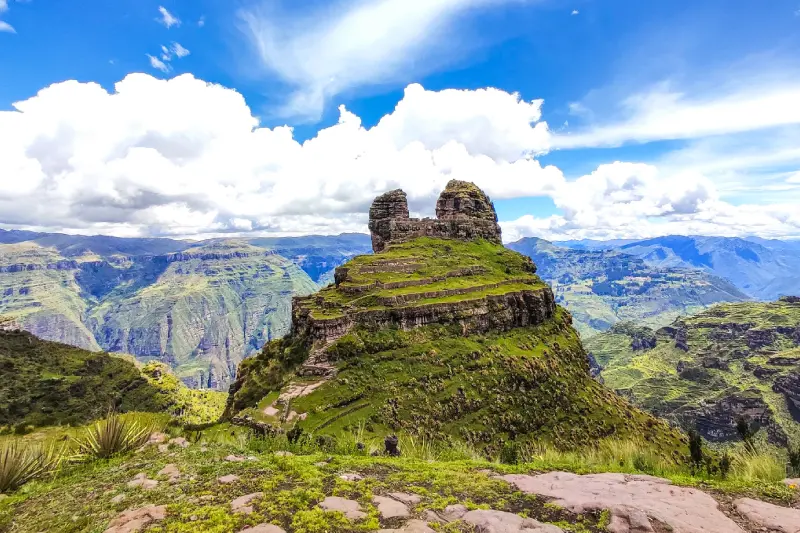
The most striking features are the two rock formations that crown the complex. They were not completely carved, but rather partially shaped from the natural bedrock. Between them are enclosures, stairways, and platforms that make use of every projection in the terrain.
The Inca section features well-fitted stone blocks, stepped terraces, and trapezoidal doorways. These details confirm the site’s importance within the imperial system. The combination of carved stone and natural rock gives it a unique character.
Legends of the Site
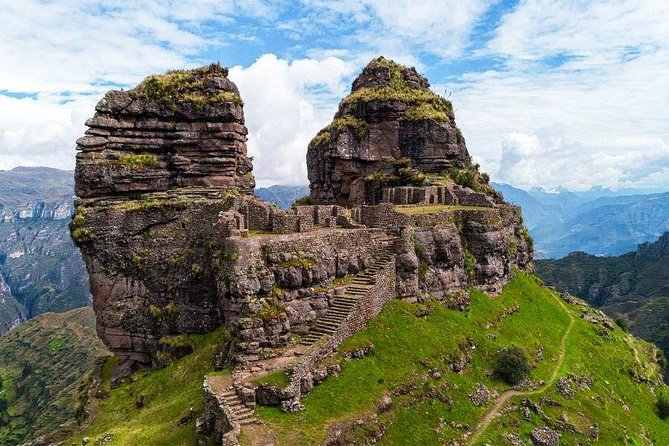
Stories about Waqrapukara have been passed down from generation to generation. Some connect it with ancient rulers who resisted imperial expansion, while others associate it with rituals dedicated to sacred guardian mountains. Regardless of their historical accuracy, these stories keep the site’s symbolic significance alive among nearby communities.
Why Visit Waqrapukara Today
The same remoteness that kept the site largely forgotten for centuries is now part of its appeal. Visitors find a monument without crowds, surrounded by silence and offering sweeping views over the Apurímac Canyon. The hike to reach it is demanding but rewarding and forms part of the experience of discovering such a secluded place.
If you want to experience it up close, you can take a Waqrapukara tour with Incredible Peru Tours and experience the site at the pace and with the attention it deserves.


