
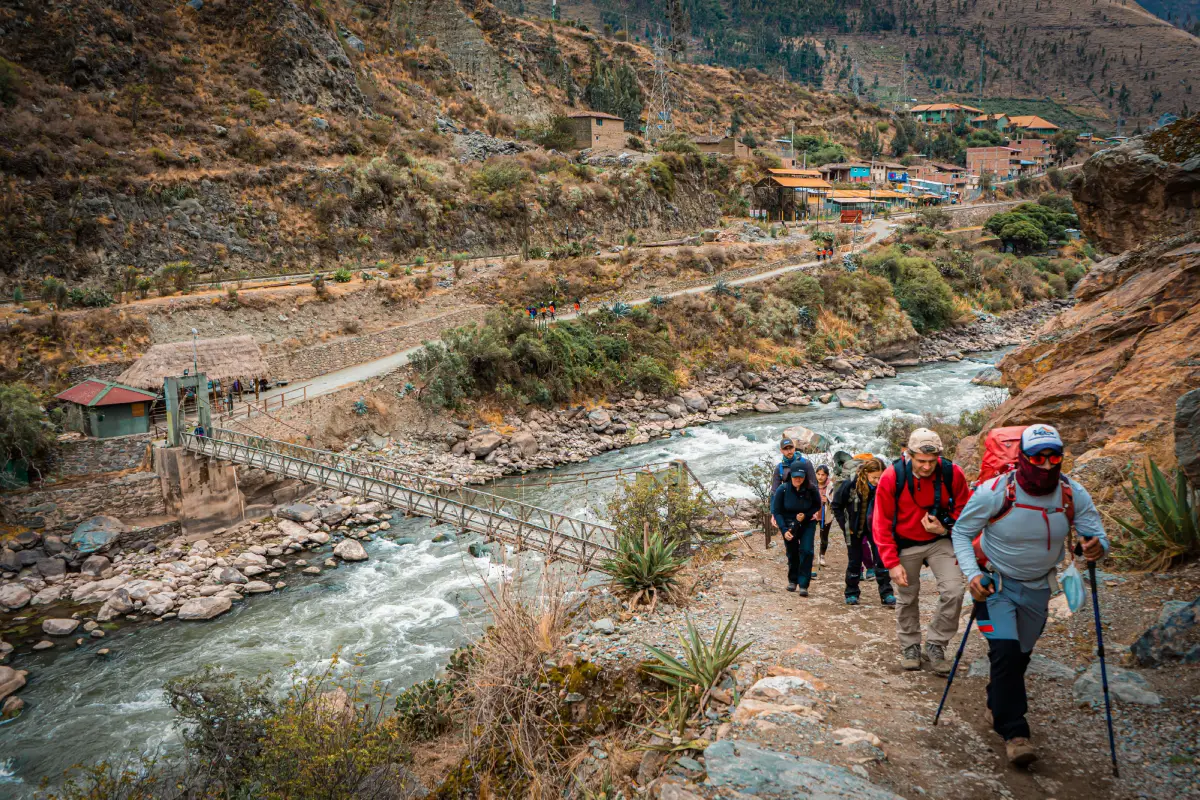
The question about restroom facilities on the Inca Trail is one of the things most people have on their minds before booking, and one of the things they are least likely to ask out loud out of embarrassment or because they are not quite sure how to phrase it. However, it is a completely legitimate question, and the answer directly affects the practical preparation for the trek. This guide answers it clearly and without euphemisms, because arriving at kilometer 82 without knowing what to expect in this regard is one of the most avoidable sources of discomfort on a trek that already has enough challenges on its own.
The restroom facilities at the Ministry of Culture control points
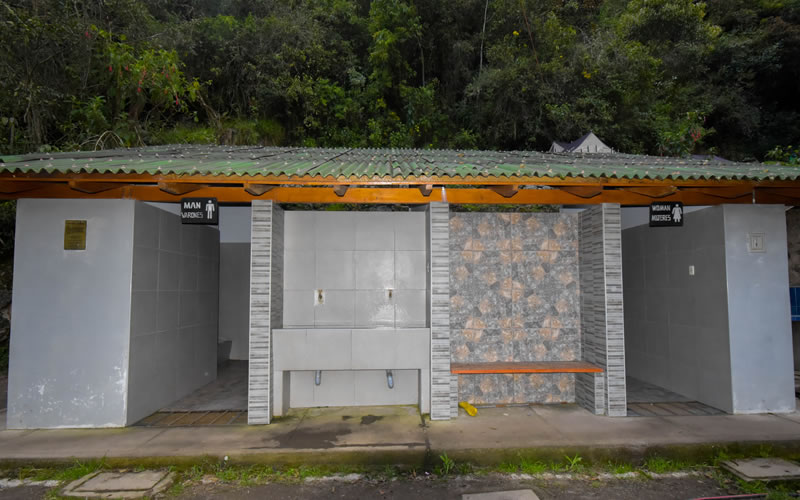
Along the Inca Trail, there are sanitary facilities at the Ministry of Culture control points and at some archaeological sites along the route. These restroom facilities are permanent structures with toilets or latrines, and in most cases they have a usage fee of one or two Peruvian soles, paid directly on site. Carrying loose coins in your pocket from the start is a practical habit that experienced guides recommend from day one.
The quality and condition of these facilities vary. At the busiest points, such as kilometer 82 and the entrance to Wiñay Wayna, the facilities get heavy use, and their condition may vary depending on the time of day and the number of groups that have passed through earlier. At less busy points, conditions are usually better. They are not hotel restrooms, but they are functional and accessible when they are needed most.
The presence of toilet paper in these facilities is not guaranteed. Carrying your own in an easy-to-reach pocket of your daypack is a recommendation that seems obvious, but several Inca Trail participants discover at the worst possible moment that they failed to follow it.
The restroom facilities at the campsites
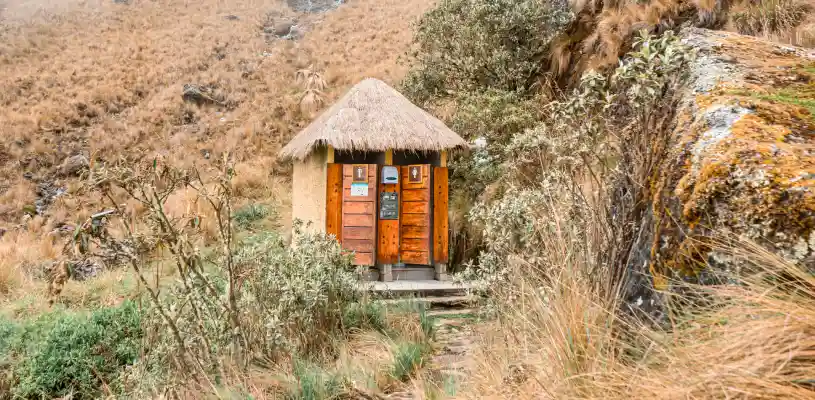
At the Inca Trail campsites, the restroom facilities depend on the type of service booked and the operator. Groups with standard camping service have access to field latrines set up by the support team at the overnight stops. These latrines are basic facilities: a simple structure with enough privacy, located at a reasonable distance from the tents and prepared by the porter team before the group arrives.
Some higher-quality operators set up portable bathroom tents with a folding toilet and a water container for handwashing, offering a higher level of comfort and privacy than a simple latrine. This difference in the quality of campsite sanitary facilities is one of the aspects that varies the most between operators and one of the things most worth checking before booking, especially if nighttime comfort is an important factor for the person or group.
At campsites closer to fixed infrastructure, such as the Wiñay Wayna area, there may be access to permanent facilities operated by the Ministry of Culture or by nearby glamping complexes, with a noticeably higher level of comfort than field latrines.
Showers: what exists and what does not
The question about showers on the Inca Trail has a simpler answer than the one about restroom facilities: at the campsites on the standard route, there are no showers available for participants. The four days of the Inca Trail are done without the possibility of showering in the field, except in glamping complexes or domes that do have hot water facilities at some points along the route.
For groups with conventional camping service, personal hygiene during the trek is managed with wet wipes, water from the container that the kitchen team provides each morning for washing face and hands, and in some cases with water from the streams along the trail in sections where the guide indicates it is safe to do so.
Upon arriving in Aguas Calientes at the end of the fourth day, the shower at the hotel or hostel is one of the most appreciated moments of the journey. Many Inca Trail participants describe that first shower after four days in the field as one of the most pleasurable sensory experiences they remember, even though in a normal context it would be completely ordinary.
The issue of toilet paper and waste
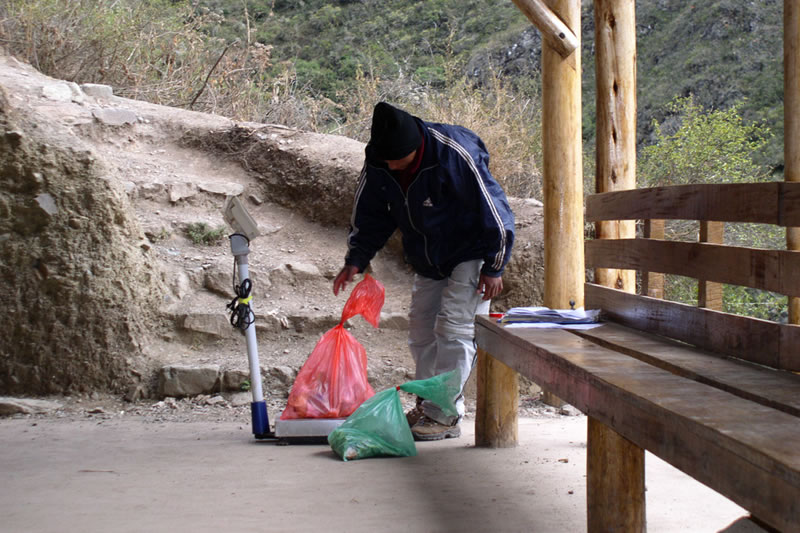
On the Inca Trail, as on any protected high-mountain trail, waste management follows specific rules that participants must know and respect. Toilet paper is not buried or left on the trail: it is carried in a small plastic bag until the next sanitary facility point or until camp, where the support team handles its proper disposal.
This practice, which may seem uncomfortable to think about in advance, is actually very easy to manage with the right preparation. Carrying a couple of resealable plastic bags in your daypack for this specific purpose, mentally labeled as “trail trash bags,” solves the issue without much complication. It is the same principle applied in any protected mountain area with group traffic: what goes onto the trail leaves with the group that brought it in.
Major bathroom needs, when they do not coincide with the fixed facility points along the route, are handled by following the guide’s instructions regarding the designated areas of the trail for that purpose. The guide explains the specific procedure and points out the appropriate zones depending on the section of the trail where the group is. It is not a situation that participants have to solve on their own or improvise.
What to bring to properly manage the restroom situation
Proper preparation for the sanitary aspect of the Inca Trail is simple, and the necessary gear is minimal in both weight and space. These are the items worth including in your daypack from the very first kilometer:
- Toilet paper in a waterproof bag: Enough for the four days, with a small backup margin. The amount is not large, but not having it at the wrong moment makes a big difference. The waterproof bag keeps it from getting wet if the backpack is exposed to rain or dew.
- Resealable plastic bags for waste: Two or three medium-sized bags are enough. They are used for used paper between facility points and are handed over at camp for disposal by the support team.
- Antibacterial wet wipes: For cleaning your hands when there is no access to soap and water. Essential before eating on sections between campsites.
- Small bottle of hand sanitizer: A complement to wet wipes and especially useful after using the facilities at control points where water for handwashing is not always available.
- Loose coins in soles: To pay for restroom use at control points. One or two soles per use is the usual range. Carrying five to ten soles in coins in your pants pocket from the start is enough for the four days.
- Flashlight or headlamp: Very useful for going to the bathroom at night or early in the morning, since campsites and trails are not always lit. It helps you walk with more safety and comfort.

Restroom facilities at Machu Picchu: the last day of the trek
Upon arriving at Machu Picchu on the fourth day, the site’s restroom facilities are located outside the main entrance, in the access area before crossing the ticket checkpoint. There are no sanitary facilities inside the archaeological site itself: if you need to use the bathroom during the visit, you must leave to the access area and re-enter, which means the guard at the checkpoint will check your ticket again.
The restroom facilities at the entrance to Machu Picchu also have a usage fee in soles. They are generally in better condition than the field facilities along the route because they receive more frequent maintenance due to the high volume of visitors. They also usually have toilet paper available, although this is not guaranteed during peak traffic hours.
In Aguas Calientes, the town you descend to at the end of the visit, public restrooms and those in restaurants and hotels are normally available. It is the first point of the journey with sanitary facilities comparable to urban ones, and after four days in the field, their presence is appreciated in a way that would normally go completely unnoticed.
An honest perspective for those who are worried about this
If the question about restroom facilities causes some concern before the trek, it helps to know that almost all Inca Trail participants who had this worry before departure had completely forgotten about it by halfway through the first day. The pace of the journey, the scenery, the physical effort, and the group dynamic quickly push aside the logistical concerns that seemed important back at the hotel in Cusco.
Certified Inca Trail guides handle this aspect completely naturally because it is part of their everyday work. There is no question about the topic that seems strange or uncomfortable to them, and they respond with practical information and without drama. Asking your guide about it during the pre-trek briefing is exactly what you should do if you have any specific concern.
Millions of people of all kinds of profiles, levels of outdoor experience, and degrees of comfort with rustic conditions have completed the Inca Trail. The vast majority of them finished the four days without the issue of restroom facilities becoming a real problem. Proper preparation and the adaptable attitude that the trek requires in every aspect make this just another part of the experience that can be handled without major difficulty.
Do you have practical questions about the Inca Trail before deciding to book? At Incredible Peru Tours, we answer any questions before confirming the booking, including the most everyday ones, because we believe that arriving at kilometer 82 without surprises is part of the service we provide.


