
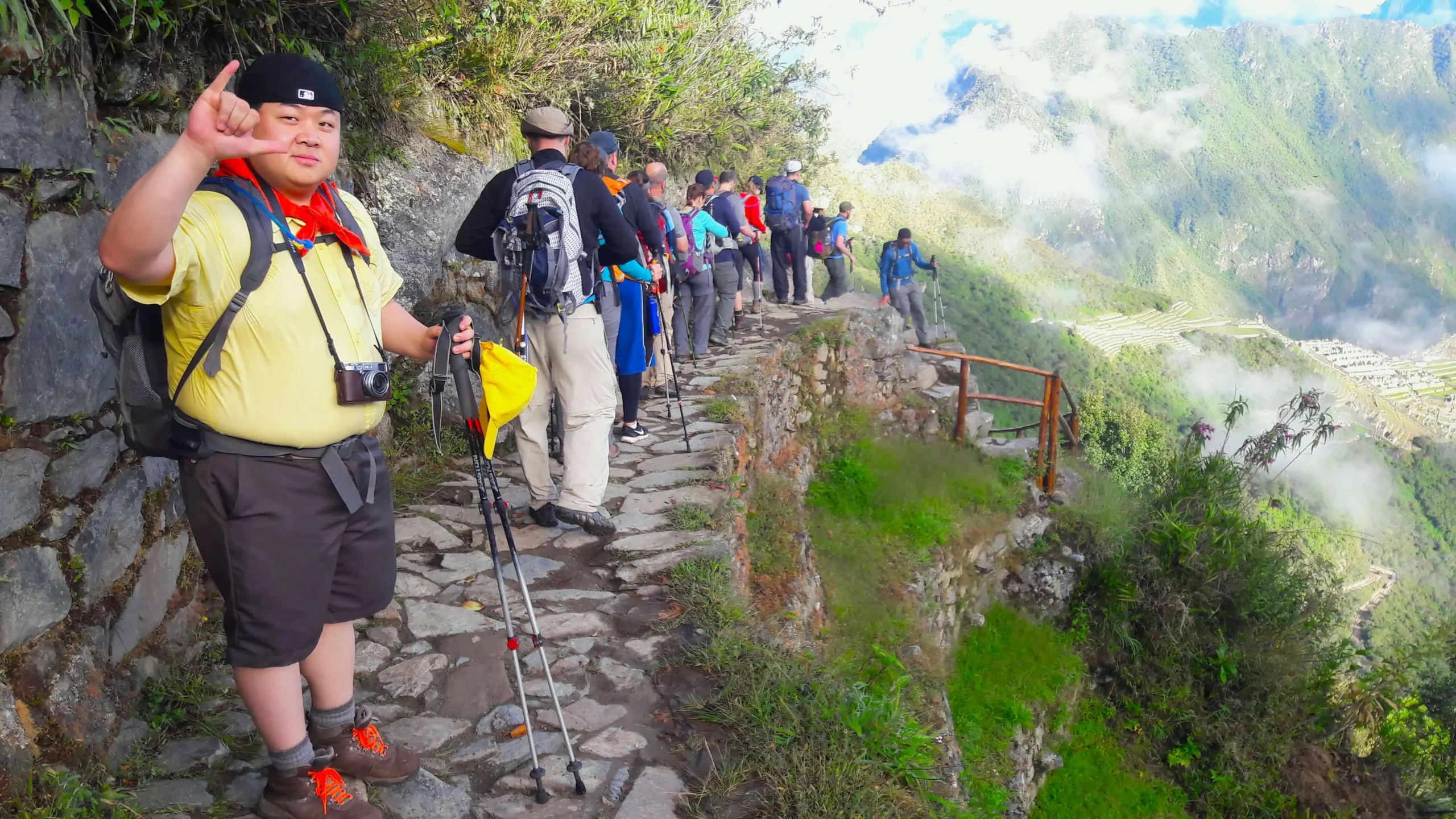
The Inca Trail is the pre-Hispanic stone path that connected the heart of the Inca Empire with the citadel of Machu Picchu. Built more than five hundred years ago as part of the most extensive road network in pre-Columbian America, the section that thousands of travelers walk today toward the Inca citadel is one of the most iconic, most studied, and most sought-after trekking experiences in the world. It is not a modern trail designed for tourists. It is the original path walked by messengers, priests, soldiers, and pilgrims during the peak of the Tahuantinsuyo.
This historical continuity between those who walk it today and those who walked it centuries ago is what makes the Inca Trail qualitatively different from any other trek in the region. You do not simply visit a historical site at the end of the route—you spend four days walking the very infrastructure that once connected that site to the world that created it.
The historical origin: who built the Inca Trail and why
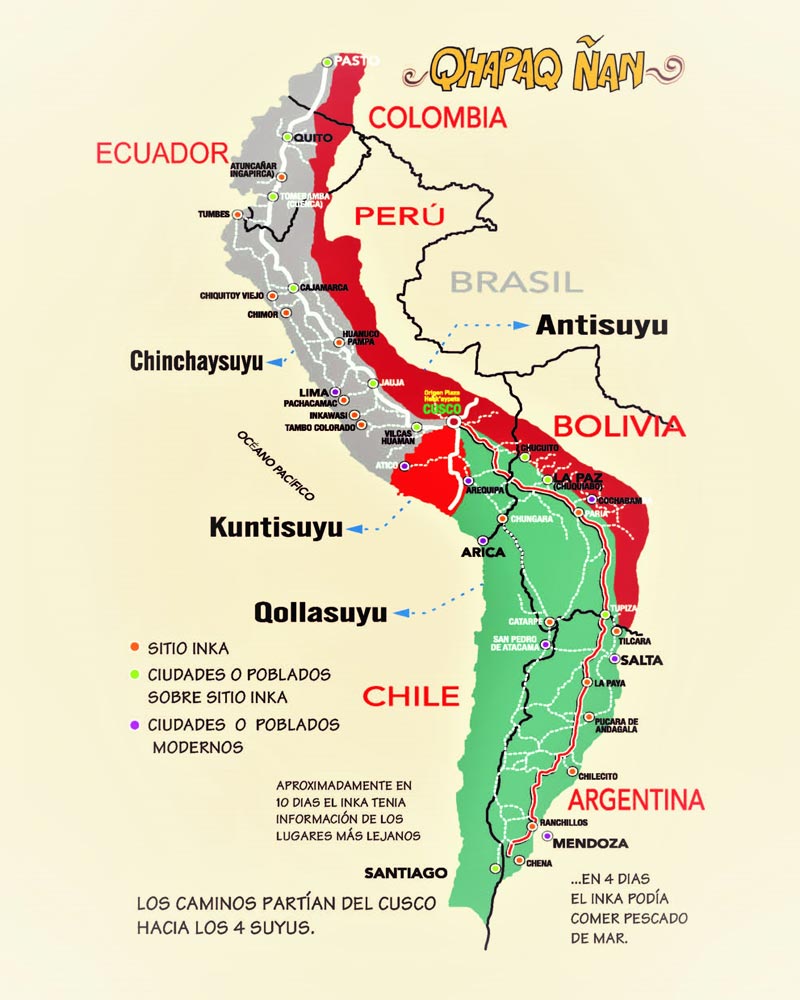
The trail that leads to Machu Picchu today is part of the Qhapaq Ñan, the Inca road system that at its height extended for approximately 30,000 kilometers, connecting southern Colombia with northern Chile and northwestern Argentina. The section known as the Inca Trail is the segment that links the Sacred Valley of the Urubamba River with Machu Picchu through the Andes, following the route used by imperial officials and messengers to connect Cusco with one of its most important ceremonial centers.
The construction of this section, like the rest of the Qhapaq Ñan, was carried out through the mit’a, a system of mandatory community labor in which each community contributed work to the Inca state in exchange for protection and access to redistributed resources. It was not slave labor in the Western sense but organized labor within a system of reciprocity that the Inca state used to execute its most ambitious infrastructure projects.
In 2014, UNESCO declared the Qhapaq Ñan a World Heritage Site, recognizing its exceptional value as an engineering achievement and as a living testament to a civilization that built something unprecedented in the pre-Columbian Americas.
What the route is like: key facts about the classic Inca Trail
The classic Inca Trail covers approximately 43 kilometers over four days of trekking with overnight camping. The route begins at kilometer 82 of the Cusco–Aguas Calientes railway, where the stone Inca path separates from the train tracks and enters the mountains, and ends at the main entrance of Machu Picchu, reached through the Sun Gate, Inti Punku, at sunrise on the fourth day.
Between these two points, the trail crosses three mountain passes, the highest of which, Warmiwañusca Pass, also known as Dead Woman’s Pass, reaches 4,215 meters above sea level. It also passes through five archaeological sites from the imperial period: Llactapata, Runkuraqay, Sayacmarca, Phuyupatamarca, and Wiñay Wayna, each with Inca architecture in different states of preservation and located in landscapes that are sometimes as impressive as the trail itself.
The route passes through three distinct ecosystems in four days: high-altitude puna in the upper sections, cloud forest in the mid-level areas, and subtropical jungle in the final descent toward Aguas Calientes. This rapid change of landscapes is one of the aspects that most surprises first-time trekkers.
Why you need a permit and how the quota system works
Access to the Inca Trail is regulated by Peru’s Ministry of Culture, which limits the number of people who can enter the trail each day to a maximum of 500, including trekkers, guides, porters, and cooks. This restriction was established to protect the trail and archaeological sites from the degradation caused by unregulated mass tourism.
Permits cannot be purchased individually; they must be managed through authorized tour operators registered with the Ministry of Culture. This means that doing the Inca Trail completely independently is not possible—you must hire a certified guide and book through a licensed agency.
The permit is linked to each participant’s passport number and is non-transferable. If someone cannot attend after the permit has been issued, the spot is lost. During peak season from May to August, permits sell out four to five months in advance. Booking early is not just recommended—it is essential to secure your preferred dates.
Archaeological sites along the trail
One of the features that most distinguishes the Inca Trail from other treks in the region is the presence of archaeological sites directly along the path, not as separate destinations but as integral parts of the journey. Walking through them is part of the experience itself.
Llactapata is the first site, near kilometer 82, with agricultural terraces and views over the Urubamba Valley. Runkuraqay, visited on the second day, stands out for its unusual circular architecture and its strategic location along the ascent to the second pass. Sayacmarca, meaning “inaccessible town” in Quechua, sits on a rocky promontory with steep drops on three sides. Phuyupatamarca, “city in the clouds,” features ceremonial water channels that still function today and offers some of the most striking views when the area is covered in mist. Wiñay Wayna, “forever young,” is the best-preserved site on the trail, with terraced slopes and ceremonial structures just before the final stretch to Machu Picchu.
Arrival at Machu Picchu: why the Inca Trail is different
The Inca Trail does not enter Machu Picchu through the usual bus entrance from Aguas Calientes. It arrives through the Sun Gate, Inti Punku, the historical entrance used by Inca travelers and pilgrims coming from Cusco. From there, the entire citadel is revealed from above, with its terraces, temples, and the Huayna Picchu mountain in the background, before descending into the site.
This moment of arrival, after four days walking the same path used centuries ago, produces a powerful emotional response that travelers describe with remarkable consistency. Whether the sky is clear or covered in mist, whether it is your first time seeing Machu Picchu or not, the way you arrive fundamentally changes how the site is experienced.
Who can do the Inca Trail and what preparation is required
The Inca Trail does not require technical mountaineering experience or specialized climbing equipment. What it does require is above-average physical fitness and, most importantly, proper acclimatization to altitude, which makes the difference between enjoying the second day and simply enduring it.
Spending at least two nights in Cusco before starting the trek is the minimum recommended for any participant, regardless of fitness level. Three nights are better for travelers over 55 or those sensitive to altitude. Cusco’s elevation at 3,400 meters is the best preparation for the effort required on the second day at Dead Woman’s Pass.
Physical preparation with progressive hikes of two to three hours on uneven terrain in the weeks before the trip helps condition the cardiovascular system and leg muscles. You do not need to be an athlete, but you should arrive active rather than completely sedentary.
When is the best time to go
The dry season, from May to October, is the most recommended due to stable weather, good trail conditions, and clear views at the mountain passes. June, July, and August have the highest demand and sell out earliest. May, September, and October offer equally good conditions with fewer crowds and often lower prices.
The wet season, from November to January and in March, does not prevent trekking but introduces weather variability that requires proper rain gear. The landscape is greener and more lush during these months, and fewer groups on the trail create a more intimate experience. February is the only month when the Inca Trail is completely closed for maintenance.
Inca Trail variations: not just the four-day trek
The Inca Trail is not limited to the classic four-day trek. There are alternative versions adapted to different timeframes and physical levels. The two-day short Inca Trail starts at kilometer 104, avoids the high mountain passes, and still reaches Machu Picchu through the Sun Gate. There is also a one-day private version covering the final section from kilometer 104. The three-day Inca Trail Jungle combines the final part of the trail with mountain biking and adventure activities.
Each version reaches the same destination and shares the same historical significance of the original Inca path. What changes is the duration, the physical demands, and the time available to experience the route.
Do you want to hike the Inca Trail with the right preparation and service? At Incredible Peru Tours we manage permits, organize certified guides and porters, and coordinate every detail so you can focus on enjoying each kilometer of South America’s most historic trail.


