
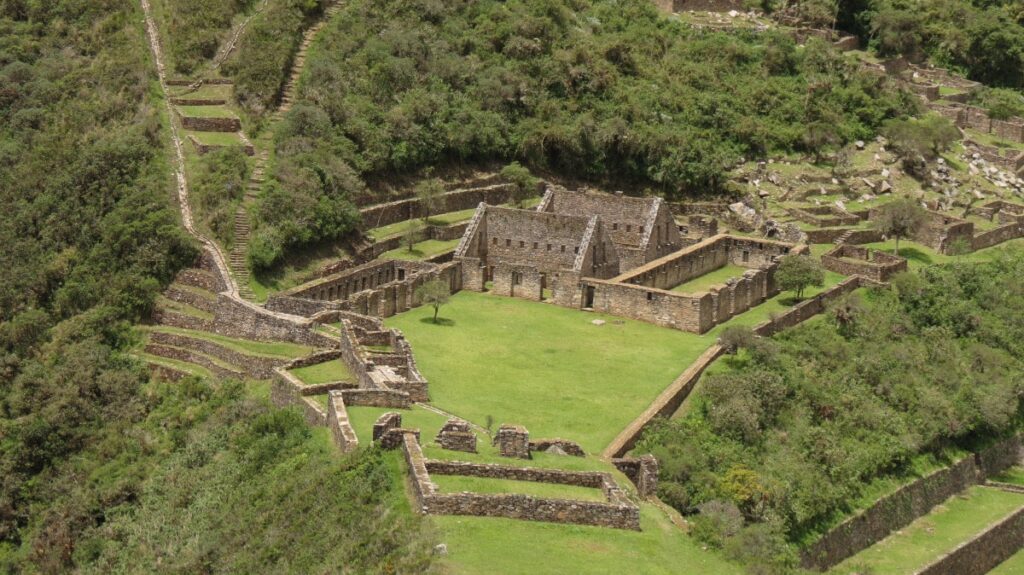
If the Inca Trail is Peru’s most famous trek, the Choquequirao trek is the one most respected by people who truly know the region. One leads to the most photographed Inca citadel in the world. The other takes you to an archaeological site as large as Machu Picchu, just as impressive, and visited by only a tiny fraction of the tourists who arrive in Cusco each year. One requires permits that sell out months in advance. The other is accessible almost any day of the year without advance booking. One has worldwide fame. The other has something fame usually takes away from places: solitude.
This guide compares the two routes with the honesty a decision of this importance deserves. There is no objectively better option. There is one that fits each type of traveler better, and that is exactly what these pages are meant to help you identify.
Choquequirao: what it is and why so few people know it
Choquequirao is an Inca archaeological complex located on a mountain ridge at 3,033 meters above sea level, in La Convención Province, in the Cusco region. Its name in Quechua means “cradle of gold,” and the greatness of that name is no exaggeration: the site is similar in scale to Machu Picchu, with stepped agricultural terraces, ceremonial plazas, residential buildings, and a hydraulic system that still functions in part. Archaeologists estimate that only between 30 and 40 percent of the site has been excavated to date.
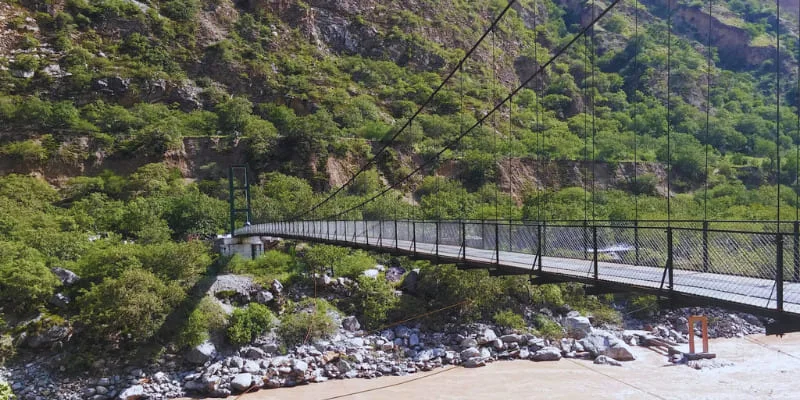
The reason so few travelers reach Choquequirao has a very concrete physical explanation. There is no access road. There is no train. There is still no cable car in operation, although its construction has been announced and canceled several times in recent years. The only way to get there is on foot, by way of a four-day trek in and four days out that involves one of the steepest descents and ascents of any trek in Peru. The trail drops nearly 1,500 meters to the bottom of the Apurímac River canyon and then climbs another 1,500 meters to the archaeological site. Doing that in both directions, with a backpack, is what keeps Choquequirao out of reach of mass tourism.
That difficult access is also its greatest value for those who make it there. The site receives an average of between 30 and 50 visitors per day in high season, compared with the thousands who access Machu Picchu during the same period. Walking through the terraces of Choquequirao without lines, without large groups, and without the background noise of organized tourism creates an experience of contact with Inca heritage that is no longer possible at the better-known citadel.
The Inca Trail: what you already know and what people sometimes forget to mention
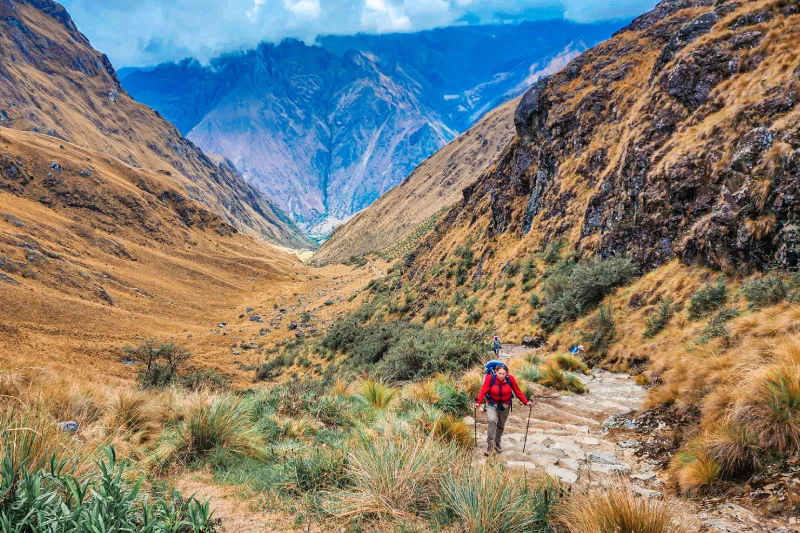
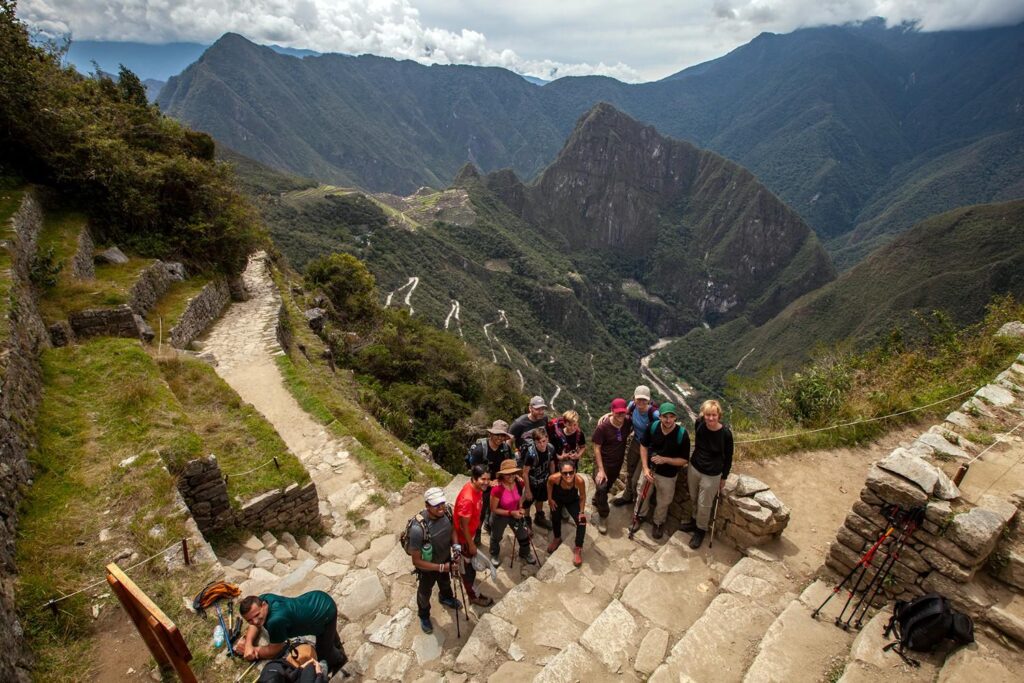
The four-day Classic Inca Trail is the best-documented trek in Peru and probably in all of South America. It covers approximately 43 kilometers along the pre-Hispanic stone trail that connected imperial Cusco to Machu Picchu, passing through three mountain passes and several archaeological sites located directly on the route. It reaches the citadel through the Sun Gate at sunrise on the fourth day, carrying all the emotional weight that moment builds after days on the trail.
What people sometimes forget to mention is what this route can no longer offer: solitude. In high season, the Inca Trail is a path where groups share campsites, cross paths at the mountain passes, and gather at the same photo spots. The experience is extraordinary in every sense, but it is not a solitary or intimate adventure during the busiest months. That detail matters a great deal to some traveler profiles and hardly at all to others.
Comparing difficulty: numbers and realities
The Inca Trail is classified as moderate to challenging, with Warmiwañusca, commonly known as Dead Woman’s Pass, as its most demanding point. The main difficulty is not the terrain itself but the altitude and the cumulative elevation gain over the course of four days. For someone who is well acclimatized and has a basic level of fitness, the route is entirely manageable.
The Choquequirao trek is classified as difficult to very difficult, and that rating is well deserved for reasons different from those of the Inca Trail. The maximum altitude on the standard route does not exceed 3,700 meters, which makes it more accessible in terms of available oxygen. What makes it extreme is something else: the cumulative elevation gain is brutal compared with any other trek in the region. The standard route involves descending approximately 1,500 meters to the bottom of the Apurímac canyon on the first day, crossing the bridge over the river, and climbing another 1,500 meters to the Choquequirao base camp. That is 3,000 meters of net elevation change in two days, and then it all has to be repeated on the return.
For the knees and quadriceps, that kind of effort is more demanding than anything required by the Inca Trail. Steep descents on dirt and rock trails for several hours at a time, often in intense heat inside the canyon, are the factor that most clearly separates those who finish the trek in good shape from those who do not. Specific physical preparation for long descents, including strengthening the quadriceps and hamstrings in the weeks beforehand, is not optional for this route.
The landscape: two experiences that are nothing alike
The Inca Trail crosses three distinct ecosystems in four days: the puna zone at the mountain passes, the cloud forest in the middle sections, and the subtropical zone on the final descent toward Aguas Calientes. That environmental shift is one of its great attractions, combined with the constant presence of Inca architecture along the trail.
The trek to Choquequirao offers scenery on a different scale. The Apurímac canyon is one of the deepest in the world, with rock walls dropping vertically toward the river from heights that create vertigo even in people who are not afraid of heights. The vegetation changes radically between the bottom of the canyon, where humid heat allows tropical plants to grow, and the ridge where the archaeological site is located, from which snowcapped peaks can be seen in every direction on clear days. It is a geographical contrast of a magnitude that few routes in Peru can match.
And then there is the site itself. Choquequirao seen from the main terrace, with its plazas and structures spread across the mountain ridge and the emptiness of the canyon on both sides, creates an impression with no familiar comparison. It is not Machu Picchu with fewer people. It is a different place, with architecture and surroundings that tell a different story about the Inca Empire and the decisions that led to building in places that seem physically impossible.
Logistics and planning: what each one requires
The Inca Trail requires an official permit processed through an authorized agency, with quotas that sell out months in advance during high season. The Machu Picchu entrance ticket must be purchased separately. A certified guide is mandatory. The amount of advance planning required is considerable, especially for travelers with fixed dates who cannot easily adjust their itinerary.
The Choquequirao trek does not require a special permit to access the trail. Logistics are more flexible and can be organized with less advance notice. However, it is not a route to do without support: the length of the trek, the canyon heat during the dry season, and the lack of infrastructure along the way make it necessary to have a guide with experience on that specific route, along with muleteers or porters to carry equipment and food. Self-supported trekking without logistical backup is an option only for people with extensive experience on multi-day backcountry journeys.
The gear required for Choquequirao includes items that the Inca Trail does not demand with the same urgency: very high-SPF sun protection for the canyon sections where sunlight reflects off the rock walls, quick-drying clothing for the heat of the lower stages, and enough water for stretches without sources between the river and the ridge. The temperature difference between the bottom of the canyon and the top where the site is located can exceed 20 degrees in a single day.
Who each route is for: no sugarcoating
The Inca Trail is the right choice for someone visiting Machu Picchu for the first time and wanting to do it in the most meaningful way possible, with historical context, archaeological heritage along the trail, and arrival through the Sun Gate at sunrise. It is also the right option for people in good physical condition who want a well-organized trek with quality infrastructure and guides specialized in Inca history. And it is the only choice for someone who specifically wants the experience of crossing Inti Punku after days of walking the pre-Hispanic trail.
The Choquequirao trek is the right choice for travelers with previous mountain experience who are looking for something physically demanding and who value solitude over the appeal of a famous name. It is especially recommended for people who have already visited Machu Picchu and want a second experience in the region from a completely different angle. And it is practically essential for anyone curious to see a first-rate Inca archaeological site in the state closest to what all these places would be like if mass tourism had not yet arrived.
There is also a third option that few people know about: the Choquequirao to Machu Picchu route, which connects the two archaeological sites on an eight- to ten-day trek that crosses several mountain passes and different ecological zones. It is one of the most complete journeys in Peru and is reserved for people with technical experience in multi-day trekking under backcountry conditions. It is not for beginners, but for those with the required level, it is hard to surpass in terms of the overall experience.
Comparative summary by criteria
| Category | Inca Trail | Choquequirao Trek |
|---|---|---|
| Length | 43 km over 4 days | 60–70 km round trip over 8 days |
| Highest point | 4,215 m (Dead Woman’s Pass) | Approx. 3,700 m at the site |
| Difficulty level | Moderate to challenging (altitude and climbs) | Challenging to very demanding (steep descents and ascents) |
| Crowds | Busy during peak season | Very low (30–50 visitors per day) |
| Permits required | Yes, limited and must be booked months in advance | No special permit required |
| Highlights along the way | Multiple Inca sites on the trail | Choquequirao as the main highlight |
| Access to Machu Picchu | Arrive on foot through the Sun Gate | Not included unless extended trek is chosen |
| Ideal traveler | First-time visitors seeking history and iconic experience | Experienced hikers seeking solitude and adventure |
Do you want to do the Inca Trail, the Choquequirao trek, or the full journey that connects both? At Incredible Peru Tours, we operate all three routes with specialized guides, complete logistics, and the level of support each one requires.


