
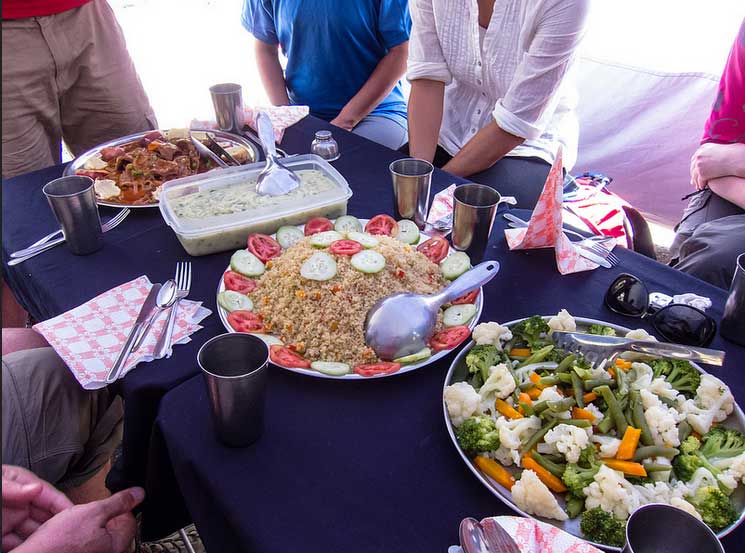
One of the most common questions before booking the Inca Trail is about the food. The mental image of a four-day mountain trek usually comes with energy bars, canned food, and the kind of meals you accept out of necessity rather than enjoyment. Anyone who arrives at the first campsite with that expectation is in for a surprise one that often becomes one of the most talked-about aspects of the entire experience.
Food on the Inca Trail, when the agency works with a skilled cooking team, is not survival food. It is real food, prepared fresh, served hot, varied, and portioned according to the energy demands of long days on mountain terrain. This article explains what to expect at each meal, how the cooking logistics work on the trail, and what you should communicate to your agency in advance if you have dietary restrictions or preferences.
How cooking works at camp
Inca Trail groups include a cook sometimes two, depending on group size whose sole responsibility is preparing all meals during the four-day trek. The cook is part of the porter team that hikes ahead of the group, sets up the kitchen tent, and has dinner ready when hikers arrive at the campsite at the end of each day.
The cooking logistics on the Inca Trail are a feat of organization in themselves. Ingredients are carried from Kilometer 82 in boxes and bags distributed among the porters, without refrigeration and with no heat source other than the gas stoves the team carries. With these resources, experienced Inca Trail cooks create menus that include soups, main courses with protein, side dishes, desserts, and hot drinks. It is not magic it is skill developed in one of the most demanding environments for cooking.
Breakfast: fuel for the day ahead
Breakfast on the Inca Trail is served early, usually between 5:30 and 6:30 a.m., before breaking camp and continuing the hike. On colder days especially at the second campsite above 3,600 meters a hot breakfast inside the dining tent is one of the most appreciated moments for hikers, regardless of what is served.
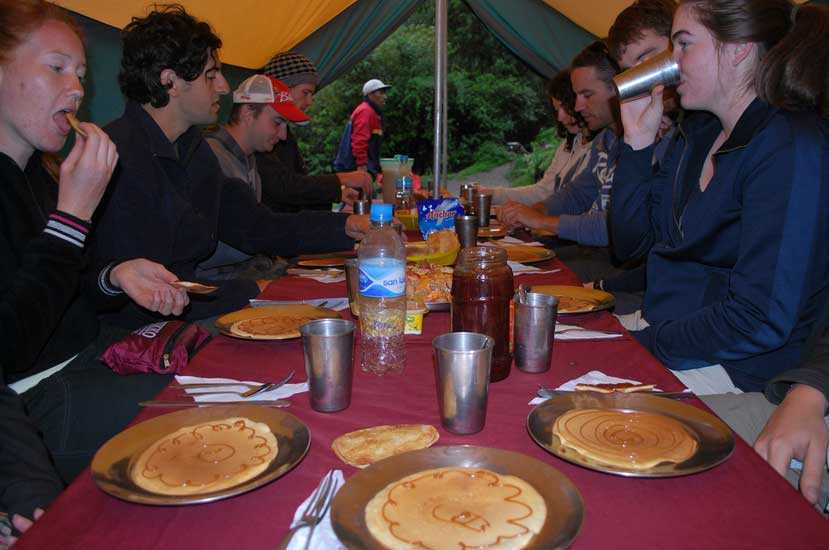
The typical breakfast starts with a hot drink: tea, coffee, herbal infusions, or the ever-present coca tea offered by responsible agencies from day one. This is followed by a light soup or broth that provides an initial boost of calories and hydration. The main breakfast dish often includes eggs (scrambled, omelet, or poached) served with bread, toast, or pancakes, along with jam, butter, and fresh or canned fruit. Some agencies also offer oatmeal or quinoa as an alternative, especially on colder or more demanding days.
Portions are generous by design. The cook understands that hikers will need that fuel for the hours ahead and adjusts quantities to match the demands of five to eight hours of hiking with a backpack on mountain terrain. Eating well at breakfast is not optional on the Inca Trail it is part of your performance strategy for the day.
Lunch: the meal prepared along the trail
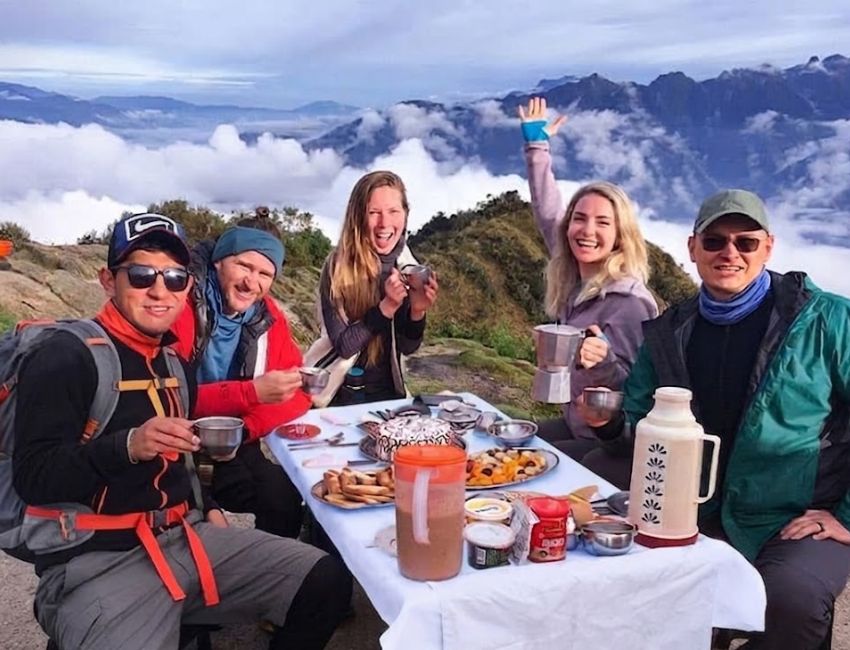
Lunch has a different logistical setup from breakfast and dinner. While the group is hiking, the kitchen team moves ahead to a designated lunch spot an area set up with portable tables and chairs that the agency carries and has the meal ready when hikers arrive. For first-time visitors, it is often surprising: a table set with a tablecloth, plates, and utensils in the middle of a mountain trail over 3,000 meters above sea level.
Lunch is usually the most elaborate meal of the day. It begins with a hot soup or cream, followed by a main course that typically includes rice, pasta, or potatoes as a base with chicken, trout, or another protein depending on the stage of the trek. It ends with fruit, dessert, or a hot drink. The portion size is comparable to a full home-style lunch, which is more than necessary after the morning’s physical effort.
Some agencies provide snacks between breakfast and lunch and again before reaching camp: popcorn, cookies, dried fruit, or energy bars prepared or selected by the cook before departure. These snacks are especially appreciated on the second day, when the ascent to Dead Woman’s Pass requires continuous calorie intake that the three main meals alone cannot fully cover.
Dinner: the social moment at camp
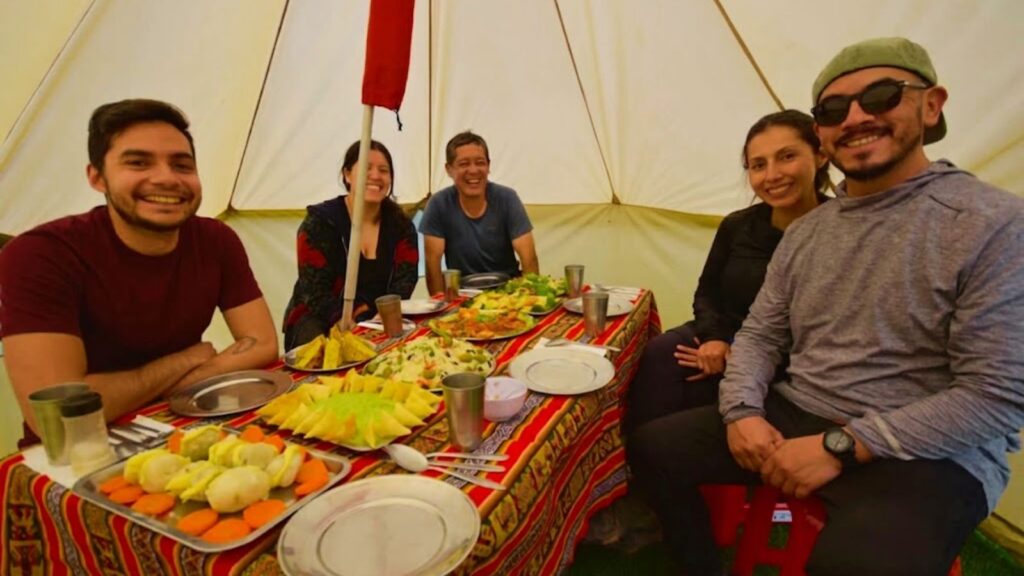
Dinner on the Inca Trail goes beyond nutrition. After hours of hiking, when the group gathers in the dining tent with the camp already set up and headlamps on, a kind of shared experience emerges that many hikers describe as one of the most memorable parts of the four days. Conversations flow easily, and a hot meal in that setting takes on a meaning that is hard to replicate in a restaurant.
Dinner is the most elaborate of the three daily meals. It starts with an appetizer popcorn, toasted corn, or a local snack while the group settles in. Then comes a hearty soup, usually made with vegetables, quinoa, or noodles, followed by a main course with protein, side dishes, and salad. Dessert may include fresh fruit, purple corn pudding, rice pudding, or another sweet preparation the cook can create with the available ingredients. Everything is accompanied by hot drinks that help with hydration before sleep.
Variety from one day to the next is one of the aspects most frequently mentioned by hikers when talking about Inca Trail food. An experienced cook plans different menus for each day and avoids repeating the same main dish throughout the trek. This variety is not a luxury it is a real motivational factor when accumulated fatigue makes dinner the most anticipated moment of the day.
Typical Peruvian dishes you may find on the menu
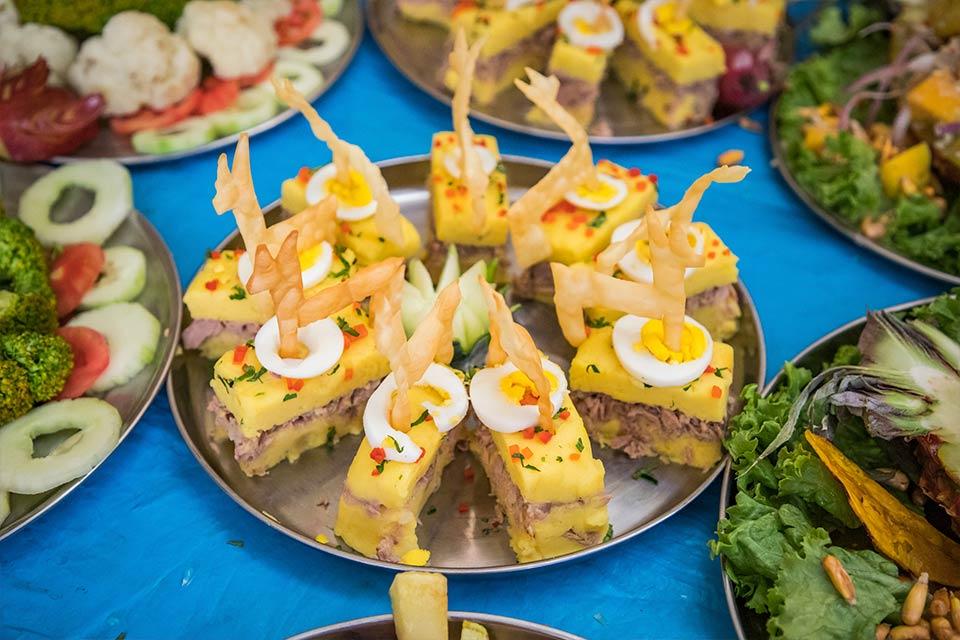
Inca Trail cuisine is not generic camp food it has a recognizable Peruvian identity that, for many travelers, becomes a first introduction to local gastronomy. Some of the dishes most commonly found in well-organized agency menus include:
- Quinoa soup: A protein-rich Andean grain that is easy to digest at high altitude, often served at dinner on more demanding days.
- Grilled trout: One of the most iconic fish in the Andean region, commonly served during lunch on certain days of the trek.
- Lomo saltado: A well known Peruvian dish that occasionally appears in dinner menus an impressive achievement in a mountain campsite.
- Papa a la huancaína: Andean potatoes served with a creamy cheese and yellow chili sauce, often as a starter or side dish.
- Purple corn pudding: A traditional dessert made from purple corn, fruits, and spices sweet, warm, and ideal for camp conditions.
- Andean herbal teas: Muña, chamomile, lemongrass, and coca tea are served at every meal to aid digestion and help with altitude adaptation.
Dietary restrictions and special diets: how to manage them
The Inca Trail is fully compatible with vegetarian, vegan, gluten-free, and other common dietary needs as long as they are communicated to the agency well in advance. The most common mistake is mentioning it the day before departure or not mentioning it at all, assuming the cook will adapt on the spot.
Inca Trail cooks work with ingredients planned and carried from Kilometer 82. Once on the trail, there is no access to stores or the ability to replace missing ingredients. If your dietary restriction was not communicated beforehand, the cook will do their best with what is available, but the result may fall short compared to proper planning.
Reputable agencies offer alternative menus for vegetarians and vegans that maintain the necessary calorie and protein intake for the trek. Communicate your dietary needs at the time of booking, confirm them a week before departure, and verify with your guide at Kilometer 82 that the cook has the information. This double check may seem excessive, but for a four-day trek without room for correction, it is exactly the level of attention required.
Water: staying hydrated over four days
Drinking water on the Inca Trail is provided by the agency at campsites through purified containers. During meals, hot beverages are always available. While hiking between camps, each traveler is responsible for carrying their own water usually one to two liters depending on the day which can be refilled at designated water points indicated by the guide.
Hydration on the Inca Trail is not optional. At high altitude, dehydration happens faster than at sea level because increased breathing during physical effort expels more moisture than usual. A traveler who does not drink enough during the morning will reach lunch already dehydrated, which increases fatigue and worsens altitude sickness symptoms. Drinking before feeling thirsty a sip every 20 to 30 minutes even without thirst is one of the most effective habits for maintaining energy throughout the trek.
What surprises hikers most about the food
When asked what surprised them most about completing the Inca Trail, many travelers consistently mention the food. Not the scenery, not Machu Picchu, not even the difficulty of the second day the food.
The explanation is simple: no one expects to eat truly well during four days of mountain trekking. The gap between expectation and reality is large enough that it becomes one of the most memorable parts of the trip. A skilled cook on the Inca Trail does more than feed the group they directly contribute to morale, daily energy levels, and that reassuring feeling of being well taken care of.
That difference starts with the agency you choose. An operator that prioritizes food quality usually takes care of everything else as well. One that cuts costs on meals to lower the price may also cut corners in other areas that only become visible once you are already on the trail.
Do you have questions about the menu included in our service or how we handle dietary restrictions for your group? At Incredible Peru Tours, we detail the type of menu included in each package and coordinate any specific needs with our kitchen team before every departure.


