
One of the most practical questions before doing the Inca Trail is also one of the least clearly answered: what time do you have to wake up each day? The answer varies depending on the day, because each day of the trek has a different departure logic determined by the terrain, altitude, weather, and the goal of reaching the next campsite. Knowing these schedules in advance allows you to adjust expectations, organize your gear the night before, and understand why guides insist on wake-up times that at first may seem unnecessarily early.
This guide gives you the real schedules for each day of the Classic 4-day Inca Trail, the reason behind each early departure, and what happens if the group falls behind the guide’s plan.
Day 1: the most relaxed start of the trek
The first day of the Inca Trail has the latest start and the gentlest pace. The group arrives at kilometer 82 by bus from Cusco, a journey of approximately one and a half hours that usually departs between 5:00 and 6:00 in the morning from the meeting point agreed with the agency. Depending on the operator and departure time, the actual start of the hike from kilometer 82 takes place between 7:00 and 8:30 in the morning.
The first day covers between 11 and 12 kilometers to the Wayllabamba campsite, at 3,000 meters of altitude, with moderate elevation gain and mostly accessible terrain. There is no need for an extremely early departure because the distance and elevation do not require it, and the goal is to reach camp with enough time to have dinner, rest, and prepare for the most demanding day ahead.
Arrival at Wayllabamba campsite usually occurs between 2:00 and 4:00 in the afternoon, depending on the group’s pace and the time spent at archaeological sites along the first section. That afternoon at camp has a value that many participants underestimate before experiencing it: it is the last calm afternoon before the nature of the trek changes the next day.
Day 2: the early morning that defines the trek
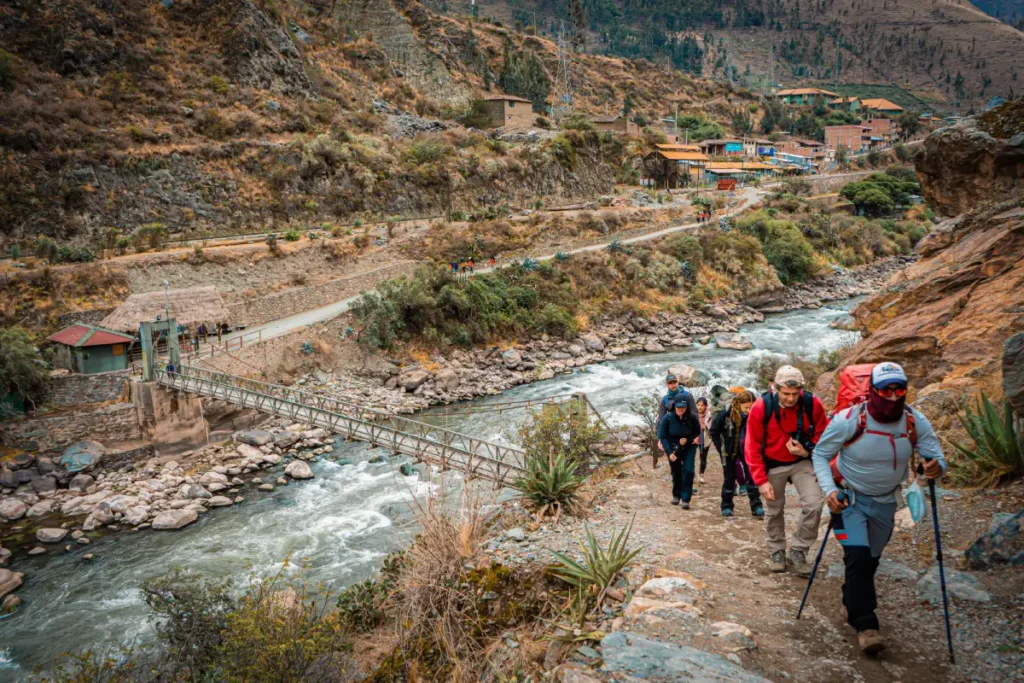
The second day has the earliest wake-up of the entire Inca Trail, and it is also the one that surprises those who do not anticipate it. Departure from Wayllabamba campsite usually takes place between 5:00 and 6:00 in the morning, with headlamps on during months when it is still dark at that hour.
The reason for this early departure has several components. The first is the distance and elevation of the day: the trek covers approximately 12 kilometers with the ascent to Warmiwañusca at 4,215 meters as the central point, and completing it at a steady pace requires enough hours that only an early start can guarantee. The second is the weather: Warmiwañusca has better visibility and a lower probability of clouds and rain in the early morning compared to midday, when high-mountain weather conditions intensify. The third is temperature: crossing the highest point of the Inca Trail with the sun still low and the air cool is physically more manageable than doing so later in the morning heat.
Arrival at the summit of Warmiwañusca usually occurs between 9:00 and 11:00 in the morning depending on the group’s pace. From there, the descent to Pacaymayo campsite takes an additional two to three hours. Arrival at the second-day campsite, with the most demanding effort of the trek completed, usually occurs between 12:00 noon and 2:00 in the afternoon.
Day 3: early start with more archaeological sites along the way
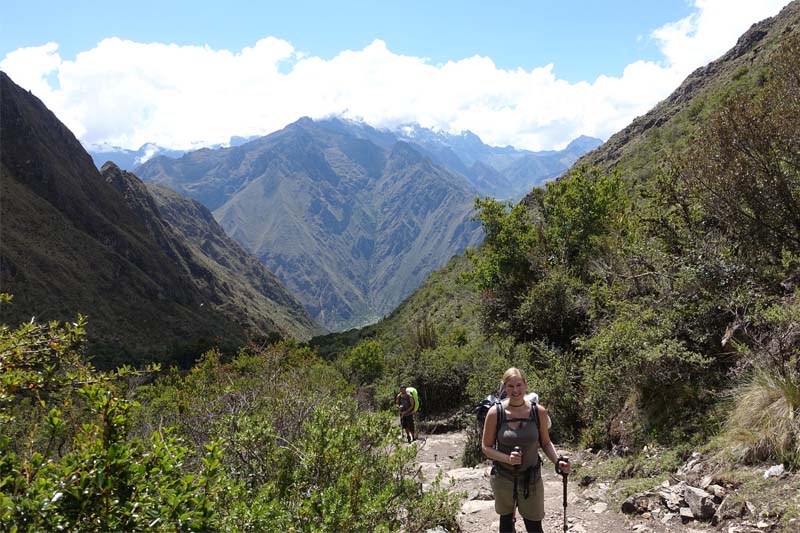
The third day of the Inca Trail is the most varied and for many the most beautiful of the trek. Wake-up time is again early, between 5:00 and 6:00 in the morning, because the day covers the longest distance of the trek, approximately 16 kilometers, and includes visits to the archaeological sites of Runkuraqay, Sayacmarca, Chaquicocha, and Phuyupatamarca, as well as the steep descent to the final campsite of Wiñay Wayna.
The early departure on day three also has a photographic logic that experienced guides understand well. The site of Phuyupatamarca, whose name means “city above the clouds,” has its best viewing and photography conditions in the early morning, when mist moves between the structures creating the atmosphere seen in some of the most iconic images of the trek. Arriving late to Phuyupatamarca, when the sun has already cleared the mist, means missing that moment.
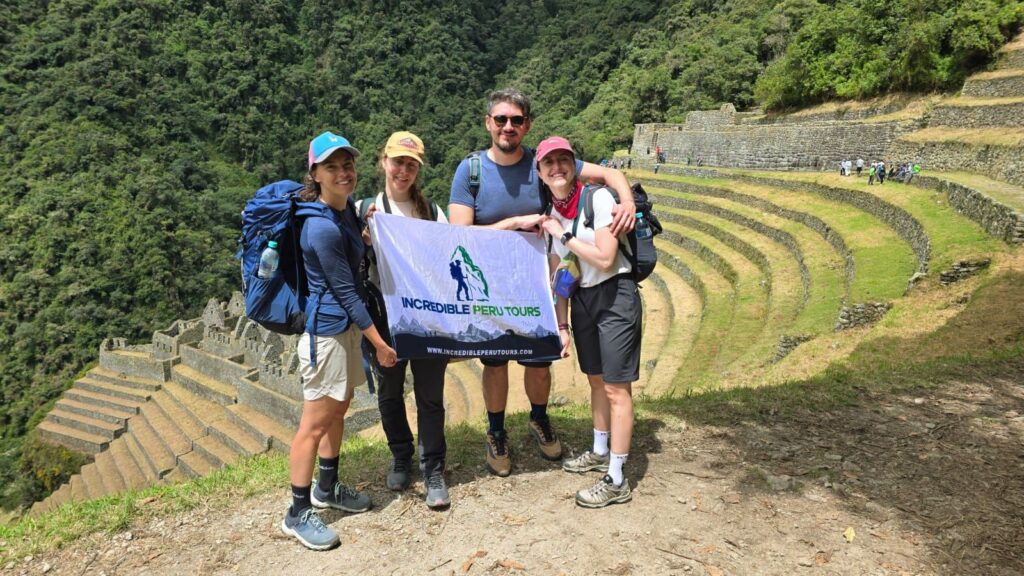
The Wiñay Wayna campsite, the last one before Machu Picchu, is usually reached between 3:00 and 5:00 in the afternoon. That night at camp has its own character: the group is at the best-preserved archaeological site of the trek, just hours from the final destination, and the mix of accumulated fatigue, anticipation, and conversations about what lies ahead creates an atmosphere many participants describe as the most memorable night of the four days.
Day 4: the earliest and most emotional morning
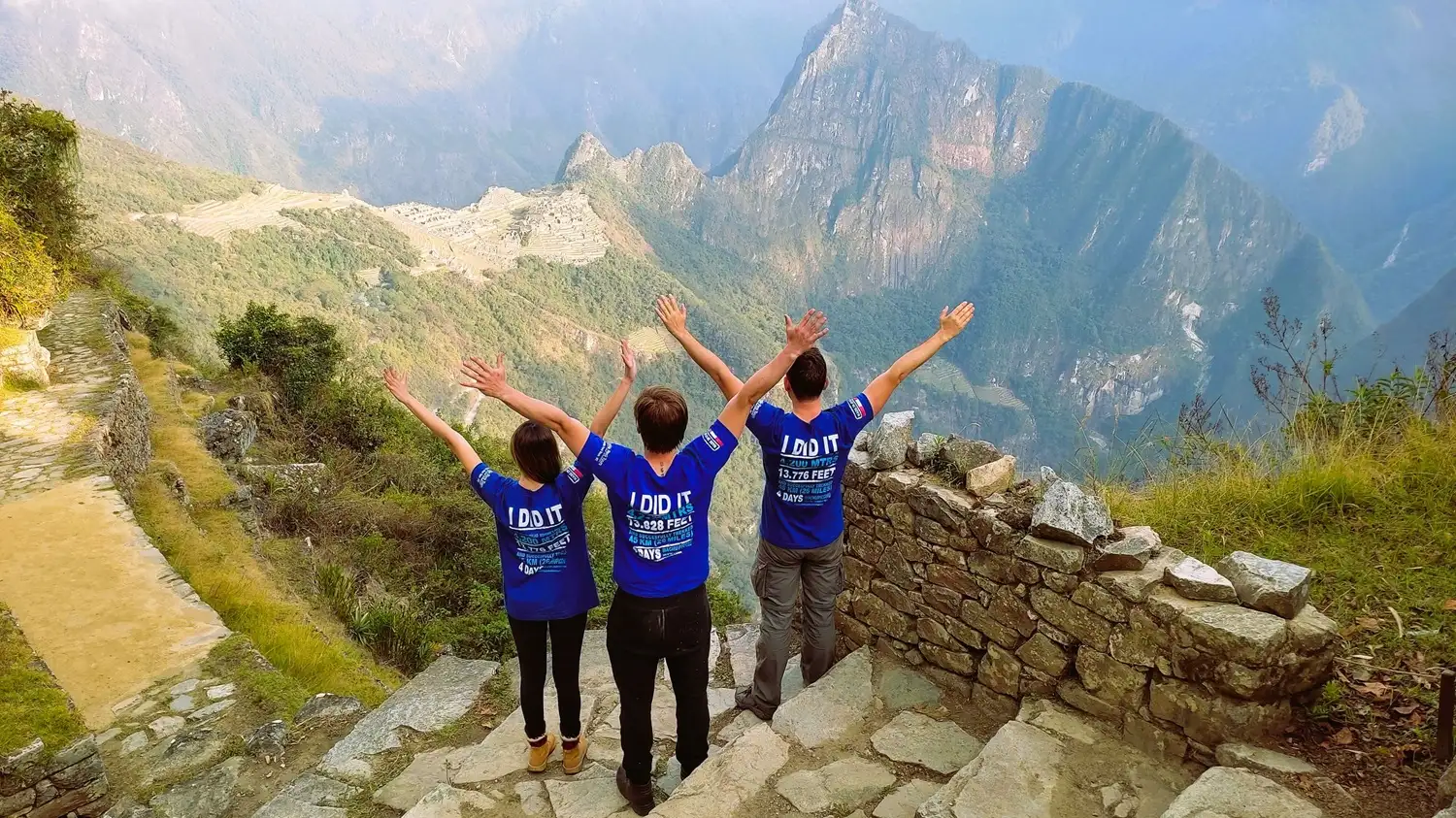
The fourth day has the earliest wake-up of the entire trek and also the one that requires the most determination: between 3:30 and 4:30 in the morning, depending on the operator and time of year. The reason is simple: the goal is to reach the Sun Gate, Inti Punku, at the moment when the sun begins to illuminate Machu Picchu in the distance, and that moment occurs before 6:30 on most days of the year.
The section from Wiñay Wayna campsite to Inti Punku is about four kilometers along a trail that includes stair sections and relatively flat stretches. With headlamps on and the group still quiet, that walk in the dark has a different dimension than any other part of the trek: the focus on the path lit by the headlamp, the cold of early morning, and the anticipation of what lies ahead create an intensity that no other moment of the trek produces in the same way.
Arrival at Inti Punku usually occurs between 5:30 and 6:30 in the morning. On clear days, Machu Picchu appears in the distance with the first light of sunrise over its stone terraces. On foggy days, the citadel appears and disappears among the clouds in a spectacle that many participants find even more impressive than a clear sky. From the Sun Gate, the descent to the main entrance of the archaeological site takes an additional 30 to 45 minutes.
Why it is not advisable to delay departure on any day
Departure times on the Inca Trail are not suggestions from the guide but part of the logistical structure that makes the trek work properly for all participants. Delaying departure on any day has consequences beyond your own group.
On the second day, leaving Wayllabamba late means reaching Warmiwañusca when the sun has already warmed the glacier and the chances of fog and rain are higher. It also means arriving at Pacaymayo campsite with less daylight available to rest, have dinner, and prepare gear for the third day.
On the fourth day, the most direct consequence of leaving late is reaching Inti Punku when the sun has already passed the angle of the Sun Gate and the light over the citadel no longer has the quality of sunrise. It is not an irreparable mistake, because Machu Picchu is impressive at any time of day, but it is exactly the kind of detail that those who arrived on time never forget and those who arrived late regret.
Practical tips for managing departure times
- Prepare your daypack the night before each day. In the darkness at 4:00 a.m., searching for your headlamp, trekking poles, or rain jacket inside your backpack wastes time and energy that can be completely avoided with ten minutes of organization before going to sleep.
- Keep your headlamp in an easily accessible place. Not at the bottom of your backpack or inside your sleeping bag. Keep it in an outer pocket or next to your morning clothes so it is available without having to search in the dark.
- Prepare the next day’s clothing before getting into your sleeping bag. At high-altitude camps, getting dressed at 4:00 a.m. in freezing temperatures while searching through your backpack is uncomfortable. Having everything ready next to your sleeping bag reduces that process to minutes.
- Do not underestimate breakfast on early days. The guide and cook have breakfast ready at departure time even on the earliest mornings. Eating well before starting, even if your appetite is low, is part of your performance for the day.
- Sync your watch with the guide before going to sleep. At campsites without phone signal, your personal clock can drift without you noticing. Confirming the departure time with the guide at night avoids surprises in the morning.
What happens if the group needs more time than planned
Inca Trail guides have enough experience to manage different group paces without compromising the goals of each day. If someone needs more time on a section due to fatigue, physical discomfort, or simply wanting to photograph an archaeological site at a relaxed pace, the guide adjusts the rhythm without drama. That said, these adjustments have limits imposed by the available daylight and access schedules to the next point of the route.
On the fourth day, access to the Sun Gate is conditioned by the trail checkpoint opening time, which is usually from 5:30 a.m. Groups arriving after that time may encounter a queue at the access control, adding time to the final stretch and potentially causing arrival at Inti Punku to coincide with a less favorable moment of sunrise.
Do you want to hike the Inca Trail with perfectly organized logistics and schedules coordinated to make the most of every moment of the trek? At Incredible Peru Tours, we manage every detail of the journey, from hotel pickup in Cusco to the return train from Aguas Calientes.


