
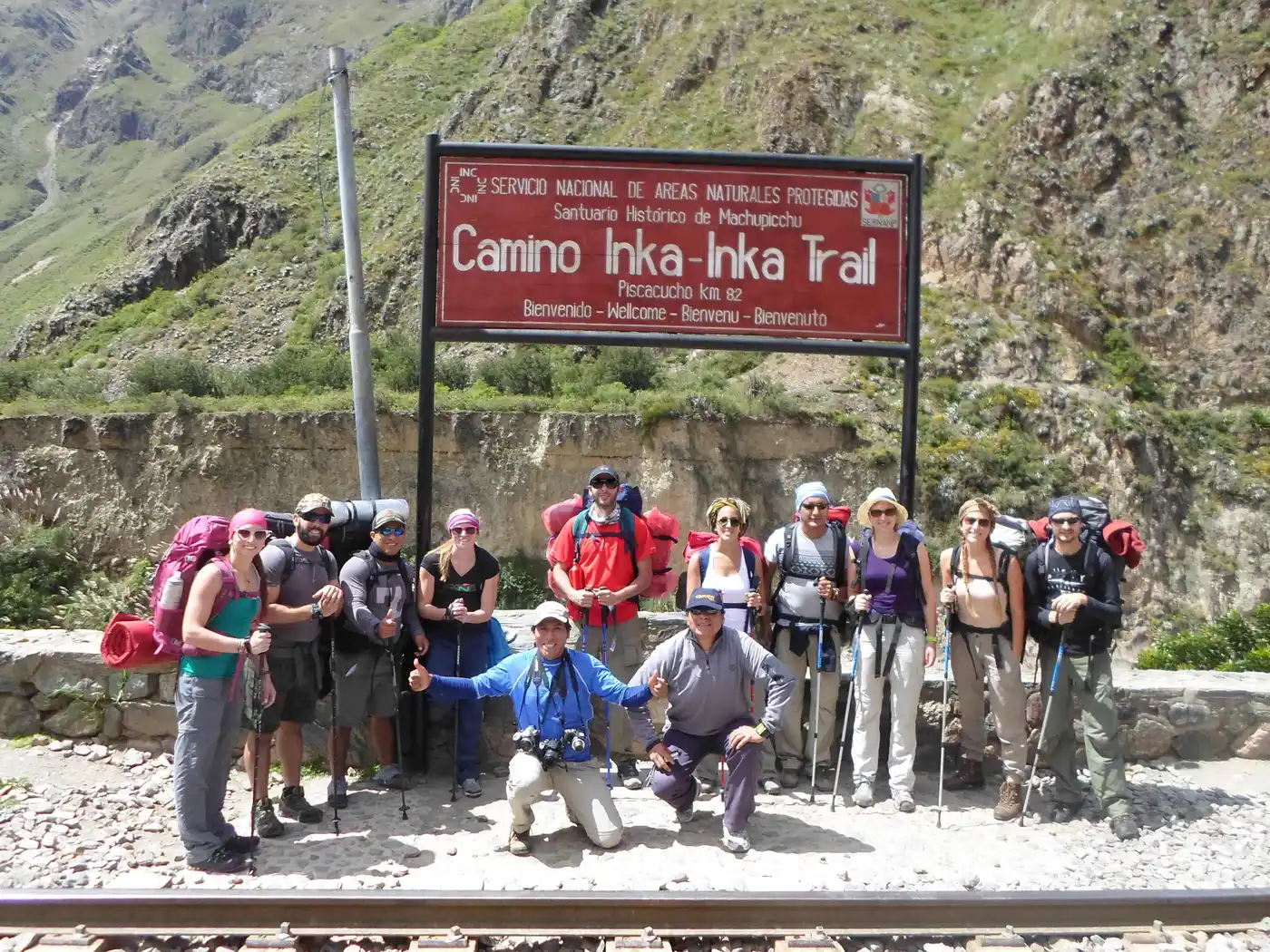
The Inca Trail has a reputation that can feel intimidating for anyone who has never done a multi-day trek in the high mountains. Four days, 26 miles, 13,828 feet at the highest point, and three nights camping in the Andean mountains. From home, those facts can make it seem like an adventure reserved for people with specific training and mountain experience. The reality on the trail is more nuanced: every season, thousands of people complete the Inca Trail without ever having done a multi-day trek before, and most of them describe those four days as one of the most intense and unexpectedly achievable experiences of their lives.
That does not mean anyone can do it without preparation. It means that with the right preparation, the range of people who can enjoy the Inca Trail is much wider than the altitude and distance figures suggest. This guide explains exactly what you need to do the Inca Trail for the first time without letting a lack of previous experience ruin the experience.
What “Beginner” Can Mean in This Context
It is useful to distinguish between two types of beginners before answering whether the Inca Trail is right for you. The first is someone who has never done a multi-day trek but does have an active lifestyle: they walk regularly, climb stairs without difficulty, and practice some kind of sport or physical activity on a regular basis. The second is someone with a completely sedentary lifestyle, who does not walk more than twenty minutes at a time in their daily routine and has never slept in a tent.
For the first profile, the Inca Trail is completely achievable with the right preparation. The basic fitness level is already there; what is needed is to adapt that active body to the specific conditions of the route: altitude, accumulated elevation gain, and sustained effort over four consecutive days. For the second profile, doing the Inca Trail without previous preparation has a significant chance of becoming an experience remembered for the wrong reasons.
Acclimatization: The Factor That Most Separates Those Who Enjoy Day Two from Those Who Struggle Through It
The second day of the Inca Trail includes the ascent to Warmiwañusca at 13,828 feet. At that altitude, the oxygen available in each breath is approximately 40 percent lower than at sea level. That deficit affects everyone regardless of fitness level, but it affects people very differently depending on whether they arrive acclimatized or not.
For a beginner doing the Inca Trail for the first time, acclimatizing in Cusco beforehand is not just a friendly recommendation: it is the factor that most determines how the second day feels. Spending at least two full nights in Cusco before starting the trek, with moderate activities and good hydration, allows the body to begin adapting to the city’s 11,155 feet before facing Warmiwañusca at 13,828 feet. Three nights are more appropriate for beginners who have never been above 6,500 feet before.
At Incredible Peru Tours, we always recommend that participants with no previous high-altitude experience arrive in Cusco at least three days before the trail departure. That extra margin has a noticeable impact on performance on the second day, and no other factor can compensate for it if it is missing.
Physical Preparation: What to Train and How
The Inca Trail does not require the fitness level of an athlete, but it does require enough physical condition to walk between six and eight hours a day for four consecutive days, with the second day being considerably more demanding than the rest. The three most important areas of preparation for a beginner are cardiovascular endurance, leg strength for descents, and tolerance for long walks with a backpack.
The most effective preparation program for someone starting from zero is a combination of progressive hikes over eight to twelve weeks before the trip. The first weeks should include one-hour walks on varied terrain, progressing to two- to three-hour walks with moderate elevation gain in the middle weeks, and reaching four-hour walks while wearing your trekking backpack in the final weeks before flying. This program does not require a gym or special equipment and can be done in any city with access to a park or a hill.
The detail most beginners overlook in their preparation is specific downhill training. Most people train for uphill sections because they intuitively seem the hardest, but on the Inca Trail, it is the descents on the third day—especially the Inca stone stairways between Phuyupatamarca and Wiñay Wayna—that create the most impact on the knees of anyone who has not prepared for them. Walking down stairs for 20 or 30 minutes at a time, two or three times per week, while wearing your backpack, prepares the quadriceps in a way that flat cardio cannot replicate.
Footwear: The Most Important Gear Decision for a Beginner
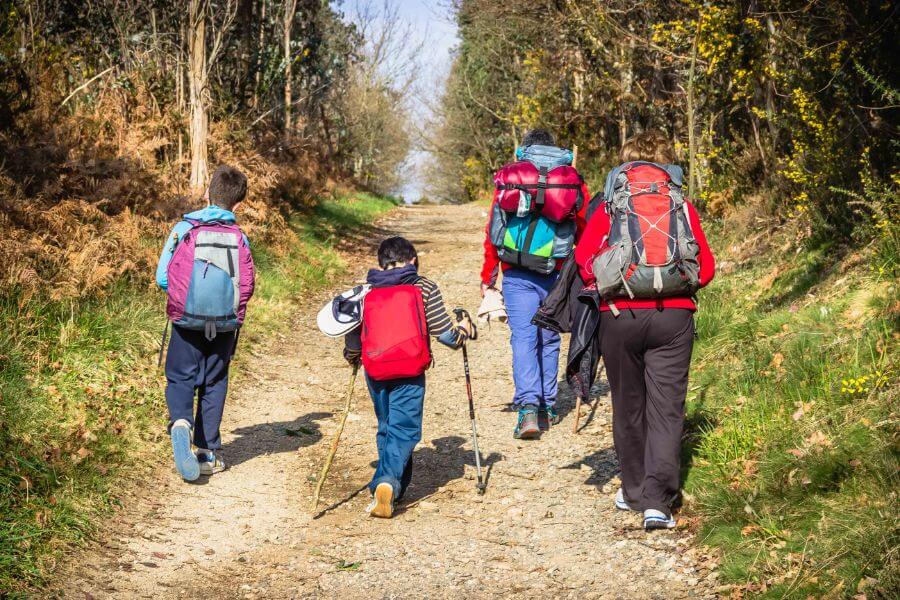
For someone doing the Inca Trail for the first time, footwear is the piece of gear with the greatest consequences if it is chosen poorly or not broken in properly before the trek. New trekking boots that have not been broken in can cause blisters from the first day. Shoes with smooth soles or regular athletic sneakers do not provide the grip needed for the wet stairways on the third day, nor the ankle support required for the steep descents on the second day.
The right trekking boots for the Inca Trail have three essential features: a waterproof membrane, a firm-grip sole with well-defined lugs, and a mid- or high-cut design that supports the ankle on descents. Most importantly, they must be broken in before arriving at kilometer 82. Breaking in new boots means wearing them on three or four two-hour walks before the trip, with the same socks you will use during the trek, so the material adapts to the specific shape of your feet and pressure points disappear before they appear on the trail.
What a Beginner Should Not Try to Do Alone
The Inca Trail cannot be done completely independently because the official permit from the Ministry of Culture can only be processed through authorized agencies, and a certified guide is mandatory throughout the entire route. For a beginner, that requirement is not a bureaucratic limitation; it is a real advantage.
A certified Inca Trail guide has mountain first-aid training and knows how to recognize the early symptoms of altitude sickness before they become serious. For someone doing this type of route for the first time and who has no reference for how the body feels at 13,000 feet, having someone with that knowledge beside them for all four days is worth the cost of the guide on its own. The difference between a mild altitude symptom that can be managed with rest and a serious one that requires evacuation sometimes comes down to early recognition, and that is exactly what the guide does.
The Moments That Surprise Beginners the Most
First-time Inca Trail participants describe the same surprising moments with striking consistency, regardless of where they come from or their previous fitness level.
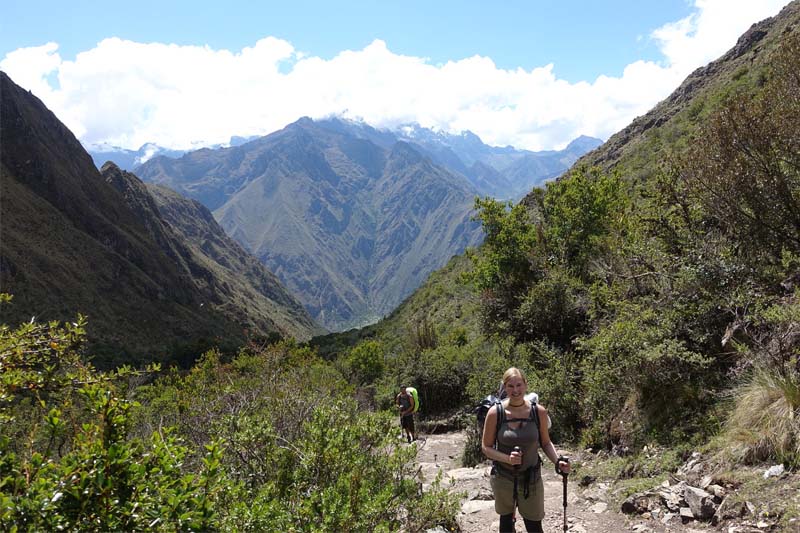
The first is the magnitude of the second day. Everyone knows it is the hardest, but the reality of climbing for several hours toward 13,828 feet at a pace imposed by the body, regardless of willpower, is an experience that no previous description can fully convey. And yet, it is also the day most often mentioned as the most memorable.
The second is the quality of the food. Travelers who arrive expecting basic camp meals and instead find a carefully prepared lunch with soup, a main course, and dessert served at a table with a tablecloth in the middle of the Inca Trail experience a contrast that leaves an impression far beyond the role food would play in almost any other context.
The third is the Sun Gate. After four days, after waking up before dawn on the fourth day and walking in the dark with a headlamp to Inti Punku, the citadel appears in the distance with the first light of day. That moment closes something that began at kilometer 82 in a way beginners may have read about, but cannot fully anticipate until they experience it.
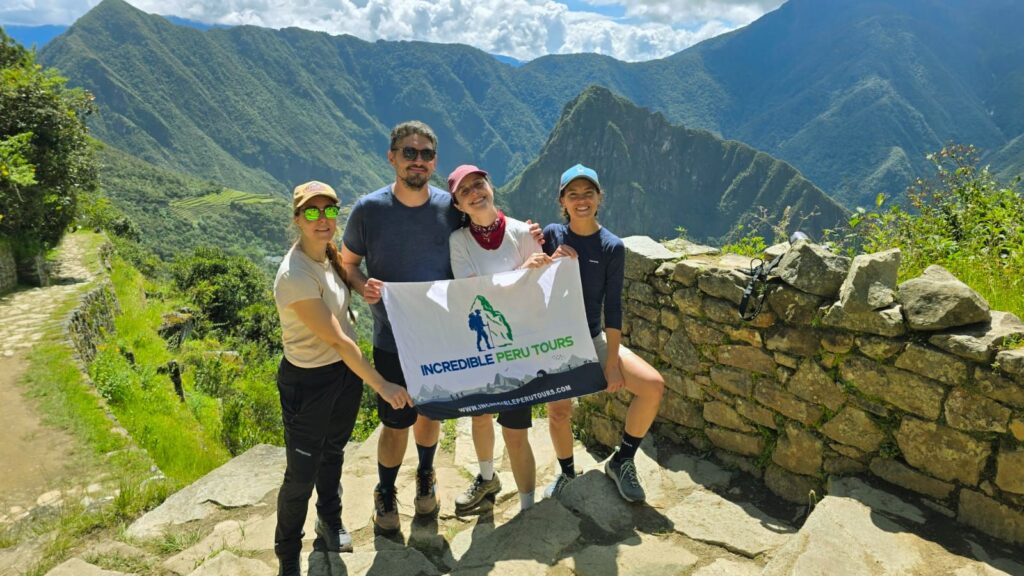
What the Inca Trail Gives First-Time Trekkers
There is something specific the Inca Trail gives people who do it for the first time without previous mountain trekking experience that it does not give in the same way to those with years of accumulated experience. It is the experience of having done something that was not obviously possible. Completing four days of high-altitude trekking, crossing Dead Woman’s Pass, and reaching one of the most extraordinary places on the planet through the Sun Gate without knowing in advance that you could do it creates a form of satisfaction that predictable experiences do not produce.
That does not turn the Inca Trail into a personal challenge test or an endurance exam. It is simply what happens when someone does something significantly bigger than anything they had done before and completes it. And with the right preparation, the Inca Trail is within reach for a much wider range of people than its altitude and distance figures suggest from home.
Are you thinking about doing the Inca Trail for the first time and unsure whether you are ready or what preparation you need? At Incredible Peru Tours, we evaluate each participant’s profile before confirming any booking and guide travelers toward the version of the route that best fits them, including the Two-Day Short Inca Trail as an intermediate option for those who want the experience of the historic trail with less physical demand. Contact us and we will help you decide with real information.


