It is the question almost every traveler has when arriving in Cusco with the goal of reaching Machu Picchu on foot: the Inca Trail or Salkantay? Both are trekking routes that end at the Inca citadel. Both cross landscapes of a beauty that is hard to put into words. And both have a well-earned reputation as travel experiences that stay forever in the memory of those who do them.
But they are very different routes in almost every other way: in the route itself, in the physical demands, in the type of landscape, in access, in cost, and in the traveler profile they are best suited for. Choosing between one and the other without enough information is like choosing a hotel without knowing what city it is in. This guide gives you the real factors you need to make the right decision based on your situation, your schedule, and what you want from the experience.
Two routes, one destination: what each one Is about
The Classic Inca Trail is the section of the ancient road system of the Empire that connects kilometer 82 of the railway line with Machu Picchu through three mountain passes, several archaeological sites, and approximately 43 kilometers of pre-Hispanic stone trail spread over four days of hiking. It is the best-known route, the one with the greatest historical significance, and the only one that reaches the citadel through the Sun Gate, the original access used by the Incas themselves.
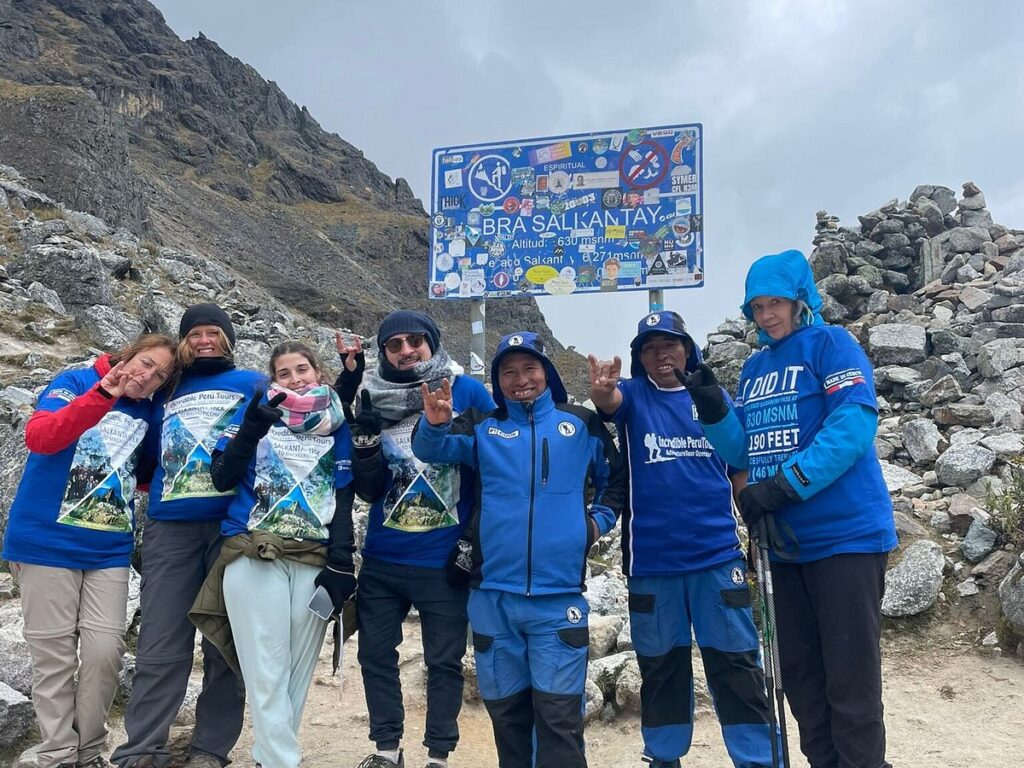
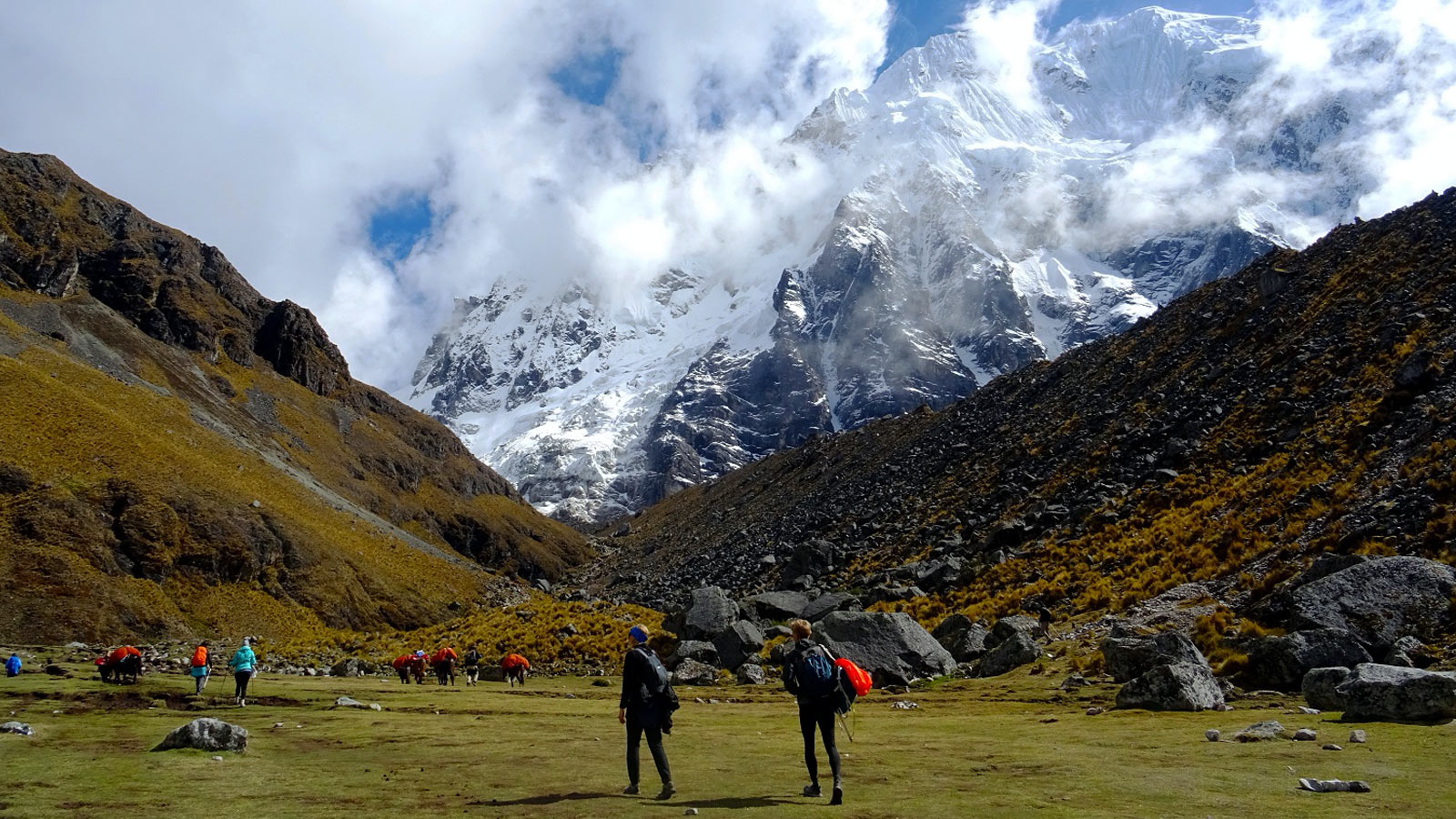
The Salkantay Trek is an alternative route named after the Salkantay snow-capped mountain, the second-highest mountain in Cusco at 6,271 meters above sea level, under whose shadow the most dramatic section of the route unfolds. The standard version lasts five days and covers approximately 74 kilometers, although there is also a four-day variation. It does not follow the Inca stone trail, but rather natural mountain paths, and it reaches Machu Picchu through Aguas Calientes, not through the Sun Gate.
Landscape and visual experience: different worlds in the same region
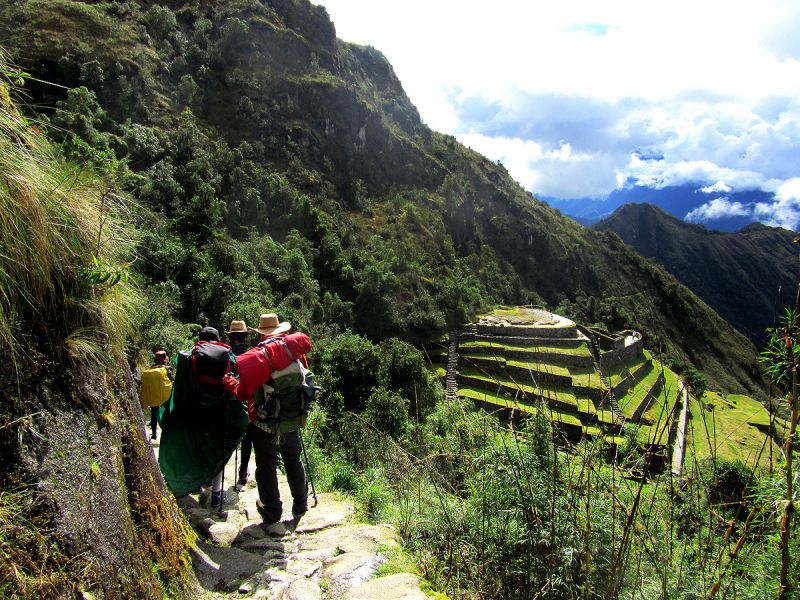
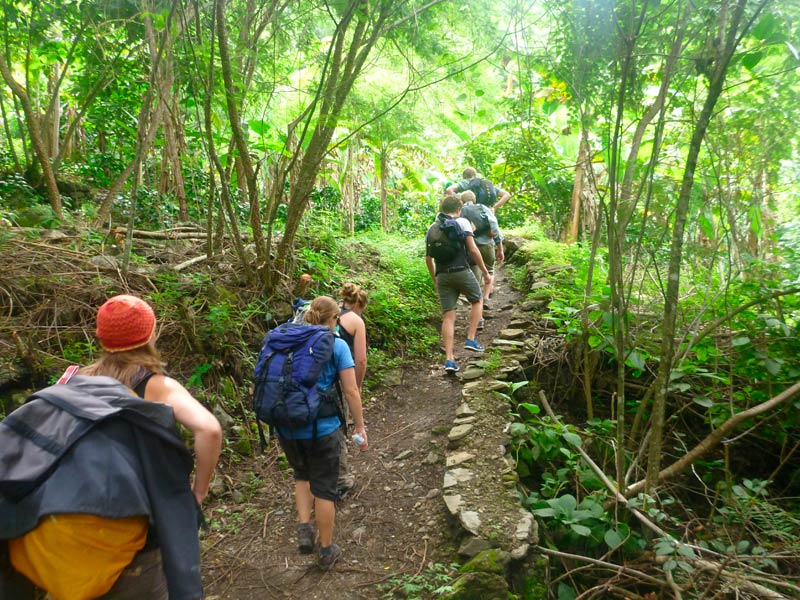
The Inca Trail offers an experience in which the natural landscape and archaeological heritage are completely intertwined. Along the route you pass through sites such as Runkuraqay, Sayacmarca, Phuyupatamarca, and Wiñay Wayna, groups of Inca architecture in different states of preservation located directly on the trail. Walking among those structures with the mountains in the background is not something you can separate from the hike: it is part of it in every mile.
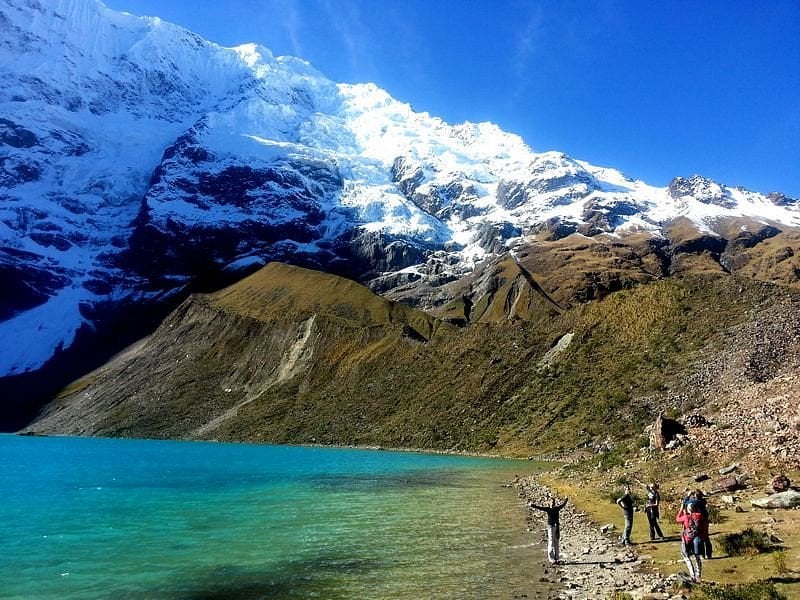
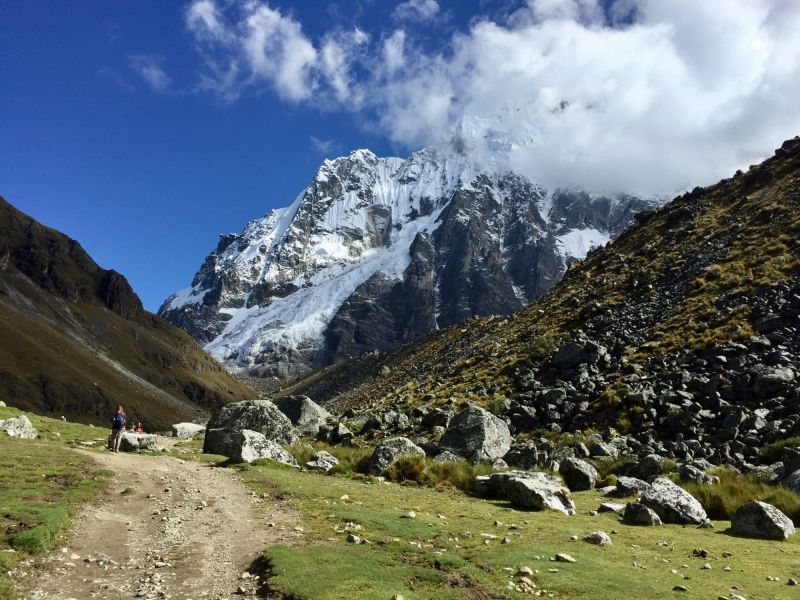
Salkantay offers something radically different: an experience of pure and monumental nature. On the second day of the route, when the group crosses the Salkantay Pass at 4,630 meters with the snow-capped mountain dominating the horizon and glaciers just a short distance from the trail, it creates an impression of scale that very few hikes in the world can match. There are no Inca ruins in sight at that moment, but you do not need them either: the landscape alone is enough to stop you in your tracks.
In the final section, Salkantay descends toward the subtropical area of the Santa Teresa valley, where the surroundings change completely: coffee plantations, tropical fruit, humid heat, and low-altitude vegetation that contrasts with the glacial cold of the previous days. That variety of ecosystems in five days is one of the reasons why many travelers describe it as the most complete trek they have ever done in their lives.
Real difficulty: which one is more demanding and why
Salkantay is considerably more demanding than the Classic Inca Trail in terms of maximum altitude and accumulated elevation gain. The Salkantay Pass at 4,630 meters is more than 400 meters higher than Dead Woman’s Pass on the Inca Trail, and the total elevation gain over the five-day route is greater. For someone who is not well acclimatized or who arrives without prior physical preparation, the second day of Salkantay can be a very tough experience.
The Inca Trail also has its most demanding day on the second day, with the ascent to Dead Woman’s Pass at 4,215 meters. The difference is that the classic route has a shorter overall distance and four days instead of five, which gives a little more room for recovery between days. In general terms, it can be said that the Inca Trail is demanding and Salkantay is very demanding, but neither one requires technical mountaineering experience.
For both treks, prior acclimatization in Cusco is the factor that most influences the quality of the experience. Arriving with two or three days to adapt to the altitude, avoiding intense exertion, staying well hydrated, and getting enough sleep makes a difference that no level of fitness can make up for if it is skipped.
Permits and availability: a key difference
The Inca Trail has a maximum quota of 500 people per day, including guides, porters, and cooks. In the high season from May to August, permits for trekkers sell out four or five months in advance. You cannot do this route independently: it is mandatory to book it through an agency authorized by the Ministry of Culture, and the permit is linked to your passport. If you do not book far enough ahead in the most requested months, there is simply no availability.
The Salkantay Trek does not have that regulated quota system and does not require a special permit from the Ministry of Culture for the trek itself, although you do still need a Machu Picchu entry ticket, which is purchased separately. This means you can organize Salkantay with much less advance notice, even just a few days before if demand is low. For travelers with flexible itineraries or those who were unable to secure a permit for the Classic Trail, this availability is a real and concrete advantage.
Cost: which one is more affordable and why
The Classic Inca Trail is generally more expensive than the Salkantay Trek. The price difference is mainly explained by the cost of the official permit that the Ministry of Culture charges per person and that can only be processed through registered agencies. Added to that base cost is the price of the certified guide, the porters, and the camping equipment, all within a regulated market that has established minimum prices.
Salkantay does not have that additional permit cost, which lowers the final package price. That said, the price difference between the two routes is not as large as many people expect, especially if you compare packages of similar quality. A low-cost Salkantay with basic services is not comparable to a well-operated Inca Trail, and vice versa. The most sensible approach is to compare options within the same quality range, not just prices in the abstract.
Archaeology vs. nature: the deciding factor for many
If what matters most to you about reaching Machu Picchu on foot is the historical and archaeological dimension of the journey — walking on the same trail the Incas used, passing through their ruins, understanding the citadel within the context of the road network that connected it to the Empire — the Inca Trail has no competition. No other route to Machu Picchu offers that continuity between the path you walk and the civilization that built it.
If, on the other hand, what you are looking for is an extreme nature experience, with glaciers, high-altitude lakes, radical ecosystem changes, and the feeling of being in a completely wild environment for several days, Salkantay is hard to match in the region. The snow-capped mountain that dominates the second day has no visual equivalent on any other trek to the citadel, and the contrast between the high mountains at the beginning and the subtropical zone at the end is a geographical experience in itself.
Many travelers who have enough time do both on the same trip. It is not a crazy option: with a well-planned week and a half in Cusco and the surrounding area, it is entirely possible to combine both routes and reach Machu Picchu by two completely different paths on the same journey.
| Aspect | Classic Inca Trail | Salkantay Trek |
|---|---|---|
| Distance | 43 km in 4 days | 74 km in 5 days |
| Maximum altitude | 4,215 m (Dead Woman’s Pass) | 4,630 m (Salkantay Pass) |
| Difficulty | Moderate to high | High |
| Permits | Limited quota with mandatory advance booking | No regulated quota |
| Availability | Low in high season | High year-round |
| Cost | More expensive due to the official permit | Generally more affordable |
| Arrival at Machu Picchu | Through the Sun Gate (Inti Punku) | Through Aguas Calientes |
| Main focus | Inca history and archaeology | High-mountain nature and variety of ecosystems |
| Annual closure | Closed in February | Open year-round |
So, which one should you choose?
If permits are available, your physical condition is ready, and Inca history is one of your main motivations for making this trip, choose the Inca Trail. The experience of reaching Machu Picchu through the Sun Gate after four days of walking the same trail the Incas used five hundred years ago is unique in the world and more than justifies the planning effort it requires.
If you could not get a permit for the Classic Trail, are traveling with little advance planning, are looking for an experience more focused on the grandeur of nature, or simply want something different, Salkantay is an extraordinary alternative that is not a second-best option: it is a route with its own identity that for many surpasses any other route in the region in visual impact.
And if the question still has no clear answer after reading this, there is a simple way to solve it: talk to someone who has done both. Most of the time they will say that both are worth it, that they are completely different, and that they wish they had been able to do both on the same trip. That tells you something too.
Do you want to do the Inca Trail, Salkantay, or both on the same trip? At Incredible Peru Tours, we operate both routes with specialized guides, quality equipment, and personalized attention that begins before you even set foot on the trail. Write to us with your dates, your experience level, and what you are looking for from the experience, and we will guide you toward the option that best fits your trip.