
Some people reach Machu Picchu by train. Some do it by hiking the Classic Inca Trail. And some choose to get there by riding downhill on a mountain pass over 4,000 meters high, ziplining above the Urubamba River canyon, hiking dirt trails through local communities, and finishing the journey on foot along the final stretch of the pre-Hispanic trail to the Inca citadel. That last group is the one that takes the Inca Jungle Trail.
If you are looking for an experience that combines nature, history, adventure activities, and the final reward of Machu Picchu in a single three-day route, it is hard to find anything better in the entire Cusco region. This guide tells you everything you need to know before booking.
What the inca jungle trail Is and why it is different from other routes
The Inca Jungle Trail is an alternative route to Machu Picchu that combines several means of transportation and adventure activities over the course of three days. Unlike the Classic Inca Trail, which is a pure four-day trek, this route mixes mountain biking, hiking, rappelling, ziplining, and walking along sections of the original Inca trail in a single itinerary.
The journey begins from the highest point of Málaga Pass, at approximately 4,350 meters above sea level, and descends gradually to Aguas Calientes, passing through different ecological zones and geographic areas that change dramatically from one day to the next. That variety of landscapes and activities in such a short time is one of the features that makes this route especially attractive for active travelers who want to make the most of every hour of their trip.
Another element that sets it apart is access. While the Classic Inca Trail has a strictly limited daily quota and its permits sell out months in advance, the Jungle Trail has greater availability and can be arranged with less lead time, making it a perfect option for travelers who plan on shorter notice or were unable to secure a permit for the classic route.
Day-by-day itinerary: what happens each day
Day 1 – Mountain Biking: From Málaga Pass to Santa María
The first day begins before 7 in the morning with a bus transfer from Cusco to Málaga Pass, at over 4,300 meters above sea level. That is where the mountain bike descent begins: approximately 60 kilometers downhill on a paved and dirt road with views that shift from the frozen highlands to the subtropical zone in just a few hours. It is one of the longest and most spectacular bike descents you can do anywhere in Peru.
No previous mountain biking experience is required for this section. The downhill ride does not demand advanced technique, although it does require attention, focus, and respect for speed on the steepest sections. The agency provides the equipment, including helmet, gloves, knee pads, and elbow pads, and the guide stays with the group throughout the descent, setting the pace and the stops for photos and rest.
The day ends in Santa María, a small town at about 1,500 meters above sea level where you spend the first night. The temperature change compared to dawn at Málaga Pass is dramatic: from dry high-altitude cold to humid warmth that signals the change of environment for the days ahead.
Day 2 – Adventure and Hiking: From Santa María to Santa Teresa
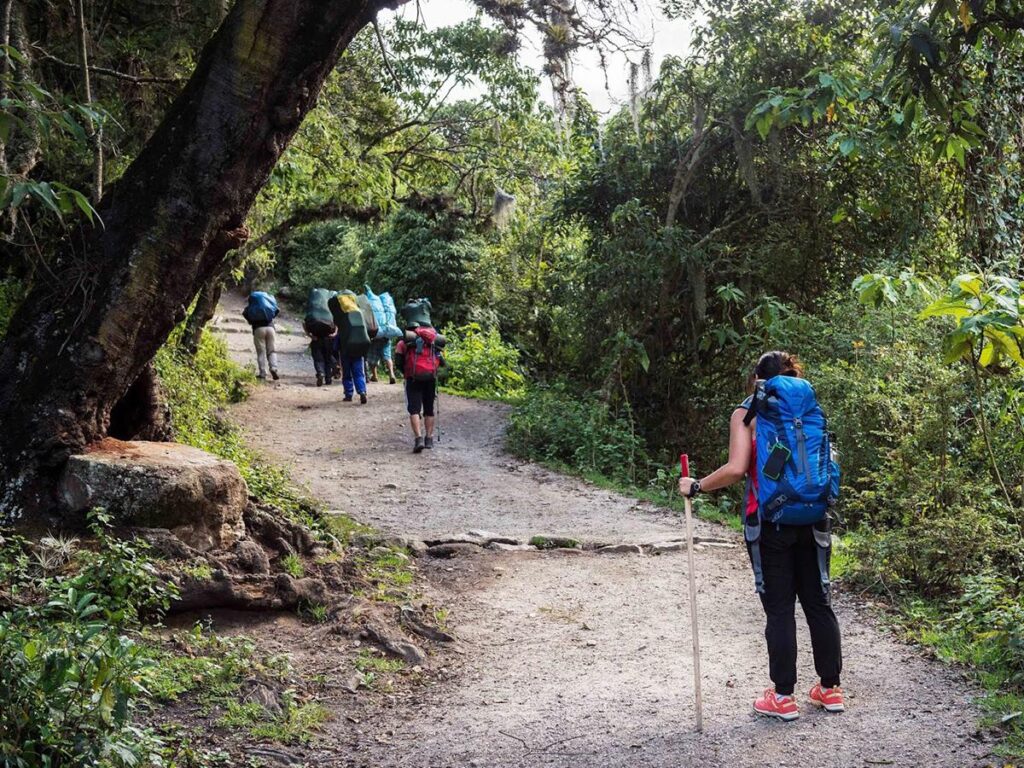
The second day is the one with the greatest variety of activities. From Santa María, the group hikes along dirt trails through coffee, cacao, and tropical fruit plantations that follow the river canyon. The landscape at this mid-level altitude has a completely different plant density from the day before: large trees, vines, bromeliads, and wildlife that is more active and visible than in the higher-elevation areas.
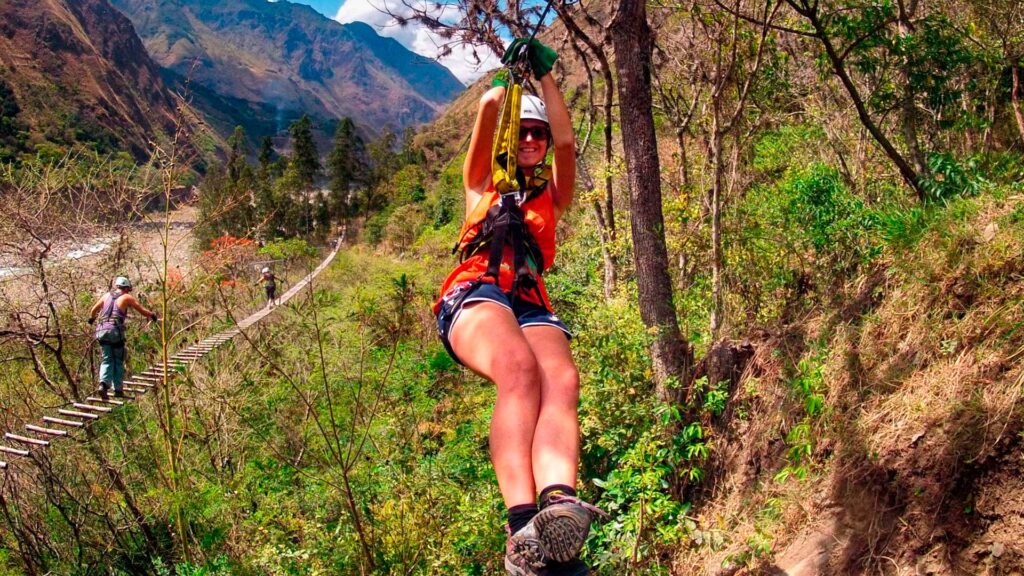
During this section, optional activities such as waterfall rappelling and ziplining across the canyon may be included, depending on the package you choose with your agency. These activities are not mandatory, but they are among the most memorable for those who do them: the zipline over the Urubamba River void, with rock walls on both sides and vegetation below, is one of those moments that stays with you.
The second day ends in Santa Teresa, known for its natural hot springs. After hours of hiking and physical activity, soaking in the Cocalmayo hot springs at the end of the afternoon is a contrast that is hard to beat. The town has basic lodging options and a few restaurants where you can eat well for little money.
Day 3 – The Inca Section and Arrival at Machu Picchu
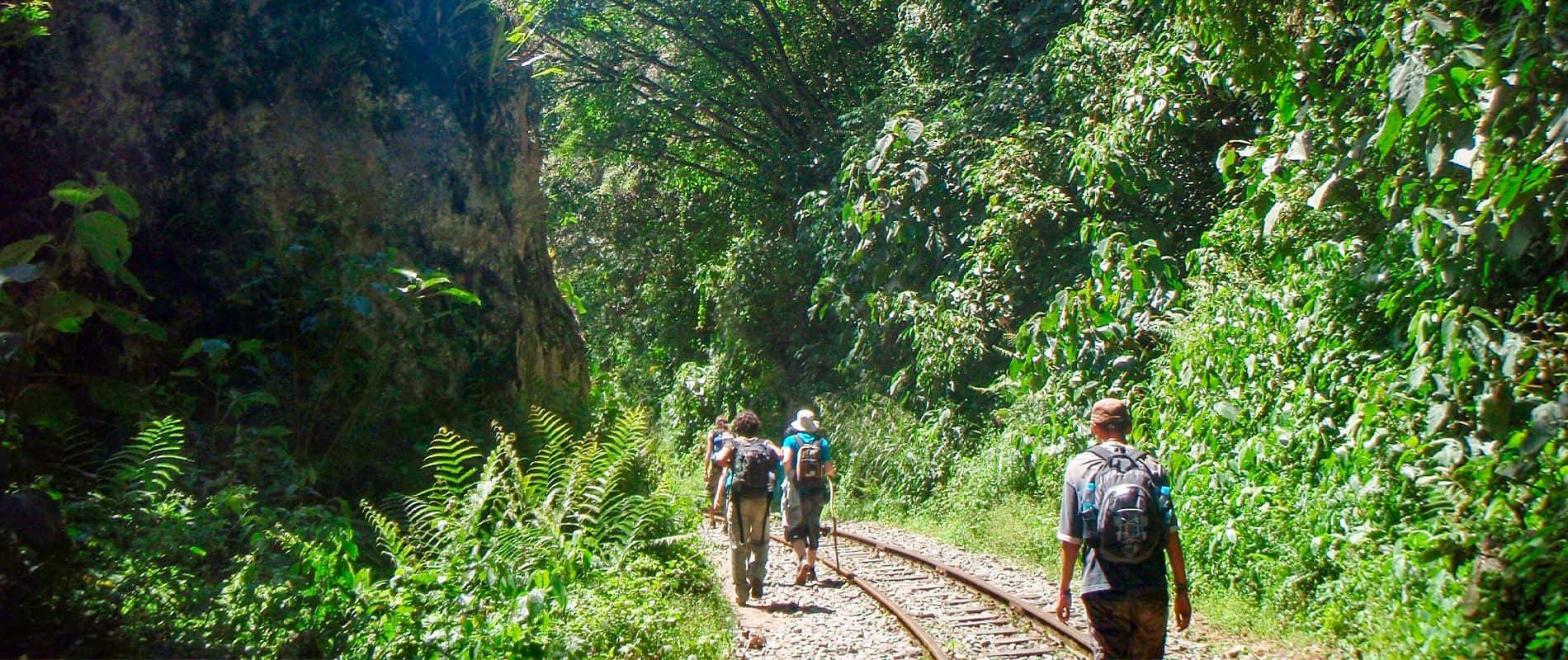
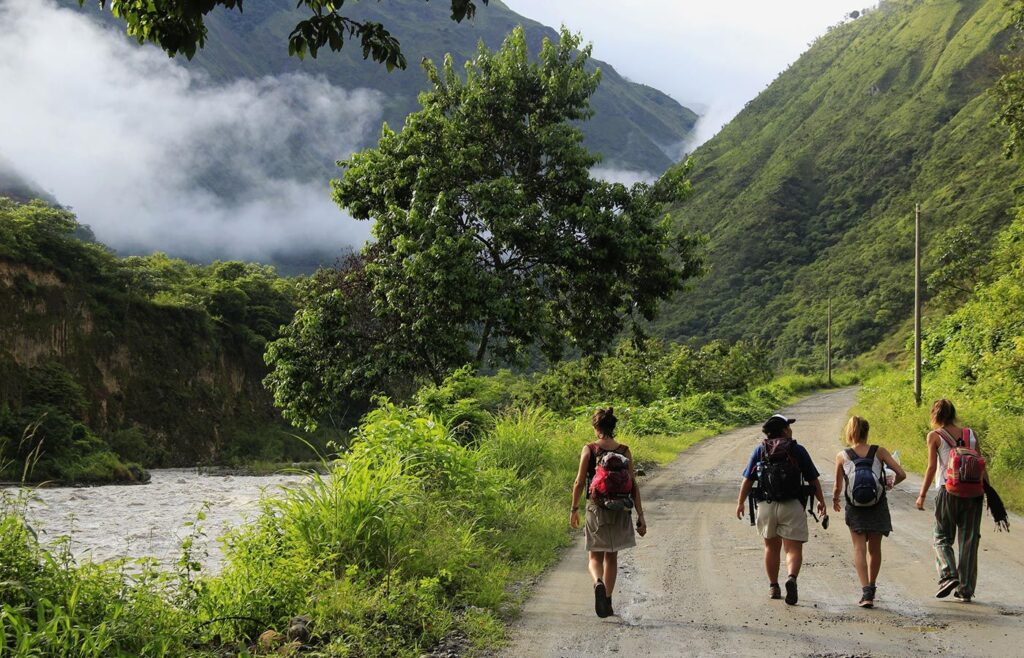
The third day is the one that gives the route its name. From Santa Teresa, the group takes a train or walks along the railway to Hidroeléctrica, the station closest to Aguas Calientes on this route, and from there begins the final hike of approximately two hours along the riverbank to the gateway town of Machu Picchu.
Once in Aguas Calientes, the group takes the first available bus up or climbs on foot before dawn along the trail that follows the mountain to the entrance of the archaeological site. The guided tour of the citadel closes the circle of the three-day journey: the same route that connects the subtropical zone with the heart of the Inca Empire, completed in the most active and intense way possible.
Difficulty level: who Is this route for?
The Jungle Trail is designed for active travelers looking for adventure, but it does not require technical experience in any of the disciplines it includes. You do not need to know mountain biking, you do not need to have rappelled before, and you do not need previous high-altitude trekking experience. What you do need is good overall physical condition, willingness to spend hours on the move, and no issues with heights if you are going to do the zipline.
The maximum altitude of the route is reached on the first day, at Málaga Pass. But unlike the Classic Trail, at that point you are not hiking, but going up by bus and then descending by bike, which significantly reduces the physical impact of the altitude. The real effort of the route is concentrated on the second day, with hours of hiking on uneven terrain, and on the final section of the third day.
In direct comparison terms, the Jungle Trail is physically less demanding than the four-day Classic Trail, but more dynamic and intense in terms of activities. It is the right option for those looking for adrenaline without sacrificing history or the chance to reach Machu Picchu by a meaningful route.
What a standard inca Jungle trail package includes
Packages from authorized agencies for this route usually include transportation from Cusco to Málaga Pass on the first day, full biking equipment (bike, helmet, gloves, and protective gear), a certified guide throughout the three days, meals along the route, accommodation in Santa María and Santa Teresa, the train or transfer from Hidroeléctrica to Aguas Calientes, the bus up to Machu Picchu, and the entrance ticket to the archaeological site.
Rappelling and ziplining activities are usually optional and are booked as add-ons to the base package. Check with your agency to see which version of the package includes each activity and what the additional cost is if you decide to add them once you are already on the route.
The best time to do the jungle trail
Unlike the Classic Inca Trail, the Jungle Trail does not close in February and does not have a restricted access season. It can be done year-round, although the dry season from May to October offers better conditions for the first day’s biking and the second day’s adventure activities, especially if waterfall rappelling is part of your plan.
During the rainy season, the landscape on the second and third days becomes visually more intense: the green is deeper, the rivers run with more volume, and the vegetation in the lower area is at its most lush. The biking section may have some dirt areas that are more slippery, but with the right equipment and a cautious pace it can be managed without problems.
What to pack for the three-day route
- Quick-dry technical clothing: Avoid cotton on all days. Synthetic or merino wool garments regulate temperature better through altitude changes and dry much faster after sweat or rain.
- Lightweight rain jacket: Essential both for possible rain on the first day at high altitude and for splashes during waterfall rappelling.
- Hiking shoes or boots with good traction: For the second and third days of hiking. Standard athletic shoes work on dry ground but become a risk on mud or wet rock.
- Swimwear: For the Cocalmayo hot springs at the end of the second day and for rappelling if you decide to do it at a waterfall.
- High-SPF sunscreen: The first day at Málaga Pass and the open hiking sections involve heavy sun exposure, especially at high altitude where atmospheric filtering is lower.
- Small daypack (20 to 25 liters): Enough to carry water, a change of clothes, documents, and personal accessories. Camping gear and supplies are handled by the agency.
- Cash in soles: For small expenses in Santa María and Santa Teresa, tips for the guide team, and any personal purchases along the way.
Frequently asked questions about the inca jungle trail
Do you need a special permit for the Jungle Trail? It does not require the same limited permit as the Classic Inca Trail, although you do need a Machu Picchu entry ticket, which must be purchased in advance through the official Ministry of Culture website.
Can I do the Jungle Trail if I do not know how to ride a mountain bike? The first bike section is a downhill road ride that does not require special technique, but you do need to know how to handle a bicycle with basic confidence. If you have not ridden recently, let your agency know before booking so they can evaluate whether it is the right option for you.
Is it possible to do the Jungle Trail in 2 days? There is a shortened two-day version that combines biking and hiking in a more compressed format. However, the three-day version is the one that allows you to enjoy each stage at a relaxed pace, include the adventure activities, and reach Machu Picchu without rushing.
Are there minimum or maximum age groups? There is no official age restriction, but the route is not recommended for children under 12 due to the physical demands and adventure activities. For people over 60, it is advisable to consult a doctor beforehand, especially because of the high-altitude section on the first day.
Do you want to experience Machu Picchu in a completely different way? At Incredible Peru Tours, we organize the Inca Jungle Trail with guides specialized in adventure travel, top-quality equipment, and all the logistics taken care of so that you only have to focus on enjoying every mile. Write to us with your dates and your group size, and we will put together the package that best fits what you are looking for.


