The market for Inca Trail agencies in Cusco is broad and uneven. There are operators with years of experience, top-level certified guides, and proper labor practices with their porters. And there are operators that use the same words on their website, charge similar prices, and produce very different experiences on the trail. The difference between the two is not always visible from home before paying the deposit, but there are clear signs that allow you to identify a serious operator before committing to any expense.
At Incredible Peru Tours, we understand that this is exactly the question any responsible traveler should ask before booking, and we answer it without euphemisms.
First sign: they can answer specific questions with concrete data
A serious Inca Trail agency can answer any question about the elements of the service it offers with concrete data. Not with generalities or marketing phrases, but with verifiable numbers and specifications.
The questions that reveal the real quality of an operator the most are the following. How many porters does the group have? How much does each porter earn per workday? Do they have active accident insurance during the trek? Does the service price include the porter’s transportation back to their community after the route ends? What comfort rating does the sleeping bag they provide have for Pacaymayo, the coldest campsite on the route?
An operator that works within the legal framework of the Porter Law answers these questions with specific data and without evasiveness. One that responds with generalities such as “we care about our team” or redirects the conversation without giving concrete figures is communicating something relevant about its real practices.
Second sign: they are registered with the Ministry of Culture of Peru
The Ministry of Culture of Peru maintains a public registry of the agencies authorized to operate the Inca Trail. Only operators listed in that registry can process access permits for the trail. Anyone selling the Inca Trail without being in that registry is either reselling permits processed by another agency, with the risks that this implies, or directly operating irregularly.
Verifying that the agency you are considering booking with appears in that registry is a simple step that any legitimate operator can help with. Asking them to confirm their registered name or operator code and checking it on the Ministry’s official portal takes less than five minutes and immediately rules out operators that do not meet this basic requirement.
To do the Inca Trail with Incredible Peru Tours, when you contact us, we will provide you with all the necessary information about registration and the permits required for the Inca Trail before you make your reservation.
Third sign: their guides have current official certification
The Inca Trail guide must have official certification from the Ministry of Culture of Peru, which verifies their specific training in Andean archaeology and their qualification to manage groups on the historic trail. That certification involves training in mountain first aid, deep knowledge of the archaeological sites along the route, and legal responsibility for the group throughout the four days.
A serious agency can identify the guide assigned to your group in advance and confirm that their certification is current. If the agency cannot or does not want to provide that information before departure, or if the guide who appears on the start day is not the one previously confirmed, these are situations that deserve a direct conversation before continuing.
Fourth sign: the price makes mathematical sense
The price of an Inca Trail package has an economic floor that no serious operator can ignore. The official permit from the Ministry of Culture costs 292 soles in 2026, equivalent to about 77 US dollars. The return train from Aguas Calientes in standard class costs between 60 and 90 US dollars per person. The certified guide, porters with proper labor conditions, meals during four days, camping equipment, and transfers have real operating costs that any responsible operator includes in its price.
A four-day Classic Inca Trail package under 500 US dollars cannot cover all of those elements at acceptable levels of quality and legality. When the price is unusually low, the right question is not whether it is a deal, but which part of the service has disappeared to reach that number. In most cases, the answer involves the labor conditions of the porters, the quality of the equipment, or the actual certification of the guide.
Fifth sign: they have verifiable reviews with a real history
Reviews on platforms such as TripAdvisor or Google Maps are a useful source of information about the real experience of other travelers with that specific agency. The pattern of comments over time is difficult to fake completely and reveals aspects of the service that no website reflects with the same honesty.
What you should look for is not only the average rating, but also specific comments about the guides, the food, the condition of the equipment, and the way the agency handled unexpected situations. The most recent reviews carry more weight than older ones because an agency’s practices can change over time. An operator with good reviews from three years ago but recent comments mentioning a decline in service deserves a direct conversation about what has changed.
Sixth sign: communication before booking is clear and pressure-free
The way an agency answers your questions before you have paid anything is the best available predictor of how it will respond when there is a problem on the trail. A serious agency responds quickly, with specific information, and without pressuring you to close the reservation before all questions are resolved.
Warning signs in pre-booking communication include answers that avoid concrete questions, pressure to pay the deposit before resolving doubts, promises to include elements without confirming them in writing, or changes in the terms between the first contact and the moment of confirmation. An agency that does not respond transparently before receiving the money will not turn into an honest operator once the deposit has been paid.
Seventh sign: they have a clear policy on porters’ working conditions
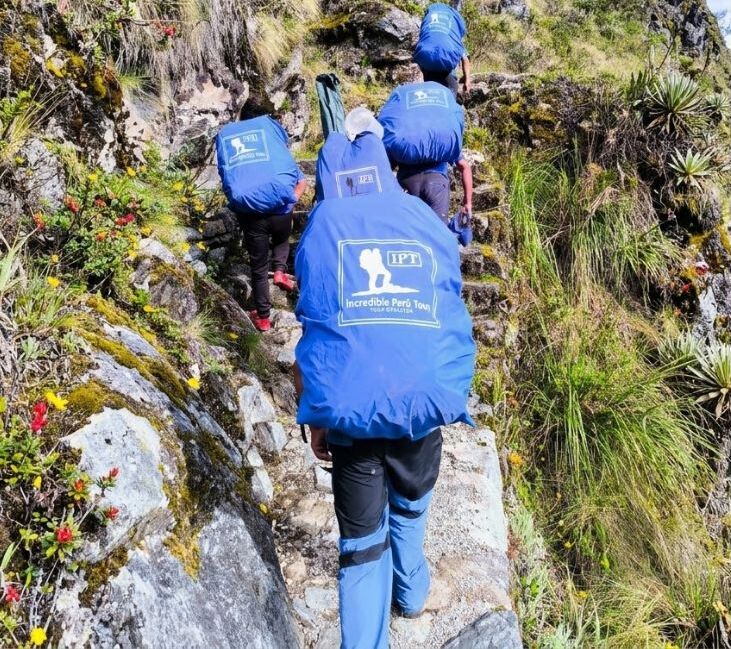
Inca Trail porters are the most invisible element of the service for someone organizing the trip from home and the most important one for evaluating the real ethics of an operator. Peru’s Porter Law establishes minimum wages, maximum load weight, and accident insurance that all authorized operators are required to comply with. Not all of them do.
An agency that complies with that law can tell you how much each porter earns per day, what insurance they have active during the trek, and the maximum weight they carry. For travelers who value their money having a positive impact on the people who make the route possible, that information is a central part of deciding who to book with, not a secondary detail.
Eighth sign: they do not promise what is impossible to promise
A serious agency does not promise clear skies at Machu Picchu, does not guarantee that the group will reach Warmiwañusca without difficulty, and does not assure you that the experience will be exactly like the photos on its website. Weather, individual response to altitude, and group dynamics are variables no operator can control.
What it can promise, and must deliver, are the elements within its control: the certified guide, proper equipment, quality meals, well-paid porters, and responsible management of any unexpected situation. If an agency promises more than that, it is selling expectations it cannot guarantee. If it promises less, it probably cannot deliver either.
Concrete steps to verify an agency from home
- Ask for the registered name with the Ministry of Culture of Peru and verify it on the official portal.
- Search for the agency’s name on TripAdvisor and Google Maps, read the most recent comments, and pay attention to negative reviews and how the agency responded to them.
- Ask concrete questions about porters, the sleeping bag, and the guide’s certification, then evaluate the quality and specificity of the answers.
- Ask for all elements included in the package to be confirmed in writing before paying the deposit.
- Verify the package cancellation and refund policy before confirming any payment.
None of these steps takes more than an hour, and all of them produce information that protects an investment that, in most cases, represents several months of planning and several hundred dollars of budget.
At Incredible Peru Tours, we answer every question in this guide with concrete data because we operate within the legal framework, hold current registration with the Ministry of Culture, and take both our groups’ experience and the working conditions of our guides and porters seriously. If you want to verify this before booking, write to us and we will provide any information you need with no obligation.


