
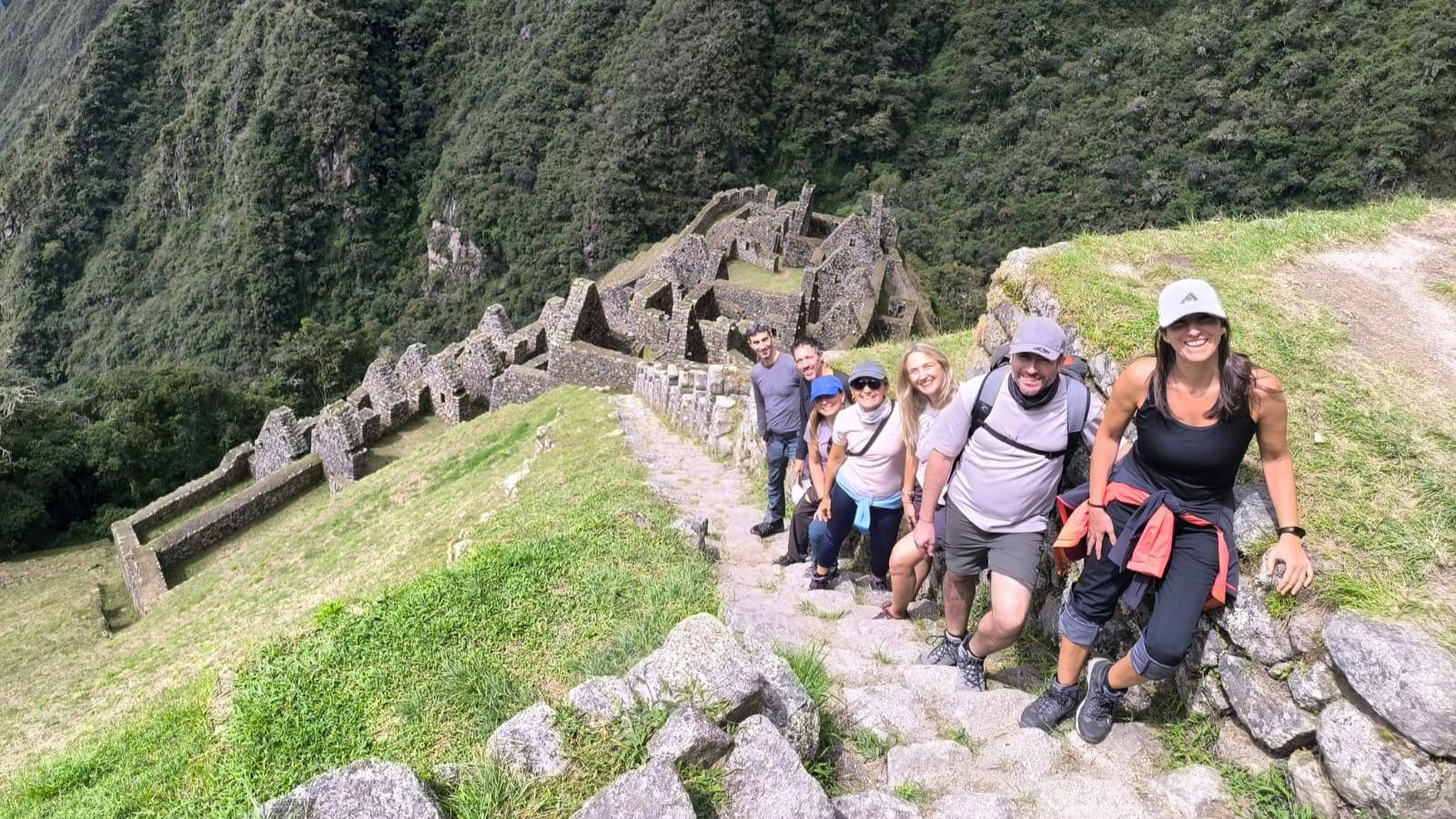
Before confirming any Inca Trail reservation, most people build up a list of questions that general articles never fully answer. At Incredible Peru Tours, we answer these questions every day, and this guide gathers the most frequently asked ones with the same clear information we would give in a direct conversation before confirming any payment.
Can you hike the Inca Trail independently, without an agency?
No. The Inca Trail is the only trek in the Cusco region that legally requires booking through an authorized agency approved by the Ministry of Culture of Peru and the presence of an official certified guide throughout the entire route. Access permits for the trail can only be processed through registered operators: there is no way to buy them directly as an individual visitor. Anyone who arrives at Kilometer 82 without a permit processed by an agency cannot enter the trail under any circumstances.
How far in advance should you book the Inca Trail?
It depends on the season. For June, July, and August, which are the months with the highest demand, the minimum recommended booking time is four months in advance, while the safest approach is five or six months. Permits for those months consistently sell out that far ahead every season. For May, September, and October, three months is usually enough. For the low-season months of November, December, January, and March, two months is generally adequate. February is the only month when the Inca Trail closes for official maintenance.
What does the official Inca Trail permit include?
The official permit issued by the Ministry of Culture covers access to the trail during the four days of the route, plus entry to the archaeological site of Machu Picchu on the assigned circuit and time slot for the final day. The permit cost for foreign adult visitors in 2026 is 292 Peruvian soles, equivalent to approximately 77 US dollars. The agency manages that cost and includes it in the package price without any additional markup.
Is the permit refundable if I need to cancel the trip?
No. The Inca Trail permit is personal, non-transferable, and non-refundable by the Ministry of Culture of Peru, with no exceptions and regardless of the reason for cancellation. Once issued, if the participant cannot attend, that space is lost. The only way to recover that cost is through travel insurance with cancellation coverage that explicitly includes high-altitude trekking as a covered activity.
How many days does the Inca Trail take?
The classic version takes four days with three nights of camping, covering approximately 43 kilometers between Kilometer 82 and the Sun Gate of Machu Picchu. There is also the Short Inca Trail, a two-day version that begins at Kilometer 104, avoids the most demanding mountain passes, and also reaches Machu Picchu through Inti Punku. There is also a one-day private-service version that covers the final section of the trail in a single day.
What physical condition do you need to hike the Inca Trail?
The Inca Trail is classified as a high-difficulty trek, mainly because of Dead Woman’s Pass at 4,215 meters on the second day. Technical mountaineering experience is not required, but you do need above-average physical condition and, above all, prior acclimatization in Cusco. Spending at least two full nights in Cusco before starting the trek is the factor that makes the biggest difference in performance on the second day. A person in good physical condition who arrives without acclimatization may struggle more than a person with average fitness who arrived with three nights of adaptation.
How high does the Inca Trail reach?
The highest point of the Classic Inca Trail is Warmiwañusca Pass, known as Dead Woman’s Pass, at 4,215 meters above sea level. It is crossed in the morning of the second day. The second-highest point is Runkuraqay Pass, at 3,950 meters, which is crossed on the third day. The overnight campsites are located at 3,000 meters in Wayllabamba on the first night, 3,600 meters in Pacaymayo on the second night, and 2,650 meters in Wiñay Wayna on the third night.
Does the Inca Trail close during any month of the year?
Yes. The Inca Trail closes completely throughout the entire month of February for official maintenance of the trail and archaeological sites. There are no permits available for any date in February under any circumstances. For travelers whose trip dates fall in that month and who want to reach Machu Picchu on foot, the Salkantay Trek is the most complete available alternative: it does not have a monthly closure and is open all twelve months of the year.
Are there discounts for students or children?
Yes. Students with a valid university ID card issued by their educational institution receive a discount of approximately 35 US dollars off the adult permit price. The ISIC card is no longer valid for this discount due to recent changes in the Ministry’s policy: the student ID must be issued by the student’s own institution and include a photo, full name, and expiration date. Children on the Inca Trail have a fare of approximately 40 US dollars. Peruvian citizens with a valid DNI have national rates that are significantly lower than those for foreign tourists.
Which archaeological sites are visited along the route?
The Classic Inca Trail passes through five archaeological sites from the imperial Inca period directly along the trail: Llactapata on the first day, Runkuraqay and Sayacmarca on the third day, Phuyupatamarca with its still-active ceremonial water fountains, and Wiñay Wayna, the best preserved of them all, just before Machu Picchu. None of these sites require an additional ticket: the Inca Trail permit includes access to all of them.
How do you reach Machu Picchu on the Inca Trail?
The Inca Trail reaches Machu Picchu through the Sun Gate, Inti Punku, the historic entrance used by travelers of the Inca Empire. From that point, the entire citadel can be seen from above before descending into the site. That arrival, after four days of walking the same pre-Hispanic stone trail, creates an experience that arriving by bus from Aguas Calientes simply cannot replicate.
What happens if Machu Picchu is covered in fog when you arrive?
Fog over Machu Picchu at the moment of arrival through Inti Punku happens more often than blue-sky photographs suggest, especially during the wet season. Fog at the site moves with the wind, and visibility windows open and close within minutes. For many participants, seeing Machu Picchu appear and disappear among the clouds from the Sun Gate after four days of trekking creates an even stronger impression than seeing it completely clear.
Are there showers at the Inca Trail campsites?
At the campsites along the Classic Inca Trail, there are no showers available for participants. Personal hygiene is managed with wet wipes, water from the container provided by the cooking team every morning, and antibacterial gel. The first hot shower comes in Aguas Calientes at the end of the fourth day, and in that context, it becomes one of the most appreciated sensory experiences of the entire route.
Is there phone signal on the trail?
There is no phone signal along most of the Inca Trail. The first few kilometers near Kilometer 82 and the Wiñay Wayna area have weak intermittent signal with some providers, especially Claro. During the second and third days, coverage is practically nonexistent. Signal returns in Aguas Calientes at the end of the fourth day. It is a good idea to let family or contacts know before departure that the route involves four days without communication.
What kind of food is served during the trek?
Meals on the Inca Trail are prepared by the support team’s cook at each point along the route. Breakfast includes hot drinks, eggs, bread, and oatmeal or quinoa. Lunch is the most elaborate meal, with soup, a main dish with protein, and a side. Dinner follows a similar structure with different menus each night to avoid repetition. Dietary restrictions such as vegetarianism, veganism, or gluten intolerance are completely manageable if they are communicated to the agency far enough in advance before departure.
How much should you tip the support team?
Tips for the support team are a common practice and economically significant for the people who work on the route. The suggested ranges per person in the group for the four-day Inca Trail are between 15 and 25 US dollars total for the porters, between 20 and 30 US dollars for the cook, and between 25 and 40 US dollars for the main guide. The tip is given in cash on the final day before the team takes transportation back. Bringing the cash prepared in individual envelopes from Cusco is the most organized way to manage it.
How much does the Inca Trail cost in 2026?
Standard group packages with good-quality camping arrangements range from 760 to 900 US dollars per person with the train included. Private-service packages range from 1,000 to 1,500 US dollars per person depending on the size of the group. The two-day Short Inca Trail in group service costs between 475 and 650 US dollars. Packages under 500 US dollars for the classic route should be evaluated very carefully because the cost of the permit plus the train already exceeds or comes close to that price.
What makes the Inca Trail different from the Salkantay Trek or the Lares Trek?
The Inca Trail is an experience of Inca archaeology in motion: the historic trail, the five archaeological sites along the route, and the arrival through the Sun Gate are elements that no other route in the region can offer. The Salkantay Trek is an experience of monumental nature, with glaciers and extreme ecosystem changes, no regulated quotas, and year-round access. The Lares Trek is an experience of cultural connection with living Andean communities. All three reach Machu Picchu, but they create completely different experiences along the way.
How is altitude sickness handled if it appears on the trail?
Mild symptoms of altitude sickness, such as a moderate headache, slight loss of appetite, or more fatigue than expected, are common on the second day and are managed with a slow pace, constant hydration, and rest upon arrival at the campsite. Severe symptoms, including persistent vomiting, disorientation, difficulty breathing while at rest, or loss of balance, require immediate communication with the guide. Descent is the only effective treatment for severe altitude sickness, and the guide is trained to manage that situation and coordinate evacuation if necessary.
Do you have more questions about the Inca Trail that are not included in this guide? At Incredible Peru Tours, we answer any questions before confirming the reservation and guide each traveler toward the version of the route that best fits their profile, dates, and budget. Write to us and we will respond with the same clarity you would expect from someone who knows the route firsthand.


