
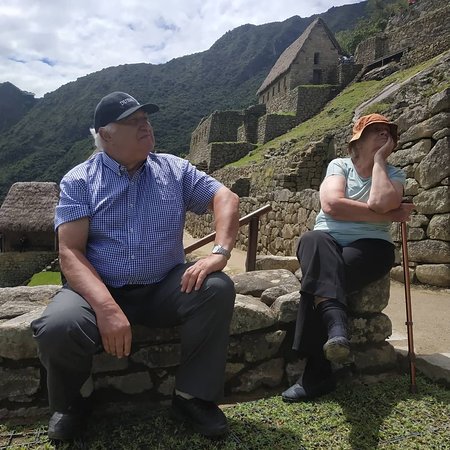
Visiting Machu Picchu with reduced mobility or knee problems may be possible, but it depends on your level of mobility, pain, balance, physical endurance, chosen circuit, and support during the visit. Not everyone will have the same experience, so it is important to plan carefully before buying your ticket.
Machu Picchu is not fully accessible. There are steps, uneven stones, slopes, narrow areas, and sections where walking with assistance may be necessary. The key is not only getting to the site, but choosing a realistic route to avoid pain, excessive fatigue, or the risk of falls.
Can you visit Machu Picchu with knee problems or reduced mobility?
Yes, in some cases it may be possible to visit Machu Picchu with knee problems or reduced mobility. The main condition is choosing a circuit that matches your real ability to walk, climb steps, keep your balance, and remain standing during the tour.
Not all circuits are recommended. Some routes have more elevation changes, more stairs, or higher areas that may be uncomfortable for people with knee pain, cane use, prosthetics, low physical endurance, or difficulty going up and down steps.
Before deciding, it is important to be honest about the traveler’s physical condition. If a person can walk slowly, take breaks, and climb some steps with help, there may be options. If the person needs a standard wheelchair or cannot walk on uneven terrain, the visit requires a more careful evaluation.
What you should know before choosing a circuit
Machu Picchu is visited through defined circuits. When buying the ticket, you choose a specific route and cannot freely change the route once inside the site. This greatly affects travelers with reduced mobility.
Choosing the wrong circuit can turn the visit into a more tiring, uncomfortable, or even impossible experience to complete. That is why, before booking, you should review what the route includes, which areas it visits, whether it climbs to high viewpoints, and how much physical effort it may require.
Machu Picchu has steps and stone paths
Even the shortest routes inside Machu Picchu may include steps, stone surfaces, natural ramps, narrow areas, and small elevation changes. It is not flat or even terrain like a museum or an urban park.
During the rainy season or on humid mornings, some stones may feel slippery. If you have knee, ankle, hip, or balance problems, each section should be taken calmly, using shoes with good traction and support if needed.
Not all circuits are suitable for reduced mobility
Some routes include long climbs, high viewpoints, or access to mountains. These options may be attractive for travelers looking for wide views, but they are not suitable for all travelers with physical limitations.
If you use a cane, have a prosthetic, low endurance, or pain when climbing stairs, it is best to avoid routes with a lot of elevation change. You should also consider that going down steps can cause more discomfort in the knees than going up.
The ticket must be chosen before traveling
The circuit is defined when purchasing the entrance ticket to Machu Picchu. It is not advisable to leave this decision until the last minute, especially if there is a physical condition that limits movement.
Carefully review the route, entry time, and current restrictions before booking. Rules may change, so it is always better to confirm updated information before paying for trains, hotels, or additional services.
Best circuit for knee problems or reduced mobility
In general, Circuit 3 or the Royalty Route is usually the most manageable option for many people with knee problems or reduced mobility. It goes through lower areas of the citadel and avoids mountain routes.
This does not mean it is a fully accessible route. There may still be steps, uneven stones, and sections that require attention. The difference is that it is usually more practical than high panoramic circuits or mountain hikes.
Circuit 3 or the Royalty Route
Circuit 3 may be more convenient for travelers looking for a shorter visit with less physical demand. Since it stays in lower areas, it reduces part of the effort involved in climbing to viewpoints or walking through higher sections.
Even so, it does not completely eliminate steps or uneven terrain. If you have knee pain, it is best to walk slowly, take breaks, and let the guide know from the beginning so the pace of the tour can be adapted.
What you can see on Circuit 3
This route allows you to visit an important part of the lower urban sector of Machu Picchu. Depending on the route available at the time of purchase, it may include ceremonial spaces, enclosures related to the main architecture, and internal transit areas of the citadel.
The route helps visitors understand how the lower part of the site was organized without necessarily requiring a climb to the highest panoramic sectors. For many travelers with reduced mobility, this offers a reasonable balance between historical content and physical effort.
Limitations of this circuit
The main limitation is that Circuit 3 may not include the classic panoramic photo from the Guardhouse. It may also leave out some higher areas that are part of other longer routes.
It is a more practical route, but not necessarily the most complete one for photography. If the priority is to reduce effort and protect the knees, this disadvantage may be acceptable compared to the benefit of a more manageable visit.
Circuits that may be difficult if you have knee problems
Some routes inside Machu Picchu may not be recommended for people with knee pain, reduced mobility, or low physical endurance. Difficulty does not depend only on distance, but also on elevation change, stairs, and walking time.
Before choosing a route for its views or based on general recommendations, check whether you can actually complete it safely. In Machu Picchu, a poor choice may force you to continue in pain or abandon part of the route.
- Circuit 1 or panoramic routes
- Circuit 2 or classic route
- Huayna Picchu
- Machu Picchu Mountain
- Huchuy Picchu, Intipunku, or the Inca Bridge
What to bring if you have knee problems or reduced mobility
What you bring to Machu Picchu can make the visit easier or more difficult. It is not about carrying many items, but about choosing what truly helps you walk more safely and with less effort.
These recommendations are practical and do not replace medical advice. If you have an injury, recent surgery, or severe pain, consult a healthcare professional before the trip.
Cane or walking support
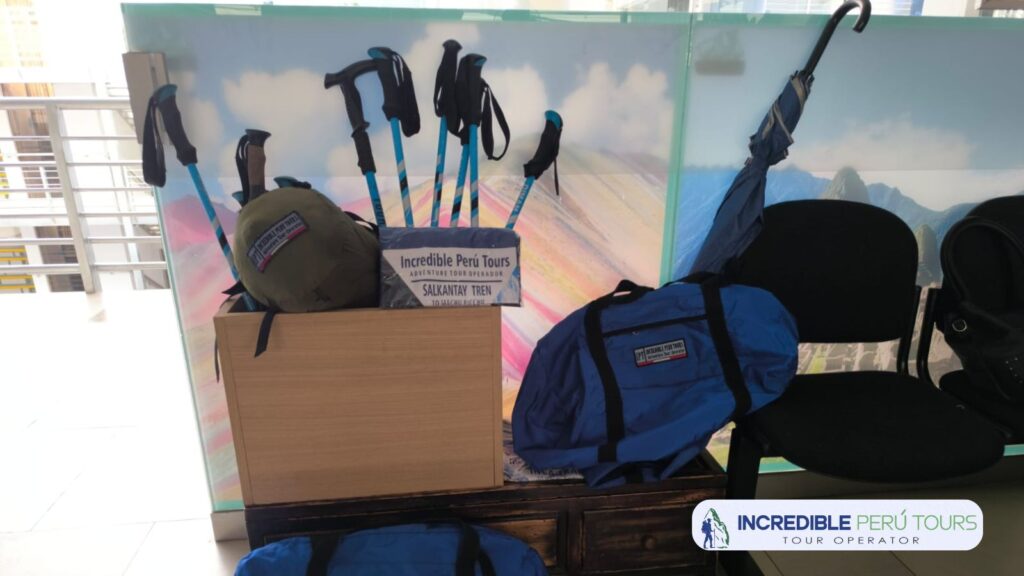
A cane or walking support can help on uneven areas, especially if the person is already used to using it. It is not advisable to try it for the first time in Machu Picchu, because incorrect use may cause discomfort or lack of stability. If you do not have one, at Incredible Peru Tours you can purchase walking sticks before starting your visit, so you have the support you need from the very beginning.
Before entering, review the site’s current rules regarding permitted objects. Rules may change, and some types of walking sticks or accessories may be subject to restrictions.
Shoes with good soles
Wear comfortable sneakers or lightweight trekking shoes with good soles. The stones inside Machu Picchu may be wet, smooth, or slippery, especially on rainy or foggy days.
Avoid new shoes, sandals, or footwear with poor traction. If you have knee problems, a small slip can cause pain or make you walk with more tension during the rest of the tour.
Knee brace or regular support
If you already use a knee brace or support recommended by your doctor or physical therapist, it is a good idea to bring it on the trip. It is best to test it beforehand on short walks to confirm that it does not cause discomfort or limit movement too much.
Do not use a new knee brace on the day of the visit if you do not know how your body will respond. In Machu Picchu, it is not easy to stop for long periods or change equipment at any point along the route.
Light backpack
Bring only what is necessary so you do not carry extra weight during the tour. A heavy backpack increases fatigue and may affect balance on steps or narrow paths.
Water, documents, sunscreen, a light rain layer, and basic items are usually enough. Large luggage should stay at the hotel or in an approved storage area, depending on availability and current rules.

Tips to reduce effort during the visit
Reducing effort does not mean enjoying Machu Picchu less. It means walking wisely, avoiding unnecessary movements, and adapting the pace to the person with reduced mobility.
The visit should be organized with safety in mind, not with the goal of completing as many areas as possible. On terrain with steps and stones, moving calmly can help prevent pain, fatigue, and falls.
Walk slowly from the beginning
It is not advisable to keep up with fast-moving groups. If you have knee problems, starting too quickly can increase pain before reaching the most important parts of the route.
Walk slowly from the entrance and keep a steady pace. The visit should adapt to the person with reduced mobility, not to the rush of other travelers.
Take breaks before the pain becomes severe
Take breaks in safe spots before the pain increases. Waiting until the discomfort becomes strong can make it harder to continue or go down steps with stability.
Short breaks help you catch your breath, relax your legs, and check whether the pace is still appropriate. Avoid stopping in narrow areas where you may block the path or lose balance.
Avoid unnecessary stairs
Follow the permitted route and avoid detours that add extra effort. In Machu Picchu, visitors cannot walk freely through every area, and leaving the route may cause issues with internal site control.
If you have questions about a section with stairs, ask the guide or site staff. Sometimes a small extra climb may seem simple, but going back down can be more uncomfortable for the knees.
Do not carry weight during the tour
Do not carry heavy backpacks or luggage during the visit. Extra weight can increase pressure on the knees, ankles, and back, and can also affect balance on stone paths.
Bring water, documents, and basic items. Leave suitcases, purchases, or large items at the hotel or in approved storage, always checking updated conditions before entering.
What to do if you use a wheelchair
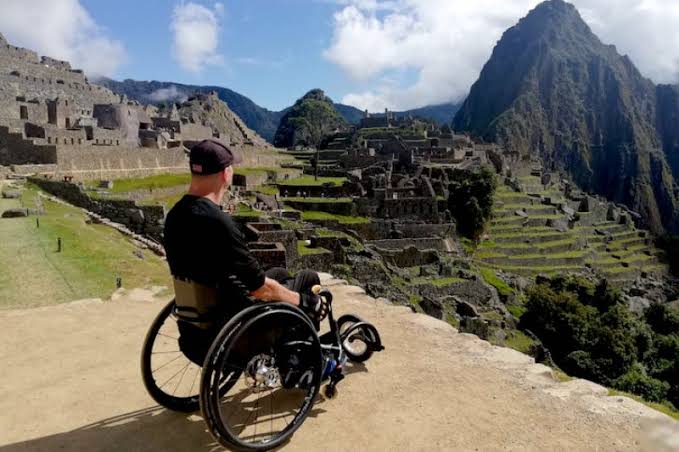
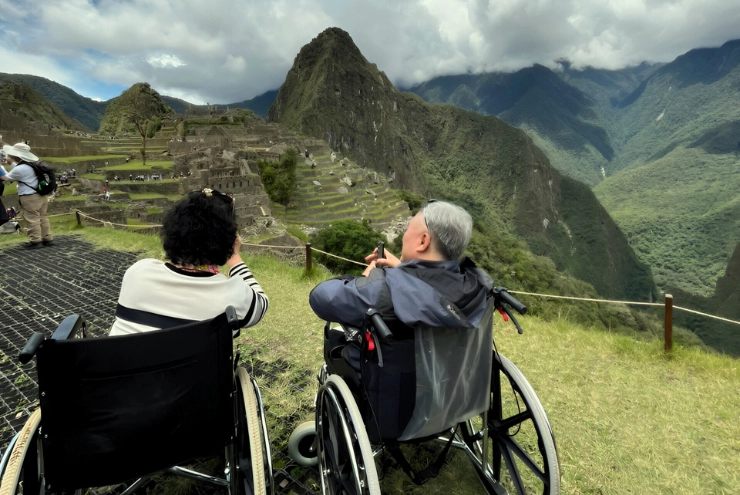
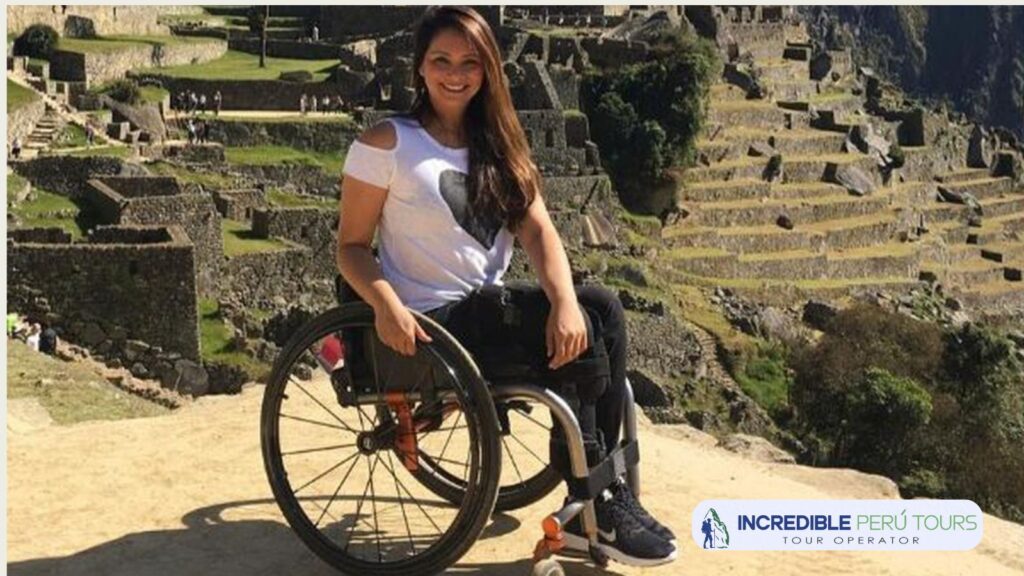
Machu Picchu is not conventionally accessible for a standard wheelchair. The presence of steps, uneven stones, elevation changes, and narrow paths greatly limits independent movement.
Some people may visit with specialized assistance, an adapted wheelchair, or support from companions, but it should not be assumed that any wheelchair will work for the route. Advance planning is essential.
Standard wheelchair
A standard wheelchair can have many limitations inside Machu Picchu. The steps, stone paths, elevation changes, and narrow passages make it difficult to move forward without constant assistance.
Before buying the ticket, check the site’s updated conditions. It is not enough to know that entry is allowed; you also need to confirm which circuit would be viable and what support would be required.
Adapted wheelchair or special assistance
Some people may be able to visit with an adapted wheelchair or special assistance. This type of support must be coordinated in advance, considering the circuit, the condition of the terrain, and the traveler’s physical condition.
Not all wheelchairs work the same way in Machu Picchu. A wheelchair designed for city or indoor use may not work on stone paths, so the evaluation should be done before booking tickets and services.
Ask before buying tickets
Ask about access, restrictions, available assistance, circuit type, and current entry conditions before buying tickets. Rules may vary, and ticket availability also changes depending on the date.
If you need help coordinating tickets, trains, buses, circuits, and transfer times, you can contact the Incredible Peru Tours team to review realistic logistics based on your mobility.
Who should avoid demanding routes?
Not everyone with mild discomfort needs to cancel their visit to Machu Picchu, but some people should avoid demanding routes. The decision should be made carefully, considering pain, stability, and the ability to walk on uneven terrain.
Choosing a shorter circuit does not mean giving up the trip. In many cases, it is the safest way to enjoy the site without overloading the body.
People with recent pain or an active injury
If you have severe pain, swelling, an active injury, or recent surgery, it is best to consult a healthcare professional before the trip. Machu Picchu requires walking on stone, climbing steps, and maintaining balance.
Forcing a visit may worsen an existing discomfort. If the trip is already scheduled, check whether it would be better to change the circuit, reduce activities, or have additional support during the tour.
People who have difficulty going up or down stairs
Many knee discomforts appear more when going down than when going up. In Machu Picchu, elevation changes and steps can make the descent the most uncomfortable part of the route.
If going down stairs already causes pain in daily life, avoid routes with high areas or mountains. A lower and shorter circuit may be a better choice.
Older adults with limited stability
Older adults with limited stability should prioritize short routes, support during the visit, and calm schedules. It is also best to avoid high sectors, mountains, and routes that require walking for a long time.
Support is very useful on steps, narrow areas, and wet surfaces. Planning breaks and walking without rushing can make the difference between a comfortable visit and an exhausting day.
Common mistakes when planning the visit
Many problems during the visit do not happen because of a lack of motivation, but because of poor planning. Buying the wrong ticket, leaving too little time, or trying to do too much in one day can lead to pain and fatigue.
If you travel with reduced mobility, every logistical decision should help conserve energy. The circuit, transportation, schedule, and luggage should be planned to reduce walking and move more safely.
Buying the circuit without checking the difficulty
It is not enough to buy an entrance ticket to Machu Picchu. You must review which route it includes, which areas it visits, and whether it matches the traveler’s mobility.
Some tickets may include routes that are more demanding than expected. Before paying, check whether there are climbs, high viewpoints, mountains, or long sections that may affect the knees.
Choosing a route only for the classic photo
Choosing a route only for the classic photo can be a mistake if you have knee pain. Some panoramic routes require climbing to high areas and may be more tiring than other alternatives.
Comfort should come before the photo. It is better to have a manageable and safe visit than to reach a photo spot in pain or without enough energy to continue.
Walking up from Aguas Calientes
Walking up from Aguas Calientes can consume a lot of energy before entering the citadel. For people with reduced mobility or sensitive knees, this hike is usually not recommended.
Taking the bus up helps conserve strength for the internal route. It also reduces pressure on the knees before facing steps and stone paths inside the site.
Scheduling the train, bus, and entry without enough time
Scheduling the train, bus, and entry without enough time can create unnecessary rushing. People with reduced mobility need more time to move around, rest, and wait in lines.
Leave space between each transfer. If everything is too tight, any delay may force you to walk fast, skip breaks, or arrive at the entrance already tired.
Frequently asked questions about Machu Picchu with reduced mobility
These answers help resolve the most common questions before buying tickets and organizing the visit. Even so, always check the current conditions, because entry circuits and rules may change.
What is the most accessible circuit in Machu Picchu?
Circuit 3 or the Royalty Route is usually the most manageable for many people with reduced mobility. It goes through lower areas and avoids mountain routes, but it is not fully accessible or free of steps and uneven stones.
Can I visit Machu Picchu if my knees hurt?
It depends on your level of pain, balance, and endurance. If the discomfort is mild, it may be possible with a short route, breaks, and support. If there is an active injury, swelling, or severe pain, consult a healthcare professional before traveling.
Is Machu Picchu wheelchair accessible?
It is not conventionally accessible for a standard wheelchair. The terrain has steps, elevation changes, and uneven stones. Some visits may require an adapted wheelchair, specialized assistance, and advance coordination.
Which circuit should I avoid if I have knee problems?
It is best to avoid Huayna Picchu, Machu Picchu Mountain, and long routes or routes with a lot of elevation change. You should also carefully evaluate high panoramic circuits if going down stairs causes pain or instability.
Is it better to sleep in Aguas Calientes if I have reduced mobility?
Yes, sleeping in Aguas Calientes the night before may be more comfortable. This reduces long transfers, avoids a difficult early morning, and allows you to go up to Machu Picchu with less accumulated fatigue.
Is it better to take the bus up to Machu Picchu?
Yes, for knee problems or reduced mobility, the bus is usually the most convenient option. The uphill walk from Aguas Calientes can be demanding and use up energy before starting the tour.
Can I do the visit with a cane?
A cane can help on uneven areas if the person is already used to using it. Before entry, review the site’s current rules to confirm what type of support is allowed.
How long does a comfortable visit take for reduced mobility?
It depends on the circuit and the traveler’s pace. The best option is to plan a visit without rushing, with breaks, and without adding mountains or demanding activities on the same day.
Planning a shorter route can improve the experience
Visiting Machu Picchu with knee problems or reduced mobility does not mean giving up the trip. It means choosing the circuit better, reducing effort, sleeping nearby, taking the bus, and prioritizing safety over the number of places visited.
For many people, a shorter and well-organized route offers a more comfortable experience than trying to complete demanding sectors. If the body responds well, the visit can be enjoyed more calmly. If fatigue appears, having a realistic plan helps avoid forcing the walk.
The best decision is to buy the ticket based on the traveler’s real mobility, not only on the photo or the most popular route. Machu Picchu has accessibility limitations, but with proper preparation, it may be possible for some people who need to walk more carefully.


