
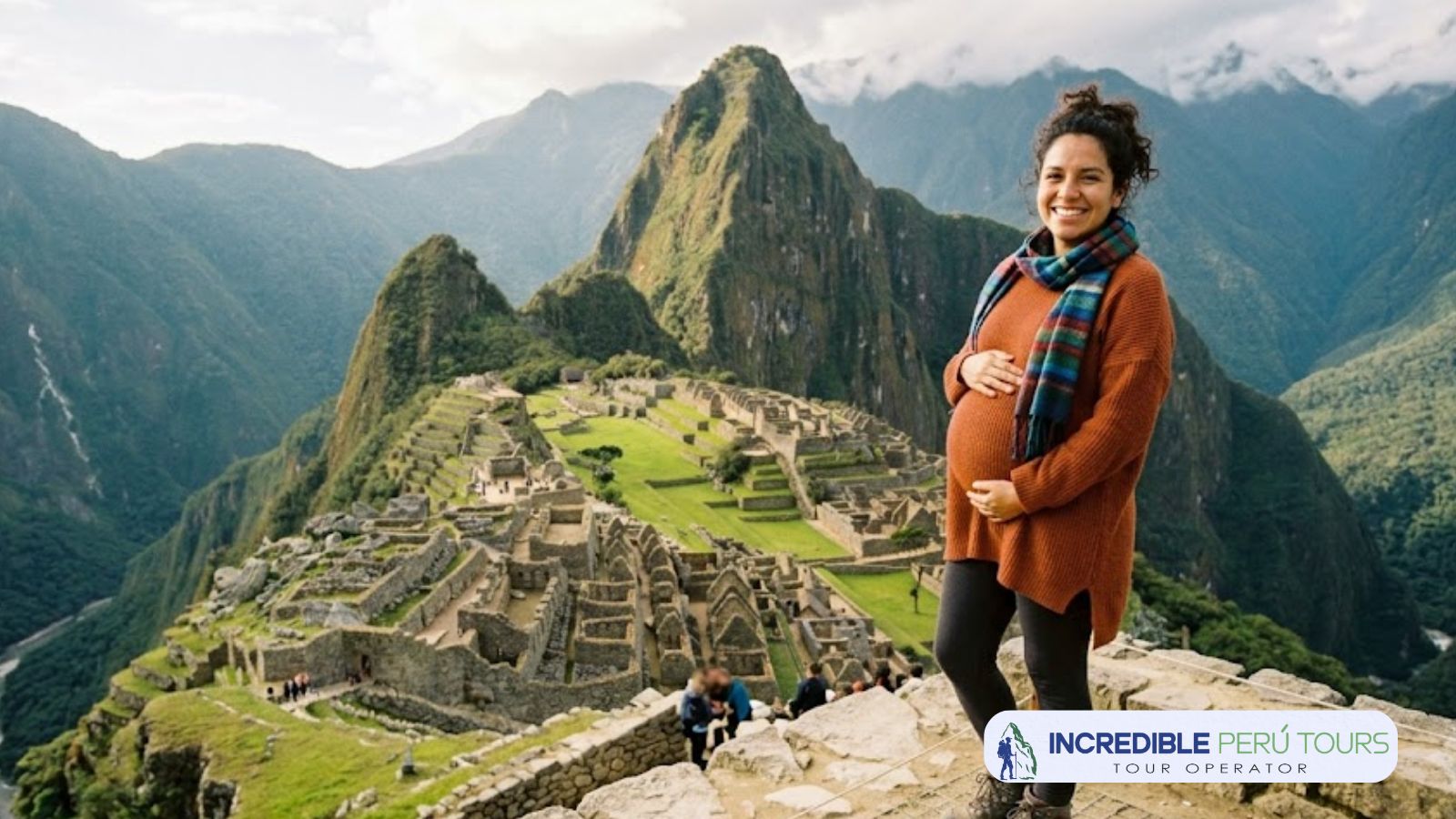
Traveling to Machu Picchu while pregnant may be possible in some cases, but it should not be decided based only on general recommendations. It depends on how many weeks pregnant you are, your health condition, your obstetrician’s advice, your tolerance to altitude, the type of route, and the level of effort the trip involves.
This guide is for informational purposes and does not replace a medical evaluation. Before buying tickets, trains, flights, or tours, the most prudent thing to do is talk to your doctor and check whether the trip is appropriate for your case.
Can you travel to Machu Picchu while pregnant?
Yes, it may be possible to travel to Machu Picchu while pregnant if the pregnancy is low-risk and your doctor authorizes it. The visit does not always require major effort, but it does involve altitude, transfers, walking, stairs, and changes to your routine.
Not all pregnant travelers have the same conditions. Some travelers feel well and tolerate the trip without major discomfort, while others may experience nausea, fatigue, high blood pressure, pain, or symptoms that require monitoring.
The decision should be made before buying entrance tickets, train tickets, or tours. Changing dates, routes, or tickets at the last minute can be difficult, especially during high season, so a medical evaluation should be the first step.
What to ask your doctor before the trip
The medical consultation should take place before traveling to Cusco or Machu Picchu, not once you are already on the route. Your obstetrician should review whether the destination, altitude, flight, transfers, and walks are suitable for your pregnancy.
During that consultation, it is a good idea to review gestational age, medical history, blood pressure, recent symptoms, permitted medications, and effort restrictions. It is also useful to ask what to do if discomfort appears during the trip.
Week of pregnancy and overall condition
Traveling in the first trimester, second trimester, or third trimester is not the same. Each stage has different discomforts and risks, so the exact week of pregnancy should be evaluated by your doctor before confirming the itinerary.
Your doctor should review nausea, fatigue, blood pressure, risk of preterm birth, bleeding, placenta previa, or other conditions. If you have had recent symptoms, even if they seem mild, they should be discussed during the consultation.
Low-risk pregnancy or pregnancy requiring special care
A low-risk pregnancy usually allows more flexibility for travel, as long as the mother feels well and the doctor sees no contraindications. Even so, the trip should be planned with rest, hydration, and little physical demand.
A pregnancy requiring special care needs more caution. If there are risk-related histories or diagnoses, the trip may not be recommended or may require important changes, such as avoiding altitude, reducing transfers, or postponing the visit.
Medical documents you should carry
It is advisable to carry recent prenatal checkups, your treating doctor’s information, blood type, a list of permitted medications, travel insurance, and an emergency contact. These details can help if you need care during the trip.
It is also useful to keep digital copies on your phone and send a copy to your travel companion. If you are traveling from another country, make sure the documents are clear and easy for a healthcare professional in Peru to understand.
Altitude in Cusco, the Sacred Valley, and Machu Picchu
Many travel discomforts do not happen only at Machu Picchu, but also when arriving in Cusco and during transfers through high-altitude areas. Cusco is at a higher altitude than the citadel and may feel more demanding for some travelers.
Prevention consists of slowing down, resting, staying hydrated, and avoiding rushed plans. During pregnancy, any altitude-related symptom should be watched more carefully and not assumed to be a normal travel discomfort.
Cusco and altitude sickness during pregnancy
Cusco is located at approximately 3,400 meters above sea level, an altitude that can cause headaches, fatigue, nausea, dizziness, or shortness of breath in some travelers. These symptoms can appear even in healthy people.
During pregnancy, these discomforts should be handled with greater care because they may be confused with pregnancy symptoms or with signs that require medical review. If the discomfort is strong, persistent, or accompanied by other symptoms, seek medical attention.
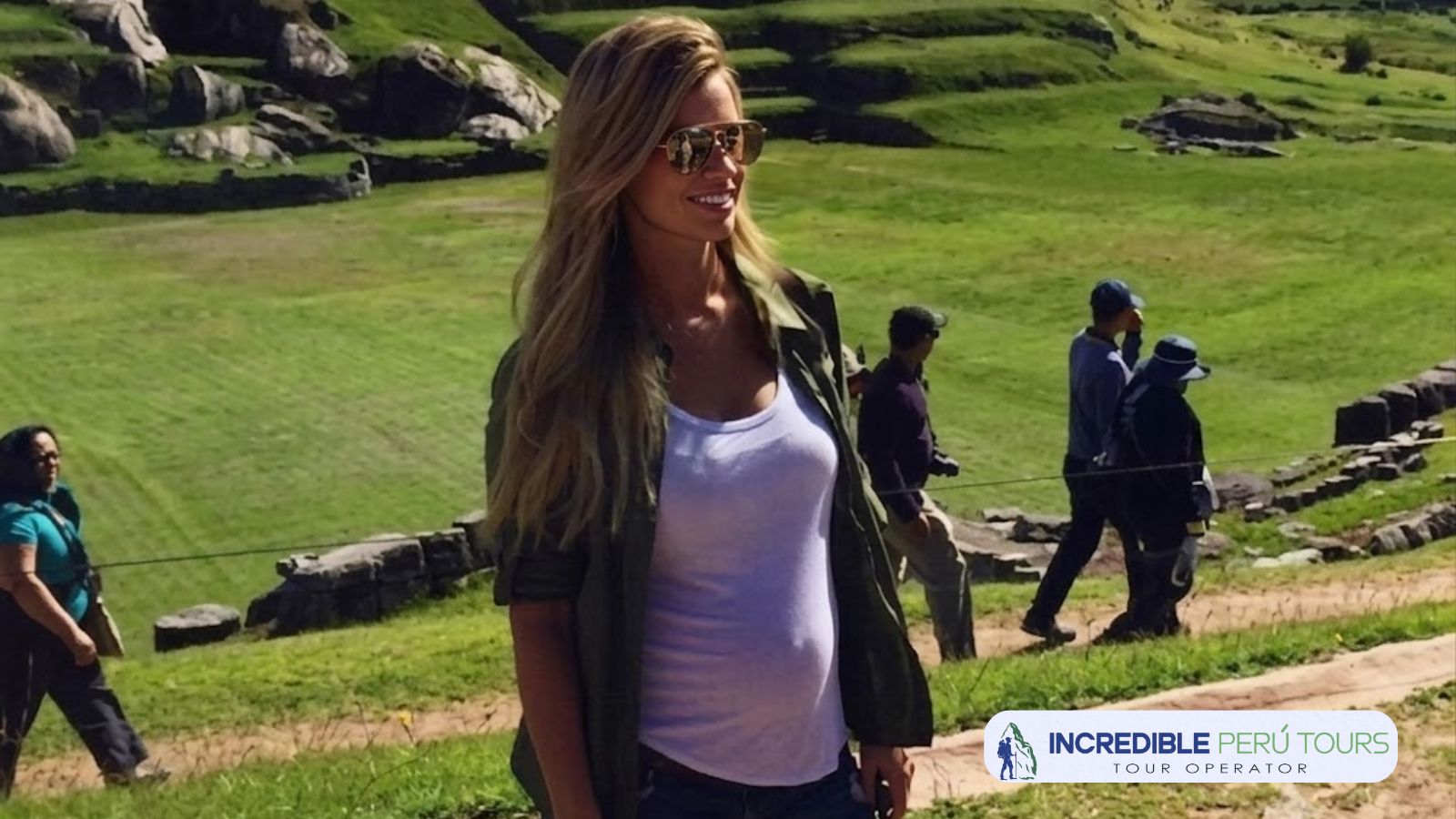
The Sacred Valley as an alternative for acclimatization
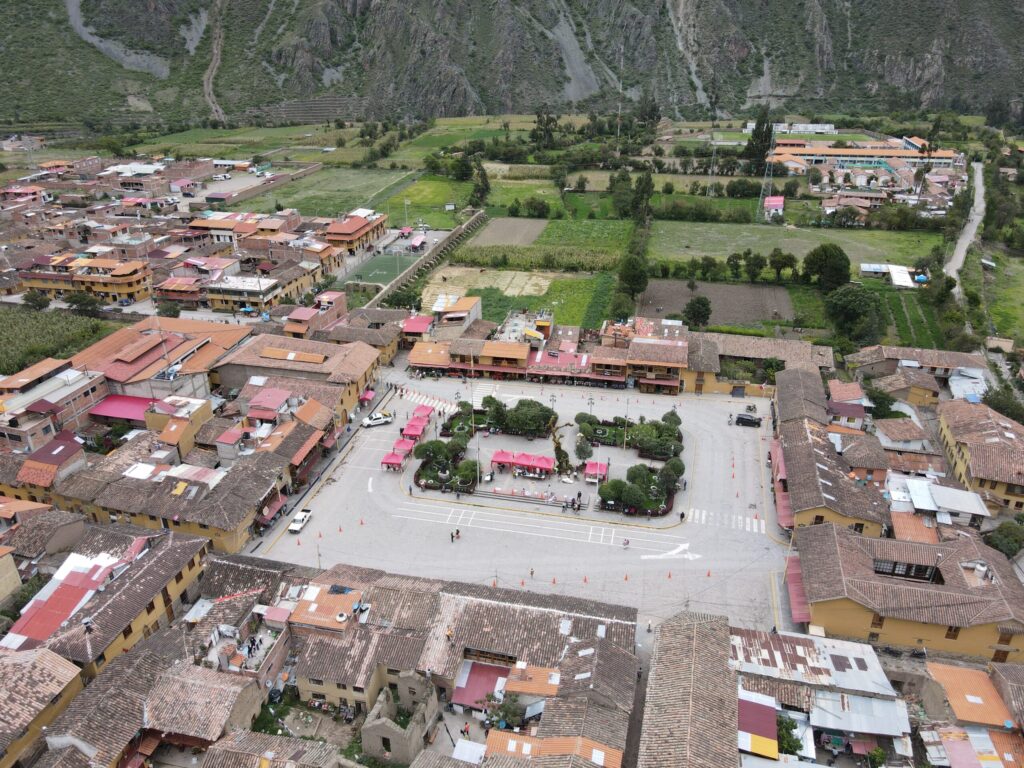
Sleeping in the Sacred Valley may be a more comfortable option for some travelers because it allows you to slow down before continuing to Machu Picchu. Areas such as Urubamba or Ollantaytambo are at a lower altitude than Cusco.
This decision should be coordinated with the itinerary, train schedule, and medical recommendation. It is not just about choosing a quieter hotel, but about creating a route with less pressure and better rest.
Machu Picchu does not require running, but it does require walking
Machu Picchu is located at approximately 2,430 meters above sea level, and visiting the citadel does not require running or a sports-style hike. Even so, it involves walking, climbing steps, moving along stone paths, and standing for several hours.
For a pregnant traveler, the most recommended option is a calm route, with breaks and without demanding circuits. If you are going with a guide or group, let them know from the beginning that you need to move slowly and rest when necessary.
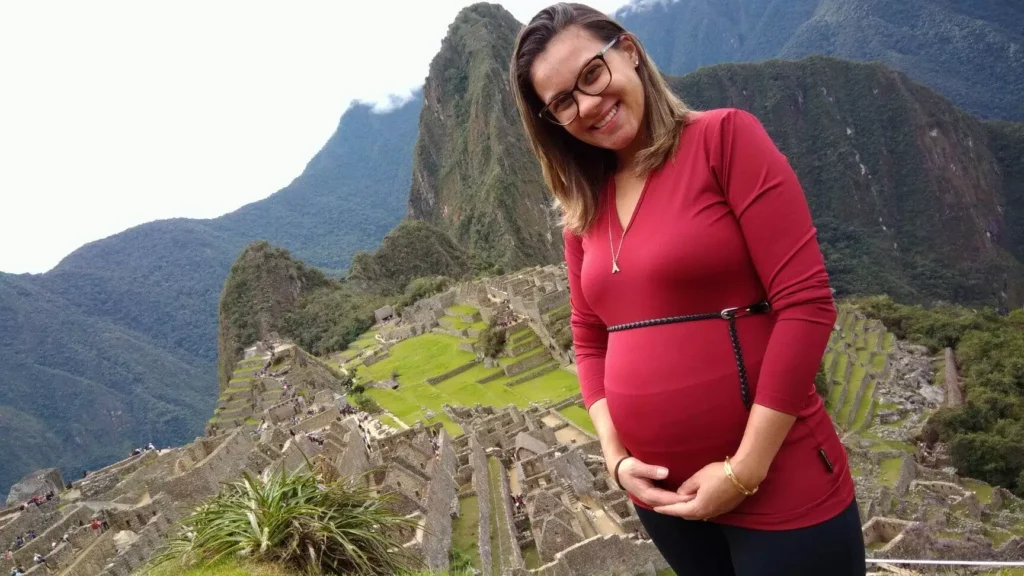
Risks you should consider before traveling
The risks of traveling to Machu Picchu while pregnant do not mean the trip is prohibited for everyone. They help you make better decisions, prevent discomfort, and know when to stop the tour.
Altitude, fatigue, dehydration, food, weather, and limited access to medical care can influence the experience. The key is not to minimize warning signs and not to force your body to complete an itinerary.
- Altitude sickness
- Fatigue and physical effort
- Dehydration and food
- Access to medical care
- Weather, rain, and slippery paths
When it is not advisable to travel to Machu Picchu while pregnant
There are situations in which the most prudent decision may be to postpone the trip. It is not about canceling out of fear, but about prioritizing health when there are symptoms or diagnoses that require close monitoring.
The decision should be made by a healthcare professional who knows your medical history. Reservations, tickets, or travel plans should never be placed above medical advice.
If there is bleeding, severe pain, or contractions
Bleeding, severe pain, or contractions require medical attention and should not be ignored in order to continue the trip. Even if the symptom appears briefly, it should be evaluated.
If you are in Cusco, the Sacred Valley, Aguas Calientes, or along the route, notify your companion and seek assistance. Do not keep walking or make decisions based only on waiting for it to pass.
If there is a risk of preterm birth
Any history or diagnosis related to preterm birth should be evaluated before traveling to areas with limited logistics. Machu Picchu requires transfers that can complicate quick access to care.
If your doctor believes there is a risk, they may recommend postponing the trip or making significant changes to it. In these cases, itinerary comfort does not eliminate the need for medical monitoring.
If there is high blood pressure, preeclampsia, or placenta problems
High blood pressure, preeclampsia, or placenta problems require strict medical monitoring. These conditions can make traveling to altitude or taking long transfers inadvisable.
If you have this type of diagnosis, avoid making decisions based on recommendations from other travelers. Your obstetrician should indicate whether you can travel, what limits you should respect, and what signs require immediate attention.
If your doctor recommends avoiding altitude or effort
If your doctor recommends avoiding altitude or effort, that instruction should take priority over the itinerary, reservations, or travel plans. Forcing the trip can increase unnecessary risks.
In some cases, the route can be adjusted to reduce effort. In others, the best decision will be to postpone Machu Picchu for a safer time.
Best time during pregnancy to travel
Many travelers feel better during the second trimester because nausea usually decreases and there is still greater comfort when moving around. Even so, this does not apply to every case.
The ideal week depends on your health condition, the development of the pregnancy, and medical authorization. It is not advisable to choose the date only based on tourist season or ticket availability.
First trimester
During the first trimester, nausea, fatigue, sleepiness, and greater sensitivity to routine changes may occur. Altitude and transfers can intensify some discomforts.
If your doctor authorizes the trip, avoid overloading the itinerary. Leave time to rest, eat calmly, and change plans if you do not feel well.
Second trimester
The second trimester is usually a more comfortable stage for travel in many low-risk pregnancies. Some women have more energy and tolerate moderate walks better.
Even so, medical authorization is still necessary. It is also advisable to keep the route simple, avoid demanding walks, and not assume that feeling well allows you to do any activity.
Third trimester
During the third trimester, travel may be more uncomfortable due to mobility, fatigue, a greater need for rest, and possible discomfort when walking or standing.
There may also be airline or insurance restrictions depending on the weeks of pregnancy. Review those conditions before booking flights, trains, or tourism services.
Most comfortable route to visit Machu Picchu while pregnant
The most comfortable route is usually the one that reduces effort, avoids rushed transfers, and allows time to rest. It will not always be the cheapest or fastest route, but it may be more suitable during pregnancy.
Plan with extra time. If you need to coordinate entrance tickets, trains, hotels, and transfer times, you can consult with the Incredible Peru Tours team to review a calmer logistics plan based on availability and season.
Arrive in Cusco and do not travel onward the same day
Avoid a tight itinerary as soon as you arrive in Cusco. The first day may be difficult because of the altitude, the flight, fatigue, and the change in routine.
The most prudent thing to do is rest, hydrate, and adapt before continuing to the Sacred Valley or Aguas Calientes. If you notice strong symptoms, do not move forward with the plan without consulting.
Stay overnight in the Sacred Valley or Aguas Calientes
Staying overnight in the Sacred Valley or Aguas Calientes can help reduce very early mornings and long transfers. This allows you to arrive at the visit more rested and with less pressure.
The choice depends on the train schedule and the Machu Picchu entrance time. If your entry time is early, staying overnight in Aguas Calientes can help you avoid leaving before dawn from another area.
Take the train instead of long road routes
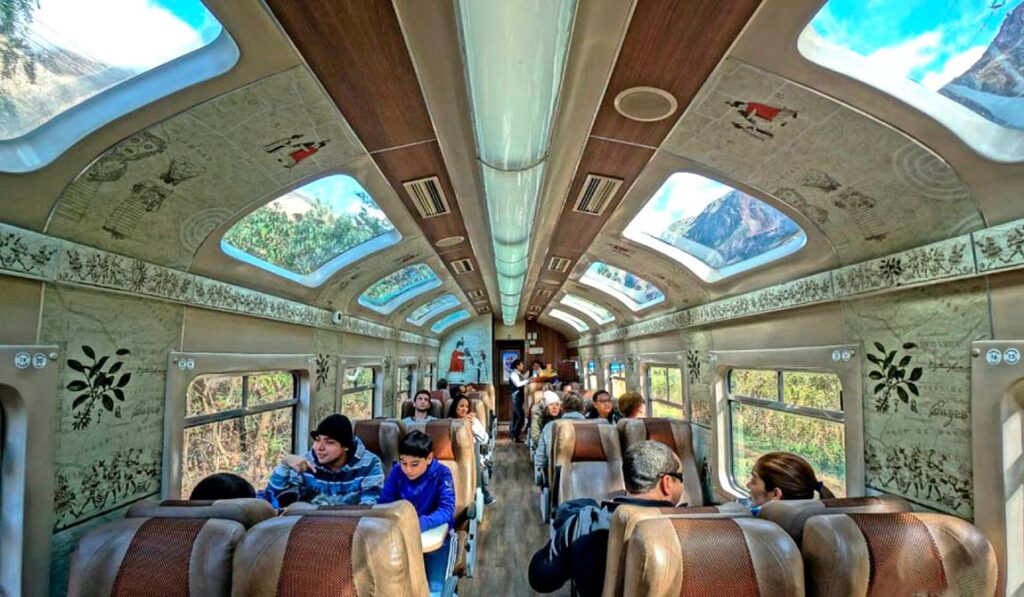
The train is usually a more comfortable option for reaching Aguas Calientes, especially if you want to reduce physical effort and avoid long road trips.
Even so, review schedules, departure station, waiting times, and hotel proximity. A good route does not depend only on the train, but on how all parts of the trip connect.
Use the bus up to Machu Picchu
The bus from Aguas Calientes avoids the uphill walk to Machu Picchu. For a pregnant traveler, it is usually a more comfortable alternative because it reduces effort before entering the citadel.
Confirm schedules and consider lines, weather, and waiting time. Bring water, rain protection, and enough extra time so you do not feel pressured before entry.
Activities to avoid during the trip
During pregnancy, it is advisable to avoid activities that increase effort, the risk of falling, or accumulated fatigue. The visit can be enjoyed better with a simple and realistic plan.
Not all tourist activities around Machu Picchu have the same level of difficulty. Before choosing, ask how much walking is involved and whether there are slopes, stairs, altitude, or slippery areas.
Huayna Picchu or Machu Picchu Mountain
Huayna Picchu and Machu Picchu Mountain are more demanding hikes than the regular visit to the citadel. They include slopes, steps, physical effort, and greater exposure.
During pregnancy, they are usually not the most prudent option, especially because of the risk of falling and fatigue. It is better to choose a calm visit without mountain routes.
Long hikes or adventure routes
Routes such as trekking, extended hikes, or activities with a risk of falling should be evaluated very carefully. Some involve several hours of effort, weather changes, and areas far from medical care.
If your doctor advises you to avoid these types of activities, respect the recommendation. Machu Picchu can be visited more comfortably without including adventure routes.
Itineraries with many early mornings
Lack of sleep can increase fatigue, nausea, headaches, and general discomfort. An itinerary with several early mornings in a row can be especially tiring during pregnancy.
Prioritize more comfortable schedules, nights of rest, and transfers with extra time. If a route requires you to wake up very early every day, it is advisable to adjust it.
Carrying heavy suitcases or backpacks
Carrying heavy suitcases or backpacks can cause fatigue, back pain, or discomfort when walking through stations, sloped streets, or hotels without elevators.
Use light luggage and ask for support during transfers, at stations, and in hotels. Bring only what you need for the visit and avoid carrying weight during the tour of the citadel.
Tips for visiting Machu Picchu while pregnant
The visit should be planned for comfort, not speed. The most useful approach is to reduce last-minute decisions, avoid physical overload, and listen to your body’s signals.
These tips do not replace medical advice, but they can help organize a safer and calmer experience if your obstetrician authorizes the trip.
- Choose a schedule with less pressure
- Walk slowly and take breaks
- Bring water and simple snacks
- Wear comfortable clothing and sturdy footwear
- Avoid self-medication
- Travel with insurance that covers pregnancy
What to bring if you travel to Machu Picchu while pregnant
Your luggage for Machu Picchu during pregnancy should be practical, light, and focused on comfort. You do not need to bring too much, but you do need what is necessary to stay hydrated, protect yourself from the weather, and respond to discomfort.
Organize a small backpack for the visit and leave heavy luggage at the hotel. Also review the current entry conditions before traveling, as they may change.
Documents and health
Bring your ID or passport, recent prenatal checkups, your doctor’s contact information, travel insurance, authorized medications, and emergency details. These documents should be within reach, not in a large suitcase.
It is also a good idea to carry a note with your week of pregnancy, blood type, and any allergies you may have. If you are traveling with someone, that person should know where the medical information is.
Clothing and accessories
Include comfortable shoes, layered clothing, a lightweight rain jacket, a hat, sunglasses, sunscreen, and a small backpack. Clothing should allow you to move without pressure on your abdomen.
Do not wear brand-new shoes on the day of the visit. The terrain at Machu Picchu has stone, steps, and uneven areas, so a good sole helps you walk more safely.
Food and hydration
Bring water, snacks you tolerate well, safe fruit, or packaged foods. Avoid heavy meals before the visit, especially if you have nausea or slow digestion.
Eat small portions if that helps you feel better. Do not rely only on finding food along the way, as transfer and waiting times may vary.
Common mistakes when planning the trip
- Booking first and consulting the doctor afterward
- Doing Cusco and Machu Picchu too quickly
- Not reviewing airline or insurance restrictions
- Choosing the cheapest route without considering comfort
Frequently asked questions about traveling to Machu Picchu while pregnant
These answers help resolve common questions before organizing the trip. Even so, each case should be confirmed with a healthcare professional because pregnancy can vary from one person to another.
If you have symptoms, medical history, or any previous medical advice, use these answers only as initial guidance and consult before booking.
Is it dangerous to travel to Machu Picchu while pregnant?
It is not always dangerous, but it can involve risks depending on the mother’s health, the weeks of pregnancy, altitude, effort, and access to medical care. If the pregnancy is low-risk and the doctor authorizes it, the visit can be planned calmly.
How many months pregnant are best for traveling?
Many travelers feel better in the second trimester because there is usually less nausea and more comfort when moving around. Even so, the decision should be confirmed with your doctor based on your exact week and health condition.
Can I take altitude sickness pills if I am pregnant?
You should not self-medicate. Any medication for altitude should be indicated by a healthcare professional, since during pregnancy some medications may not be suitable or may require specific instructions.
Is it better to stay in Cusco or in the Sacred Valley?
The Sacred Valley may be more comfortable for some travelers because of its pace and rest options, since several areas are at a lower altitude than Cusco. The best choice depends on the itinerary, available trains, and medical recommendation.
Can I walk up from Aguas Calientes to Machu Picchu?
It is usually not the most recommended option during pregnancy because of the physical effort required for the uphill walk. The bus from Aguas Calientes can be a more comfortable alternative to save energy before entering the citadel.
Can I climb Huayna Picchu while pregnant?
It is usually not recommended because of the difficulty, slopes, stairs, and risk of falling. During pregnancy, it is better to choose a calm visit to the citadel and avoid mountain routes.
What happens if I feel unwell at Machu Picchu?
You should notify your companion or guide, stop the visit, and seek assistance. It is not advisable to continue if there are strong symptoms, warning signs, or discomfort that does not improve with rest.
Do I need travel insurance if I am pregnant?
Yes, it is highly recommended. Check that it covers pregnancy, weeks of gestation, obstetric emergencies, and care at the destination, because not all insurance plans offer the same conditions.
Traveling calmly is part of the planning
Machu Picchu can be enjoyed more with a simple itinerary, breaks, rest, and medical authorization. Traveling while pregnant does not automatically mean giving up the destination, but it does require more care with every decision.
Prioritize health, comfort, and safety over tight schedules or demanding activities. If your doctor authorizes the trip, organize a calm route, listen to your body, and leave room to change plans if you need to.
At Incredible Peru Tours, we design your Machu Picchu itinerary according to your pace and needs, with flexible timing and personalized attention at every stage of the trip.


