
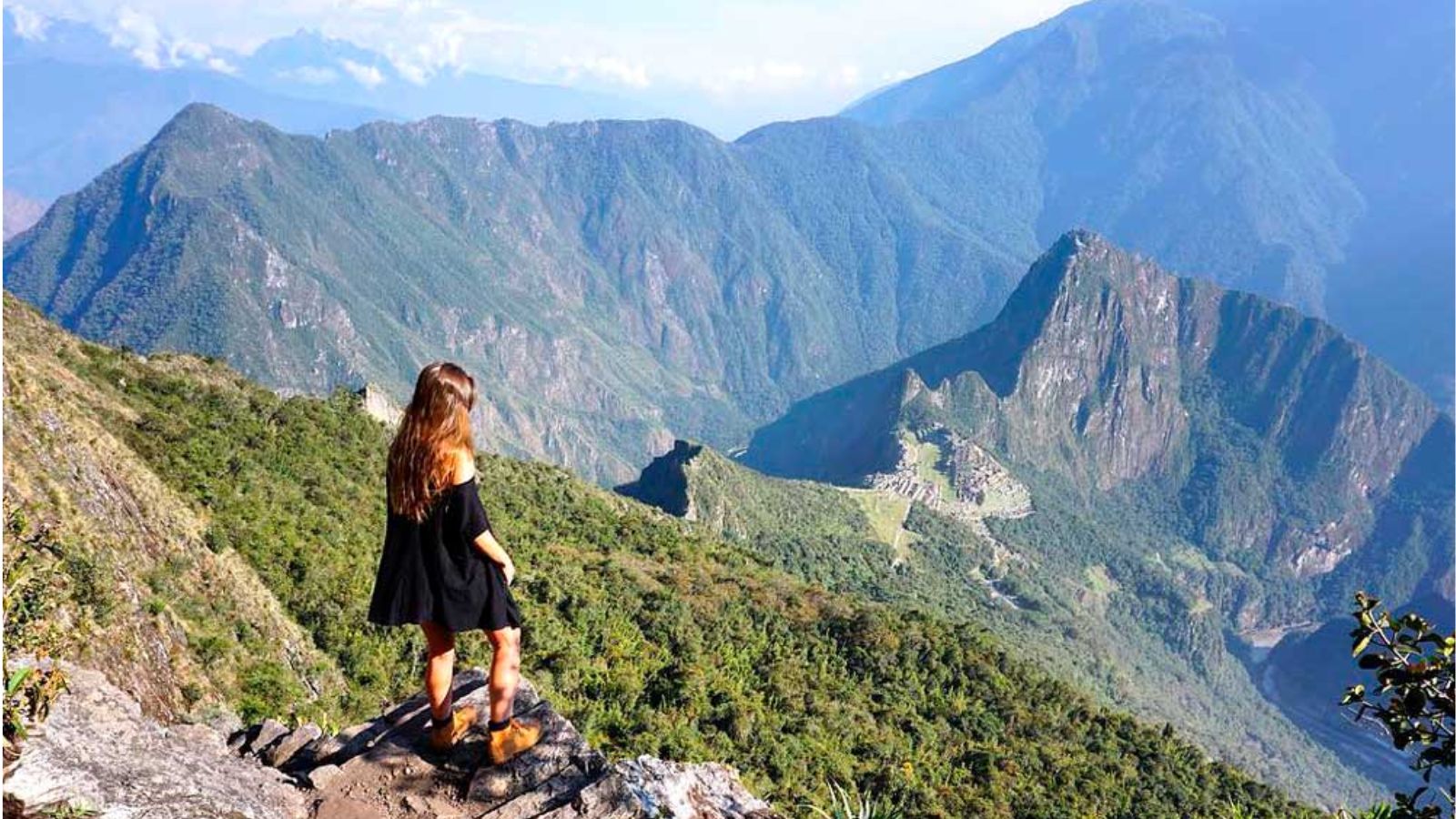
Machu Picchu Mountain is the mountain that appears in the background of photographs taken from the northern sector of the archaeological site. More experienced visitors often point to it as the one that offers the most complete and unexpected view of the entire citadel. It is not Huayna Picchu, the most famous and most photographed mountain in the complex. It is the opposite mountain: higher, less crowded, and with a perspective of the archaeological site that no conventional access point can provide. This guide explains what climbing Machu Picchu Mountain involves, how much it costs, when you need to be there, and what you will find at the top.
What Route 1A Is and How to Access It
Route 1A is the Machu Picchu ticket circuit that includes access to Machu Picchu Mountain. You cannot climb the mountain with the standard Circuit 2 ticket or with any other basic circuit. It requires a specific ticket that combines access to the archaeological site with access to the mountain. This ticket costs more than the standard circuit ticket and has a very limited daily capacity that sells out well in advance during the high season.
The ticket price with access to Machu Picchu Mountain in 2026 is approximately 60 dollars for foreign adult visitors. Available spots are divided into two mountain entry times: the first at 7:00 a.m. and the second at 9:00 a.m. Access to the mountain inside the site is signposted from the main entrance checkpoint, and there is a second specific checkpoint at the base of the climb where park rangers verify that your ticket includes this access.
The Altitude: Where You Start and How High You Go
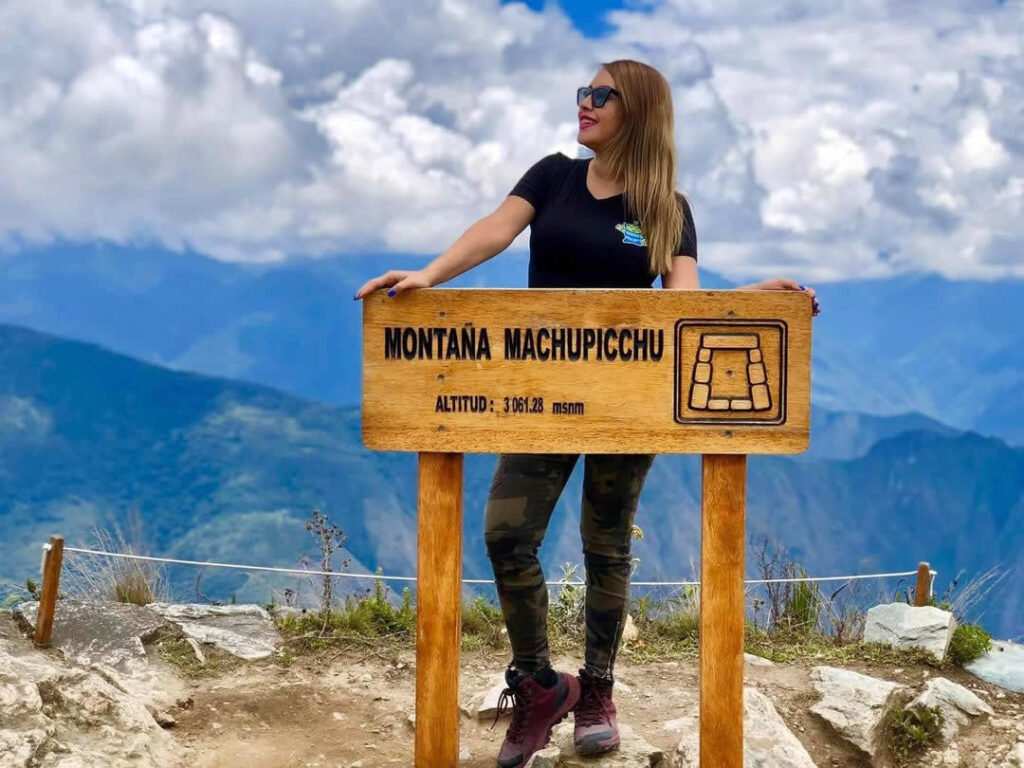
The Machu Picchu archaeological site is located at 2,430 meters above sea level. The summit of Machu Picchu Mountain is at 3,082 meters. This means the climb involves an elevation gain of approximately 650 vertical meters from the site entrance to the summit, following a trail made up of stairs and dirt sections with dense vegetation on both sides.
That 650-meter vertical gain is not insignificant, especially for travelers arriving from sea level or from low-altitude cities. However, compared with Warmiwañusca on the Inca Trail at 4,215 meters or the Salkantay Pass at 4,630 meters, Machu Picchu Mountain is a moderately difficult climb that most people in good physical condition can complete without the altitude-related complications often associated with treks in the region.
The Real Difficulty: What to Expect on the Trail
The trail up Machu Picchu Mountain is a series of stone and dirt steps with different heights and angles. In some sections, you may need to use your hands on the rock to keep your balance. It is not a technical mountaineering trail. It is a moderately to highly difficult mountain hike that requires above-average physical condition and no strong fear of heights in the sections where the trail runs alongside steep drops toward the valley.
The ascent usually takes between 60 and 90 minutes for most visitors walking at a moderate pace. Faster hikers may complete it in 45 minutes. People with lower fitness levels or those who need frequent stops may take up to two hours. The descent usually takes between 45 minutes and one hour.
The most demanding parts of the climb are found in the first 200 meters of elevation gain, where the steps are steeper and the trail is narrower. From the middle of the climb onward, the trail becomes easier in some sections and the pace of ascent stabilizes. In the final 100 meters before the summit, the trail becomes steep again, and in some points you may need to use your hands on the rock or on the fixed ropes installed by the Ministry of Culture to make passage easier.
Schedules and Time Management Inside the Site
The Route 1A ticket includes access to the main archaeological site plus access to the mountain. Managing your time inside the site is one of the most important things to plan before arriving, because the climb to the mountain takes between two and three hours of the total time available inside the site.
For the 7:00 a.m. mountain entry time, the most efficient strategy is to enter the site during the first available time slot at 6:00 or 6:30 a.m., walk quickly through the access sector to the starting point of the mountain trail, and begin the ascent as early as possible. This strategy allows you to climb with the first light of the day, which is the most photogenic from the summit, and return to the main site with enough time to visit the main archaeological sectors before your exit time.
For the 9:00 a.m. entry time, the strategy can be reversed: first visit the main sectors of the archaeological site, climb the mountain at 9:00 a.m., and then return for a second look at the most important points of interest before leaving the site.
The Views from the Summit: What You See and Why It Is Different
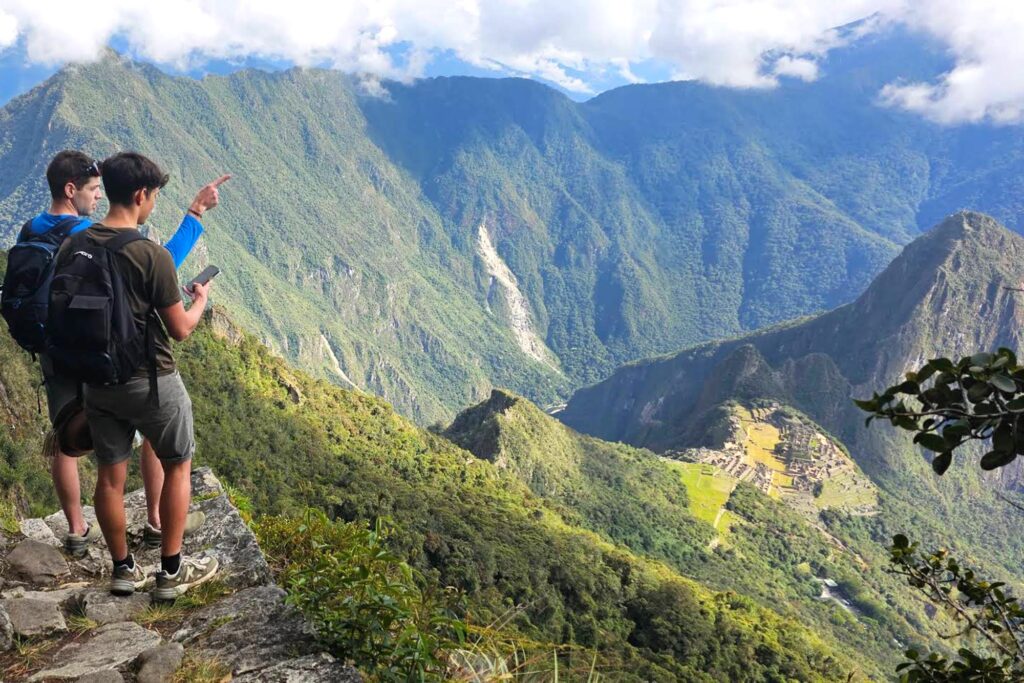
The view of Machu Picchu from the summit of Machu Picchu Mountain is completely different from any other perspective the site offers from inside. From the upper viewpoint of Circuit 2, the classic view shows the agricultural terraces, the temples, and Huayna Picchu in the background. From Machu Picchu Mountain, the view looks over the entire archaeological site from the summit opposite Huayna Picchu, with the citadel in the center and the Urubamba Canyon visible at the bottom of the valley in both directions.
What makes this perspective special is the sense of scale. From the summit of Machu Picchu Mountain, the Inca citadel can be seen in its entirety with a relative size that no access point inside the site can provide, because from within the site the scale is always partial. The relationship between the citadel and the surrounding mountain landscape, visible from above in a way that helps explain why the Incas chose that specific location to build their city, creates an understanding of the whole complex that cannot be achieved from terrace level.
On clear days, the view from the summit includes the snow-capped Salkantay Mountain on the southern horizon, the same glacier that dominates the second day of the Salkantay Trek. From here, it appears as a geographic reference that connects two of the region’s great treks from a perspective rarely shown in travel guides.
What to Bring Specifically for the Climb
Climbing Machu Picchu Mountain requires a few additional equipment considerations compared with a standard visit to the site.
Footwear with a firm-grip sole is even more important on the mountain than on the main circuit, because the wet dirt sections and steep stone steps with moss require more traction than the interior paths of the site. Trekking shoes or trail shoes are the right choice. Standard sneakers with flat soles are not suitable for some sections of the climb.
Trekking poles with rubber tips are allowed on the mountain and are genuinely useful on the steeper parts of the descent, where the knees absorb the greatest impact. Bringing them makes sense if you plan to climb the mountain, even if you do not use them on the main circuit of the site.
Additional water beyond what you would bring for a standard visit is necessary. For a two- to three-hour visit to the site plus two hours of climbing and descending the mountain, one and a half liters per person is a reasonable minimum. The effort of the climb causes dehydration, which is intensified by the altitude, so it is best to prevent it with steady hydration during the ascent.
Who the Climb Is Suitable For and Who It Is Not
Machu Picchu Mountain is suitable for visitors in good physical condition, with no history of serious joint problems in the knees and no strong fear of heights when facing visible side drops from the trail. There is no explicit age restriction, but for older adults with joint or mobility limitations, the most demanding sections of the climb can be difficult to manage without a level of fitness that not all visitors in that age group have.
For travelers with moderate or severe fear of heights, the climb includes sections where the trail runs alongside steep drops toward the valley without railings or side protection. These sections are not technically dangerous for someone who walks calmly and carefully, but for a person with a strong fear-of-heights reaction, they can create unexpected discomfort after starting the climb.
For children under 10 years old, the climb is not recommended due to the combination of the length of the ascent and the additional altitude compared with the main site. For teenagers in good physical condition, the climb is completely doable and, in many cases, becomes one of the most memorable experiences of the trip.
Are you planning a visit to Machu Picchu that includes Machu Picchu Mountain and would like us to coordinate the Route 1A ticket with the best schedule for your itinerary? At Incredible Peru Tours, we manage Machu Picchu tickets for all available circuits and coordinate your time inside the site so that the mountain visit fits properly with the rest of your tour. Send us your travel dates, and we will prepare the most suitable proposal for you.


