
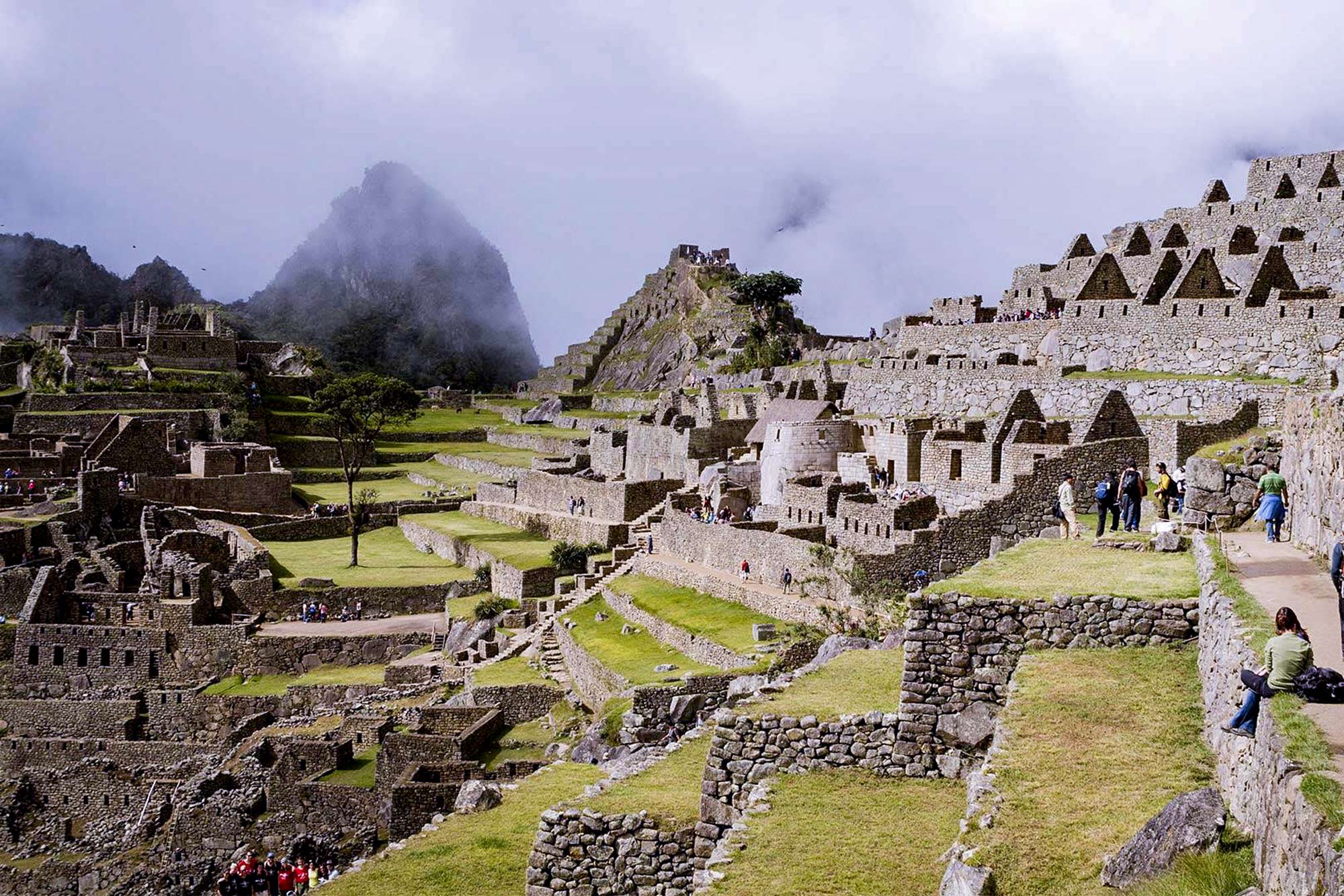
Route 2B is the least mentioned of Machu Picchu’s main routes and also the one that creates the most confusion among travelers trying to understand the differences between the site’s circuits before buying a ticket. This guide explains what Route 2B includes, how it specifically differs from Route 2A, which is the most requested option, and which type of visitor gets the most value from this specific circuit.
What Route 2B Is and Which Sectors It Covers
Route 2B is the Machu Picchu circuit that prioritizes the lower agricultural sector of the archaeological site. While Route 2A moves from the upper viewpoint of the agricultural terraces into the urban sector with its full ceremonial extension, Route 2B partially reverses that route and gives more attention to the lower terraces of the agricultural sector and the secondary access points of the complex before entering the urban sector.
The agricultural sector of Machu Picchu is the part of the site that is most visually impressive from outside the complex, yet paradoxically receives less attention during standard visits. The terraces that descend along the southern slope of the mountain, with a steep incline toward the Urubamba Valley, are the most visible agricultural engineering work at the site and the clearest example of the Inca ability to transform a mountainside into productive land through retaining and drainage systems of a sophistication that, in some aspects, has still not been fully understood by archaeologists.
Route 2B allows visitors to explore these lower terraces in greater detail than Route 2A, observing the drainage systems, retaining walls, and access paths between terraces that are seen more superficially on the standard circuit or are directly overlooked in favor of the ceremonial sector.
The Specific Differences from Route 2A
| Comparison Criteria | Route 2A | Route 2B | Recommendation |
|---|---|---|---|
| General focus of the route | Offers a more complete route through the urban sector of Machu Picchu. | Still provides an important visit, but with greater emphasis on other sectors of the site. | Both routes are good, but the choice depends on the visitor’s interests. |
| Access to the Intihuatana | Includes the full route to the Intihuatana, considered one of the most important points of the urban sector and known for its documented astronomical function. | May not include access to the Intihuatana or may include it with less emphasis, depending on the specific circuit configuration for each season. | For visitors who consider the Intihuatana essential, Route 2A is the safest choice. |
| Urban sector | Covers the urban sector more extensively, including the main temples, ceremonial enclosures, and residential areas. | May prioritize the more accessible areas of the urban complex and dedicate more time to the lower agricultural sector. | Route 2A is better for those who want to explore the urban sector in greater depth. |
| Lower agricultural sector | Includes it as part of the general route, but not necessarily as the main focus. | May give greater attention to the lower agricultural sector. | Route 2B may be suitable for those who want a more balanced experience between urban and agricultural sectors. |
| Upper Terrace viewpoint | Includes access to the upper viewpoint with the classic panoramic view of Machu Picchu. | Also includes access to the upper viewpoint, although the order and access axis may vary. | Both routes allow visitors to get the site’s most famous panoramic view. |
| Photography perspective | Offers a broad perspective of the urban complex from the upper viewpoint. | May offer a slightly different perspective due to the order and way the viewpoint is accessed. | Both routes are good for panoramic photography. |
| Conclusion | It is the most recommended route for visitors looking for a more complete urban route and secure access to the Intihuatana. | It is a valid alternative for visitors looking for a more accessible route or greater emphasis on other sectors of the site. | If the Intihuatana and the urban sector are priorities, Route 2A is the better choice. |
What Route 2B Offers That Route 2A Does Not Develop in the Same Way
Route 2B has a specific element of value that positively differentiates it from Route 2A for certain visitor profiles: its attention to the lower agricultural sector and the hydraulic engineering systems that support it.
The Inca drainage and irrigation channels that run through the lower terraces of Machu Picchu are among the most sophisticated elements of the site from a functional engineering perspective. The rainwater collection system, its distribution down the slope through channels carved into the stone, and the controlled drainage that prevents the terrace soils from becoming saturated were designed with a deep understanding of water behavior in high-mountain terrain, making cultivation possible in conditions that would otherwise be impossible without that infrastructure.
This system, visible in its greatest extension in the lower agricultural sector that Route 2B explores in more detail, provides an understanding of the logistical functioning of the citadel that the ceremonial sector does not offer in the same way. Machu Picchu was not only a group of temples: it was a city with all the agricultural production infrastructure needed for its self-sufficiency, and the lower terraces are where that infrastructure becomes most visible.
The Duration and Physical Effort of Route 2B
The duration of Route 2B is comparable to that of Route 2A, between two and a half and three and a half hours at a moderate pace. However, the physical profile of the route may be slightly different because the lower agricultural sector involves descents through terraces that, in some sections, are steeper than those of the standard urban-sector route.
For visitors with knee or ankle limitations, descending through the lower terraces with stone stairways of different heights may be more demanding than walking through the urban sector of Route 2A. Shoes with firm-grip soles are especially important in these sections, where the wet stone steps of the agricultural sector require more attention to foot placement than the paths of the urban sector.
Ticket Availability: The Practical Advantage of Route 2B
Route 2B has considerably greater ticket availability than Route 2A at any time of year. Since demand is concentrated on the better-known circuit, Route 2B often keeps spaces available at times and on dates when Route 2A is already sold out. For travelers with fixed travel dates who cannot find availability on Route 2A, Route 2B can be the closest alternative in terms of content without the problem of sold-out tickets.
This greater availability also means that Route 2B spaces for early morning time slots are more likely to remain available with less advance notice. For travelers organizing their trip at the last minute or changing plans shortly before arrival, Route 2B may be the only viable option for a first-time-slot visit.
Who Should Choose Route 2B Over Route 2A
Route 2B is specifically suitable for several visitor profiles that Route 2A does not serve equally well.
For those with a specific interest in Inca agricultural architecture and the site’s hydraulic engineering systems, Route 2B provides more time and greater access to the sector where these elements are most visible. For architects, engineers, or visitors with a technical background who want to understand the structural functioning of the terraces, Route 2B is the most coherent choice for that interest.
For those who have already visited Machu Picchu on Route 2A during a previous trip and want to explore the sectors that the standard circuit does not cover in enough detail, Route 2B adds a dimension of the site that the first visit may not have provided.
For those with fixed dates when Route 2A is already sold out, Route 2B is the closest alternative in terms of general content available within the site’s circuit system.
And for visitors who prefer less crowded areas inside the site, the lower agricultural sector that Route 2B explores more slowly usually has fewer simultaneous groups than the central urban sector of Route 2A, creating a visit with more personal space.
Quick Comparison: How to Decide Between 2A and 2B
Choose Route 2A if this is your first visit to Machu Picchu, if the Intihuatana and the complete ceremonial sector are central to what you are looking for, if you can buy your ticket far enough in advance, and if the extent of the urban sector matters more to you than the agricultural sector.
Choose Route 2B if Route 2A is sold out for your dates, if this is a second visit and you want to explore what you did not see the first time, if the agricultural sector and Inca hydraulic engineering are of specific interest to you, or if you prefer a circuit with greater ticket availability and fewer groups concentrated in the site’s most visited sectors.
Do you have fixed dates for your Machu Picchu visit and need to know which circuit has availability or which one best matches what you are looking for? At Incredible Peru Tours, we check real-time availability for all site circuits and guide you toward the most suitable option based on your dates and interests. Contact us, and we will confirm availability before you make any decision.


