
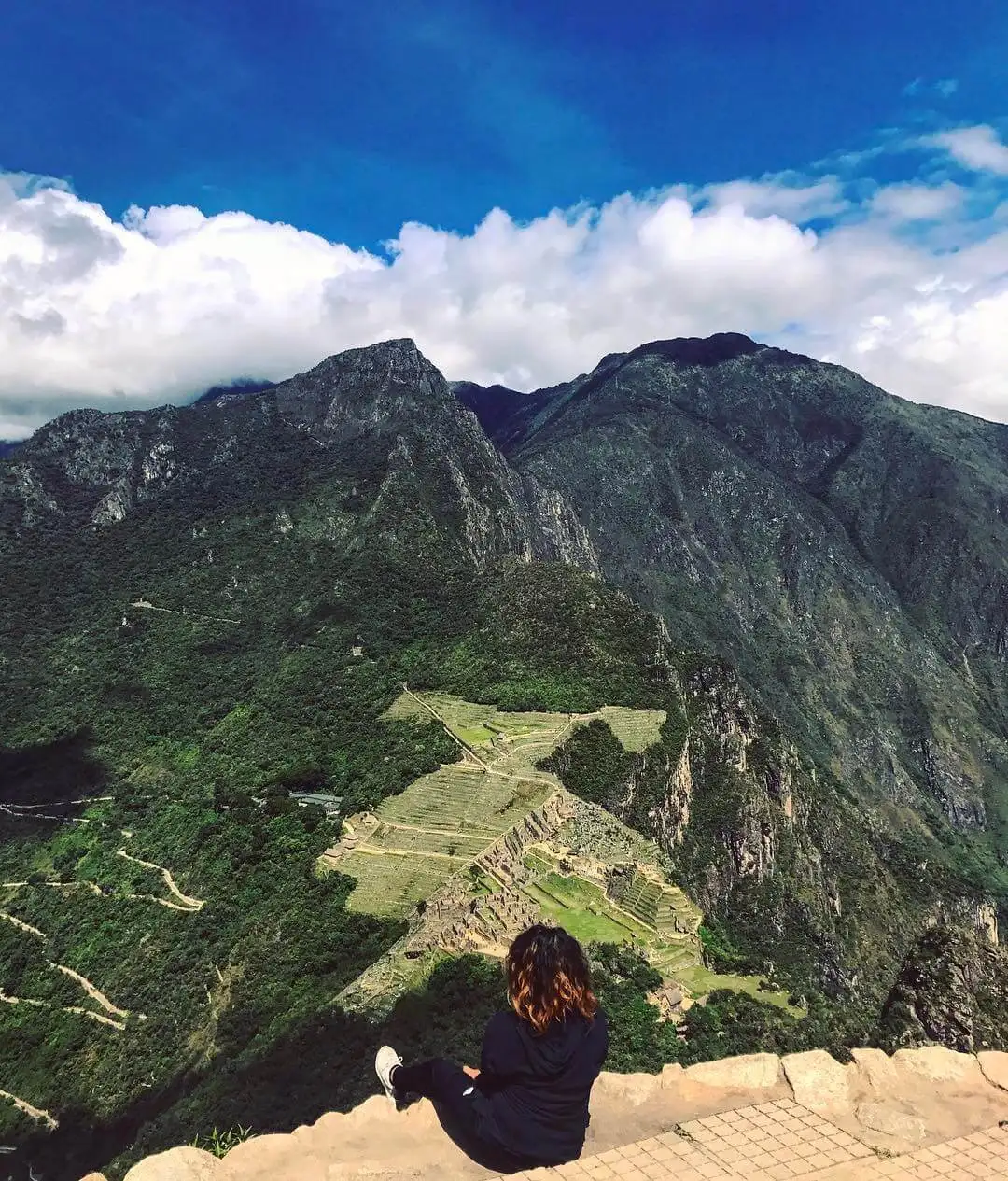
Huayna Picchu is the mountain that appears in the background of the most iconic photograph of Machu Picchu, the one that dominates the northern horizon of the citadel with its pointed silhouette. Climbing to that summit is not just a physical activity: it changes your perspective of the archaeological site in a way no other available access within the complex can match. Route 3A is the ticket that makes it possible, with such limited availability that during high season it sells out within days after sales open. This guide explains exactly what it requires, what it involves, and what you will find at the top.
What Route 3A Is and What the Ticket Includes
Route 3A is the Machu Picchu circuit that combines access to the main archaeological site with access to Huayna Picchu Mountain. The ticket includes entry to the standard archaeological complex plus access to the trail up Huayna Picchu, which has its own entry checkpoint inside the site where park rangers verify that the ticket includes this specific access.
The price of the Route 3A ticket in 2026 is approximately 68 dollars for adult foreign visitors, the highest of all available circuits at the site. This price reflects both the administrative cost of the additional access and the management of the extremely limited capacity that the Ministry of Culture maintains to protect the mountain’s structure from the impact of foot traffic.
Capacity: Why It Is So Hard to Get
The daily capacity for Huayna Picchu is approximately 400 people distributed across two time slots: the first between 7:00 and 8:00 in the morning and the second between 10:00 and 11:00. These 400 spots are the most restrictive limit of all available access options at Machu Picchu, considerably lower than the rest of the circuits and the other mountains at the site.
The practical consequence of this limited capacity is that during high season, from May to August, Route 3A tickets sell out four to eight weeks in advance for the most requested time slots. In some periods of July and August, availability for both Huayna Picchu time slots can be sold out more than two months ahead of time. Anyone who wants to climb Huayna Picchu during high season needs to secure the ticket before any other part of the trip, even before buying the flight if the travel dates are flexible.
During mid and low season, from October to April, availability improves but never becomes as broad as it is for the other circuits. Two or three weeks in advance may be enough during the months with lower demand, but waiting until less than a week before the visit means risking not finding availability in either of the two time slots.
Altitude and Elevation Gain: Where You Start and How High You Go
The base of the trail up Huayna Picchu is located inside the Machu Picchu archaeological site, at approximately 2,430 meters above sea level. The summit of Huayna Picchu is at 2,720 meters. The ascent has an elevation gain of about 290 vertical meters over a trail approximately 1.5 kilometers long.
That figure of 290 meters may seem modest compared with the Salkantay Pass or Dead Woman’s Pass on the Inca Trail. The real difficulty of Huayna Picchu is not the elevation gain or the altitude but the type of terrain: the trail is steep, narrow, and in several sections requires using your hands on the rock. In the most vertical parts of the ascent, fixed ropes installed by the Ministry of Culture help visitors move through the route, but even with those ropes, the climb requires confidence in your balance and a lack of fear of heights that not all visitors have.
The Real Difficulty: What No One Tells You Before You Climb
Huayna Picchu has the reputation of being the most difficult climb available within the Machu Picchu complex, and that reputation is justified. Not because of the altitude or the distance, but because of the combination of vertical terrain, a narrow trail, and lateral exposure in several sections where the path runs next to steep drops without protection.
The most demanding sections of the ascent are found in the middle and upper parts of the climb, where the stone stairways become more vertical and the trail narrows until only one person can pass through some sections at a time. In those areas, visitors descending cross paths with visitors climbing in very limited spaces, which requires coordination and patience during busier moments.
The descent is, in many cases, more demanding than the climb because the slope of the trail and the unevenness of the steps require more balance control going down than going up. People who climb with relative ease may find that descending requires more focus and more time than they expected.
For someone with a strong fear of heights, Route 3A is not recommended. The sections with greater lateral exposure create real discomfort that, for some visitors, can prevent them from continuing the ascent halfway along the trail. On a narrow one-way path, this creates logistically uncomfortable situations for everyone coming behind.
Duration: How Much Time to Allow
The climb from the trail entry checkpoint inside the site to the summit of Huayna Picchu takes between 45 minutes and an hour and a half, depending on each visitor’s pace and physical condition. The descent takes between 40 minutes and one hour. In total, the full climb and descent, plus time at the summit to observe and take photos, requires between two and two and a half hours.
To those two hours, you need to add the time required to visit the main circuit of the archaeological site, which on Route 3A is combined with the mountain climb. Managing the total time inside the site in order to do both things properly requires between four and five hours in total.
The Views from the Summit: What You See and Why It Is Unique
The perspective of Machu Picchu from the summit of Huayna Picchu is the most recognized of all those available within the complex, and the reasons become completely clear once you reach the top. From the summit of Huayna Picchu, the citadel appears directly below with an overhead perspective that no other point at the site can offer because no other point stands above the complex in the same way.
The citadel as seen from Huayna Picchu reveals its complete layout: the agricultural terraces in the southern sector, the urban sector with its temples and plazas, the residential enclosures in the northern sector, and the relationship of the entire complex with the Urubamba canyons that surround the mountain on three of its four sides. This perspective makes visible, in a way no viewpoint inside the site can match, why Machu Picchu could only be located where it is and nowhere else in the region.
On clear days, the view from the summit includes the snow-capped Salkantay Mountain on the southern horizon and several other snow-capped peaks of the Andes in different directions. On days with low mist, which are common in the early morning hours, the citadel appears surrounded by clouds from above, creating the most dramatic image the complex can offer from any viewpoint.
The Temple of the Moon: What Few People Know Exists Along the Way
On the slope of Huayna Picchu, halfway down the alternative descent trail that some operators include in the visit, is the Temple of the Moon, one of the most fascinating and least visited ceremonial enclosures in the Machu Picchu complex. It is built inside a natural cave on the mountainside, with trapezoidal niches and stonework of the highest Inca quality, which in that cave setting creates an impression unlike any other structure at the site.
The Temple of the Moon is not part of the standard Route 3A itinerary, but it can be added to the descent with the additional time it requires. For those interested in Inca architecture beyond the main sectors of the site and who have the physical condition to handle the extra time for that detour, the Temple of the Moon adds a dimension to the visit that few people know about and that, in many cases, has an even greater impact than the summit viewpoint itself.
Who Route 3A Is Suitable For and Who It Is Not
Route 3A is suitable for visitors in good physical condition, without a strong fear of heights, without severe joint limitations in the knees or ankles, and with the willingness to take on a trail that is technically more demanding than any other available within the Machu Picchu complex.
It is not suitable for older adults with reduced mobility, children under 12, people with moderate or severe fear of heights, or visitors who arrive physically exhausted after several days of intense trekking without enough time to recover before the climb. For those who arrive at Machu Picchu directly after the Inca Trail or the Salkantay Trek, Machu Picchu Mountain on Route 1A, with its greater elevation gain but more accessible terrain, may be more suitable than Huayna Picchu for the physical condition of the final trekking day.
Do you want to include the climb to Huayna Picchu in your visit to Machu Picchu and need to secure the Route 3A ticket far enough in advance? At Incredible Peru Tours, we coordinate tickets for all circuits at the site, including Route 3A with its limited availability, and we check availability for your dates before you book any other part of the trip. Write to us with your dates and we will confirm availability right away.


