
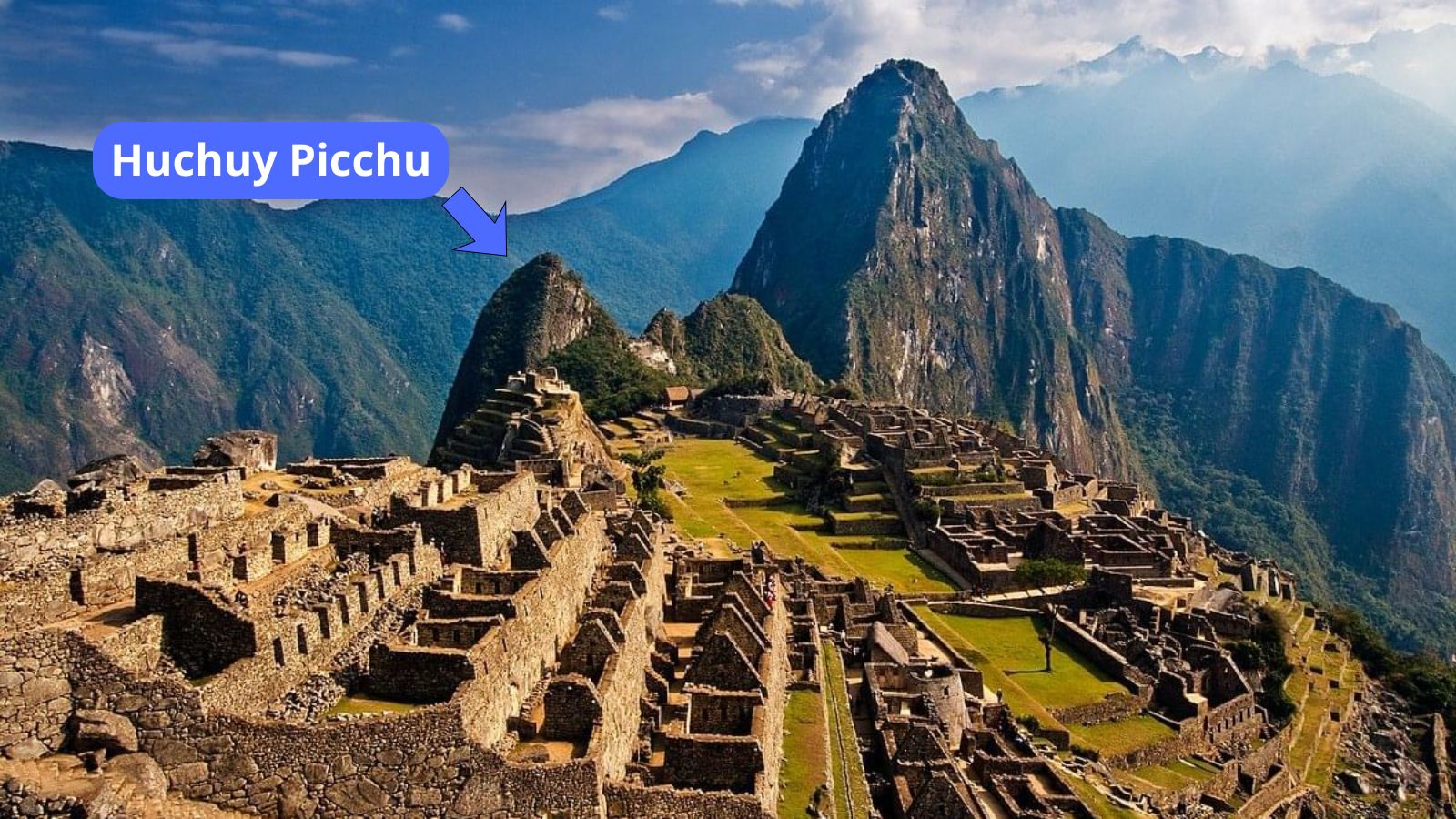
Huchuy Picchu is the third mountain in the Machu Picchu complex, the least known of the three and also the most accessible. While Huayna Picchu sells out months in advance and Machu Picchu Mountain requires several hundred meters of elevation gain, Huchuy Picchu is a much more modest hill that can be climbed in less than 30 minutes and, from its summit, offers a view of the archaeological site and the Urubamba Valley that no access point within the inner circuit can provide. Route 3D is the circuit that includes it, and this guide explains what it involves and why it deserves more attention than it receives.
What Huchuy Picchu Is and Where It Is Located
Huchuy Picchu means “small mountain” in Quechua, in contrast to Huayna Picchu, which means “young mountain,” and Machu Picchu, which means “old mountain.” The name accurately describes its scale: it is a lower-elevation mountain than the other two in the complex, located in the northern sector of the archaeological site, between the main urban area and the base of Huayna Picchu.
The summit of Huchuy Picchu is approximately 2,575 meters above sea level, about 145 meters above the level of the main archaeological site at 2,430 meters. That elevation gain is one-fourth of the elevation gain of Machu Picchu Mountain and less than half that of Huayna Picchu, making the climb a low-difficulty hike for anyone with at least a minimally active level of fitness.
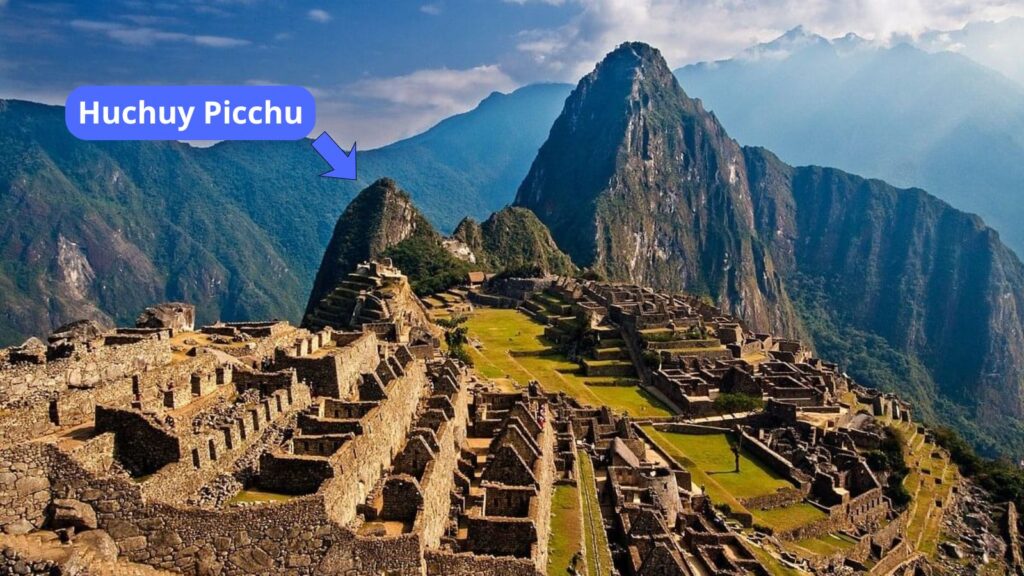
What Route 3D Is and What the Ticket Includes
Route 3D is the Machu Picchu circuit that combines access to the main archaeological site with access to the hike up Huchuy Picchu. The ticket includes entry to the standard archaeological complex plus access to the specific entrance checkpoint for the Huchuy Picchu trail, located in the northern sector of the site.
The price of the Route 3D ticket is lower than that of Route 3A to Huayna Picchu and comparable to or slightly higher than standard circuits, reflecting the smaller quota and the specific nature of the additional access. Route 3D ticket availability is greater than that of Route 3A, but it still requires advance planning because access to Huchuy Picchu is not unlimited.
The Hiking Trail: What the Route Involves in Practice
The access trail to Huchuy Picchu from inside the archaeological site is one of the shortest routes available in the entire Machu Picchu complex. The distance from the trail entrance checkpoint inside the site to the summit is between 400 and 600 meters, with an elevation gain of approximately 145 meters. The route follows a series of Inca stone stairways and compact dirt sections that, under normal conditions, require between 20 and 30 minutes of uphill walking at a moderate pace.
The descent back to the main site takes between 15 and 25 minutes. In total, the complete round trip plus time at the summit for viewing and photography requires between 45 minutes and one hour and fifteen minutes, which is the shortest time commitment of any access to an exterior viewpoint within the Machu Picchu complex.
The trail has sections of steep stone stairs in the most pronounced part of the climb that require careful footing and shoes with good grip. There are no sections with strong side exposure comparable to those on Huayna Picchu or the Inca Bridge trail, making Route 3D suitable for most visitors without major concerns related to vertigo.
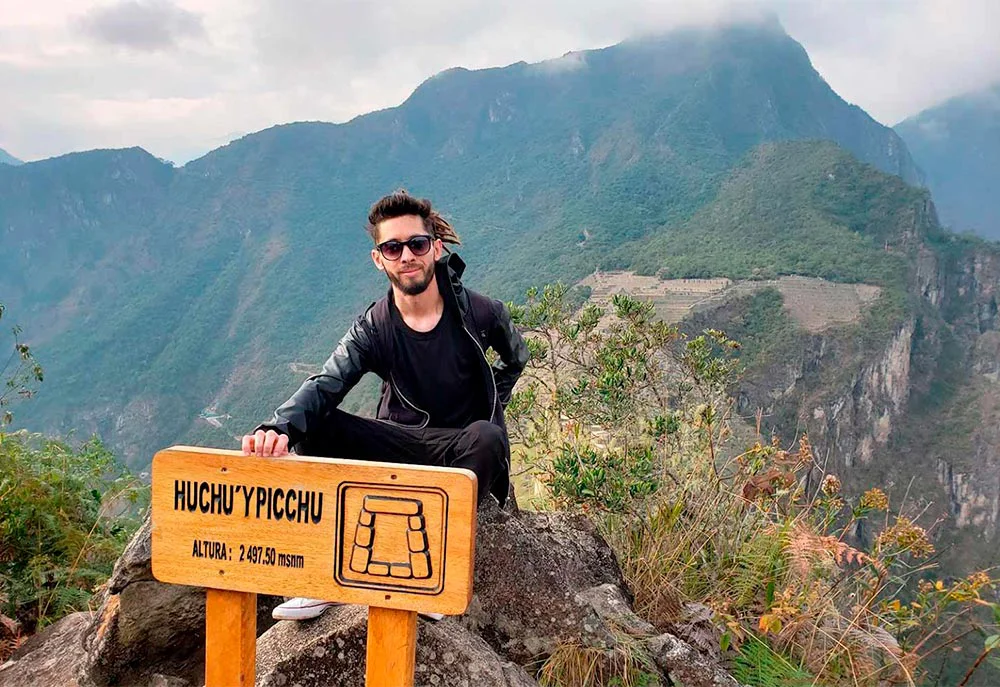
The Views from the Summit: What Perspective Huchuy Picchu Offers
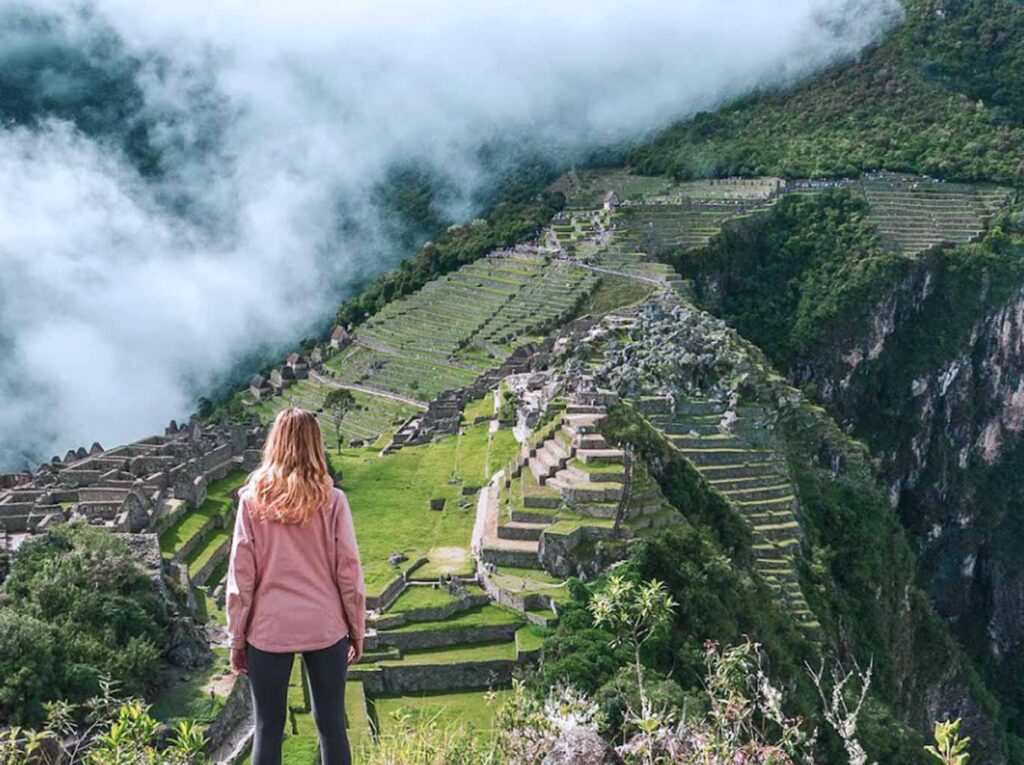
The perspective from the summit of Huchuy Picchu is different from any other access point in the complex. Because it is located in the northern sector of the site, between the main urban area and the base of Huayna Picchu, the view from Huchuy Picchu includes, within the same field of vision, the urban sector of the citadel with its temples and plazas, the agricultural terraces of the southern sector, and the monumental presence of Huayna Picchu in the background as the dominant feature on the northern horizon.
That combination of the citadel in the foreground and Huayna Picchu in the background, seen from a slightly elevated point above the northern sector of the site, creates a perspective of the complex that photographs from the inner circuit cannot capture because, from the level of the terraces and temples, the relative scale of the elements is different. From Huchuy Picchu, the visitor is above the site without being so high that the citadel loses its detail, producing images with a relationship of scale between Inca architecture and the mountain setting that few points in the complex can match.
The Urubamba River canyon is visible from the summit in both directions, with the river’s bends and the cloud forest vegetation covering the canyon slopes creating the natural backdrop that makes the Huchuy Picchu viewpoint one of the most complete available in the entire complex.
Why Huchuy Picchu Is the Least Known Option in the System
Huchuy Picchu receives noticeably less attention than Huayna Picchu or Machu Picchu Mountain in travel guides and articles about the archaeological site for a reason that is also its greatest advantage: it does not have the long-standing fame that the other two mountains accumulated over decades of mass tourism at the site.
That lack of fame creates lower demand, which in turn means more accessible ticket availability, fewer groups on the trail and at the summit, and a climbing experience with more personal space than either of the other mountains in the complex. For travelers who do not specifically need to climb Huayna Picchu or Machu Picchu Mountain and are looking for an elevated perspective of the site with less physical effort and less competition for tickets, Huchuy Picchu delivers exactly that.
Who Route 3D Makes the Most Sense For
Route 3D fits very specific visitor profiles that the other mountain-access circuits do not serve as well.
For visitors who are willing to walk but do not have the fitness level or tolerance for heights required by Huayna Picchu or Machu Picchu Mountain, Huchuy Picchu provides the experience of climbing to an elevated point within the complex and seeing the site from above without the physical demands of the other options. The difference between seeing Machu Picchu from ground level and seeing it from a summit with an aerial perspective is real and noticeable, even with Huchuy Picchu’s 145 meters of elevation gain.
For families with teenagers or with children over 10 years old who are in good physical condition, Huchuy Picchu is the mountain access within the complex that is viable for that age range without the restrictions that Huayna Picchu imposes on minors.
For travelers with limited time inside the site who want to include an elevated perspective of the complex without dedicating two or more hours to an extended climb, the one hour and fifteen minutes required for the complete Huchuy Picchu route fits into itineraries where Machu Picchu Mountain or Huayna Picchu would not.
And for photographers looking for a perspective of the complex that differs from the standard circuit without the technical difficulty of the other high-altitude access routes, Huchuy Picchu offers an angle of the site that, with less than 30 minutes of climbing, provides images that ground level cannot offer.
Availability: A Practical Advantage Over the Other Mountains
Unlike Route 3A to Huayna Picchu, whose 400 daily spaces sell out weeks or months in advance during high season, Route 3D to Huchuy Picchu usually remains available with less advance notice during most times of the year. This wider availability makes it a viable alternative for travelers who discover late that Huayna Picchu is sold out for their dates and are looking for an elevated perspective of the site that the inner circuit cannot provide.
During mid and low season, Route 3D tickets can often be obtained one or two weeks in advance without difficulty. During high season, arranging the ticket two or three weeks in advance is generally enough to secure access at the preferred time slot.
How to Include Huchuy Picchu in Your Visit Itinerary
The most efficient way to include the Huchuy Picchu climb in a visit to Machu Picchu is to combine it with the inner circuit of the main archaeological site during the same visit. The total time needed to do both properly is between two and a half and three and a half hours, which fits comfortably into the first morning time slots without rushing.
The most practical sequence is to visit the main sectors of the archaeological site first and climb Huchuy Picchu during the second part of the visit, when the sun has risen enough to illuminate the northern sector where the trailhead is located. This sequence optimizes both the coverage of the inner circuit and the lighting conditions for photography from the summit.
Would you like to include the Huchuy Picchu climb in your visit to Machu Picchu, or do you need guidance on which circuit has availability for your dates and travel profile? At Incredible Peru Tours, we manage tickets for all circuits of the site, including Route 3D, and coordinate the visit itinerary so that every part of the route fits properly within the time available. Send us your travel dates and we will prepare the most suitable proposal for you.


