
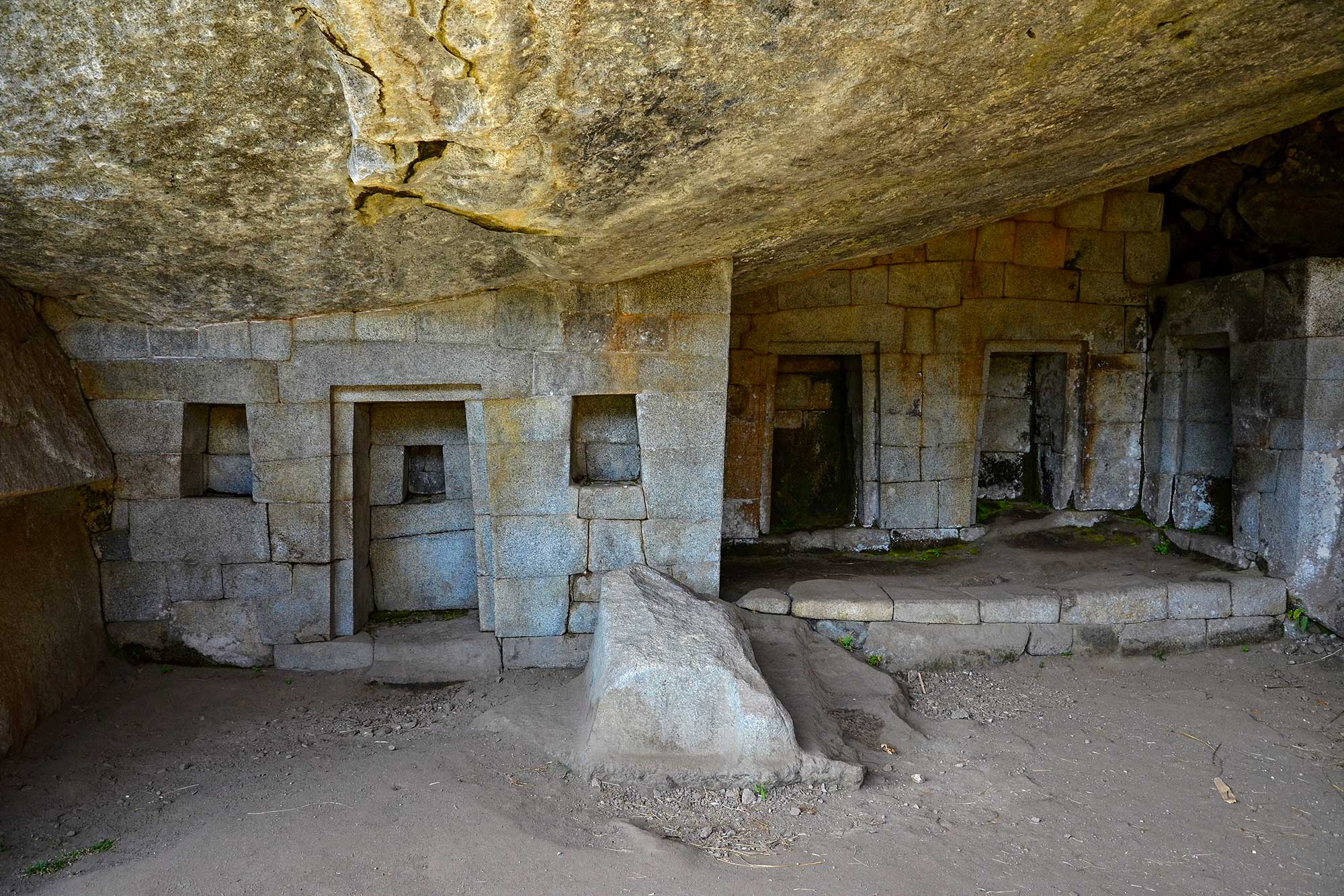
There is an Inca ceremonial enclosure on the slope of Huayna Picchu Mountain that most visitors to Machu Picchu never get to see. It is built inside a natural cave, with stonework of the highest Inca quality and trapezoidal niches that, in that setting of rock and dim light, create an impression that no other enclosure in the main archaeological site can replicate. It is called the Temple of the Moon, and Route 3C is the circuit that allows access to it from Machu Picchu without having to climb to the summit of Huayna Picchu. This guide explains what that route involves, what you will find along the way, and who should consider choosing this circuit.
What Route 3C Is and What It Includes
Route 3C is the Machu Picchu circuit that combines access to the main archaeological site with the route to the Temple of the Moon, also known as the Great Cave. It is one of the least-known circuits in the site’s ticket system and the one with the greatest potential to surprise visitors who already have some knowledge of the complex and are looking for something different from the more conventional circuits.
The Route 3C ticket includes entry to the main archaeological site plus access to the trail that leads to the Temple of the Moon along the slope of Huayna Picchu. This trail is different from the one that goes directly up to the summit: it starts from the same trail entry checkpoint for Huayna Picchu inside the site, but it branches off before the steepest part of the ascent and heads toward the cave instead of the summit.
The Temple of the Moon: What It Is and Why It Matters
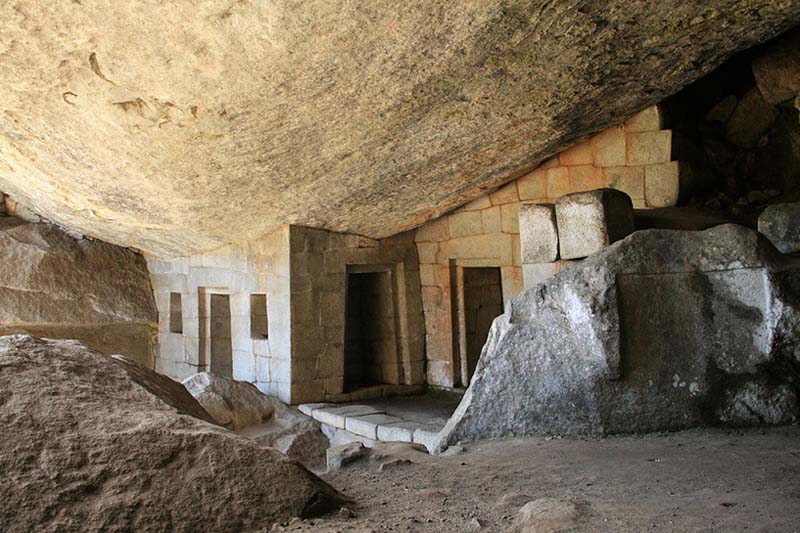
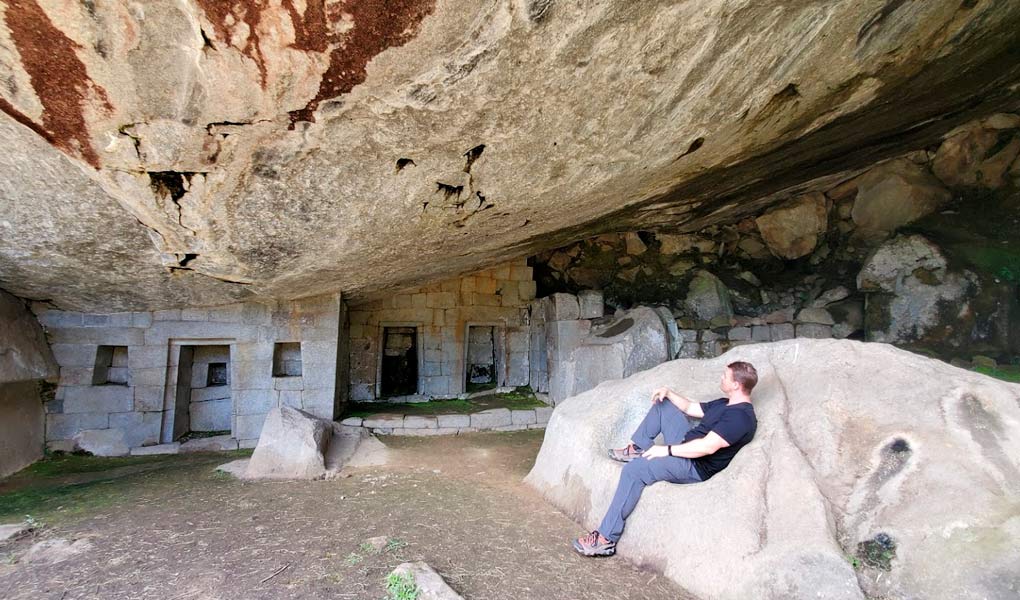
The Temple of the Moon is an Inca ceremonial enclosure built inside a natural grotto on the northwestern face of Huayna Picchu Mountain, at about 2,500 meters above sea level. The cave provides a natural rock ceiling under which the Incas built the temple structures, integrating architecture with the geology of the place in a way that has few equivalents in the full body of Inca architecture.
The interior of the enclosure has trapezoidal niches carved into the living rock of the cave, alternating with perfectly assembled Inca masonry structures built without mortar. The combination of the cave’s natural stone with the temple’s worked stone creates a space that is architecturally one of the most unique in the entire Machu Picchu complex, even though it rarely appears in the site’s marketing photos precisely because it is outside the visual field of the main circuits.
The ceremonial function of the enclosure is not fully documented, but archaeologists agree that the orientation of the space and the characteristics of its niches suggest a ritual function related to moon worship and rites associated with the underworld in the Andean worldview. In that worldview, caves were points of contact between the world of the living and the world of the ancestors, and the construction of a high-quality temple inside a natural cave reflects the spiritual importance that this type of space had for Inca culture.
The Access Trail: Difficulty and Duration
The trail from the entry checkpoint inside the archaeological site to the Temple of the Moon is approximately two kilometers each way, with moderate elevation change that varies depending on the section. Access to the Temple of the Moon is more physically demanding than the interior circuits of the main site, but less demanding than the full climb to the summit of Huayna Picchu.
The one-way walk from the trail entry checkpoint to the Temple of the Moon takes between one hour and one hour and fifteen minutes at a moderate pace. The return descent takes between 45 minutes and one hour. In total, the full round-trip route plus time at the temple requires between two and a half and three hours, in addition to the time needed for the main circuit of the site.
The trail has sections with lateral exposure where the path runs alongside steep drops toward the valley. That exposure is less intense than on the full climb to the summit of Huayna Picchu, but still enough for people with a strong fear of heights to feel uncomfortable at certain points. Shoes with firm-grip soles are essential because the trail includes sections of damp soil and uneven rock that require more attention to foot placement than the interior paths of the main archaeological site.
The Great Cave: The Cave That Gives the Route Its Alternative Name
In addition to the Temple of the Moon, the Route 3C itinerary passes by the Great Cave, another cave formation on the slope of Huayna Picchu with remains of Inca occupation. The Great Cave is smaller than the cave of the Temple of the Moon and has less visible architectural work, but it completes the understanding of the ceremonial use of caves around Huayna Picchu and of the mountain’s relationship with the Inca belief system beyond its function as a strategic observation point.
Together, the Temple of the Moon and the Great Cave create an image of the Machu Picchu complex as a ritual system that extended beyond the sectors visible from inside the site and included the mountain and its caves as integral parts of the sacred space of the citadel.
Why This Route Appears in So Few Travel Guides
The Temple of the Moon and Route 3C have a very limited presence in conventional travel guides and tourism articles about Machu Picchu for one mainly logistical reason: the route requires additional time that most Machu Picchu visit itineraries do not include, and access is conditioned by the same entry control system as Huayna Picchu, which means many visitors do not know that it is possible to visit the temple without climbing to the summit.
That relative invisibility in conventional tourist circuits is precisely what gives the route its greatest value for the visitor who discovers it: the Temple of the Moon is usually visited with very few groups at the same time, even during high season, creating a sense of intimacy with the archaeological space that the most visited sectors of the main site cannot offer in the same way.
The Best Combination with the Main Site Circuit
Route 3C can be combined on the same day with the interior circuit of the main archaeological site if there is enough time available inside the site. To do both properly, planning for a total of four to five hours inside the site is the right margin.
The most efficient sequence is to first complete the interior circuit of the main archaeological site, which includes the temples and the Main Plaza, and then visit the Temple of the Moon during the second part of the visit. This sequence allows visitors to see the main site with the highest energy level of the day and then take on the route to the temple with the body already active and the mind already oriented within the historical context of the complex.
Who Route 3C Makes the Most Sense For
Route 3C makes particular sense for visitor profiles that the more conventional circuits do not serve in the same way.
For someone who has already visited Machu Picchu on one of the standard circuits and wants to explore, on a second visit, a dimension of the site that the first visit did not cover, the Temple of the Moon offers exactly that: high-quality architecture in a completely different setting from the urban sector of the main site, with far fewer groups and an archaeological context that expands the understanding of the complex.
For archaeologists, architects, historians, or visitors with academic training in pre-Columbian cultures, the Temple of the Moon has a specific interest that the enclosures of the main urban sector cannot match in terms of typological uniqueness. An Inca rock-cut temple of this quality has few equivalents in the archaeological record of the Tahuantinsuyo.
For photographers looking for images of the site beyond the standard circuit, the Temple of the Moon in its cave setting creates compositions with natural rock, light entering through the cave openings, and trapezoidal niches that are completely different from any conventional photograph of the archaeological site.
And for those interested in the Andean worldview and the relationship between Inca architecture and the sacred landscape, the Temple of the Moon on the slope of Huayna Picchu is one of the points where that relationship becomes most visible and most understandable in the entire Machu Picchu complex.
Availability and the Ticket
Route 3C shares the entry control system with Route 3A to Huayna Picchu, which means access to the trail is subject to a capacity limit that includes both visitors climbing to the summit and those heading to the Temple of the Moon. However, since Route 3C does not include the full climb to the summit, demand is considerably lower than for Route 3A, resulting in broader ticket availability during most periods of the year.
The Route 3C ticket price is lower than Route 3A because it does not include access to the summit of Huayna Picchu. Checking the updated price and availability for the specific travel dates before confirming the purchase is the right step, especially because the Machu Picchu ticket system has changed in recent years and may have modified the name or price of some circuits.
Do you want to include the Temple of the Moon in your visit to Machu Picchu, or do you need guidance on which circuit has availability for your dates? At Incredible Peru Tours, we manage tickets for all circuits at the site, including lesser-known options such as Route 3C, and we coordinate the available time inside the site so the visit to the Temple of the Moon fits properly with the rest of your experience. Write to us with your dates and we will guide you before you book anything.


