
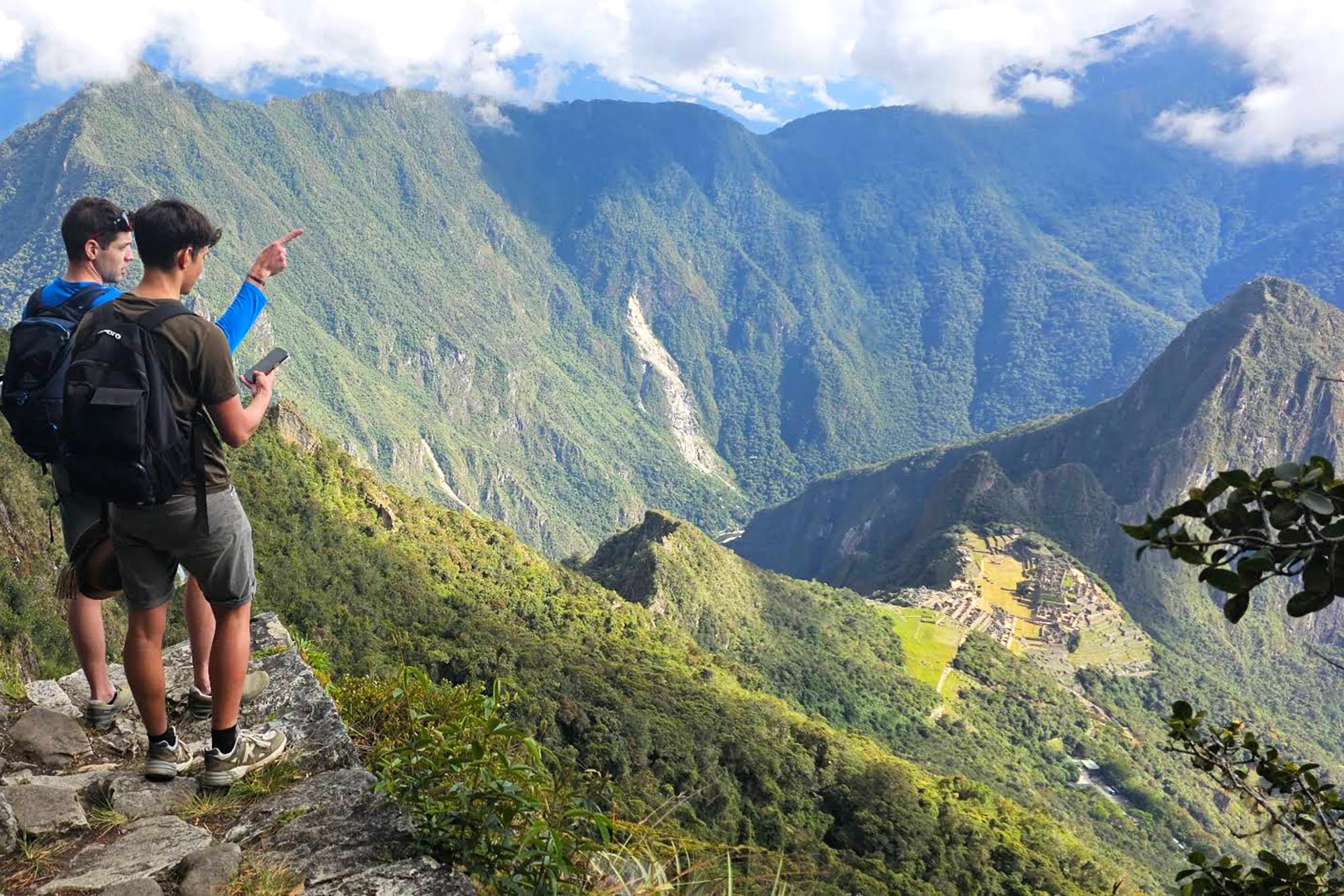
From November to March, Machu Picchu Mountain is the safer choice for a hike in the rain. Huayna Picchu is doable, but wet rock and exposed sections call for extra care, especially on the way down. If you don’t have experience on steep trails, choose the Mountain during these months.
Rain doesn’t just change the ground under your feet. It also decides whether you’ll see anything from the top, which entry time works best for you, and what to do if the day of your ticket starts with a storm. If you still don’t know which one to climb, start with the Machu Picchu Mountain vs Huayna Picchu comparison; here you’ll only see how the decision changes when it rains.
Which one is better when the trail is wet
In the rain, the main factor is no longer the view but your margin for error. On the Mountain, a slip usually ends in a scare; on the exposed sections of Huayna Picchu, a misstep has bigger consequences.
| In the rain | Huayna Picchu | Machu Picchu Mountain |
|---|---|---|
| Traction | Low on smooth rock and carved steps | Medium, with more dirt and vegetation sections |
| Risk on exposed sections | High | Low |
| Trickiest moment | The descent | The last steps before the summit |
| Time exposed to the rain | Shorter, since the visit is quicker | Longer, due to the length of the climb |
| Chance of ending up inside the clouds | Medium | High |
| Recommended for | Confident hikers with good footwear | Most travelers |
The table shows a contradiction worth keeping in mind: the Mountain is safer, but because it’s higher, it’s more likely to be wrapped in clouds. Huayna Picchu is trickier, but from its summit it’s easier to catch the citadel through a break in the clouds.
What changes on each climb when it rains
The route is the same all year, but water changes your pace, the way you step, and the time you need.
Huayna Picchu: narrow steps and slippery rock
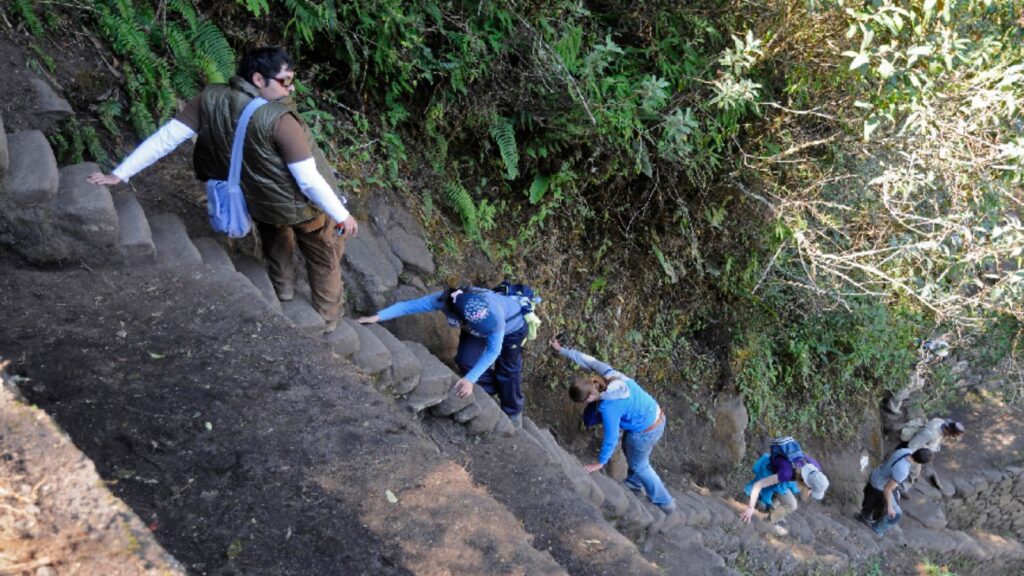
Stone polished by thousands of footsteps gets very slick when wet. You barely notice it on the way up, because you’re leaning forward and using your hands for support. The problem shows up on the way down, when your weight shifts toward the drop and your foot looks for support on narrow steps.
Face the mountain as you descend the steepest sections, use the cables wherever they exist, and don’t rush back. Plan for at least 30 extra minutes compared to the dry season for the whole route.
Machu Picchu Mountain: longer, but with more room for error
Here, the challenge in the rain is fatigue. A long climb in wet clothes is more tiring and chills your body when you stop. Mud builds up on the dirt sections, and the descent is harder on your knees when the ground doesn’t offer good traction.
The upside is that you almost never have a sheer drop right beside you, so a slip rarely turns into more than a bump. If the rain gets heavier, you can stop at a midway lookout and head back without missing out on the experience.
How likely you are to see anything from the summits these months
In the rainy season, it’s not unusual to reach the summit and see nothing for several minutes. The good news is that clouds move fast, and a break almost always opens up if you’re patient.
| Month | Typical conditions at the summits | Tip |
|---|---|---|
| November | On-and-off rain and frequent clear spells | A good month to climb either one |
| December | More steady rain and low clouds in the morning | Choose a mid-morning entry time |
| January | One of the rainiest months, summits often covered | Go with the Mountain for safety |
| February | Heavy rain and a higher risk of temporary closures | Have a backup plan without a mountain |
| March | Rain starts to ease and clear spells return | Huayna Picchu becomes a reasonable option again |
This is a general guide: the weather at Machu Picchu changes from one day to the next, and a week in January can turn out clear. To see how the season affects the rest of your visit, check out Machu Picchu in the rainy season.
Which entry time works best in the rainy season
During these months, the first slot of the morning isn’t always the best. At sunrise, clouds tend to cling to the mountains, and the rock is still wet from the overnight rain.
A mid-morning entry gives you a better chance of clear spells and slightly drier ground. It also keeps you away from the late afternoon, when showers are more frequent and coming down in low light on wet ground makes everything harder.
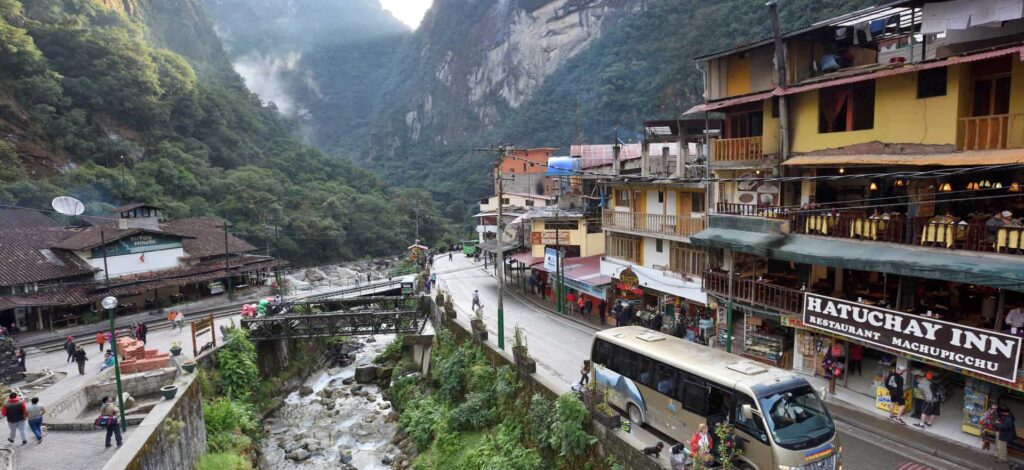
If you’re staying in Aguas Calientes, check the sky before heading out. If it’s pouring, wait at your hotel and leave with just enough time to catch the bus, instead of standing in line in the rain.
What happens if it rains hard on the day of your ticket
Regular rain doesn’t cancel the climb: on most days between November and March, both mountains stay open, and all you need is a poncho and some patience. What can happen is that sanctuary staff restrict access for safety reasons.
Temporary closures for safety
During heavy storms, landslides, or when sections of trail are damaged, park rangers may close access to a mountain for a few hours or the whole day. Huayna Picchu, with its exposed sections, is the more likely of the two to face these restrictions.
If you run into a closure, you can usually continue with the citadel route included in your circuit. Ask at the entrance checkpoint before you turn around.
Changes and refunds: what you can and can’t do
Machu Picchu tickets are non-refundable, and rain alone doesn’t entitle you to a refund or a date change. That’s why, during these months, it’s a good idea to leave a free day in your itinerary and, if you can, book the mountain for your second day in the area.
If you’re traveling with a tour operator, ask before you pay what the company does when there’s an official closure. Policies vary, and knowing ahead of time saves you an argument at the worst possible moment.
The bare minimum to bring for a climb in the rain
You don’t need much for a mountain hike in the rain, but what you bring has to work:
- Shoes with grippy soles: they matter more for your safety than any other piece of gear.
- Rain poncho: it covers your backpack too and comes off quickly when the sun comes out. Umbrellas aren’t allowed inside the sanctuary.
- A warm layer in a dry bag: so you don’t get cold at the summit while you wait for the clouds to clear.
- Waterproof phone case: the best photos these months happen right when the clouds part, and you don’t want a wet phone at that moment.
If you need trekking poles, keep in mind that only rubber-tipped poles are allowed.
The upside of climbing in the rainy season
Rain has its perks. From November to March there are fewer visitors, so tickets that include a mountain can be booked with less notice, even for Huayna Picchu, which sells out months in advance during the dry season.
The trails are also less crowded, so you can climb at your own pace and stop without feeling rushed. And when the clouds open up, the vegetation is at its greenest and the mist frames the citadel in a way you won’t see in June or July.
Frequently asked questions about climbing Machu Picchu’s mountains in the rain
Does Huayna Picchu close when it rains?
Not for regular rain. Access is only restricted during heavy storms, landslides, or when the trail is damaged, and sanctuary staff make that call on the day itself.
Can you see anything from the summit if it’s cloudy?
Sometimes not when you first arrive, but clouds move fast. If you wait 15 to 30 minutes, a break usually opens up and reveals the citadel.
Will I get a refund if I can’t climb because of the rain?
Generally, no. Tickets are non-refundable, and rain doesn’t entitle you to a change. If you’re traveling with a tour operator, check their policy on official closures before you pay.
Is it easier to get mountain tickets during these months?
Yes. With fewer visitors, Machu Picchu Mountain usually has availability just a few days ahead, and Huayna Picchu a few weeks ahead.


