
Machu Picchu has a rule about backpack size that many visitors discover at the access checkpoint instead of before leaving their hotel, and by then there is no convenient solution. Backpacks with a capacity greater than 25 liters are not allowed inside the archaeological site. Anyone who arrives with a 40- or 60-liter trekking backpack has to leave it in the storage area set up outside the entrance area, at an additional cost in soles, and enter the site only with what they can carry in their pockets or in a small bag.
That rule exists for heritage conservation reasons: a large backpack in a narrow Inca stone space can hit historic structures when turning, and controlling the size of what enters the site is the method used by the Ministry of Culture to reduce that risk. This guide explains which backpack is right for Machu Picchu and what you should pack inside.
The Right Size: Between 10 and 25 Liters
The ideal backpack for visiting Machu Picchu has a capacity between 10 and 20 liters. That range is enough to carry everything needed during the visit, which in most cases includes water, sunscreen, a waterproof jacket, a camera, documents, snacks if you bring them before entering, and an extra layer of clothing. You do not need more capacity than that for a two- to four-hour visit to the archaeological site.
A 25-liter backpack, which is the official permitted limit, can hold all of that content and leave some extra room. However, a full 25-liter backpack weighs considerably more than a 15- or 20-liter one with the same essential items, and that extra weight becomes noticeable after two hours of walking on uneven terrain at 7,972 feet. The principle of carrying only what is strictly necessary inside the site creates a more comfortable visit than trying to take advantage of the backpack’s full capacity.
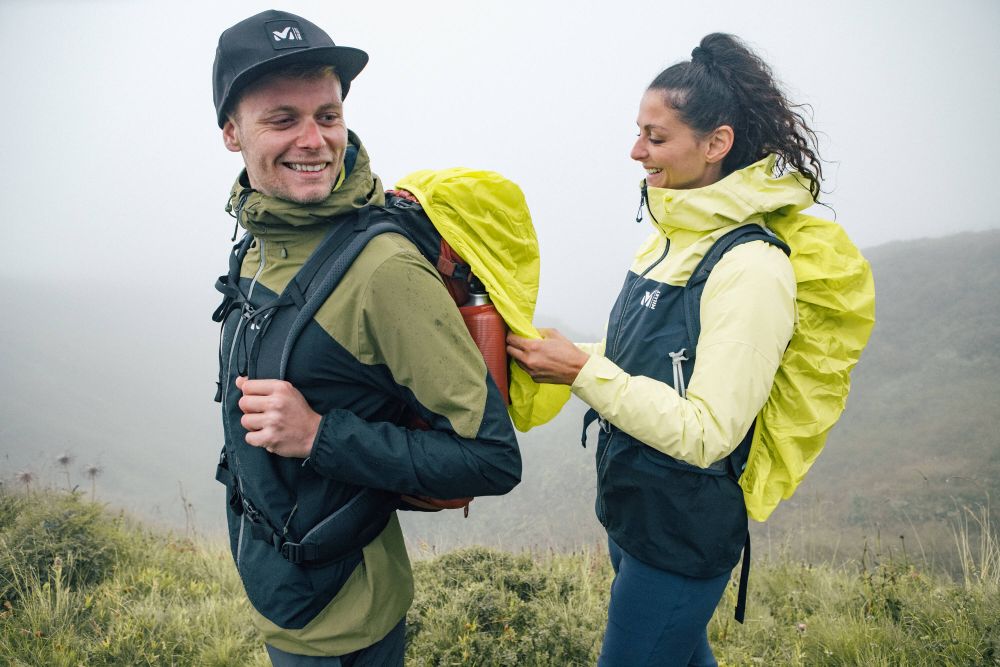
Visitors Arriving from the Inca Trail or the Salkantay Trek
For groups arriving at Machu Picchu after the Inca Trail or the Salkantay Trek, the daypack used during the trek is exactly the right backpack for visiting the site. The 20- to 30-liter daypacks used on trekking routes are within the permitted range and already carry the right content for the visit.
The large trekking backpack, the one that contains your change of clothes, camping equipment rented from the agency, and personal items that are not needed during the daily route, is left at the hotel in Aguas Calientes on the day of the visit to Machu Picchu. Most hotels store luggage during the hours of the site visit at no additional cost. Going up to the site with a large trekking backpack makes no logistical sense and, in most cases, also exceeds the permitted size limit.
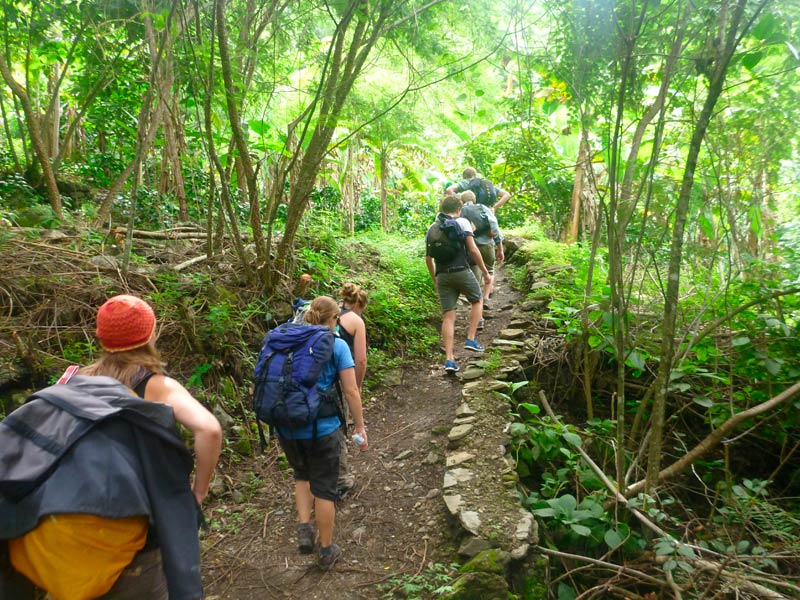
The Type of Backpack: Features That Make Sense
For visiting Machu Picchu specifically, the most valuable features in a daypack are the following.
Built-in rain cover or water-resistant material. The weather at Machu Picchu can include rain at any time of year, and the items most sensitive to water that enter the site, such as your phone, camera, and documents, need protection. A backpack with water-resistant exterior material or a built-in rain cover in the lower pocket solves that problem without needing to carry extra bags to protect the contents.
Easy-access exterior pockets. Inside the site, there are moments when you need quick access to sunscreen, water, or your phone without opening the entire backpack. Side mesh pockets for a water bottle and a front or top pocket for frequently used items reduce the time spent managing your backpack during the busiest moments of the group visit.
A back panel with some ventilation. A visit to Machu Picchu can last between two and four hours, and on stair sections and areas with more physical activity, a backpack pressed directly against your back without ventilation can create heat and discomfort. A back panel with minimal separation from the body helps reduce that. It does not need to be a backpack with a mountain-style ventilation system: any design that creates some space between the back panel and the user’s back improves comfort during extended use.
Chest strap. On stair sections where body posture changes more, the chest strap stabilizes the backpack and prevents it from moving side to side with every step. It is a small detail that, in backpacks larger than 15 liters with a reasonable amount of weight, makes a noticeable difference in comfort during hours of use.

What to Pack Inside: The Optimized List for Machu Picchu
The contents of your backpack for visiting Machu Picchu can be organized in a way that minimizes weight without leaving out any functional item.
Water: At least one liter per person for a two- to three-hour visit. Water in a sealed bottle is allowed inside the site. On hotter days or for longer visits that include access to Inti Punku or one of the mountains, a liter and a half is more practical. There are no water refill points inside the archaeological site.
Sunscreen: Keep it in the backpack but within immediate reach because it should be reapplied every two hours during the visit. SPF 50 is recommended as a minimum because of the high UV radiation at this altitude.
Waterproof jacket: Folded and stored in the main compartment or top pocket, accessible in less than thirty seconds when it starts to rain. It should not be at the bottom of the backpack under everything else.
Original passport: Keep it in an interior zippered pocket so it cannot fall out during the walk. It is the essential document for the access checkpoint and for any situation that requires identification inside the site.
Machu Picchu ticket: Keep the QR code downloaded offline on your phone or saved as a screenshot in your photo gallery. If you carry a printed copy, keep it in a waterproof sleeve inside the backpack.
Phone: Keep it in an easy-access pocket for photos during the visit, with the battery fully charged before going up from Aguas Calientes. The site does not have charging points available.
Camera: If you bring one in addition to your phone, keep it in the main compartment protected from impacts and rain with its case. Tripods are not allowed inside the site, so photography equipment is limited to what can be used handheld.
Extra layer of clothing: A long-sleeve shirt or thin fleece on cooler days, which can be stored in the backpack during the warmer hours and worn in moments of shade or wind.
Cash in soles: For the restrooms in the exterior access area, which have a small cost in soles. There are no ATMs inside the site or in the immediate access area.
Toilet paper in a small bag: The restrooms in the exterior area do not always have paper available. A small roll or a pack of tissues solves that detail without taking up significant space.
What Should Not Go in Your Machu Picchu Backpack
Some items are prohibited inside the archaeological site regardless of whether they fit in your backpack. Solid food cannot be consumed inside the site, although it can be kept in your backpack and eaten in the exterior access area before entering or after leaving. Drones are completely prohibited throughout the Machu Picchu area and its surroundings. Tripods are not allowed inside the site. Umbrellas with pointed metal structures may raise concerns at the access checkpoint.
Are you visiting Machu Picchu as part of an Inca Trail or Salkantay Trek package with Incredible Peru Tours and want to know exactly what to bring on that final day at the site?


