
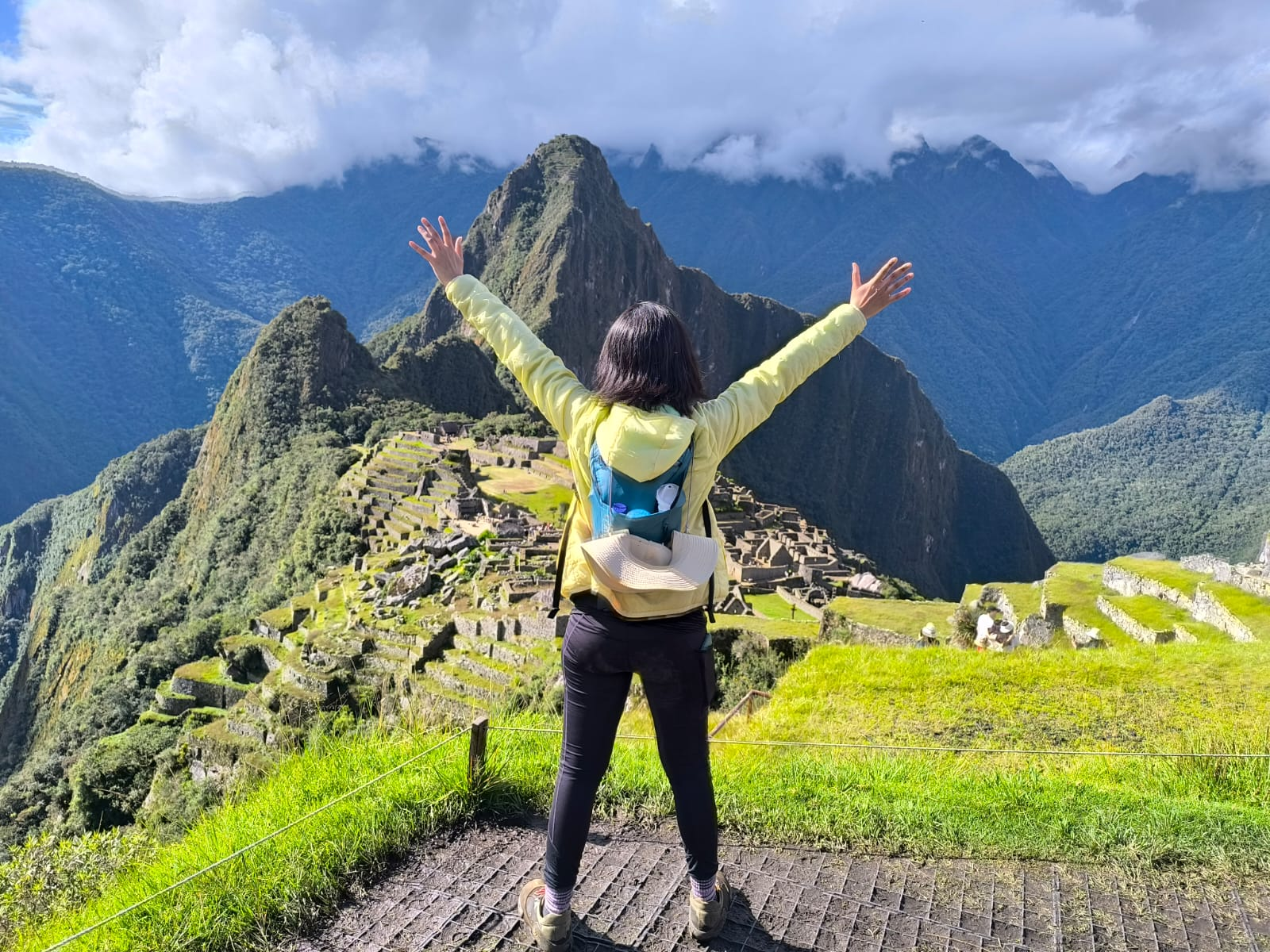
Footwear for visiting Machu Picchu is the equipment decision that has the biggest consequences if chosen poorly. Not because the terrain is technically difficult in a mountaineering sense, but because the Inca stones at the site are irregular, have different heights, and can be wet or covered with moss under certain conditions. They require a specific level of grip that the wrong footwear simply cannot provide. Every season, visitors arrive at the site entrance with inappropriate shoes, and park rangers from the Ministry of Culture point this out or restrict access to certain areas. This guide explains exactly which footwear works, which does not, and why.
Why Machu Picchu’s terrain requires specific footwear
Machu Picchu is built on a mountain summit at 2,430 meters, with the archaeological site distributed across different levels connected by Inca stone stairways of varying heights. The stones at the site are made of granite and slate, polished by decades of footsteps from millions of visitors. That polished surface, combined with the morning dew that moistens the stones during the early hours at any time of year, creates a grip condition that smooth-soled footwear turns into a real risk of falling.
During the wet season, from November to March, the stairways and terrace edges can be directly wet from rain and, in some sections, covered with a thin layer of moss or lichen that makes the surface even more slippery. In those conditions, a rubber sole with a good tread pattern is the difference between walking safely and walking with constant attention on avoiding a slip.
The best option: trekking shoes or athletic shoes with rubber soles
Low-cut trekking shoes, also known as trail shoes or trail running shoes, are the most suitable footwear for visiting Machu Picchu for most types of visitors. They combine a rubber sole with the right grip pattern for the terrain, a lightweight design that makes walking for several hours more comfortable, and enough flexibility for stairways of different heights.
Regular athletic shoes, the kind used for running or the gym, work reasonably well in dry conditions if they have rubber soles with some tread. The problem is that most running shoes have soles optimized for flat, even surfaces, not for irregular stone terrain. On the more uneven sections of the circuit, the difference in grip between a trail shoe and a regular running shoe becomes noticeable.
Mid-cut or high-cut trekking boots are the safest option in terms of stability, especially for people with less ankle confidence or a history of sprains. The mid or high cut supports the ankle when stepping on uneven terrain and reduces the risk of twisting it on stair sections where the height of the step forces the body weight to be distributed unevenly. They are heavier than trekking shoes and may feel excessive for visitors with good joint stability, but for older adults or people with a history of ankle injuries, they are the most prudent choice.
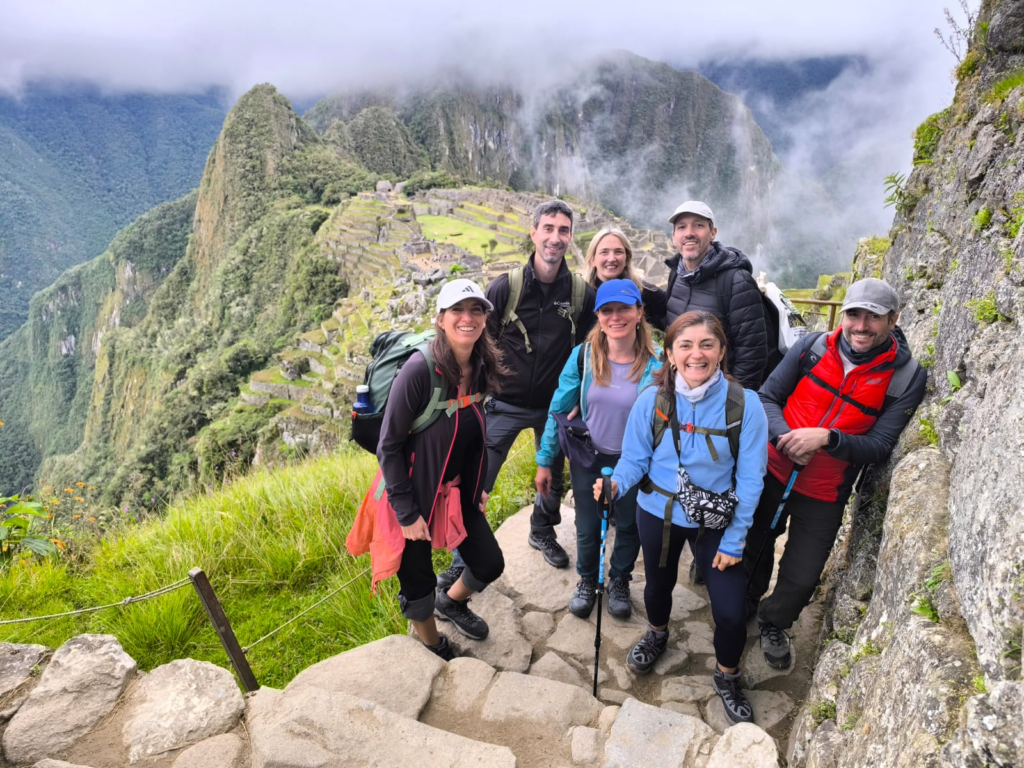
What footwear does not work at Machu Picchu
This is the most important section of the guide because it helps prevent the most common mistakes that can have consequences at the access control or on the terrain inside the site.
Smooth-soled shoes. Any footwear with leather soles, smooth plastic soles, or rubber soles without tread is unsuitable for the terrain at the site. This includes men’s and women’s dress shoes, flat ballet-style shoes, and any city footwear without a grip pattern. A smooth sole on wet or mossy stone provides no real traction.
High heels. Heels, regardless of their height, are incompatible with the terrain at the site for two reasons: the instability they create on uneven surfaces and the pressure concentrated on a very small point of the Inca stone, which can damage the heritage. Park rangers at the site are instructed to point out high-heeled footwear and, in some cases, restrict access to certain areas of the site for visitors wearing it.
Sandals without heel support. Flip-flop-style sandals or strap sandals without back support are unsuitable because they do not keep the foot secure while going up and down stairways. Trekking sandals with full foot support, including the heel, and rubber soles with tread are a viable option on warmer days if the visitor has experience using that type of footwear on uneven terrain.
House shoes or slippers. It sounds unlikely, but it happens: some visitors who arrive in Aguas Calientes with unsuitable footwear try to solve the problem with the most comfortable shoes they find in their luggage. That is not a valid solution for the terrain at the site.
Trekking sandals: when they work and when they do not
Trekking sandals from specialized brands, with Vibram or high-friction rubber soles, full foot support with straps at the heel and instep, and enough tread depth, are perfectly suitable footwear for visiting Machu Picchu in dry conditions. Some people whose feet do not tolerate closed shoes well for several hours prefer them over trekking shoes for reasons of comfort and temperature.
The conditions in which trekking sandals stop being suitable are heavy rain and soaked terrain. In those conditions, the lack of upper foot protection means puddles and wet ground will soak your socks if you are wearing them, or your feet directly if you are not. Over several hours of walking, that creates accumulated discomfort that waterproof shoes or boots completely avoid. During the wet season, trekking sandals are a weather gamble: on some days they work well, and on others they do not.
Can you enter Machu Picchu with inappropriate footwear?
Park rangers from Peru’s Ministry of Culture are instructed to evaluate visitors’ footwear at the access control and to restrict access to certain areas of the site for anyone wearing shoes that are not suitable for the terrain. In practice, how this rule is applied varies depending on the time slot and the judgment of each park ranger, and in some cases a visitor with inappropriate footwear may enter the general circuit without any issue.
Depending on that variability in enforcement to justify arriving with inappropriate footwear is a mistake for two reasons. The first is that on the day of your visit, you may encounter a park ranger who applies the rule more strictly and limits access to areas you wanted to visit. The second is that the risk of falling on uneven terrain with smooth-soled footwear is real, regardless of whether or not a park ranger points it out.
What to do if you arrive in Aguas Calientes with the wrong footwear
Aguas Calientes has sports equipment and mountain gear stores where it is possible to buy trekking shoes or athletic shoes with rubber soles on the same day of your visit. The selection is not the widest and the prices are not the most competitive, but the option exists and is better than going up with inappropriate footwear.
If your budget does not allow you to buy new shoes, some stores in Aguas Calientes rent basic trekking boots at a lower cost than purchasing a pair. The quality of rental footwear varies, but any rental trekking boot with a rubber sole in reasonable condition is a better option for the terrain at the site than your own smooth-soled dress shoes.
Footwear for travelers arriving from the Inca Trail or the Salkantay Trek
Travelers who arrive at Machu Picchu after the Inca Trail or the Salkantay Trek already have the right footwear: the trekking boots used during the four or five days of the route are exactly the most suitable footwear for the terrain of the archaeological site. There is no need to change shoes for the visit or to carry an extra pair in your backpack for that day.
The only precaution for travelers arriving with trekking boots after several days on the trail is to check that the sole still has enough grip pattern. Very worn boots with soles that have become smooth from prolonged use lose the friction that makes technical footwear useful. For anyone who has used their boots for several days on abrasive terrain, checking the condition of the sole before going up to the site is a reasonable precaution.
Do you have questions about what footwear to bring for your visit to Machu Picchu as part of an Inca Trail or Salkantay Trek package? At Incredible Peru Tours, we inform each group about the most suitable footwear before the trek begins, so you arrive prepared that day without having to improvise anything in Aguas Calientes. Write to us with your travel dates, and we will guide you before you book anything.


