
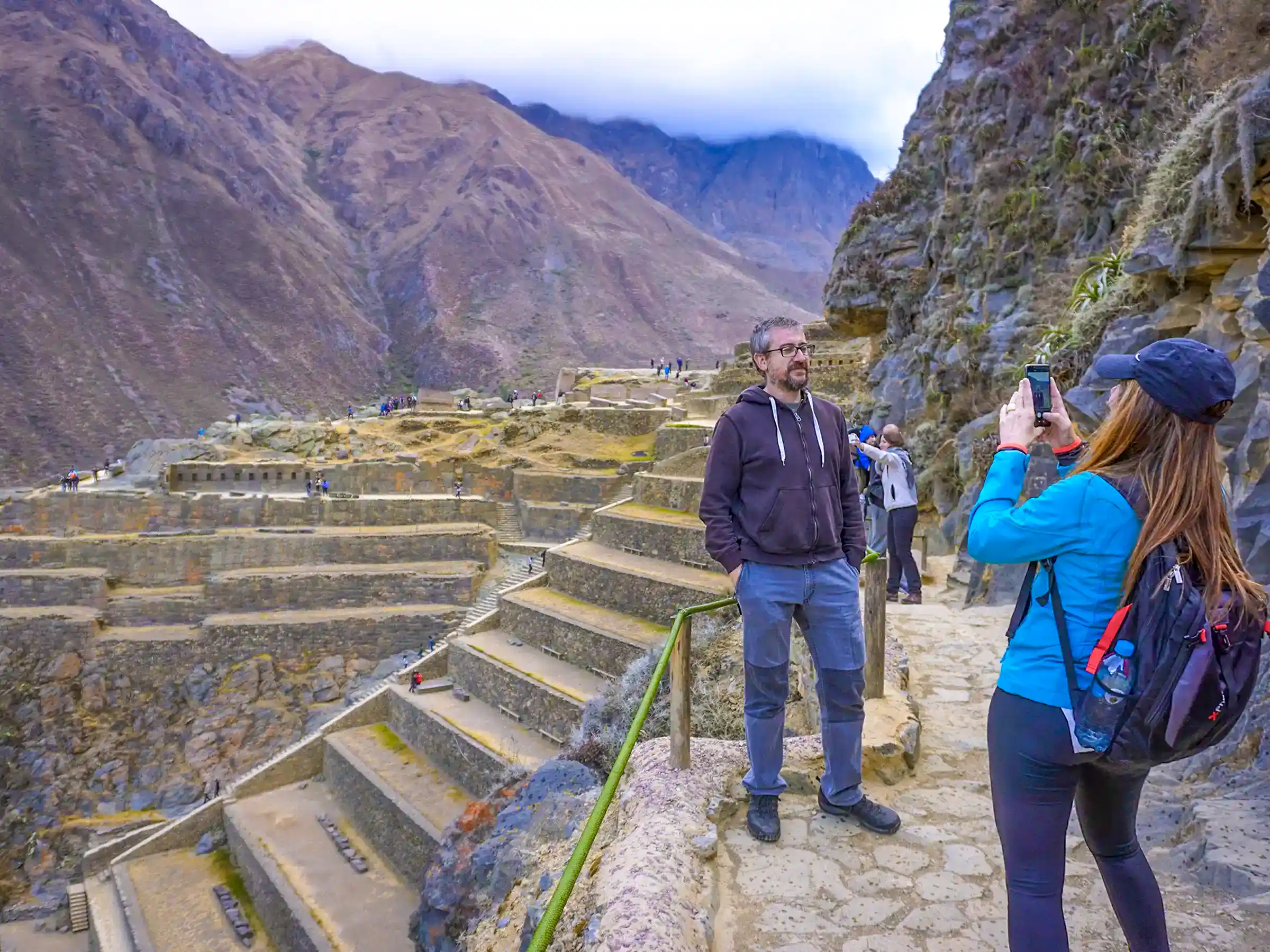
Ollantaytambo is much more than the train station from which most travelers depart for Aguas Calientes. It is one of the most fascinating towns in the Sacred Valley, with a first-class Inca archaeological site, stone streets dating back to the imperial period, and original water channels from the Tahuantinsuyo that still function today. Travelers who arrive in Ollantaytambo with enough time before the train and simply decide to wait at the station are overlooking one of the richest towns in historical content in the entire Cusco region.
This guide tells you what to do in Ollantaytambo if you have between one and four hours before taking the train, with specific suggestions for each available time frame.
First of all: how much time you need at the station before the train
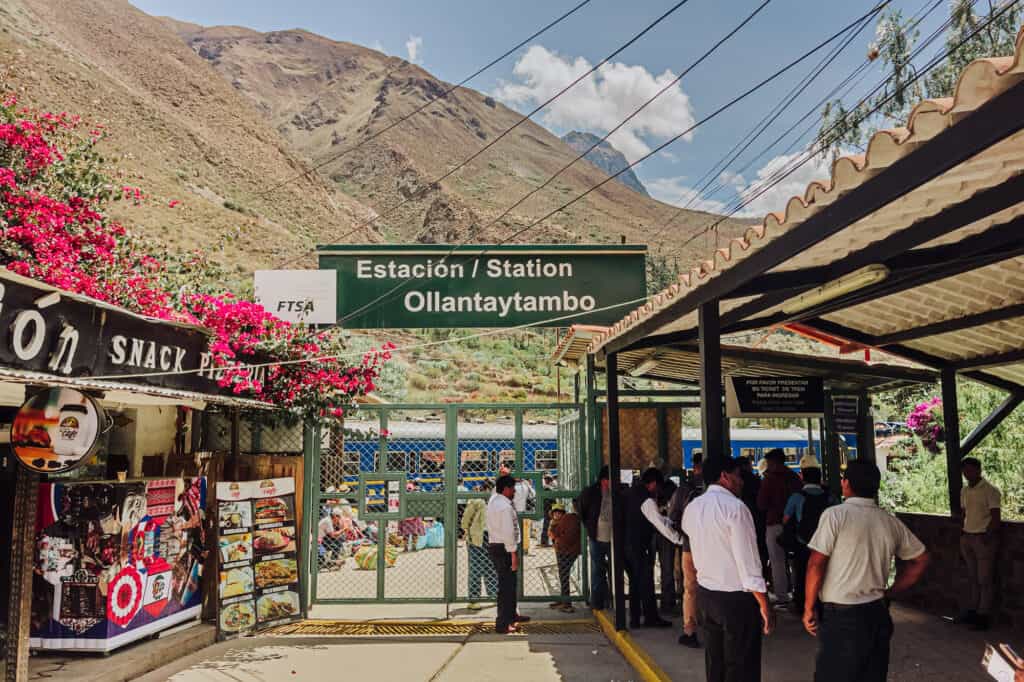
Ollantaytambo Train Station, known as Ollantaytambo Station, is located in the center of town, just a few minutes on foot from the archaeological site and the local market. PeruRail and Inca Rail recommend arriving at the station between 30 and 45 minutes before the train departure for luggage check-in and boarding. During high season, when there are more groups, arriving 45 minutes early is more advisable than arriving only 30 minutes before departure.
If your train leaves at 9:00 in the morning and you arrive in Ollantaytambo from Cusco at 7:00, you have approximately one hour and fifteen minutes available before you need to be at the station. That is enough time to go up to the lower part of the archaeological site, see the ceremonial fountains, and return without rushing. If you arrive at 6:00, you have time for more.
With less than one hour: the Inca town and the ceremonial fountains
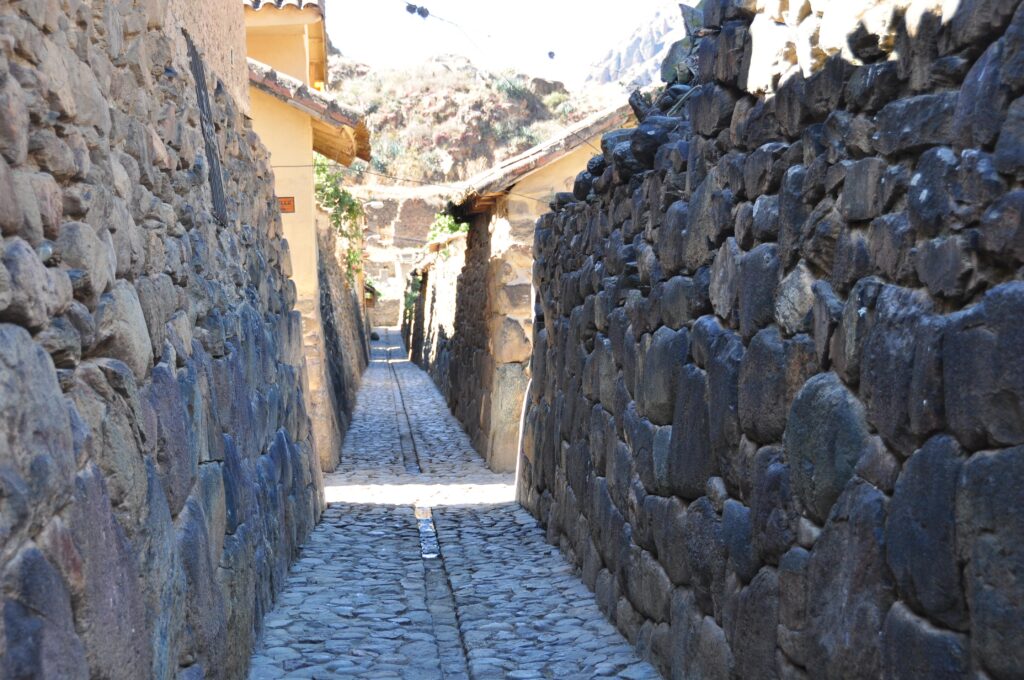
If you have less than one hour before the train, the best use of that time is a walking tour through the historic center of Ollantaytambo. The town has something that very few places in Peru still preserve: the original Inca urban layout. The stone streets of the Qosqo Ayllu sector still follow the rectangular design of Inca planning, and the water channels built more than five hundred years ago run alongside the road with the same water distribution function they had during the Tahuantinsuyo.
The ceremonial fountains of Ollantaytambo, located at the base of the archaeological site in front of the main square, are accessible without purchasing a ticket to the site and offer an immediate impression of Inca hydraulic engineering that no guide explanation can replicate in the same way as seeing them in operation. Water flows from the carved stone mouths with the same pressure it had five hundred years ago, fed by the canal system that comes from the slopes of the mountain.
The main square of Ollantaytambo, with the facade of the archaeological site in the background and Pinkuylluna Hill with its Inca storehouses on the slope, offers a perspective of the whole complex that, from street level, gives a different sense of scale than climbing the site itself. For those with less than one hour, that view from the square with the fountains in the foreground is the most complete image of the place that the available time allows.
With one to two hours: the archaeological site of Ollantaytambo
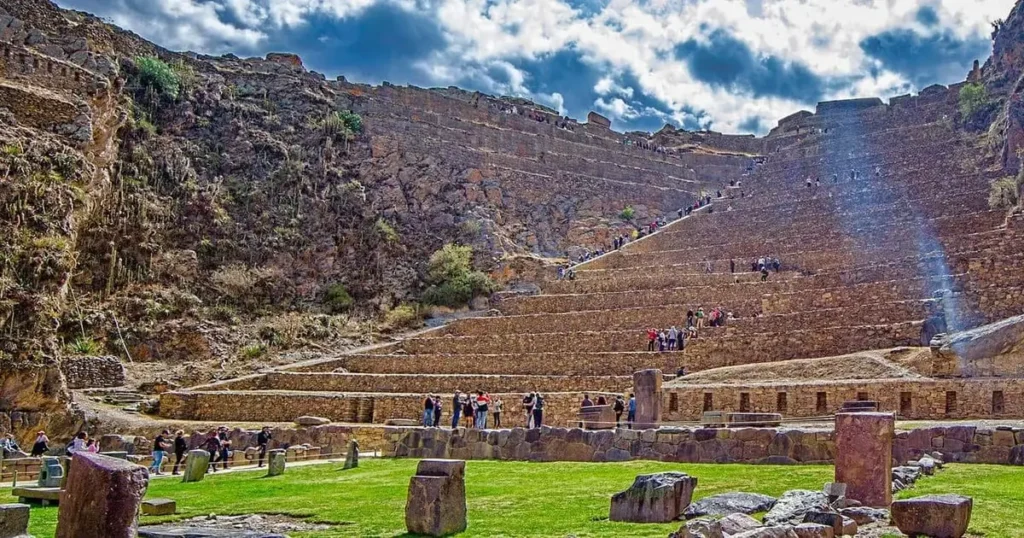
The archaeological site of Ollantaytambo is one of the most impressive in the Sacred Valley and one of the least appreciated by travelers who use it simply as a train departure point. The entrance ticket is part of the partial or full Cusco Tourist Ticket. If you already have that ticket, access to the site has no additional cost. If you do not have it, tickets are sold at the entrance booth.
The site has two main sectors with completely different characteristics. The monumental terraces of the ceremonial sector are the ones that appear in every photograph of Ollantaytambo: enormous stone retaining platforms that rise up the side of the mountain on a scale that impresses from the base before the guide explains anything. At the top of these terraces, in the highest part of the sector that can be visited with one or two hours available, is the unfinished Temple of the Sun: a series of six pink granite monoliths that the Incas began to assemble during the temple’s construction and left unfinished when the Spanish conquest interrupted the project. The monoliths, several meters high and weighing tons, were transported from the Cachicata quarry on the other side of the valley, crossing the Urubamba River. Seeing the evidence of this unfinished transport, with stones still in the process of being cut in the quarry visible on the horizon, creates one of those sudden understandings of the scope of Inca engineering that books cannot convey in the same way.
The second sector of the site is Mañay Raqay, or the Inca neighborhood, with residential enclosures from the imperial period that can be explored at street level. Its perfectly fitted stone walls, the trapezoidal niches characteristic of Inca construction, and the double doorways that indicate the ceremonial use of some rooms provide information about daily life and domestic space in the Tahuantinsuyo that the monumental terrace sector does not offer.
With more than two hours: Pinkuylluna Hill and the Inca storehouses
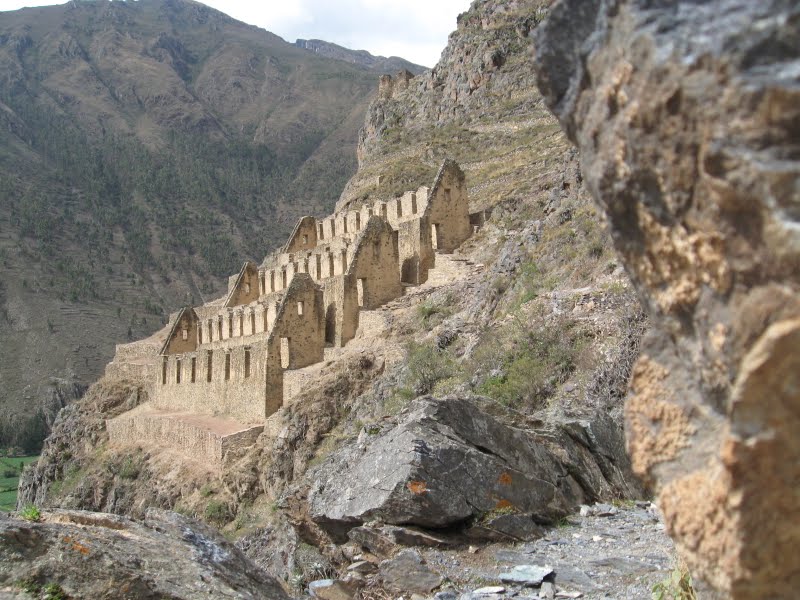
If you have more than two hours available, the climb to Pinkuylluna Hill adds a dimension to your time in Ollantaytambo that the main archaeological site cannot provide. On the hillside facing the main site, visible from the square and from the terraces, there is a series of Inca storehouses, or qollqas, built in a strategic position to take advantage of the cold valley wind and preserve products stored for imperial redistribution.
The hike up to Pinkuylluna takes between 30 and 45 minutes at a moderate pace and does not require an additional ticket to the archaeological site. From the storehouses, the view of the Urubamba Valley, the town of Ollantaytambo with its Inca urban layout visible from above, and the archaeological site on the opposite hillside is one of the most complete perspectives of the whole complex that the Sacred Valley offers anywhere.
Where to eat in Ollantaytambo before taking the train
Ollantaytambo has a range of restaurants and cafés concentrated around the main square and in the streets near the train station. For breakfast or a light lunch before the train, there are several accessible options with prices notably lower than those in Aguas Calientes for comparable quality.
A café with views of the archaeological site from the terrace is the most photogenic option available. Some establishments around the square offer this view with reasonably priced breakfast menus. For those with limited time who prioritize the archaeological site over food, an empanada or sandwich from the bakery in the local market next to the square provides enough energy before the train without spending time in a restaurant.
The local market: a short stop with a lot of content
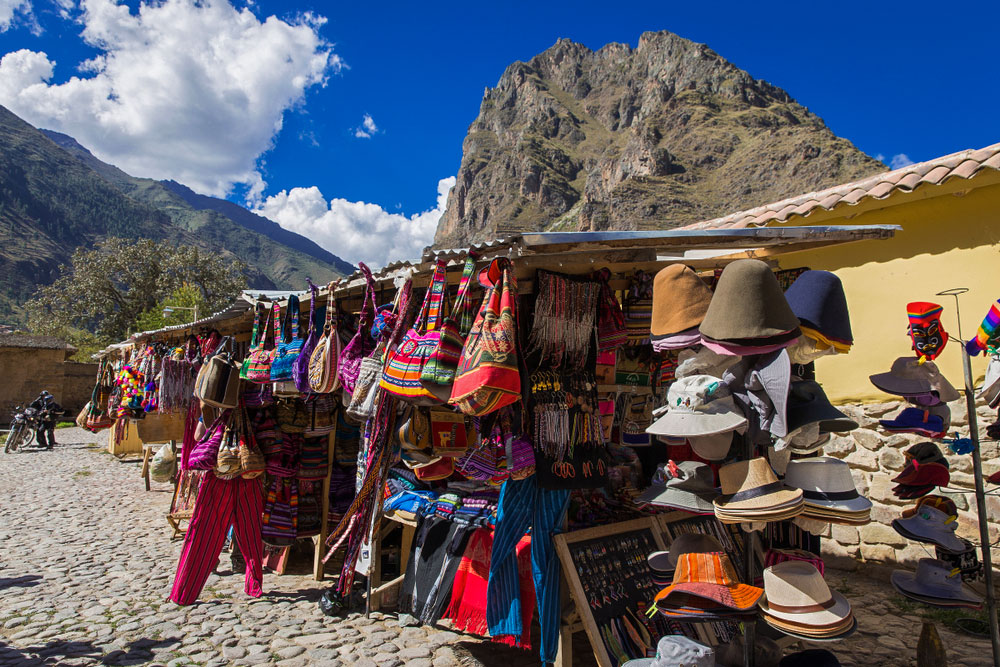
The Ollantaytambo market, next to the main square, has a local activity that Cusco’s San Pedro Market, which is more oriented toward tourism, cannot replicate with the same authenticity. Women from the valley communities selling seasonal agricultural products, stalls with handmade textiles using Andean weaving techniques that families have passed down from generation to generation, and the aromas of local food being prepared for lunch create an impression of the living Sacred Valley that the visit to the archaeological site, despite all its historical grandeur, does not provide in the same way.
A fifteen-minute walk around the market before heading to the station is the most organic way to end your time in Ollantaytambo if you have already visited the archaeological site and still have that margin of time available.
How to organize it: the most efficient sequence
For those arriving in Ollantaytambo by transport from Cusco with two or more hours before the train, the most efficient sequence is the following: leave your luggage in the station’s storage area or at the nearest restaurant’s storage space if the station does not have that service available, go directly up to the archaeological site, explore the terraces and the unfinished Temple of the Sun, descend through the Inca neighborhood, see the ceremonial fountains at the base, walk around the market if there is still time, and be at the station 45 minutes before the train departure.
This itinerary covers the most valuable points of Ollantaytambo without unnecessary rushing and allows you to reach the train having used your waiting time in a way that transforms a logistical stop into an experience with its own content.
Are you organizing a trip to Machu Picchu with the Inca Trail or the Salkantay Trek and want to include time in Ollantaytambo in your itinerary? At Incredible Peru Tours, we coordinate transfers from Cusco to Ollantaytambo with enough time to visit the site before the train. Write to us with your dates, and we will design the complete itinerary for your group.


