
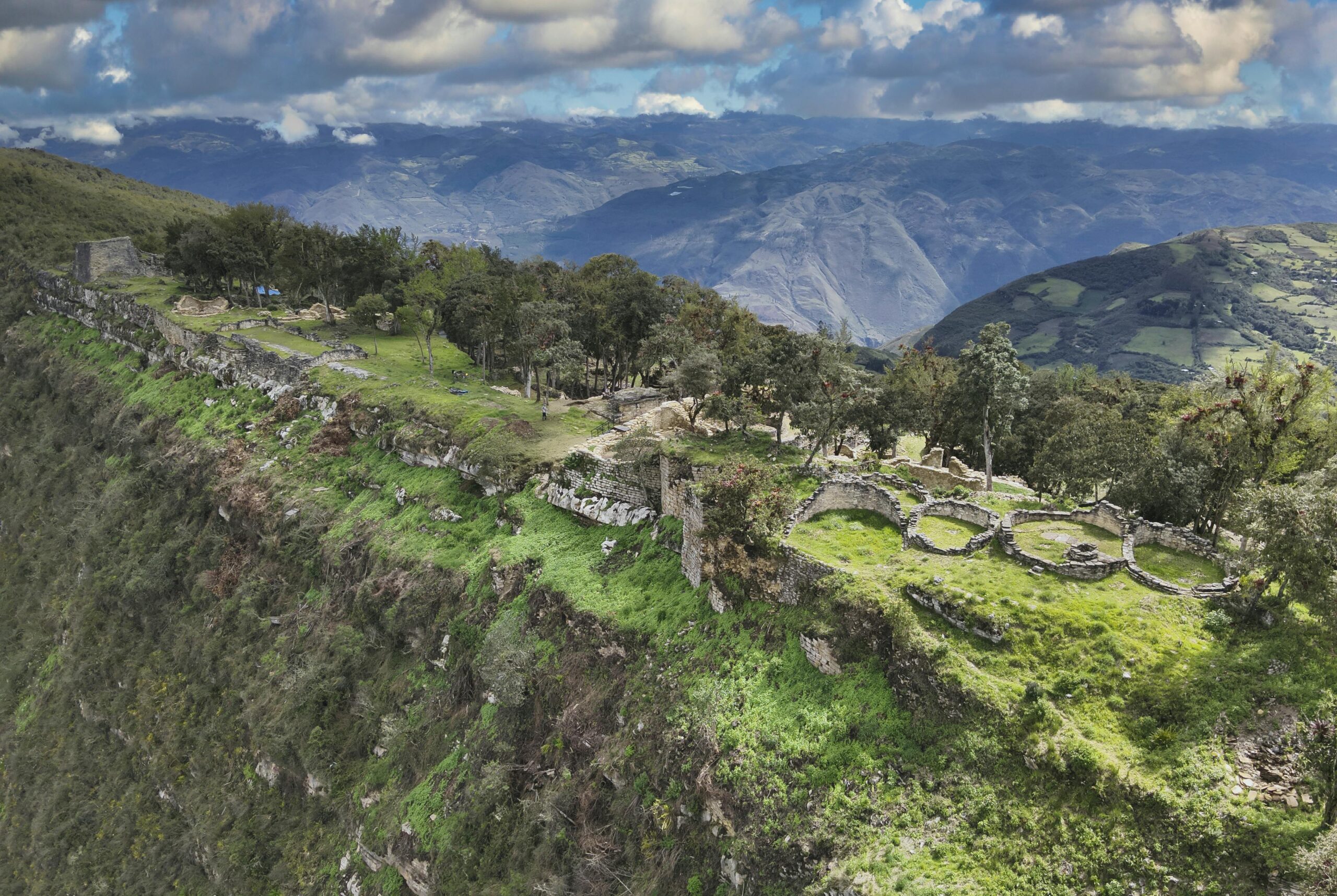
In the Amazonas region, at more than 3,000 meters above sea level and surrounded by cloud forest, stands Kuélap, one of the most impressive fortified cities of ancient Peru. Built by the Chachapoya culture (known as the “Warriors of the Clouds”) centuries before the arrival of the Incas, this monumental citadel continues to amaze visitors with the size of its walls, the number of circular structures, and the atmosphere among its stones.
Unlike Machu Picchu, Kuélap is much older, far less crowded, and offers a more intimate and contemplative experience.
History of Kuélap: A Civilization That Predates the Incas
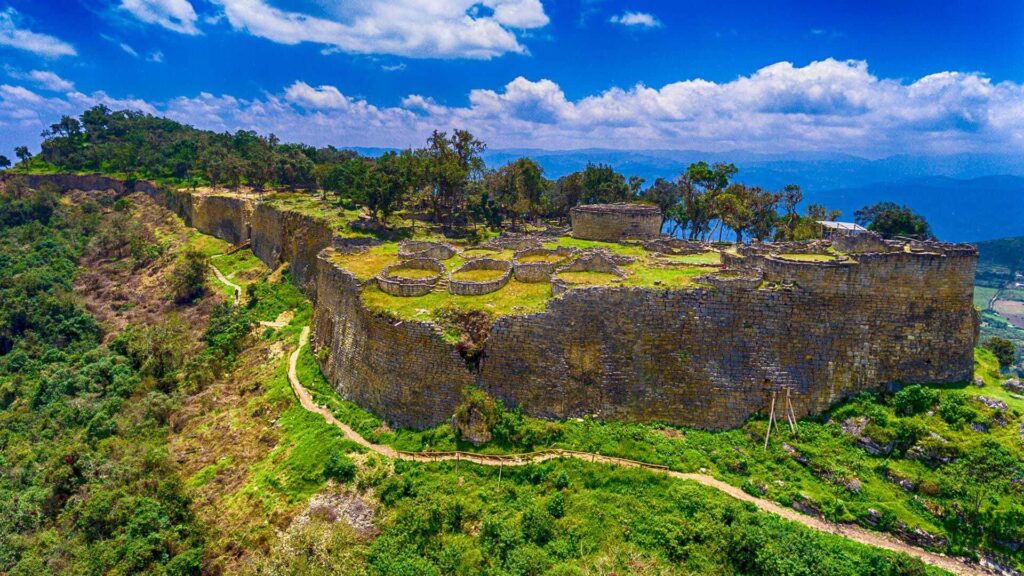
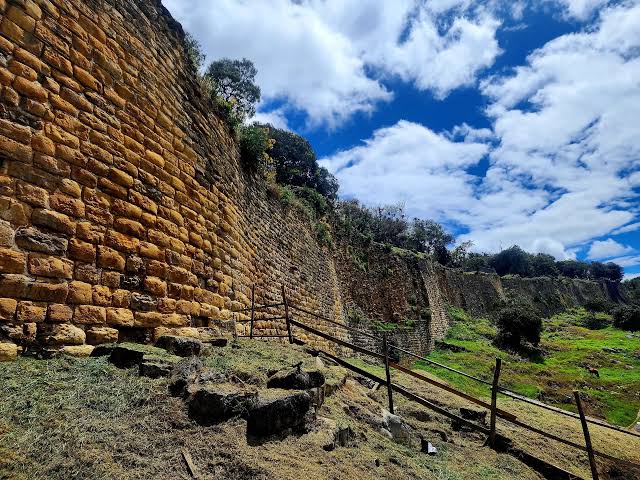
The site was occupied as early as the 5th century AD, although the large structures we see today were built mainly between the 9th and 11th centuries. The Chachapoya built a platform approximately 600 meters long, protected by walls reaching up to 20 meters in height.
Later, the Incas conquered the region in the late 15th century, but the fortress was already an established administrative, ceremonial, and defensive center. Following the Spanish conquest, the site was abandoned and became covered by vegetation until its “rediscovery” in the 19th century.
What to See in Kuélap
The complex is large, and some areas are still undergoing research and conservation work. The main highlights are:
- The perimeter walls: Some of the tallest in pre-Hispanic Peru. The South Wall route allows visitors to appreciate their monumental scale from below.
- The three funnel-shaped entrances: Narrow passageways designed for defense. Only a few people could enter at a time.
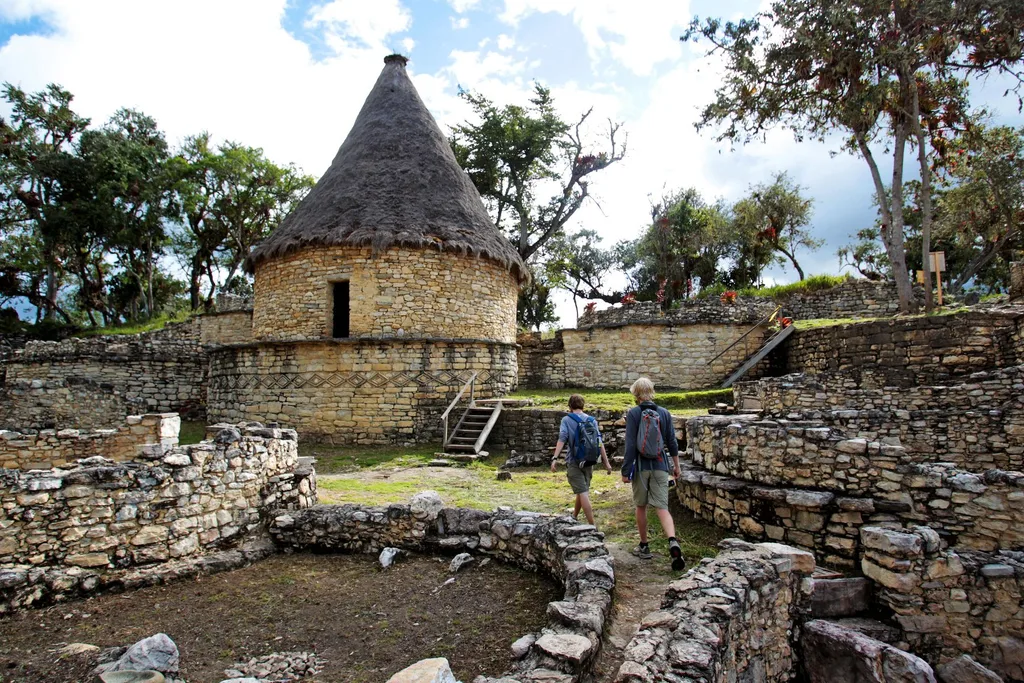
- The Main Temple and El Tintero: Distinctively shaped structures (El Tintero has the shape of an inverted cone) that are believed to have served ceremonial purposes.
- More than 400 circular structures: Remains of homes and buildings, many decorated with geometric friezes (zigzags and diamonds) typical of Chachapoya architecture.
- Upper Town and Lower Town: Different sections of the citadel featuring terraces and open spaces.
- Viewpoints: Views of the Utcubamba Valley and the cloud forest.
The recommended visit takes between 2 and 3 hours. Going with a guide is ideal for better understanding the significance of the structures, as signage is still limited.
How to Get to Kuélap (2027)
The usual starting point is the city of Chachapoyas.
- From Chachapoyas, take a shared van or tour to Nuevo Tingo (approximately 1 hour to 1 hour and 15 minutes).
- In Nuevo Tingo, board the Kuélap Cable Car system.
- The cable car ride takes about 20 minutes and arrives at La Malca.
- From La Malca, it is a 25-30 minute walk to the entrance of the citadel.
Approximate cable car hours: Tuesday through Sunday, from 8:00 a.m. to 4:30 p.m. (last return). The site is usually closed on Mondays for maintenance.
Cable car fare for 2027: Approximately S/26.50 round trip (cash). Payment by card or QR code may incur a small surcharge.
Practical Information: Tickets, Hours, and Prices for 2027
| Category | Details |
|---|---|
| Location | Tingo District, Luya Province, Amazonas Region |
| Elevation | Approximately 3,000 m |
| Site hours | Tuesday through Sunday (closed Mondays) |
| Recommended time | 2-3 hours inside the citadel |
| Kuélap + Llaqta Admission (2027) | Promotional general admission: S/20 (Peruvian nationals and CAN citizens). Foreign visitors: check the current rate (usually higher). Discounts are available for students and minors. |
| Complex Only (without Llaqta) | Free in 2027 |
| Ticket purchases | Mainly through tuboleto.cultura.pe |
| Cable cars | Paid separately in Nuevo Tingo |
Important: Always check the cable car schedule and service status on the day of your visit, especially during the rainy season (October-March), as temporary suspensions may occur due to weather or maintenance.
Best Time to Visit Kuélap
- Dry season (May to September): Less rain, better road conditions, and a greater chance of clear skies.
- Rainy season: The landscape is greener and there are fewer visitors, but there is a greater chance of fog and potential cable car service interruptions.
Useful Tips
- Arrive early to have more time and avoid the afternoon fog.
- Bring water, sunscreen, a hat, and a light jacket (temperatures drop and windy conditions are common).
- Wear comfortable shoes with good traction (some sections have uneven stone surfaces).
- Hire a local guide: it greatly improves your understanding of the site.
- Combine your visit with Gocta Waterfall and the Karajía Sarcophagi if you have several days in the area.
Kuélap vs. Machu Picchu: Main Differences
| Category | Kuélap | Machu Picchu |
|---|---|---|
| Culture | Chachapoya | Inca |
| Age | Mainly 9th-11th centuries | 15th century |
| Elevation | ~3,000 m | ~2,430 m |
| Visitors | Much less crowded | High daily visitor numbers |
| Access | Cable cars from Nuevo Tingo | Train or Inca Trail |
| Architectural style | Circular structures and very tall walls | Finely cut stonework and terraces |
Kuélap is not meant to replace Machu Picchu, but rather to complement it. It is ideal for travelers seeking a monumental site that is quieter and belongs to a different culture.
Why Visit Kuélap?
Because it is one of Peru’s great feats of pre-Hispanic engineering, it is surrounded by spectacular cloud forest scenery, and it still retains the sense of discovery that many travelers seek. In addition, the Amazonas region offers other nearby attractions that make the trip well worth it.


