
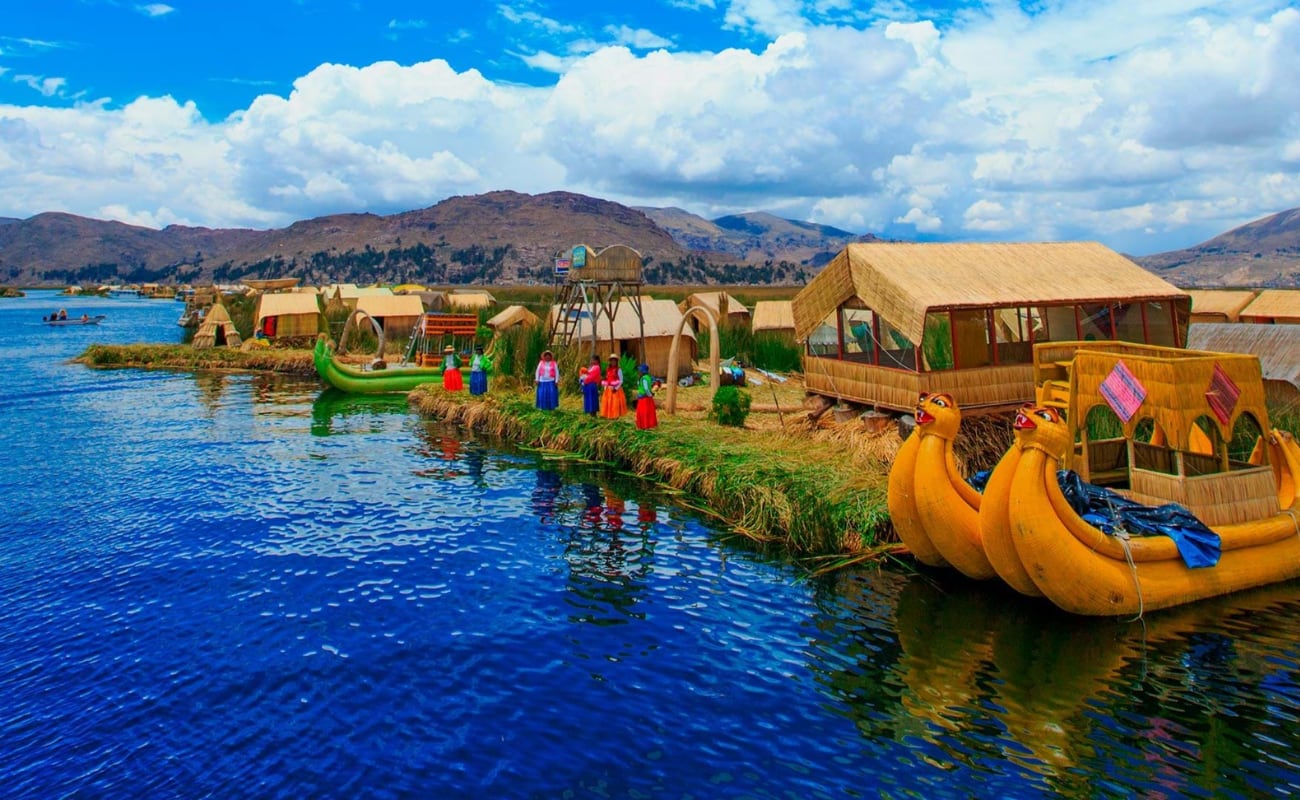
Lake Titicaca is the highest navigable lake in the world, located at approximately 12,500 feet (3,810 meters) above sea level. To explore it from Peru, Puno is the main starting point. Most travelers come to this city to discover its islands, choose the tour that best fits their schedule, and prepare properly for the high altitude.
This guide covers the lake, the main islands on the Peruvian side, the different types of tours, estimated prices, the best time to visit, and practical travel tips.
Where is Lake Titicaca?
Lake Titicaca is located in the Andean highlands. On the Peruvian side, it belongs to the Puno region, where some of the lake’s most visited islands and communities are located.
The lake covers approximately 3,200 to 3,250 square miles (8,300 to 8,400 km²). Its volume exceeds 213 cubic miles (890 km³), and its maximum depth is close to 920 feet (280 meters).
Puno is the main base for visiting Lake Titicaca in Peru. The nearest airport is located in Juliaca.
Why Lake Titicaca is important beyond its scenery
Lake Titicaca is sacred to both Aymara and Quechua communities. In Andean tradition, the sun is believed to have emerged from these waters, and the lake is closely connected to the origin of the Incas. Fishing, high-altitude farming, totora reed work, and textile production remain part of everyday life on its islands.
Tourism supports part of the local economy. It also brings large groups of visitors to the floating islands closest to Puno. Choosing the right tour can make a significant difference in your experience.
Useful facts before you travel
- Average elevation: approximately 12,500 feet (3,810 m) above sea level.
- Maximum length: approximately 105 to 118 miles (170 to 190 km), depending on the measurement.
- Maximum width: approximately 31 to 50 miles (50 to 80 km).
- Natural islands frequently visited from Puno: Taquile, Amantaní, Suasi, and Soto.
- Artificial islands: the floating Uros Islands, built with totora reeds.
The altitude affects the pace of your trip. It is an important factor to consider.
Lake Titicaca islands worth visiting
Uros Floating Islands
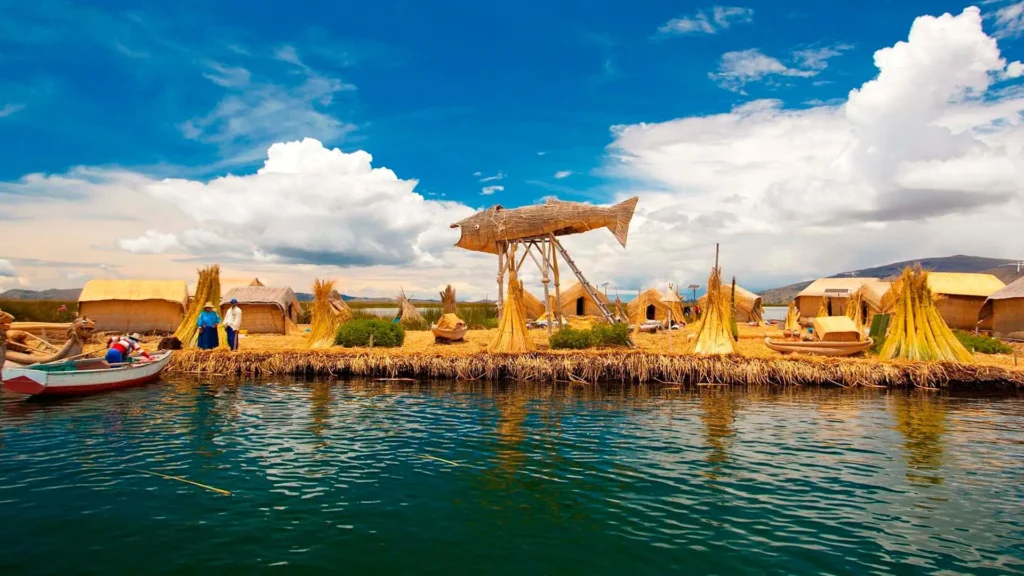
The Uros Islands are located in Puno Bay, approximately 3 to 5 miles (5 to 8 km) from the port. They are built with layers of totora reeds. The surface is soft and must be renewed regularly because the lower layers gradually decompose.
Families live on the islands and combine fishing, handicrafts, and tourism as part of their daily activities. There are dozens of islands, and those closest to the port usually receive more visitors. If you prefer a quieter experience, you can ask about islands located farther away or tours operated with smaller boats.
What to see: totora reed houses, traditional boats, the process used to build the islands, and aspects of daily life. An additional ride on a traditional reed boat usually has an extra cost and is not always included in the tour.
Tip: ask about prices before buying products or booking additional activities. It is also recommended to ask permission before entering private family spaces.
Taquile Island
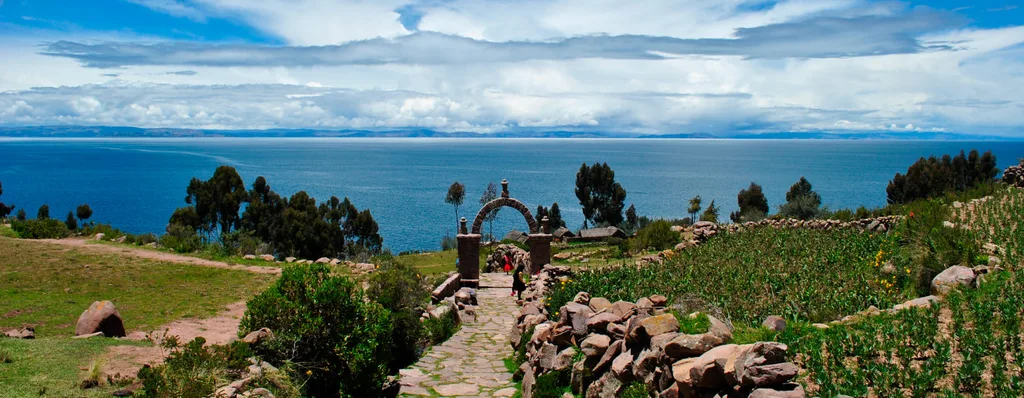
Taquile is a natural island located approximately 22 miles (35 km) from Puno. It has agricultural terraces and steep walking trails. The main square is located higher than the lake, so visitors should expect an uphill walk.
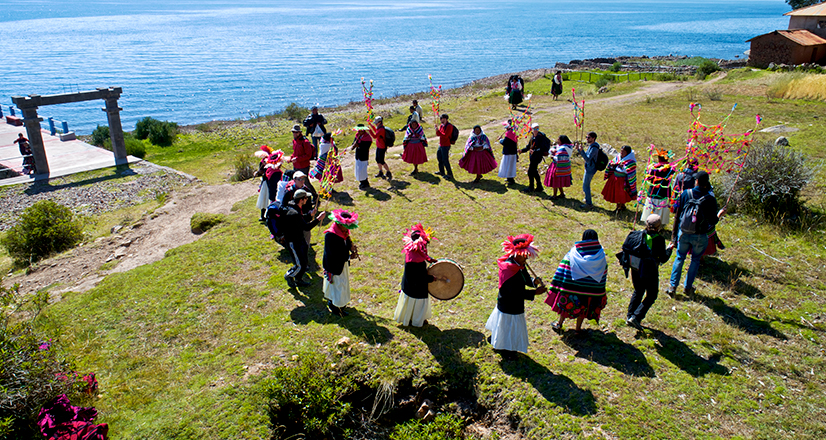
Taquile is famous for its textiles. UNESCO has recognized this textile tradition as intangible cultural heritage. Men actively participate in weaving, and certain garments, such as the traditional chullo hat, can communicate information about marital status or responsibilities within the community.
What to see: traditional weaving, viewpoints, pre-Inca and Inca remains, and the opportunity to enjoy a local lunch. The most common one-day tour combines a morning visit to the Uros Islands with Taquile later in the day.
The physical effort is moderate. Travelers with knee problems or difficulties related to altitude should walk slowly and take their time.
Amantaní Island
Amantaní is one of the largest natural islands on the Peruvian side of Lake Titicaca and is located farther from Puno than Taquile. For this reason, one of the best ways to experience it is on a two-day, one-night tour with an overnight stay in a local family home.
The island has two ceremonial hills, Pachatata and Pachamama, located at approximately 13,450 to 13,615 feet (4,100 to 4,150 meters) above sea level. The sunset hike is one of the highlights of the visit. Accommodations are simple, and facilities are generally basic. Local meals often include potatoes, quinoa, oca, and trout.
Amantaní is a good choice for travelers who want to spend a night on Lake Titicaca and experience local community life more closely. Keep in mind that accommodations are simple and should not be expected to offer the same facilities as a conventional hotel.
Lake Titicaca tours: how to choose
Tours from Puno
Uros Islands only (2 to 3.5 hours)
Tours depart in the morning or afternoon. This is a short option for travelers with limited time in Puno who want a first introduction to Lake Titicaca.
Full-day Uros and Taquile tour (7 to 8 hours)
This is one of the most popular excursions. Tours usually depart in the morning and can be operated by regular boat or speedboat. A speedboat reduces travel time between the islands. Services commonly include transportation to the port, entrance fees, a guide, and lunch on Taquile, although you should confirm what is included before booking.
Two days and one night: Uros, Amantaní, and Taquile
On the first day, you visit the Uros Islands before continuing to Amantaní, where you spend the night. On the second day, you visit Taquile before returning to Puno. Check in advance which meals and services are included.
Kayaking and island tours
Some experiences allow you to kayak through areas near the totora reeds before continuing the trip by boat. These activities require more physical effort, so it is best to do them after you have had time to acclimate to the altitude.
Group or private tour
Group tours are generally more affordable and follow established schedules. At the Uros Islands, you will usually share the experience with other groups.
Private tours offer greater flexibility with departure times and, depending on the itinerary, may provide a quieter and more personalized visit.
Before booking, ask about the type of boat, departure time, actual tour duration, number of islands visited, availability of life jackets, guide language, and included meals.
Estimated prices
Prices can vary depending on the season, type of boat, and whether the service is group or private. As a general reference:
- Uros Islands only: lower-priced short tour.
- Uros and Taquile in one day: mid-range price.
- Uros, Amantaní, and Taquile with an overnight stay: mid-range to higher price.
- Private homestay or small-group experiences: higher price.
Carry cash in Peruvian soles. Credit or debit card payments may be limited or unavailable on the islands. It is also a good idea to have extra cash for handicrafts, restrooms, optional activities, and tips.
Best time to visit Lake Titicaca
May to October. This is the dry season, with more sunny days, less rainfall, and generally better conditions for excursions. Nights can be very cold, especially in June, July, and August.
September to November. This can be a good period for travelers looking for a balance between pleasant weather and fewer visitors.
December to March. This is the rainy season, and the landscape becomes greener. Bringing a waterproof jacket is recommended. In February, Puno receives many visitors for the Virgen de la Candelaria festival, and hotel availability may be more limited.
Lake Titicaca can be visited year-round. However, in addition to the weather, you should always take the altitude into account.
Practical travel tips
How to manage the altitude
Puno is located at approximately 12,500 feet (3,800 meters) above sea level, and some areas of Amantaní are even higher. If you arrive directly from a lower-altitude destination, avoid overly strenuous activities during your first few hours. Drink plenty of water, eat light meals, and limit alcohol while your body adjusts.
Headaches, shortness of breath, and nausea can occur because of the altitude. If symptoms become severe or worsen, seek medical attention.
What to pack
- Sunscreen, sunglasses, and a hat. Sun exposure is intense because of the altitude and the reflection from the water.
- A fleece and windbreaker. It can feel cold on the boat even on sunny days.
- Shoes with good traction. Taquile and Amantaní have uphill walking trails.
- A reusable water bottle.
- Cash in Peruvian soles.
- Your personal medications. Supplies may be limited on the islands.
How to behave on the islands
Ask for permission before photographing people, especially children. Paying an entrance fee does not mean you can enter private family spaces. If you choose to buy handicrafts, do so because you value the work and the product. On Taquile, many textile pieces require hours of careful work.
Food and water
Trout, quinoa soup, potatoes, and muña are common in many local meals. It is recommended to drink bottled or properly treated water, especially if you are spending the night in a family homestay.
On the boat
Wear a life jacket when required and follow the crew’s instructions. Speedboats save time, although the ride can feel bumpier. If you are prone to motion sickness, try to sit in a more stable area of the boat and keep your eyes on the horizon.
How to get to Lake Titicaca
Getting to Puno. You can fly to Juliaca and continue by road for approximately one hour to Puno. Buses are also available from Cusco and Arequipa. From Cusco, there are also daytime tourist buses that stop at attractions along the route, such as Raqchi and Pucará.
If you are traveling from Cusco, you can add Puno and Lake Titicaca as the next destination on your journey through southern Peru. If you have enough time, spending one night in Puno before taking a longer tour can help you adjust to the altitude.
Frequently asked questions
How many days do I need?
One day is enough to visit Uros and Taquile. With two days, you can include Amantaní and spend a night in a local community. If you have three days, you can explore Puno at a more relaxed pace or combine Lake Titicaca with other attractions in the region.
Can I visit Lake Titicaca independently?
Yes. Different boat services are available at the port of Puno. However, booking a tour makes it easier to coordinate schedules, entrance fees, and guided visits.
Can altitude sickness affect me during the tour?
Yes, especially during walks on Taquile or in the higher areas of Amantaní. The trails are not technically difficult, but the lower oxygen levels can make physical activity feel more demanding.
Are the Uros Islands authentic?
Families live on the Uros Islands and maintain traditional activities while also welcoming visitors as part of their local economy. Some islands receive more tourists than others, so the experience can vary depending on the itinerary you choose.
Is Lake Titicaca suitable for children or older travelers?
Visiting the Uros Islands is relatively easy. Taquile and Amantaní require more walking and physical effort because of the altitude. If you spend the night in a family home, keep in mind that the facilities are usually simpler than those of a hotel.
How to plan your Lake Titicaca itinerary
If you only have one day in Puno, you can take a full-day tour to Uros and Taquile. Leave early and bring warm clothing for the boat ride.
If you have two days, you can include an overnight stay on Amantaní. This allows you to experience Lake Titicaca at a slower pace and learn more about daily life in the local communities.
If you have three days, you can dedicate two days to Uros, Amantaní, and Taquile and use the remaining time to explore other attractions in Puno and the surrounding area.
If you want to experience Puno and Lake Titicaca as part of a complete trip through Peru, discover our 12-day Peru package with Incredible Peru Tours and plan your journey with us.


