
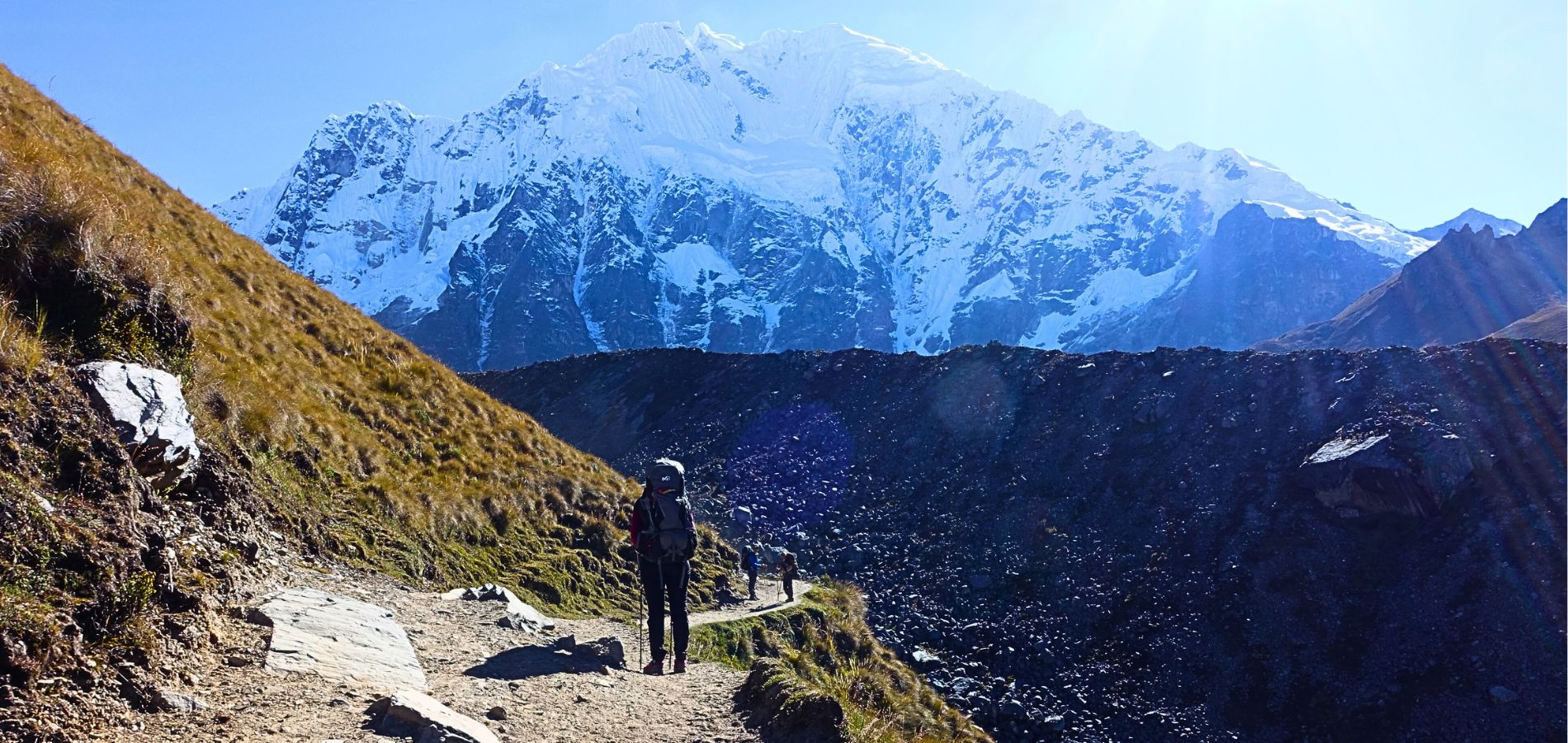
The Salkantay Trek is well documented, but the available information usually focuses on what the route is rather than what most often goes wrong. The mistakes that ruin the experience of this trek are surprisingly similar season after season, and most share one characteristic: they could have been avoided with the right information before leaving Cusco. This guide describes them precisely, explains why they happen, and gives concrete solutions to prevent them.
Error 1: starting without prior acclimatization in Cusco
The Salkantay Trek reaches its highest point at the Salkantay Pass at 4,630 meters, exceeding the Dead Woman’s Pass of the Inca Trail by more than 400 meters. That detail makes prior acclimatization not just a convenient recommendation but a real requirement for the second day to be enjoyable rather than a test of endurance.
The most common mistake is arriving in Cusco the night before the trek begins and leaving the next day directly to Soraypampa. At 3,900 meters, the body already has a significant adaptation deficit. Adding the ascent to the pass the next day with that deficit unresolved produces the worst second day the Salkantay can offer: disproportionate fatigue, headache, nausea, and in some cases symptoms of altitude sickness that force a drastic reduction in pace or abandonment of the route.
The solution: Two full nights in Cusco before the first day of the Salkantay as an absolute minimum. Three nights for people over 55, with high blood pressure, or with a prior history of altitude sensitivity. Use those days for moderate activities such as short walks in the Sacred Valley or Cusco’s historic center, good hydration, and no alcohol during the first 48 hours.
Error 2: ignoring the first night in Soraypampa and sub-zero cold
Soraypampa at 3,900 meters of altitude can register sub-zero temperatures at night at any time of the year. It is the coldest night of the trek and the one that depends most on the quality of the equipment to guarantee the rest that the second day requires. However, it is common for some participants to arrive at base camp with summer sleeping bags or comfort ratings of 10 or 15 degrees, completely insufficient for those conditions.
The result is a first night of insomnia or very interrupted sleep that is paid for directly during the ascent to the Salkantay Pass just hours later. A body that has not rested well at 3,900 meters faces the highest point of the trek with an energy deficit that has no solution on the trail.
The solution: Verify before booking that the agency provides sleeping bags rated for comfort temperatures of 0 degrees or lower. Also bring a wool hat and specific socks for sleeping: the body loses a lot of heat through the head and feet at night, and those two items significantly improve thermal perception inside the sleeping bag.
Error 3: not bringing trekking poles or putting them away on the second day
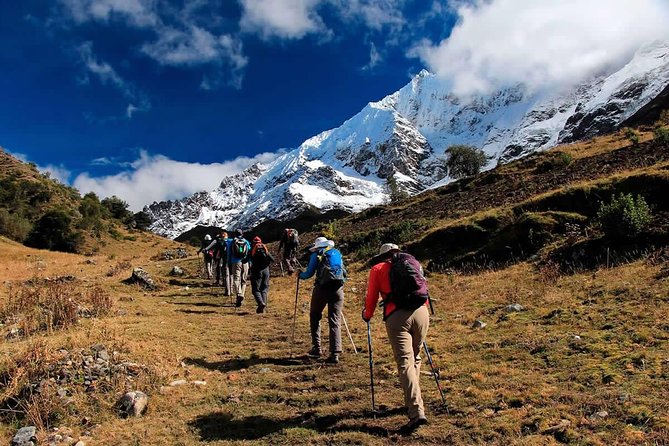
The second day of the Salkantay Trek has an elevation profile that many participants mentally simplify to “go up to the pass and go down.” What they do not clearly visualize is that the descent from the Salkantay Pass to the Chaullay camp involves approximately 1,500 meters of negative elevation over several hours of continuous descent on variable terrain. That accumulated load on the knees and quadriceps is exactly what trekking poles are designed to reduce.
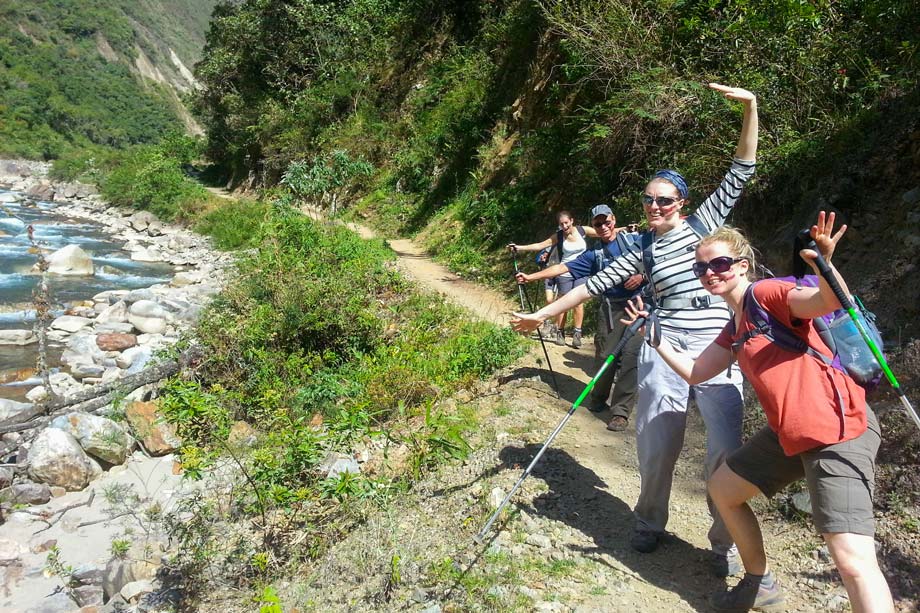
The most frequent mistake is using poles on the ascent to the pass, where the slope makes their function obvious, and putting them away upon reaching the summit because “now it’s just downhill.” The descent is where they are most needed, not less. Participants who store them at that point usually arrive at the second-day camp with a level of joint fatigue in the knees that directly affects the quality of the third day.
The solution: Keep poles active on all prolonged downhill sections of the trek, without exception. A short stride with the heel firmly placed before the forefoot on each step, combined with pole support, measurably reduces joint impact and is noticeable the next day.
Error 4: not bringing swimwear for the Cocalmayo hot springs
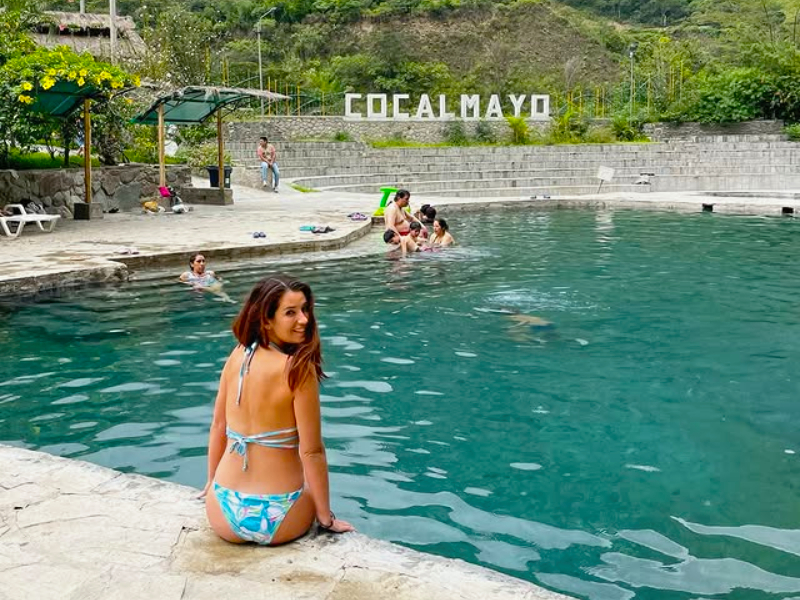
The Cocalmayo hot springs at the end of the third day are one of the most valued moments of the Salkantay Trek: the contrast between the accumulated effort of the previous days and the natural hot water at nearly thirty degrees by the river creates a recovery experience that many participants describe as unexpectedly intense. And yet, every season there are people who arrive at Cocalmayo without swimwear because no one reminded them clearly enough during preparation.
It is not a mistake that ruins the trek in a strict sense, but it is one that eliminates one of the best moments of the experience in a completely avoidable way. Getting into the hot springs with sports clothing works but is not the same, and some people simply do not enter because they do not have appropriate clothing.
The solution: Include swimwear in the packing list from the beginning of preparation, with the same priority as boots or a rain jacket. It takes up almost no space in the backpack and has the best enjoyment-to-weight ratio of all the gear on the trek.
Error 5: booking the cheapest package without verifying what it includes
The Salkantay Trek does not have the regulated quotas of the Inca Trail or the cost of official permits, which opens the door to a range of packages with greater variation in price and quality than any other route in the region. There are Salkantay packages offered at prices that are only possible if something in the service is cut: underpaid porters, sleeping bags inadequate for the real temperatures of the trek, guides without official certification or specific experience on the route, lower quality food than promised, or lack of accident insurance for support staff.
The problem is that these cuts are not visible when comparing prices from home. They are discovered at the Soraypampa camp when the sleeping bag is not sufficient, on the second day when the guide does not know the trail well, or at the end of the trek when the porter team is paid less than they should be for the work performed.
The solution: Before confirming any Salkantay package, ask the specific questions that a serious operator can answer clearly: sleeping bag temperature rating, number and conditions of porters, guide certification, accident insurance for field staff, and cancellation policy for extreme weather conditions. An unusually low price without justification is a warning sign, not an opportunity.
Error 6: not downloading offline content on your phone before leaving
The Salkantay Trek has virtually no phone signal coverage during the first three days of the route. Those who arrive at Soraypampa expecting access to Spotify, Netflix, or online Google Maps discover that those services are unavailable and that waiting time at camp, rest breaks on the trail, or hours on the train back from Aguas Calientes pass without the entertainment the phone usually provides.
It is not a survival issue or something that ruins the trek, but it is something that can be solved in ten minutes before leaving Cusco and improves comfort during the quieter moments of the route.
The solution: Download offline maps of the region on Google Maps or Maps.me, music or podcasts on your preferred player, and any entertainment content for the return journey. Activate airplane mode from the start of the trek to conserve battery, since without signal it drains constantly searching for a network. Bring a power bank with enough capacity to charge your phone two or three times.
Error 7: not physically preparing for long descents before the trip
It is common for physical preparation for the Salkantay Trek to focus on climbs: stair workouts, hikes with elevation gain, cardiovascular training. What few people specifically include is long descents, which are what stress the knees and quadriceps the most on the second and third days of the trek.
Descending 1,500 meters on uneven terrain requires sustained eccentric work from the quadriceps that cardio and uphill training do not specifically train. Those who arrive at Salkantay without having worked on this aspect discover on the third day that their legs have less than expected right when they need them most.
The solution: Include long descents with load in your pre-trek training: descend stairs for 20 to 30 minutes, go downhill with a backpack, or do hikes with sustained negative elevation. This specific work does not require much time but prepares the muscles for a type of effort that Salkantay demands significantly and that has no substitute in any other exercise.
Error 8: not confirming which Machu Picchu ticket is included in the package
The Machu Picchu entry ticket has several circuits and entry times. The one included in the Salkantay Trek package must match the actual arrival time at the archaeological site on the fifth day, which usually ranges between 8:00 and 11:00 in the morning depending on the itinerary and the operator. If the ticket included in the package corresponds to a different entry time than the group’s actual arrival, you will need to buy an additional ticket or lose part of the visit waiting at the entrance.
This is a coordination error that occurs with some frequency in lower-priced packages because the Machu Picchu ticket is not carefully verified when assembling the package. The participant discovers it when already in Aguas Calientes and cannot easily fix it.
The solution: Confirm with the agency before booking which circuit and entry time to Machu Picchu are included, and verify that the schedule is compatible with the actual itinerary of the fifth day. If there is a mismatch, resolve it before paying the deposit, not in Aguas Calientes.
Error 9: not informing family or contacts about being offline during the trek
Four or five days without phone signal in a remote mountain area can create real concern for family or contacts who do not know that the trek involves that level of disconnection. The result is unanswered calls that cause alarm, messages that do not arrive, and in some cases attempts to find information on how to contact the agency in case of emergency.
It is a mistake that does not directly affect the person doing the trek but does affect those waiting for news, and it is completely avoided with a two-minute communication before departure.
The solution: Inform relevant people before leaving Cusco that the trek involves four to five days without phone signal, provide the approximate return date and time to Aguas Calientes where connection is restored, and leave the agency’s name and phone number as a reference contact in case urgent information is needed.
Error 10: reaching the fifth day without energy to enjoy Machu Picchu
This is the mistake most regretted at the end of the trek and the one that can be most prevented with small decisions throughout the previous days. Many Salkantay Trek participants reach the fifth day with their bodies so exhausted from the previous four that the visit to Machu Picchu becomes a mechanical walk with few clear memories. The archaeological site deserves real attention, and that attention requires having some energy available.
The decisions that preserve energy for the fifth day all come from earlier days: not going faster than necessary on the first day, resting well on the second camp night, staying consistently hydrated throughout the trek, and not underestimating the recovery that the Cocalmayo hot springs provide at the end of the third day.
The solution: Manage your energy during the trek as a finite resource that needs to reach the fifth day with reserves. The Salkantay Trek is not a race: it is a route where the correct pace is the one that allows you to reach Machu Picchu with the ability to pay attention to one of the most extraordinary places on the planet, not simply to be physically present in it.
Do you want to do the Salkantay Trek with the right preparation to avoid these mistakes from the start? At Incredible Peru Tours we provide a complete briefing before each departure that covers the points in this guide and many more, with specific information tailored to each group’s profile.


