
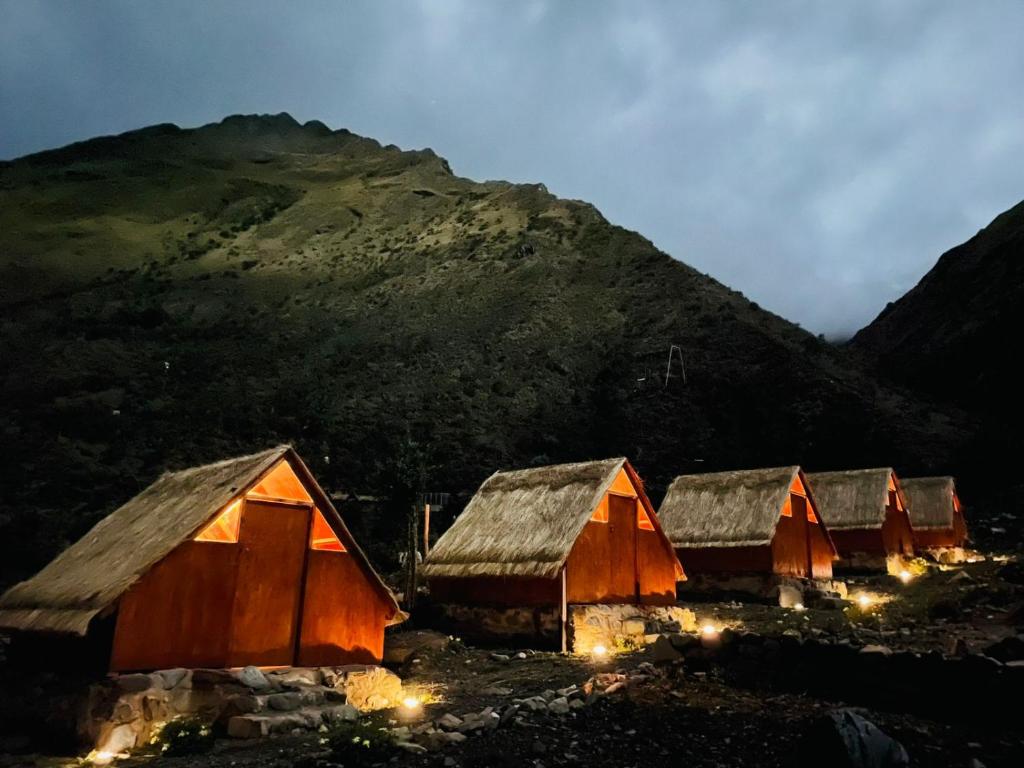
The term ecolodge appears increasingly often in the tourism offerings of the Salkantay Trek, sometimes as an accurate description of a type of accommodation with real environmental commitments and sometimes as a marketing label applied to any construction in a natural setting without implying any concrete practices. Knowing how to distinguish between these two uses of the term is important before choosing, because there is a fundamental difference between an accommodation that is simply located in the mountains and one that has built its way of operating around respect for the surrounding environment.
This guide explains what an ecolodge is in the strict sense of the term as applied to Salkantay, what real characteristics define it, what it offers that conventional camping or luxury glamping cannot provide in the same way, and why for certain traveler profiles it is the most coherent option with what they are looking for in the experience.
What truly defines an ecolodge: beyond being located in the mountains
An ecolodge is not simply accommodation in a natural environment. The concept, internationally recognized by the International Ecotourism Society, implies a set of specific practices ranging from construction to daily operation, all aimed at minimizing impact on the ecosystem where it is located while maximizing benefits for local communities.
In the context of the Salkantay Trek, a genuine ecolodge meets several of the following criteria. In terms of construction, it uses local materials and low-impact techniques that minimize alteration of the land: stone, certified local wood, adobe, or traditional Andean building techniques. The design respects the existing topography instead of modifying it and does not cause deforestation or alteration of water sources in the immediate environment.
In terms of operation, it manages water through rainwater collection systems or natural sources and treats wastewater before returning it to the environment. Energy comes from renewable sources, generally solar panels in the high-mountain areas of Salkantay where solar radiation is high even in months with less sunlight. Solid waste is managed through separation and composting, and no non-biodegradable waste remains on the ground or in the surrounding environment.
In terms of social impact, an ecolodge that operates with integrity hires staff from local communities, purchases food from regional producers, and allocates part of its income to specific community projects: improving educational infrastructure, supporting alpaca farming, or funding conservation initiatives for the puna ecosystems.
Ecolodges on the Salkantay: where they are and what they offer
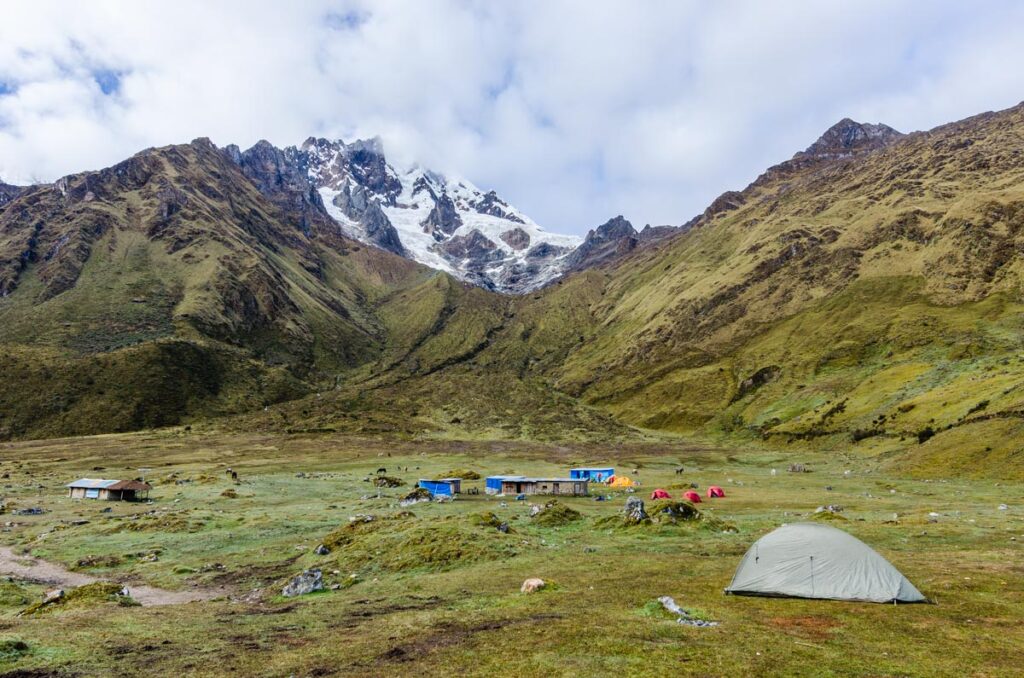
Ecolodges along the Salkantay Trek are mainly located at points of highest ecological value along the route, which partly coincide with the usual campsites but follow a placement logic that also considers minimizing visual and physical impact on the environment. They are not designed to maximize guest capacity, but to maintain a level of occupancy that the local ecosystem can absorb without degradation.
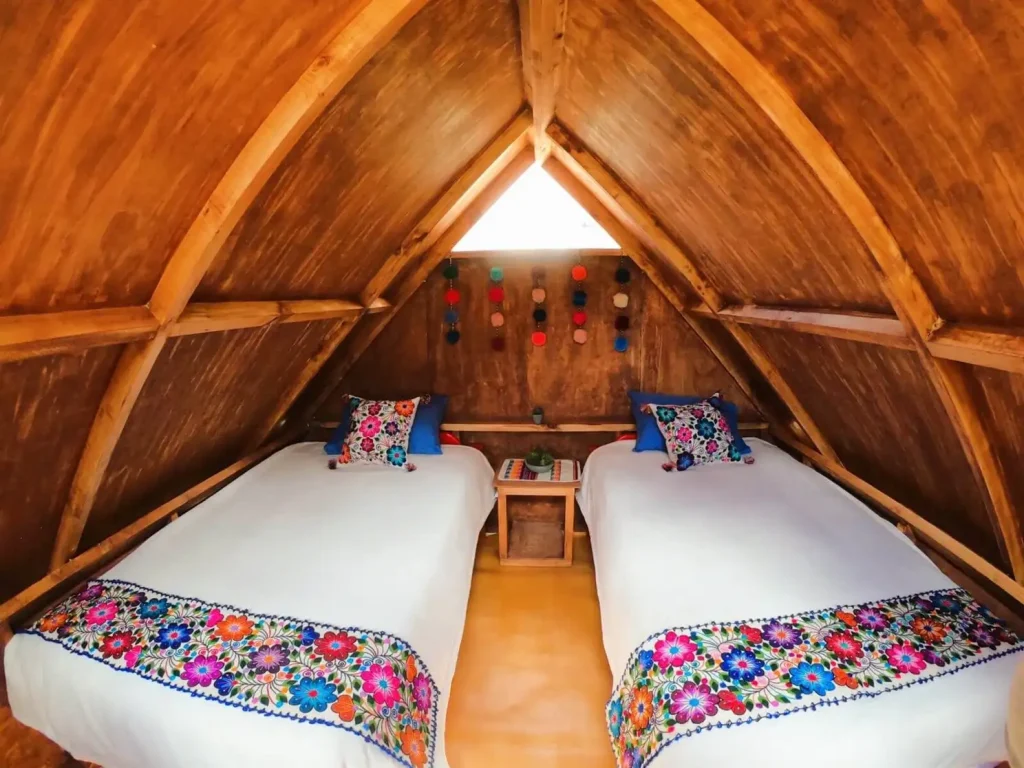
In the Soraypampa area and the high valleys of the route, some ecolodges have built their facilities using local stone and certified forest wood, with heating systems powered by biomass from pruning waste instead of new firewood or fossil fuels. The rooms are cozy and functional without aiming for the level of finish found in luxury glamping: quality beds, warm bedding, bathrooms with hot water generated by solar collectors, and windows oriented toward the snow-capped mountain or the valley depending on the building’s location.
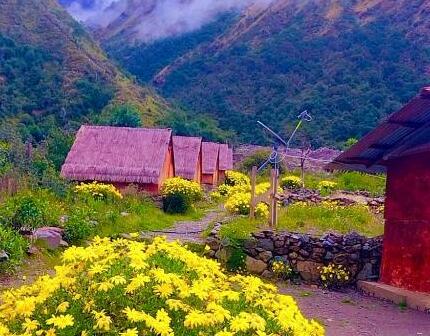
In the intermediate valleys of the route, between 2,500 and 3,000 meters, some ecolodges have integrated their architecture along the edges of coffee plantations or within cloud forest margins without removing existing vegetation. In some cases, the structure is literally built among the trees, with wooden platforms that elevate the rooms off the ground to avoid disturbing the forest’s root systems. This architectural integration creates spaces that feel part of the landscape rather than additions to it.
Gastronomy in ecolodges: local cuisine with purpose
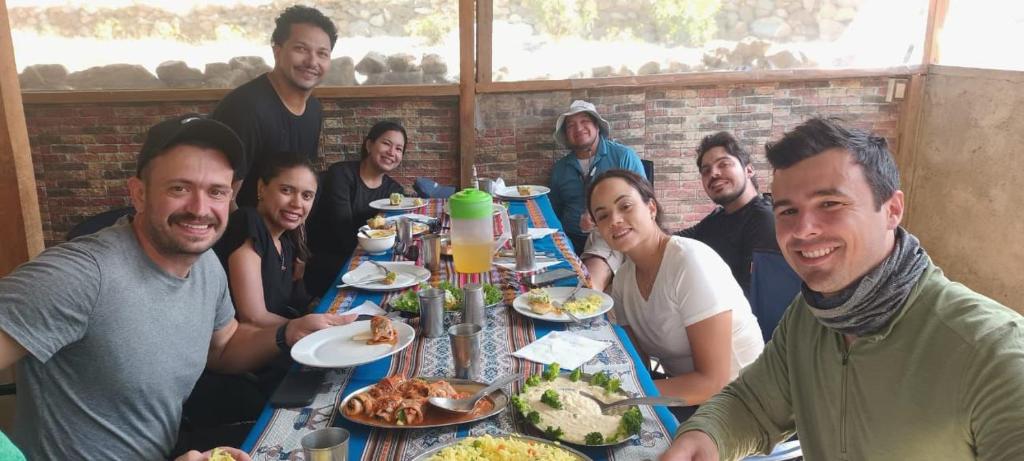
The gastronomic offering of a genuine ecolodge on the Salkantay reflects the same principle that guides the rest of its operation: using what the local environment produces sustainably. This translates into menus built around regional products: quinoa from the high valleys, native potatoes from Andean communities, trout from local rivers, wild aromatic plants responsibly gathered, eggs from nearby community farms, and seasonal fruits from the lower valleys of the route.
The cuisine in these establishments does not attempt to imitate the sophistication of an urban restaurant. It aims to do the opposite: to show that local Andean gastronomy has a richness and diversity that conventional tourism often overlooks. A quinoa soup with wild herbs prepared with ingredients collected that same morning around the ecolodge has a flavor and a connection to the place that neither standard camp cooking nor signature glamping menus can replicate exactly.
Some ecolodges on the Salkantay include, as part of the guest experience, participation in the preparation of certain meals: grinding grains with traditional tools, learning how to prepare local chicha de jora, or taking part in harvesting products from the lodge’s own garden. These optional activities transform the stop at the accommodation from a logistical pause into an experience with its own cultural content.
Impact on local communities: the difference that matters most
The most important difference between a genuine ecolodge and any other type of accommodation on the Salkantay route is not the architecture or the menu: it is the relationship with the communities that live in that territory. Ecolodges that operate under real ecotourism principles are also those that generate the most direct and lasting economic impact on the families and Andean communities in the area.
When an ecolodge hires staff from local communities, it does more than create jobs: it creates the kind of employment that allows people to remain in their territory rather than being pushed toward cities. A local community guide working in an ecolodge on the Salkantay has stable income, environmental knowledge accumulated by their family over generations, and a position within the tourism circuit that does not depend on urban intermediaries.
When an ecolodge buys food from local producers, it directly supports subsistence Andean agriculture in an area where there is constant pressure to abandon traditional farming and shift to more immediately profitable activities. Every sol paid to a quinoa producer or an alpaca farmer in the Salkantay region is a decision that has consequences for the conservation of the landscape, its species, and the cultural traditions it holds.
Ecolodge vs glamping vs camping: the differences that matter
The three accommodation options available on the Salkantay Trek create different experiences and have different impacts on the environment. Understanding these differences helps you choose in a way that aligns with what you want from the journey and what you are willing to pay, both in money and in comfort.
Conventional camping has the lowest environmental impact of the three in terms of permanent infrastructure, because it does not require construction. However, without proper waste and greywater management practices by the operator, repeated camping in the same locations can lead to cumulative ecosystem degradation that is difficult to reverse. Camping with an agency that properly manages waste and respects the carrying capacity of the environment is a low-impact option. Camping with an agency that does not manage these aspects is not, regardless of the temporary nature of the infrastructure.
Luxury glamping has a higher permanent construction impact than camping, but it can offset that impact with proper environmental management practices if the operator has incorporated those criteria from the design stage. The problem is that many glamping complexes on the Salkantay have prioritized visual experience and guest comfort over sustainability criteria, resulting in high-impact infrastructure in an ecologically fragile environment. Not all glamping options on the Salkantay are the same in this regard, but asking about environmental practices is a valid and reasonable step before booking any option in this category.

A genuine ecolodge has permanent construction like glamping, but its design and operation are focused from the beginning on minimizing that impact and generating benefits for both the ecosystem and the community. It is the option that produces the greatest net positive impact on the environment when properly operated, and also the most coherent choice for travelers who value this aspect of the journey as much as the landscape or comfort.
How to identify a genuine ecolodge before booking
The growing use of the term ecolodge in the Salkantay tourism market makes it necessary to know what to ask in order to distinguish accommodations with real commitments from those that use the label as a marketing tool without the substance to support it.
These are the questions that a genuine ecolodge can answer in detail:
- What percentage of staff comes from local communities? A serious ecolodge has a precise answer, not a generalization.
- Where do the food ingredients come from? Naming producers or supplying communities indicates that the local supply chain is real.
- How are solid waste and wastewater managed? Composting systems, waste separation, and greywater treatment should be described in concrete terms.
- What energy source does the establishment use? Solar panels, local biomass, or micro-hydropower indicate clear criteria. “Conventional grid electricity” is neutral information but not ecotourism.
- Does the establishment have any ecotourism certification? In Peru, the Ministry of Foreign Trade and Tourism (MINCETUR) offers certification programs for ecotourism establishments. It is not the only indicator of quality, but it adds credibility to the operator’s claims.
Who ecolodges are best suited for
Ecolodges on the Salkantay make the most sense for travelers who understand tourism as a way of relating to a territory, not just consuming scenery. For those who value that their money has a measurable positive impact on the local communities and ecosystems they visit. For families or groups who want the trekking experience to include an educational and cultural dimension that conventional camping and luxury glamping do not prioritize in the same way.
They are also ideal for travelers seeking reasonable comfort without the level of finishes of glamping, and who prefer a more austere and authentic environment in terms of integration with nature. A well-operated ecolodge provides everything needed to rest well and eat well in the mountains, without the luxury extras that increase the price of glamping but without the discomfort of camping on the coldest nights of the trek.
Do you want to do the Salkantay Trek staying in an ecolodge that combines comfort, environmental responsibility, and positive impact on local communities? At Incredible Peru Tours, we work with establishments that have demonstrated that commitment through concrete actions, not just labels.


