
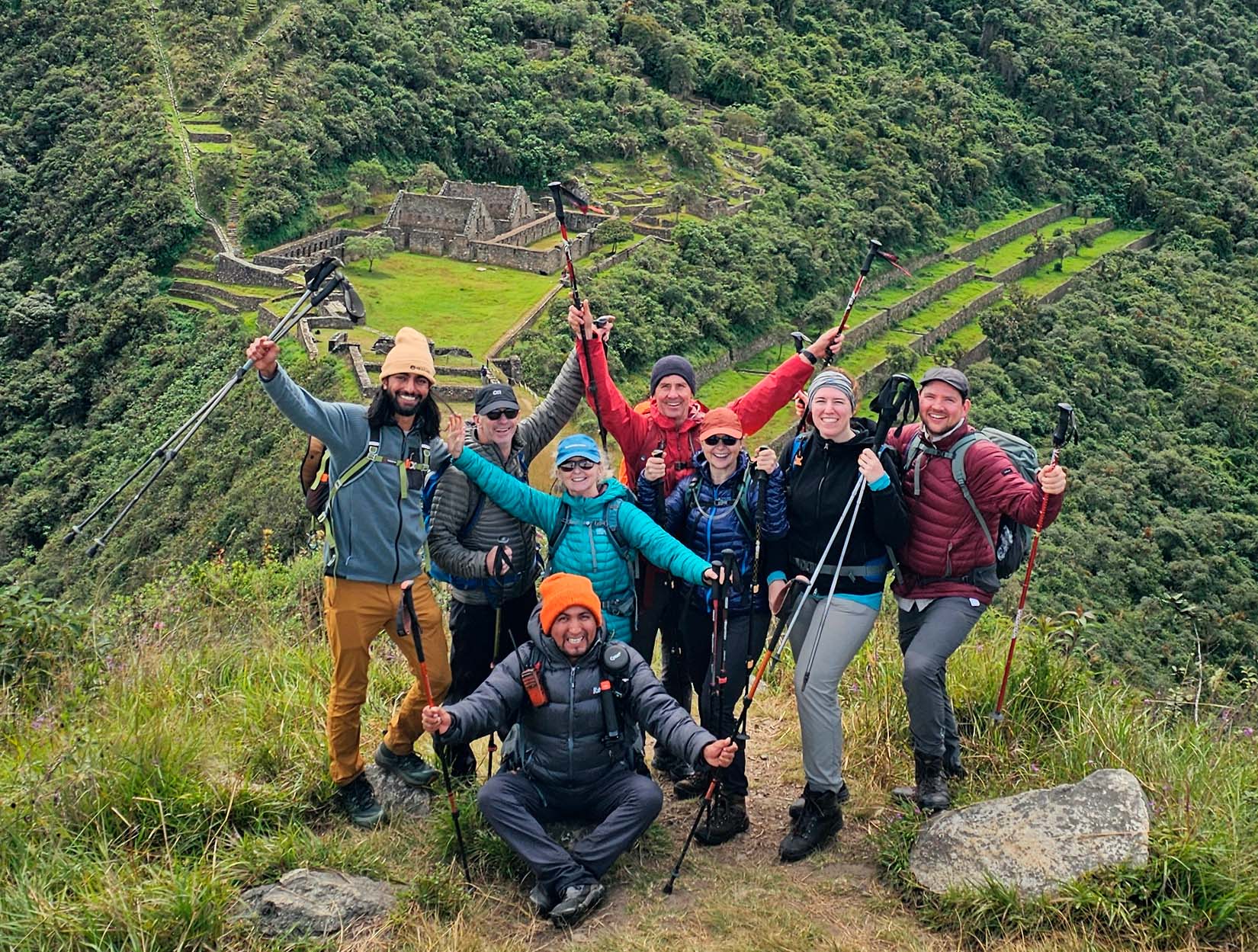
Visiting Choquequirao requires more than simply being willing to walk. The route involves several hours of trekking, long descents, and demanding climbs, so arriving with proper physical preparation can make a significant difference throughout the journey.
You do not need to be a professional athlete or train every day. However, it is a good idea to get your body used to walking for several hours, strengthen your legs, and improve your cardiovascular endurance before the trip.
In this guide, we explain how to prepare physically for Choquequirao in a practical and progressive way.
How demanding is the Choquequirao trek?
The trek to Choquequirao is physically demanding mainly because of the significant elevation changes along the route.
On the traditional route through Cachora, the trail descends toward the Apurímac River canyon and then climbs again toward the archaeological complex. This means your legs are constantly working during both the descents and the climbs.
In addition, the physical effort does not end after a single climb. Depending on the itinerary you choose, you may need to hike for several consecutive days.
For this reason, your preparation should focus on four main areas:
- Endurance to walk for several hours;
- Strength in your legs and glutes;
- Stability in your knees and ankles;
- The ability to recover and hike again the following day.
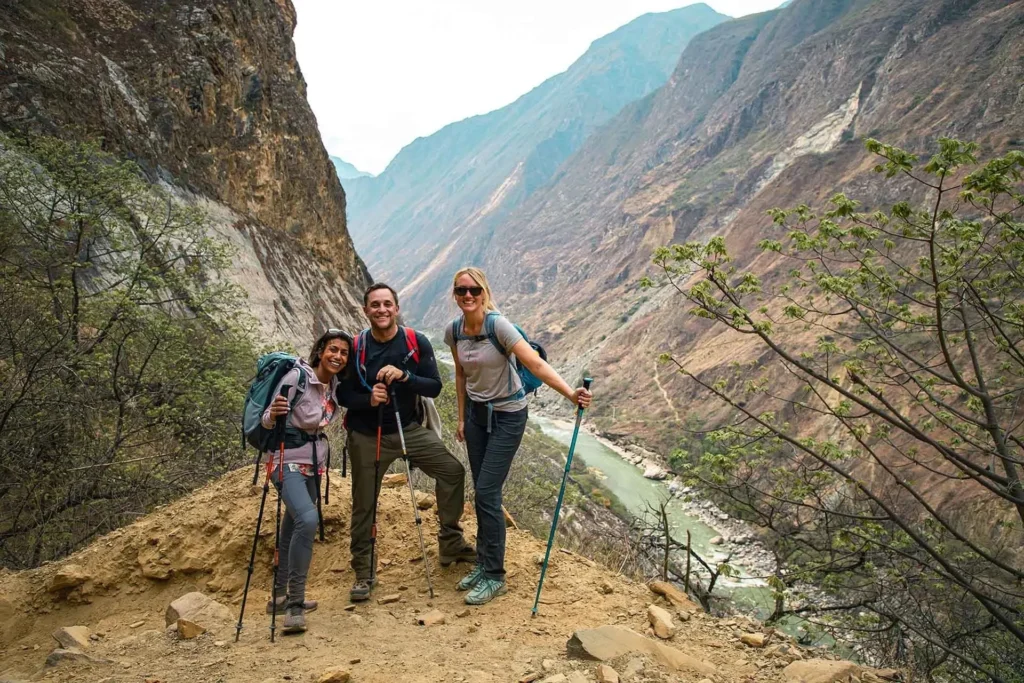
How far in advance should you start preparing?
It is best to start preparing several weeks before the trek, especially if you are currently not very physically active.
The goal is not to push yourself to the limit. Instead, gradually increase the amount of time you can walk without becoming completely exhausted.
If you already hike, run, ride a bike, or regularly practice another sport, you probably have a good fitness base. Even so, it is helpful to include hikes with hills because the effort is different from walking only on flat terrain.
If you currently have a more sedentary lifestyle, start at a comfortable pace and gradually increase the duration and difficulty of your workouts.
1. Walk more often
The best way to prepare your body for walking is, quite simply, to walk.
Start with routes you can comfortably complete, then gradually increase the duration.
For example, during the first few weeks, you can take walks lasting between 30 and 60 minutes. As you progress, add some longer hikes.
You do not need to cover distances similar to the Choquequirao trek during every training session. The important thing is to get your legs and feet used to staying active for increasingly longer periods.
Train on routes with elevation changes
Walking only on flat streets can help improve endurance, but it does not fully prepare your legs for steep slopes.
Whenever possible, include:
- Uphill paths
- Trails
- Stairs
- Inclined streets
- Routes with different types of terrain.
Climbing helps build endurance and leg strength. Descents are also important because they place a different type of stress on your muscles, especially your quadriceps and knees.
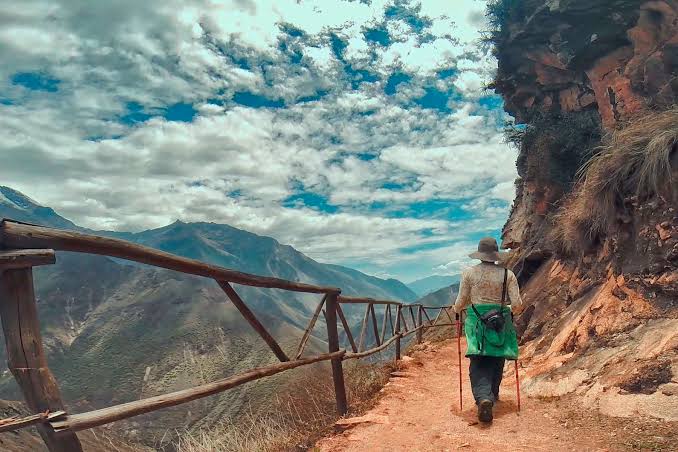
Strengthen your legs
During the Choquequirao trek, your legs will do much of the work. Having a good strength base can help you maintain a steadier pace on steep sections.
You do not need gym machines to prepare. There are simple exercises you can do using your own body weight.
Squats
Squats mainly work your legs and glutes.
Perform them slowly while maintaining a comfortable and controlled posture. Proper form should be your priority before increasing the number of repetitions.
Lunges
Lunges help strengthen each leg individually while also improving balance.
This exercise can be useful for preparing for uneven terrain where you need to constantly adjust your footing.
Step-ups
You can use a sturdy step or a surface designed for exercise.
Step up with one leg, complete the movement, and step back down in a controlled way. Then alternate legs.
It is a simple exercise that recreates part of the effort required during an uphill hike.
Calf raises
Your calves also work hard during long hikes.
Stand upright, slowly raise your heels, and lower them again. You can do this near a wall or another stable surface if you need support.
Improve your cardiovascular endurance
Leg strength is not the only thing that matters.
During long climbs, you will need to maintain a steady level of effort for an extended period. That is why gradually improving your cardiovascular endurance is also important.
Some useful activities include:
- Brisk walking
- Cycling
- Swimming
- Long hikes
- Using stairs at a controlled pace.
You do not need to turn every training session into a speed challenge.
For Choquequirao, it is more useful to learn how to maintain a steady effort for a long period than to walk extremely fast for only a few minutes.
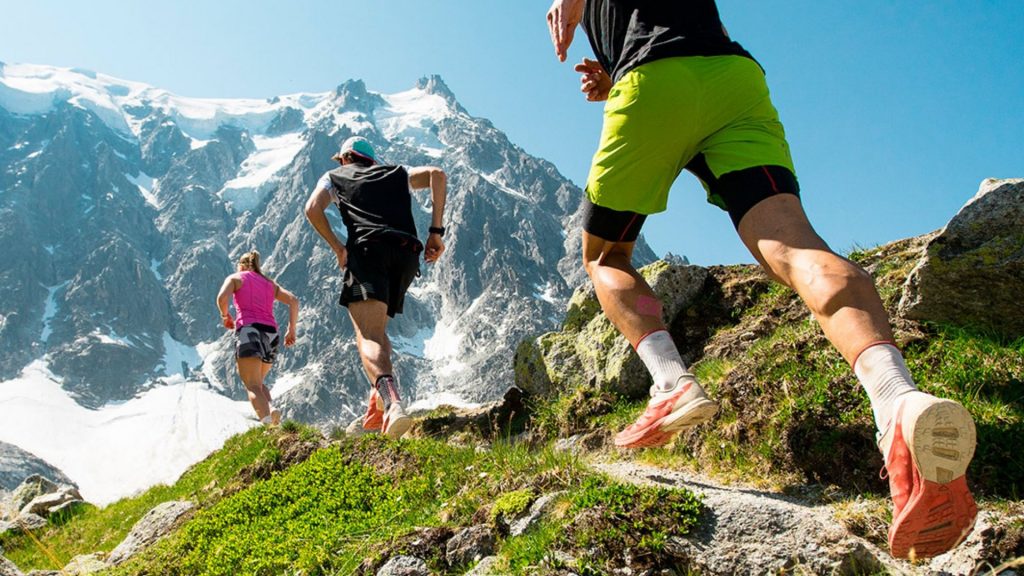
Practice hiking on consecutive days
This is a part of preparation that is often overlooked.
Completing one long hike and resting for several days is one thing. Getting up the next morning and hiking again is very different.
On the Choquequirao trek, you will have consecutive days of physical activity. As your trip gets closer, consider doing moderate hikes on two consecutive days.
For example:
Saturday: a longer hike;
Sunday: a shorter, easier hike.
This helps you understand how your body responds when you are still carrying some fatigue from the previous day.
You do not need to do this every week. The idea is simply to include this type of training occasionally as part of your preparation.
Train for both uphill and downhill sections
Many people prepare by focusing only on climbing.
However, long descents can also place significant stress on your legs.
During a descent, your muscles must constantly control the movement of your body. If you are not used to this type of effort, you may notice considerable fatigue in your quadriceps.
For that reason, when you train on a hill or a route with elevation changes, do not think of the downhill section as simply the way back.
Walk down in a controlled manner, pay attention to your footing, and treat the descent as part of your training.
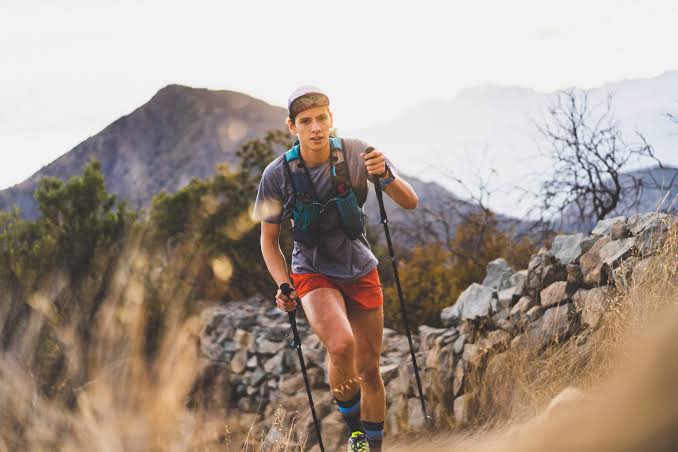
Strengthen your core
Your abdominal and lower back muscles help provide stability while you walk, especially if you are carrying a small backpack.
You can add basic core-strengthening exercises to your routine.
You do not need long workout sessions. A few minutes after your leg exercises may be enough to complement your preparation.
A stable core can make it easier to maintain good posture during long hikes.
Practice with the backpack you plan to use
You do not want the first day of the trek to be the first time you discover what it feels like to walk for several hours with a backpack.
Once you have built some fitness, complete a few training hikes using the backpack you plan to take on the trip.
Start with a light load.
The goal is to get used to:
- Walking with the backpack on
- Adjusting the straps correctly
- Identifying any areas that cause discomfort
- Understanding how the backpack affects your balance on uphill and downhill sections.
You do not need to carry unnecessary weight simply to make your training more difficult.
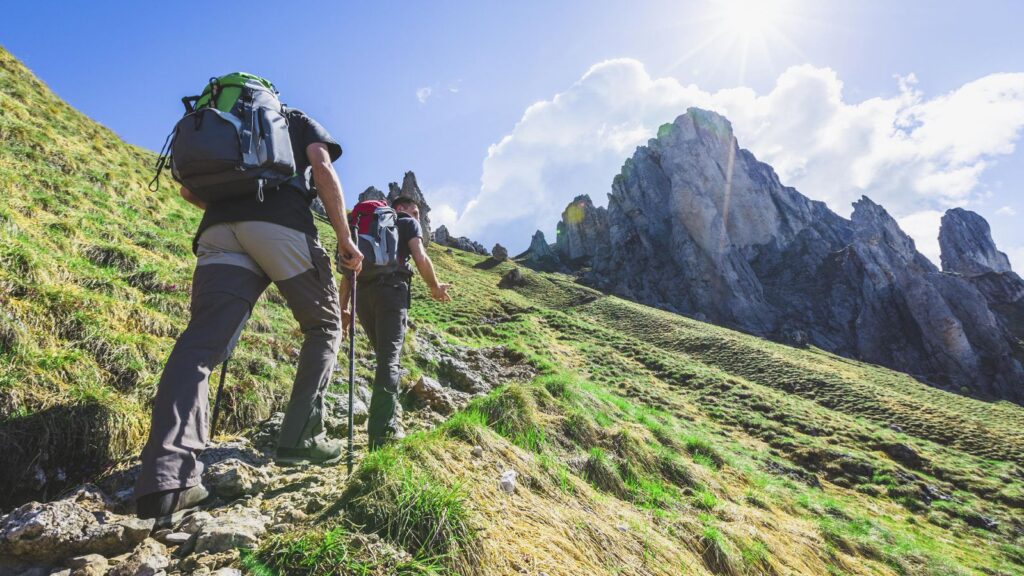
Wear your trekking shoes before the trip
Your feet also need preparation.
If you plan to wear specific hiking shoes or boots during the trek, use them on several of your training hikes beforehand.
This allows you to see whether they remain comfortable after several hours and helps you identify potential problems before reaching the trail.
Walking for several consecutive days in footwear that causes discomfort can significantly affect your experience.
That is why it is better to test your footwear in advance rather than wearing it for the first time at the beginning of the trek.
Example of physical preparation for Choquequirao
There is no single training routine that works for everyone, but this simple structure can serve as a useful reference.
First few weeks
Complete two or three walks or hikes during the week.
Start with comfortable distances and add basic leg exercises such as squats, lunges, and calf raises.
The initial goal is to build consistency.
Middle weeks
Gradually increase the duration of one of your weekly hikes.
Start looking for routes with hills or use stairs to complement your training.
You can also continue with two short strength-training sessions during the week.
Final weeks before the trip
Include a longer hike and, whenever possible, complete part of your training on terrain with elevation changes.
You can also occasionally practice hiking on two consecutive days.
Use the footwear and backpack you plan to take on the Choquequirao trek during these outings.
During the final days before your trip, avoid excessively intense training sessions. Arriving well-rested is also an important part of proper preparation.

Do you need to go to the gym to prepare for Choquequirao?
Not necessarily.
The gym can be useful for strengthening your legs, but you can also prepare through hiking, stairs, and exercises that use your own body weight.
The important thing is to train consistently and choose exercises that relate to the type of effort you will experience during the trek.
Someone who only does strength training but never goes on long hikes may face different challenges than someone who is already used to walking for several hours.
Ideally, your preparation should combine endurance and strength training.
Can you hike to Choquequirao if you do not exercise regularly?
If you are currently not very physically active, it is best not to leave your preparation until the final days before the trip.
Starting in advance will help you understand how your body responds to longer hikes and allow you to gradually improve your endurance.
The traditional route requires traveling on foot across terrain with significant elevation changes, so having an appropriate level of fitness can help you complete the trek more comfortably.
If you have a medical condition, a previous injury, or any health issue that could be affected by strenuous physical activity, consult a healthcare professional before beginning a training program or attempting the trek.
Mistakes to avoid during your preparation
Training only on flat terrain
Hills are an important part of the physical challenge of Choquequirao. Gradually include them in your training hikes.
Starting too aggressively
Increasing distance or intensity too quickly can cause discomfort and make it harder to maintain a consistent training routine.
Not training for descents
Downhill sections also place significant demands on your legs. Practicing descents can help you arrive better prepared.
Wearing new footwear during the trek
Test your hiking shoes on several walks before your trip.
Comparing your pace with other hikers
Your preparation should match your own fitness level. Maintaining a steady pace is more important than trying to keep up with someone who walks faster.
How do you know if you are better prepared for Choquequirao?
A good sign is being able to complete a hike lasting several hours at a moderate pace and finish feeling tired, but not completely exhausted.
You should also begin to feel more comfortable on hills and notice that your body recovers more easily after longer hikes.
There is no exact test that can guarantee the trek will feel easy. Choquequirao remains a physically demanding hike.
Physical preparation simply helps your body become more accustomed to the type of effort you will experience along the route.
Prepare in advance to enjoy the Choquequirao trek
Physical preparation for Choquequirao does not need to be complicated.
Walking regularly, strengthening your legs, practicing on hills, and gradually improving your endurance can make a major difference before your trip.
Start according to your current fitness level and progress gradually. You do not need to become an athlete. You simply need to prepare your body to walk for several hours and repeat that effort over several consecutive days.
The better you understand your own pace before the trip, the easier it will be to manage your energy during the trek.
At Incredible Peru Tours, we recommend preparing for this trek in advance so you can arrive at Choquequirao with a level of fitness that matches the demands of the route.


