
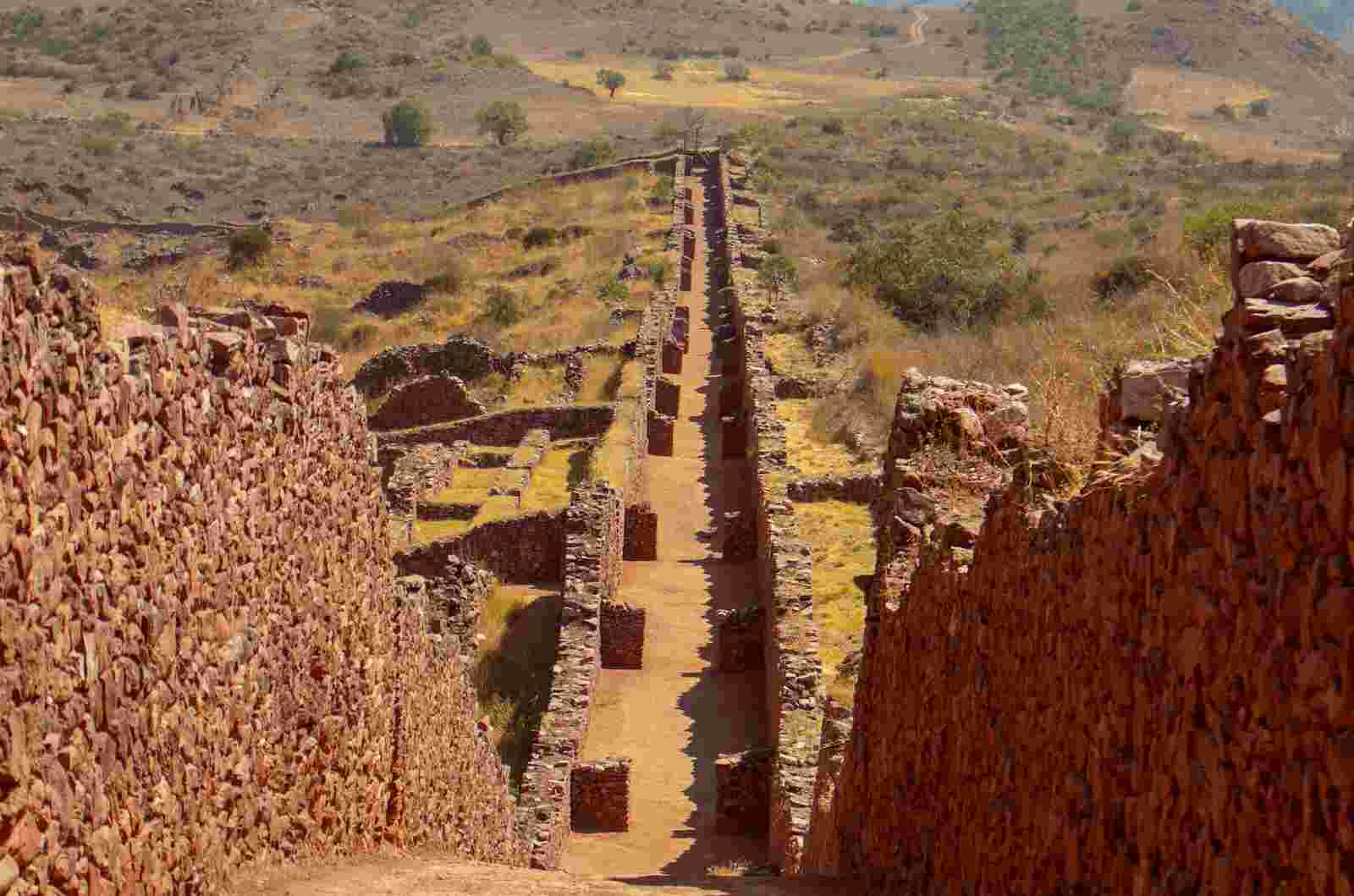
The South Valley is not the Sacred Valley. It follows the road toward Urcos and Puno, southeast of Cusco, and brings together three very different sites: an Inca hydraulic complex where water still flows today (Tipon), a Wari city that predates Inca Cusco (Pikillaqta), and a 17th-century parish church with painted ceilings and walls (Andahuaylillas).
A full-day tour is enough to visit all three without rushing. A six-hour tour can cover them and return to Cusco, but the main difference is at Tipon: if you only climb to the first terrace, you do not really understand the site.
The South Valley and Sacred Valley should not be done on the same day
The Sacred Valley (Pisac, Urubamba, Ollantaytambo, and Chinchero) heads northwest from Cusco. The South Valley follows Route 3S. They are two different routes, two different partial tourist-ticket circuits, and two separate day trips.
If your trip includes two days in Cusco in addition to Machu Picchu, the most practical order is one city day (Qoricancha, Cathedral, and the archaeological sites above the city) and one valley day. The Full-Day Sacred Valley Tour and this circuit are not combined in the same van.
The best order for visiting the sites
The natural route from Cusco is Tipon, Pikillaqta, and Andahuaylillas. You begin with elevation and water, continue with a mostly flat walk through the Wari city, and finish in the shade inside the church.
Doing the route in reverse, with Andahuaylillas first, only makes sense if you are arriving from Puno or Sicuani. From a hotel in Cusco, it does not.
A practical departure time is between 7:30 and 8:30 a.m. Tipon still gets good sunlight on its channels in the middle of the morning. After about 1:00 p.m., during the rainy season, the hillside can become slippery.
Tipon: the water system is the main reason to visit
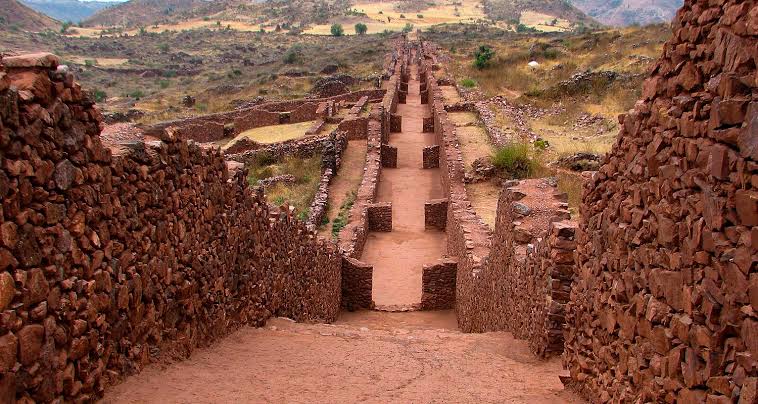
Tipon is located about 25 kilometers from Cusco in the district of Oropesa, at around 3,400 meters (11,150 feet) above sea level. From the town stop, there is a paved section to the parking area, followed by an uphill walk through agricultural terraces. It is not a trek, but there are uneven steps and strong direct sunlight.
What makes the site worthwhile is not simply “another set of Inca terraces.” It is the hydraulic system: stone channels that remain aligned, springs that continue to flow, and a carefully calculated slope that allows water to move without eroding the walls. During the dry season, the engineering is easier to appreciate. In the rainy season, water flow increases and wet surfaces make shoes with good traction important.
Higher up, there is an additional enclosure and a view over the Oropesa Valley. Visitors who stop only at the fountain near the entrance get the photo but miss the overall design. A realistic amount of time at the site is 75 to 90 minutes, plus 45 to 60 minutes for the drive from Cusco depending on traffic through San Jeronimo.
Oropesa, at the base of the route, is known for baking pan chuta. It works well as a snack stop, but not as a long lunch if you still have two more sites to visit.
Pikillaqta: Cusco did not begin with the Incas
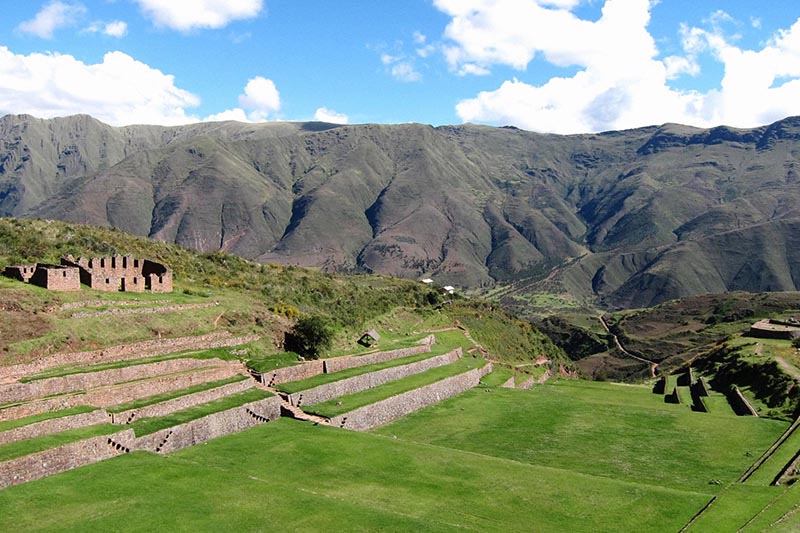
Pikillaqta is located about 30 kilometers from Cusco, near Huacarpay Lagoon and the Huacarpay-Lucre wetlands. Pikillaqta, also spelled Pikillacta or Piquillacta, was a Wari center built centuries before the height of the Inca Empire. Its layout is completely different: rectangular city blocks, grid-pattern streets, and walls made of stone and adobe spread across a plateau.
There are no trapezoidal niches or sacred fountains here. What stands out is the scale of the urban plan. The main sector can be explored in 45 to 60 minutes along mostly flat paths. The wind on the plateau is colder than at Tipon, so keep a jacket within easy reach.
Andahuaylillas: San Pedro Apostol Church
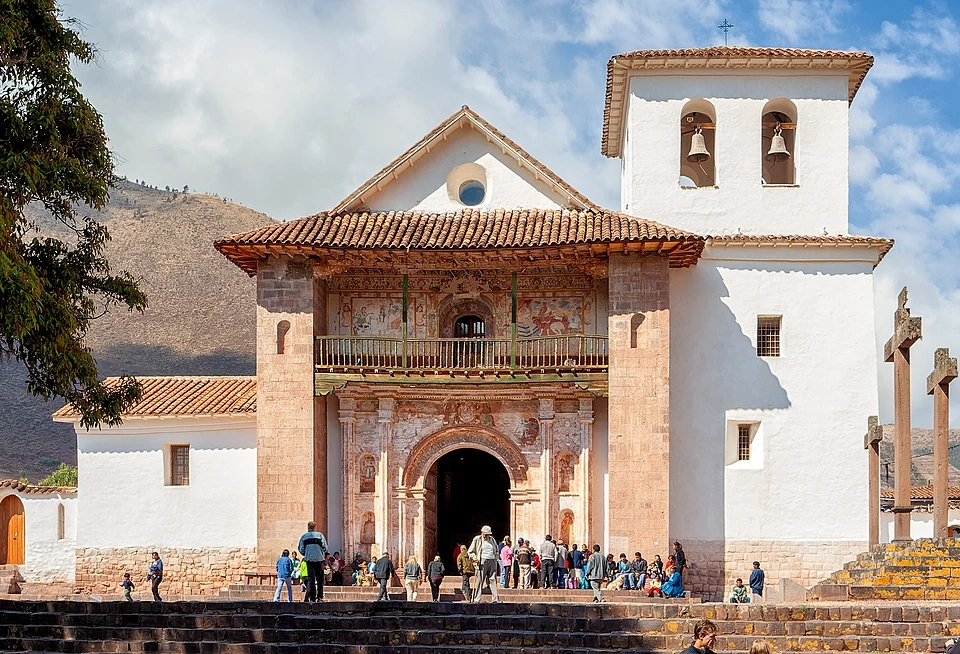
Andahuaylillas is a small town about 40 kilometers from Cusco. Its 17th-century San Pedro Apostol Church is known for murals, paintings, and an ornate wooden ceiling that earned it the nickname “the Sistine Chapel of the Americas.” The nickname is almost unnecessary once you are inside. The ceiling and the arch over the nave speak for themselves.
Typical rules include keeping your voice low, avoiding flash photography, and sometimes not using a tripod. The town is small. Lunch is easier to arrange here than at the Tipon roadside stop: usually a local set menu rather than a large tourism buffet.
Allow 30 to 40 minutes inside the church. More time is only necessary if Mass is taking place and you need to wait.
Admission is separate. It is not included in the Cusco Tourist Ticket.
Which ticket you need at each site
Tipon and Pikillaqta are included in the Cusco Tourist Ticket, either through the full ticket or the partial circuit that covers the city and South Valley. The partial ticket is valid for two days. Typical reference prices are S/ 70 for foreign visitors and S/ 40 for Peruvian visitors. Confirm current prices with COSITUC or at the ticket office.
Andahuaylillas is paid separately at the parish entrance. A common reference price is S/ 15 for foreign visitors, with a lower rate for Peruvian visitors. Bring cash.
If you already used a partial ticket for the Sacred Valley, you cannot apply it here because they are different circuits. Travelers planning to visit the Sacsayhuaman-area sites, the Sacred Valley, and the South Valley during the same stay usually benefit from buying the full ticket instead. A common reference price is S/ 130 with 10 days of validity, avoiding the need to add several partial tickets together.
How long a real full-day tour takes
| Section | Time |
|---|---|
| Cusco to Tipon | 45 to 60 min |
| Tipon (climb and water channels) | 75 to 90 min |
| Tipon to Pikillaqta | 20 to 30 min |
| Pikillaqta | 45 to 60 min |
| Pikillaqta to Andahuaylillas | 15 to 25 min |
| Church and town | 45 to 60 min |
| Lunch | 45 to 60 min |
| Return to Cusco | 50 to 70 min |
Total: 8 to 9 hours. Packages that advertise only 5 or 6 hours usually shorten the visit to Tipon and reduce lunch time, sometimes to something eaten on the road.
Visiting independently or with private transportation
Independently, you can hire a taxi or car for the day and agree in advance on waiting time at each site and the return to Cusco. Another option is to take public vans toward Urcos and use local mototaxis, although Tipon involves more logistical effort because the archaeological site is not directly beside Route 3S.
With transportation and a guide, you gain the historical context of the Wari civilization, which can otherwise make Pikillaqta look like little more than an adobe settlement, and you avoid negotiating separate stops and entrances. A full-day South Valley tour does not require trekking-level fitness, but it is better after you have already spent at least one night in Cusco because Tipon involves uphill walking.
Children and older travelers can do the route comfortably if the pace allows for breaks at Tipon and there is no pressure to climb to the highest terrace.
What to bring
Bring your identification document, a Cusco Tourist Ticket if you already have one or cash for the ticket office, and Peruvian soles for Andahuaylillas. Pack sunscreen, a hat, a jacket for Pikillaqta, water, and shoes with good traction rather than casual sandals. From November through March, bring a rain poncho. Lunch is not included in the tourist ticket.
How to fit the South Valley into your itinerary
Do not schedule it on the same day you arrive by plane, and do not combine it with your train day to Machu Picchu. It works well the day after a Cusco city tour or in the open day between Cusco and the Route of the Sun toward Puno, since Andahuaylillas already lies along that road.


