

Living tourism in Chinchero is one of the best options for those who want to get to know Andean culture in a closer way during their trip to Cusco. Instead of just observing monuments or walking through archaeological sites, this experience lets you get close to local families, learn about their traditions, and discover activities that are still part of their daily life.
Located in the setting of the Sacred Valley of the Incas, Chinchero stands out for its landscapes, its archaeological heritage, and, especially, the textile tradition kept alive by many families and associations of weavers.
During a living tourism experience you can learn how wool is worked, see the use of natural dyes, discover the meaning of different Andean designs, and get closer to the customs of a community that keeps a close relationship with its land.
The visit can also be easily combined with other nearby places, such as Moray and the Maras Salt Mines, making it an interesting option for spending a full day discovering this area of Cusco.
What is living tourism in Chinchero?
Living tourism aims to create a more direct contact between the visitor and the local population.
In Chinchero, this means getting to know some of the activities that are part of family and community traditions, especially those related to textile production, farming, food, and Andean customs.
Unlike a conventional tour, during a living tourism experience you do not just listen to a guide’s explanations.
Depending on the program you booked, you can also watch demonstrations by the weavers themselves, take part in certain activities, and talk with people from the area.
The goal is to get to know Chinchero beyond its tourist attractions and better understand how certain traditions keep being passed down from generation to generation.
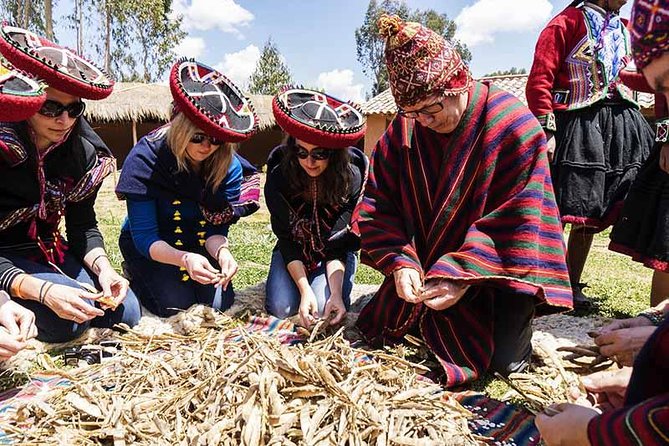
Demonstration of the Andean textile process
Making textiles is one of the most representative cultural activities of Chinchero.
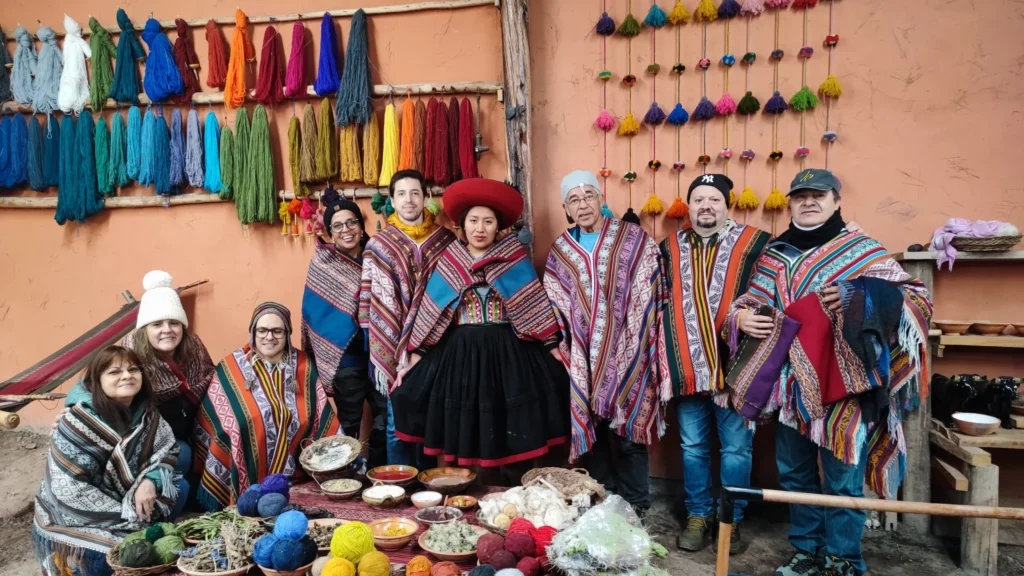
During many living tourism experiences, the weavers explain the different stages needed to turn the fiber into a finished piece.
The process can include preparing and cleaning the wool, spinning, dyeing, and later weaving using traditional techniques.
This demonstration helps you understand that behind every blanket, shawl, belt, or other handmade piece there is detailed work that requires knowledge, patience, and experience.
You can also see how the textile techniques are tied to the cultural identity of the families of Chinchero.
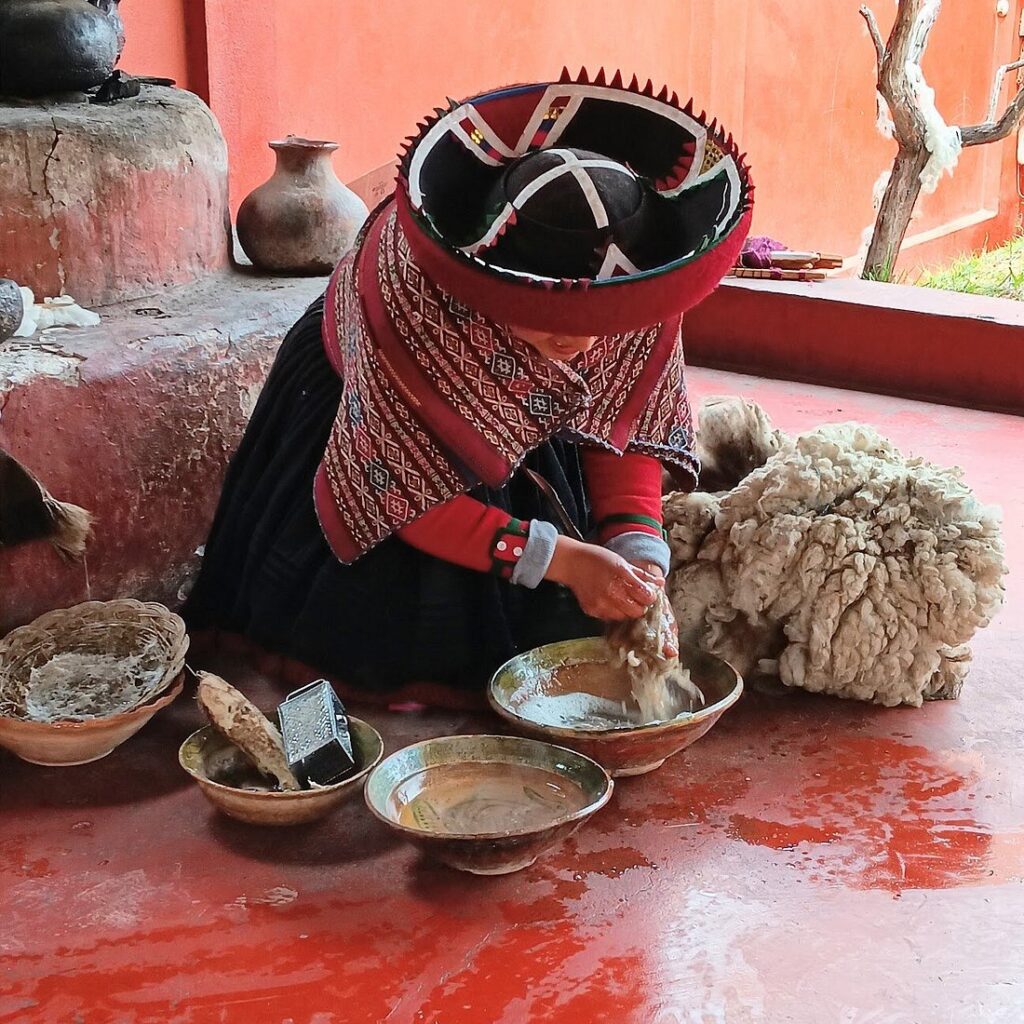
How the wool is cleaned and prepared
Before spinning begins, the fiber must be properly prepared.
During some demonstrations the weavers show traditional methods used to clean the wool before working with it.
Among the elements that may be used are plants or roots of traditional use that help remove impurities from the fiber.
This process tends to draw special attention from travelers because it shows how the communities have used the resources available in their surroundings for generations.
After cleaning and drying the fiber, the spinning process begins.
Traditional spinning of the fiber
Spinning turns the fibers into threads that will later be used to make the textiles.
The weavers do this task with traditional tools and a technique they have learned within their own families.
Although it may look simple to watch, controlling the thickness and consistency of the thread takes a lot of practice.
In certain experiences, visitors can try a small part of the process while receiving guidance from the weavers.
Taking part, even for a few minutes, lets you appreciate much better the work needed to produce each piece.

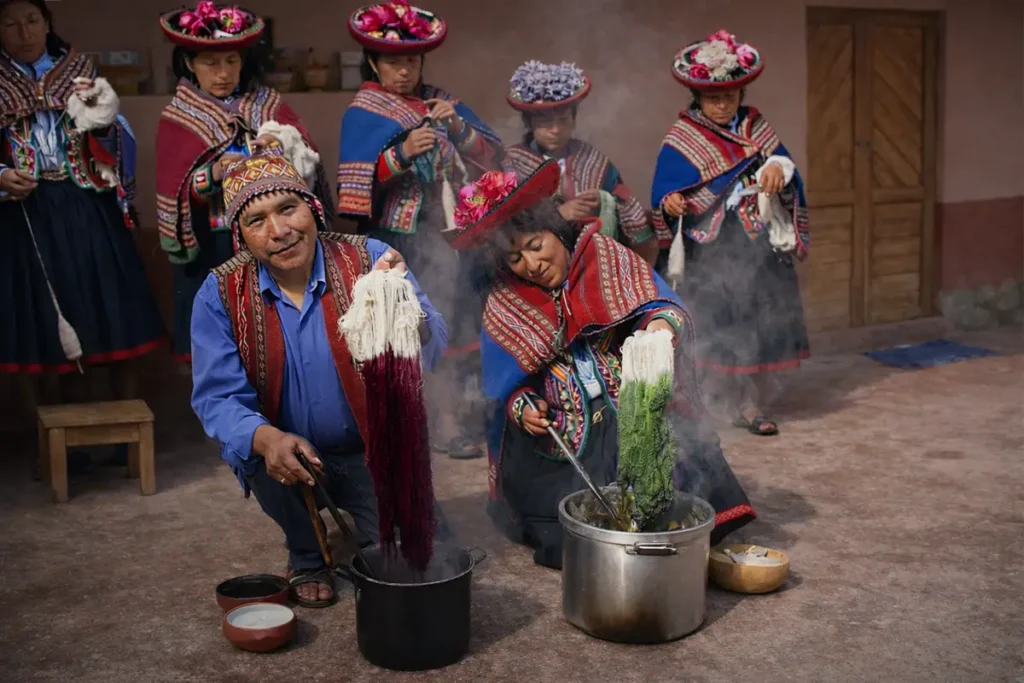
Natural dyeing of the wool
One of the most striking moments of a living tourism in Chinchero experience is learning how different colors are obtained to dye the fibers.
Traditionally, natural elements available in the Andes have been used, such as plants, leaves, roots, and other products of natural origin.
One of the best-known examples is cochineal, used to achieve different reddish shades.
During the demonstration you can see how different combinations and processes change the tones of the fiber.
More than a simple craft activity, dyeing shows knowledge built up over generations about the properties of the natural resources available in the region.
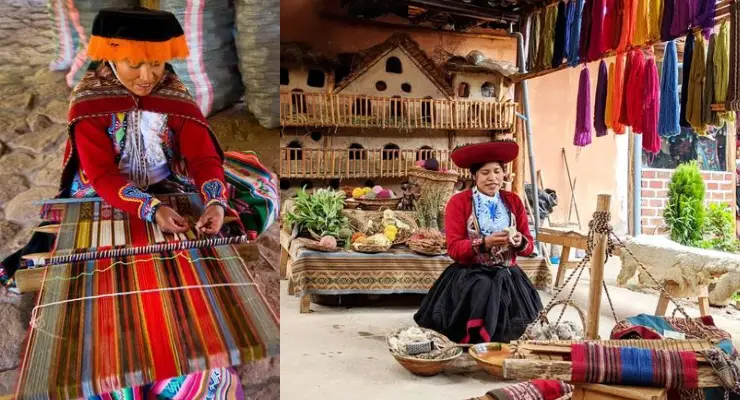
The meaning of Andean colors and designs
The textiles of Chinchero stand out not only for their colors.
The designs woven into the pieces can also represent elements related to the surroundings, animals, farming, or different aspects of Andean culture.
During a living tourism experience, the weavers can explain some of these patterns and the process needed to add them to the weaving.
This information helps you understand that textile pieces are not only decorative products.
They are also a way to preserve knowledge, techniques, and elements of cultural identity.
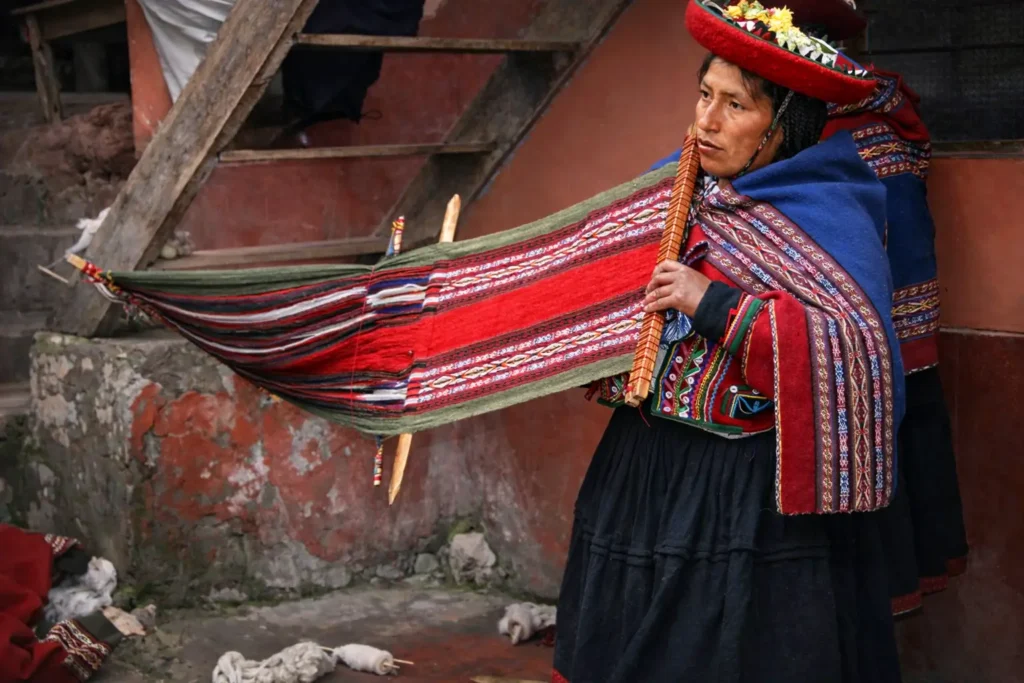
Taking part in traditional weaving
One of the main differences between watching a demonstration and taking part in a living tourism experience is the chance to interact directly with some of the activities.
Depending on the program, you can approach a loom, try to spin, or learn how the making of certain designs begins.
You do not need previous experience.
The intention is not to produce a complete piece during the visit, but to better understand the level of precision and skill required.
For many travelers, this participation becomes one of the most memorable moments of the tour.
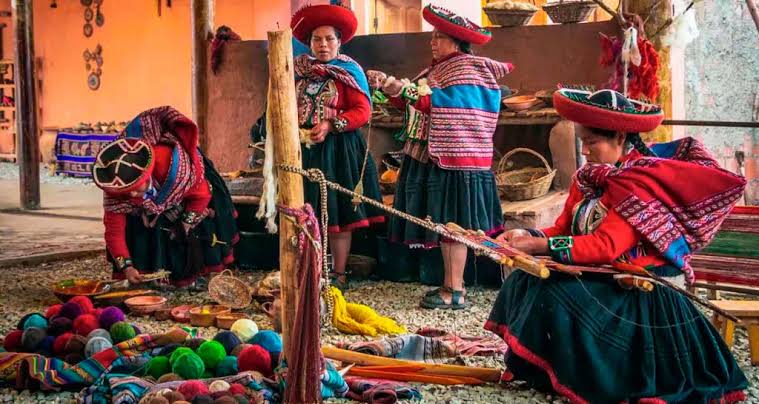
Meet the weavers of Chinchero
Meeting the weavers is a key part of this experience.
The textile techniques you see do not belong only to the past. They are still practiced by women and families who keep this knowledge as part of their life and their identity.
Listening to their explanations lets you learn the techniques from the perspective of those who really use them.
It also offers the chance to understand how traditions are passed down within families and how craftwork is part of the economy of many communities.
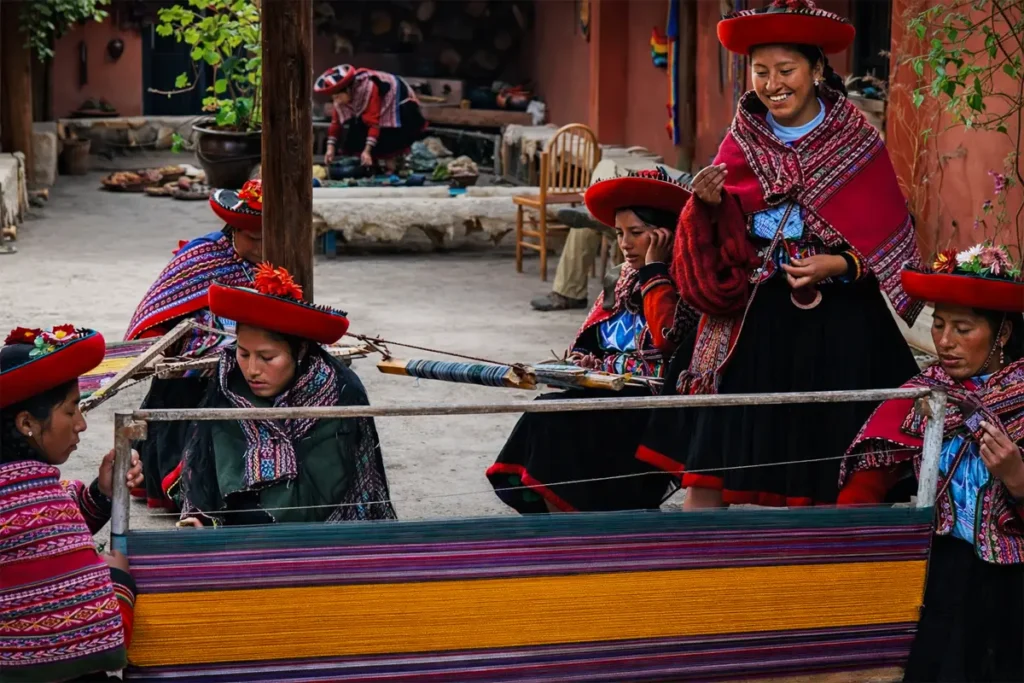
Contact with local customs and daily life
Community and living tourism in Chinchero is not limited to textiles.
Depending on the experience you choose, you can also learn about aspects related to farming, homes, food, festivals, and other local customs.
Chinchero keeps a strong relationship with farming and with the traditions tied to the Andean calendar.
Getting to know these elements lets you better understand daily life outside the main tourist areas of Cusco.
The experience gains a broader cultural side that complements the archaeological visits in the region.
Food and tasting of local products
Some experiences include a small tasting or activities related to local products.
Food lets you get to know another aspect of the relationship between the communities and the environment where they live.
You may find Andean products such as varieties of potato, corn, herbs, and other ingredients traditionally used by the families of the region.
Depending on the program you booked, the food experience can range from a hot drink or small tasting to more complete activities.
For that reason, it is a good idea to check exactly what the tour includes before booking.
Visit the town of Chinchero
Beyond the living tourism experience, it is worth spending time getting to know the town.
Its streets, homes, squares, and landscapes create an atmosphere very different from the center of Cusco.
Walking through Chinchero lets you take a close look at the combination of current buildings and the historic elements that are still part of the urban landscape.
You will also find shops, workshops, and spaces dedicated to selling crafts.
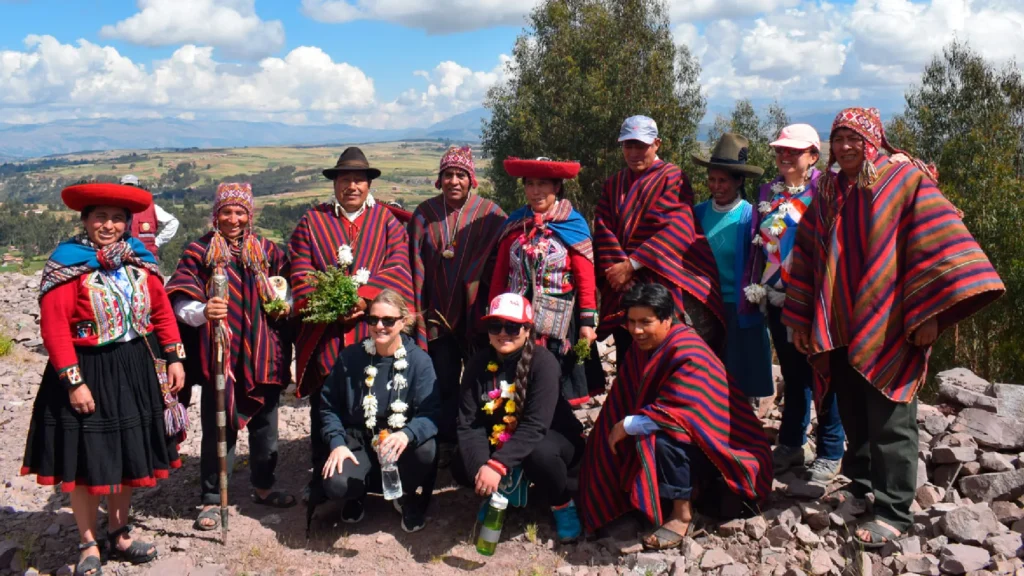
Get to know the archaeological site of Chinchero
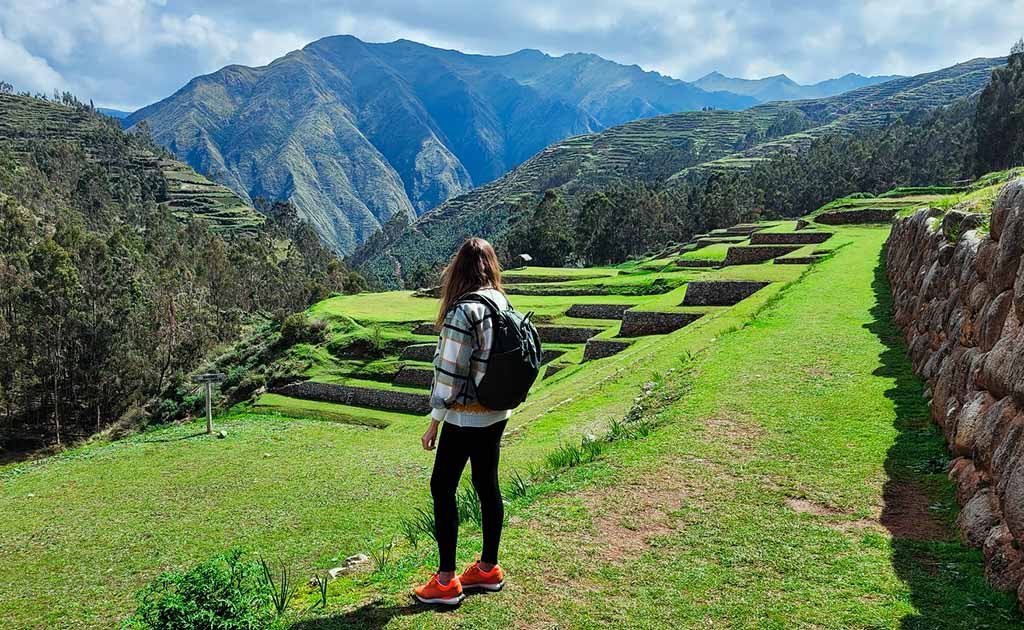
Chinchero also has important archaeological heritage.
The area preserves agricultural terraces and structures linked to the Inca period that show the historical importance of the place.
These archaeological elements complement a living tourism experience well because they let you connect current traditions with the history of the region.
If your tour itinerary includes the archaeological visit, follow the guide’s instructions and respect the areas set up for visitors.
Visit the church of Chinchero
Another of the town’s highlights is its colonial church.
The church is part of the historic complex of Chinchero and represents the overlap of different cultural periods in the region.
The presence of colonial elements alongside heritage of Inca origin creates one of the most interesting historical contrasts in the town.
Depending on the itinerary and the access hours, the visit can complement the cultural tour.
The market and crafts of Chinchero
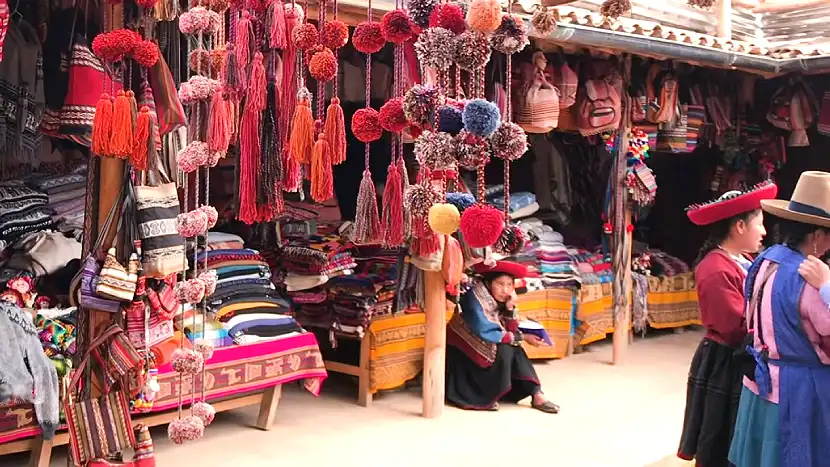
Chinchero is also known for the sale of textile and handmade products.
During your visit you can find blankets, shawls, garments, bags, and other pieces made by weavers from the area.
Buying directly from local producers can be a way to take home a souvenir from your trip and, at the same time, contribute to the economy of the families who keep these activities alive.
If you want to buy a piece, take the chance to ask about the materials and the process used to make it.
Knowing the story behind the craft gives the souvenir a different meaning.
Why is Chinchero known for its textiles?
The textile tradition is one of the cultural elements that most identifies Chinchero.
The techniques used today are the result of knowledge passed down between generations and adapted over time.
From preparing the fiber to the final designs, each stage requires specific skills.
For this reason, visiting a textile center or taking part in a living tourism experience offers much more context than simply looking at the finished pieces in a shop.
You can learn who makes them, how they are made, and what knowledge lies behind them.
Living tourism and responsible tourism
Taking part in activities organized together with local communities and associations can also contribute to a more responsible form of tourism.
The visitor gets a deeper cultural experience, while the families can generate income from activities related to their own knowledge and traditions.
For this exchange to be respectful, it is also important to keep a proper attitude during the visit.
Ask before photographing a person directly, follow the host’s instructions, and avoid treating cultural activities only as a show.
Respect is an essential part of any living tourism experience.
Tips for taking photos during the experience
Chinchero offers great opportunities for photography thanks to its landscapes, textiles, and architecture.
That said, when you photograph people it is a good idea to ask for permission first.
During the textile demonstrations, avoid interfering with the weavers’ work just to get a photo.
You can also take the chance to capture details such as the materials, colors, tools, looms, and landscapes.
That way you will have a much more complete memory of the experience.
Chinchero, Moray, and Maras: an ideal route for one day
One of the advantages of visiting Chinchero is its location relative to other tourist attractions in the region.
Many travelers combine the living tourism experience with a trip to Moray and the Maras Salt Mines.
This route lets you bring together different types of experiences in a single day: Andean traditions, archaeology, rural landscapes, and historic places.
It is a good option for travelers who have few days in Cusco and want to make the most of one day to see several points in the area.
What to see in Moray
Moray is one of the most distinctive archaeological sites around Cusco.
Its main feature is the circular terraces built at different levels.
The place offers a strong contrast with the cultural experience of Chinchero and lets you add an archaeological component to the trip.
During the visit, the guide can explain the historical context and the main interpretations related to the site.
Visit to the Maras Salt Mines
The Maras Salt Mines form one of the most recognizable landscapes of this part of Cusco.
The arrangement of many pools on the hillside creates a very particular view and makes the area a regular stop on tours that travel through Maras and Moray.
The visit complements a Chinchero experience very well because it lets you see another example of traditional activities linked to the use of the region’s natural resources.
If you want to see these destinations in a single trip, you can check our living tourism tour in Chinchero with a visit to Moray and the Maras Salt Mines.
What does a living tourism tour in Chinchero include?
Services can vary depending on the operator and the type of experience you booked.
Before booking, it is a good idea to review aspects such as:
- Transportation from Cusco.
- Pickup point and time.
- Guide during the trip.
- Visit to a local community or association.
- Textile demonstration.
- Participatory activities.
- Tastings or food.
- Visit to the town of Chinchero.
- Access to archaeological sites.
- Visit to Moray.
- Visit to the Maras Salt Mines.
- Tourist entrance tickets.
- Estimated return time to Cusco.
Reviewing in advance what is included and what must be paid separately helps you organize your budget better and avoids confusion during the trip.
How long does a living tourism tour in Chinchero last?
The duration depends on the itinerary you choose.
A visit focused only on Chinchero can take part of the day, while a trip that combines Chinchero, Moray, and Maras can extend over a full day.
To organize your itinerary properly, review both the departure times and the estimated return time.
You should also consider the travel between the different attractions.
What is the best time to visit Chinchero?
Chinchero can offer different experiences depending on the season.
In certain months you will find greener landscapes, while in periods with less rain the roads tend to be drier.
Regardless of the time of year, the weather in the Andes can change throughout the day.
For that reason, it is a good idea to bring clothing you can easily add or remove depending on the temperature.
If you will visit Chinchero during a full-day trip, it is also worth being prepared for both sun and cooler temperatures.

What clothing to wear to visit Chinchero?
Because of the altitude and the changing weather conditions, the right clothing helps you enjoy the tour much more.
You can consider bringing:
- Comfortable footwear for walking.
- Comfortable pants.
- A light jacket or coat.
- Sunscreen.
- A hat or cap.
- Sunglasses.
- Water.
- A waterproof piece if there is a chance of rain.
Dressing in layers tends to be practical because how the temperature feels can vary throughout the day.
Keep the altitude in mind
Chinchero is located in an area of considerable altitude within the Andes.
If you have just arrived in Cusco, it is a good idea to consider how you are adjusting before doing a day with many activities.
Stay hydrated, avoid overexerting yourself if you do not feel fully acclimatized, and tell the guide about any discomfort during the trip.
Walking slowly also lets you enjoy the landscapes and explanations more.
Is it a suitable experience for families?
The educational side of living tourism can be especially interesting for families.
Watching how a fiber becomes thread, learning about natural dyes, or trying to take part in a craft activity can help children and teenagers understand the culture in a much more visual way.
That said, before booking it is a good idea to review the duration of the trip, the travel, and the specific conditions for younger participants.
Each family can assess whether a half-day tour or a full-day one is more suitable.
Is it recommended for older adults?
It can be an interesting experience because many of the cultural activities do not require intense physical effort.
That said, you should consider the altitude, the travel, and the sections that may require walking.
If you travel with older adults or people with reduced mobility, check the exact features of the tour in advance to choose the most suitable itinerary.
What to bring in your backpack?
For a trip through Chinchero, Moray, and Maras you do not need to carry too much luggage.
A small backpack with the essential items is usually enough.
You can include water, sunscreen, sunglasses, an extra layer, personal documents, a phone or camera, and some money for personal expenses or craft purchases.
If the tour takes place during months with a higher chance of rain, add waterproof protection.
Is it worth buying crafts during the visit?
If you find a piece you really like, buying directly from local weavers or associations can be a good way to remember your experience.
You will also have the chance to learn about the process used to make the product.
Before buying, you can ask about the materials, the dyes, and the weaving technique.
That way, the purchase also becomes a chance to keep learning about the textile tradition.
Why choose a living tourism experience instead of a conventional visit?
A traditional visit lets you get to know the main attractions of Chinchero.
A living tourism experience adds another level to the tour because it introduces direct contact with the people and activities that keep certain traditions alive.
You not only watch a finished textile piece: you can learn how the fiber is prepared, how the colors are obtained, and how the weaving is done.
You also do not limit yourself to visiting a town: you can listen directly to those who live there and better understand some aspects of their daily life.
This combination of learning, participation, and cultural exchange is what makes living tourism different.
Combine Chinchero with other tours in Cusco
A visit to Chinchero can be easily built into a larger itinerary around Cusco.
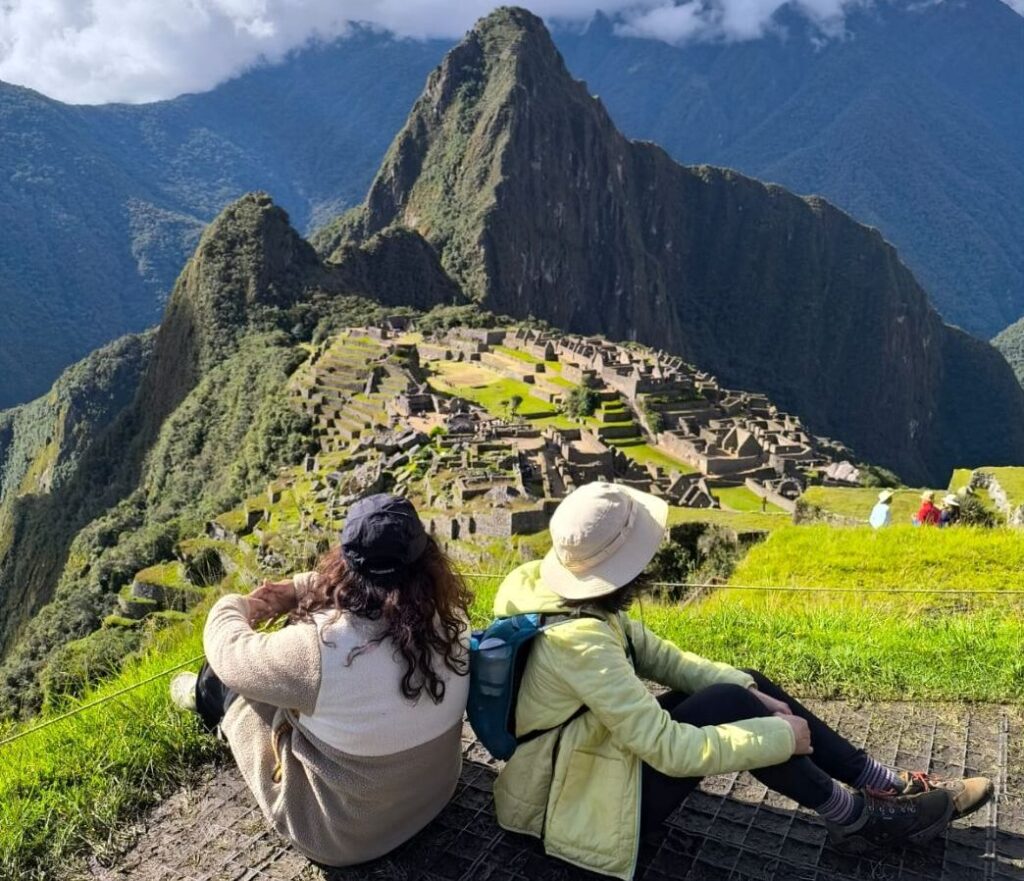
Depending on the number of days available, you can combine this experience with places such as the Sacred Valley, Machu Picchu, Maras, Moray, and other attractions in the region.
If you have few days, a trip that brings together Chinchero, Moray, and Maras lets you make better use of the travel.
On the other hand, if you prefer to travel at a slower pace, spending more time with the communities can offer a much deeper cultural experience.
Tips before booking your living tourism experience
Before choosing a tour, review the itinerary carefully.
Not all experiences called “living tourism” offer the same level of interaction with the community.
It is a good idea to know how much time is really spent in Chinchero, what activities you will do, what places you will visit, and which services are included.
You can also check whether the activities are done directly with families, associations, or local textile centers.
The more information you have before booking, the easier it will be to choose an experience that suits your interests.
Enjoy a different cultural experience near Cusco
Living tourism in Chinchero offers the chance to get closer to one of the most interesting cultural traditions of the Andes.
Learning about the textile process, seeing the use of natural dyes, talking with weavers, and discovering the town from a local perspective lets you better understand an important part of this region’s identity.
If you also combine Chinchero with Moray and the Maras Salt Mines, you can spend a full day discovering different aspects of the landscape, history, and culture around Cusco.
At Incredible Peru Tours you can find an option that brings these experiences together in a single tour. Check our living tourism tour in Chinchero with a visit to Moray and the Maras Salt Mines to learn about the itinerary and the included services.
Frequently asked questions about living tourism in Chinchero
How long does a living tourism tour in Chinchero last?
It depends on the itinerary. An experience focused only on Chinchero can be done during part of the day, while tours that include Moray and the Maras Salt Mines usually take a fuller day. Always review the specific schedules before booking.
Do I need previous experience to take part in the activities?
No. The demonstrations and activities are designed for visitors with no previous knowledge. The weavers explain the process and, when there is a participatory activity, they show how to do it.
What should I bring to visit Chinchero?
It is a good idea to bring comfortable clothing, a jacket, suitable footwear for walking, sunscreen, sunglasses, a hat, water, and a camera or phone for photos.
Can I buy textiles during the experience?
At many centers and associations you will find products made by local weavers. If you are interested in a piece, you can ask directly about the materials, dyes, and technique used.
Is living tourism in Chinchero suitable for children?
It can be a very educational experience for families because it lets them watch and take part in different cultural activities. It is a good idea to check the duration of the tour and the conditions set for minors in advance.
Can you visit Chinchero, Moray, and Maras on the same day?
Yes, there are tours that combine these places in a single day. It is a practical option for getting to know living culture, archaeological heritage, and landscapes of the region within one itinerary.
Do you have to pay an entrance fee to visit the attractions?
This will depend on the places included and the conditions of the tour you booked. Before booking, check whether the entrance tickets are included in the price or must be purchased separately.
What is the difference between a traditional tour and a living tourism one?
A traditional tour focuses mainly on visiting and getting to know the attractions. A living tourism experience adds more interaction with the people of the community and lets you learn directly about certain local activities, customs, and knowledge.
Is it possible to take photos during the activities?
Yes, although it is a good idea to ask for permission before photographing people directly. During the demonstrations, also respect the instructions of the weavers and the guide.
Is living tourism in Chinchero worth it?
It is an especially interesting option for those who want to complement the archaeological visits with a cultural experience. It lets you better understand the textile traditions and get to know Chinchero from a perspective closer to the local population.


