
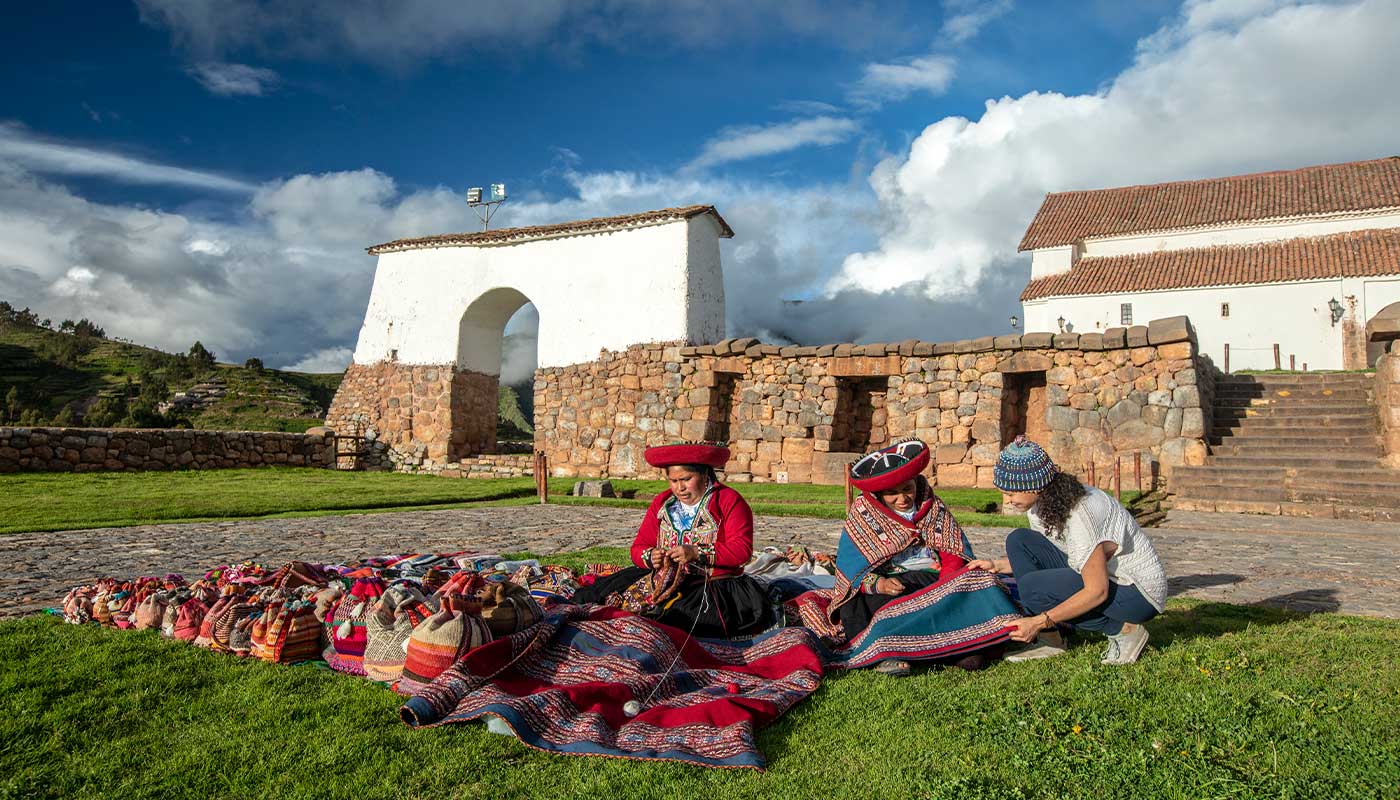
Half an hour from Cusco, in the town of Chinchero, weaving is still done much as it was centuries ago. The women of the community inherit from their mothers and grandmothers knowledge that is not written in any book: how to transform alpaca wool into colorful textiles filled with patterns that tell stories. If you want to understand the Andean world beyond the postcards, discovering Chinchero’s textile tradition is one of the best places to start.
In this guide, you’ll learn how a textile is made step by step, what its symbols mean, and why this tradition remains alive despite the passage of time. You’ll also discover what else you can see in Chinchero if you decide to visit from Cusco.
Chinchero, the Town of Weavers
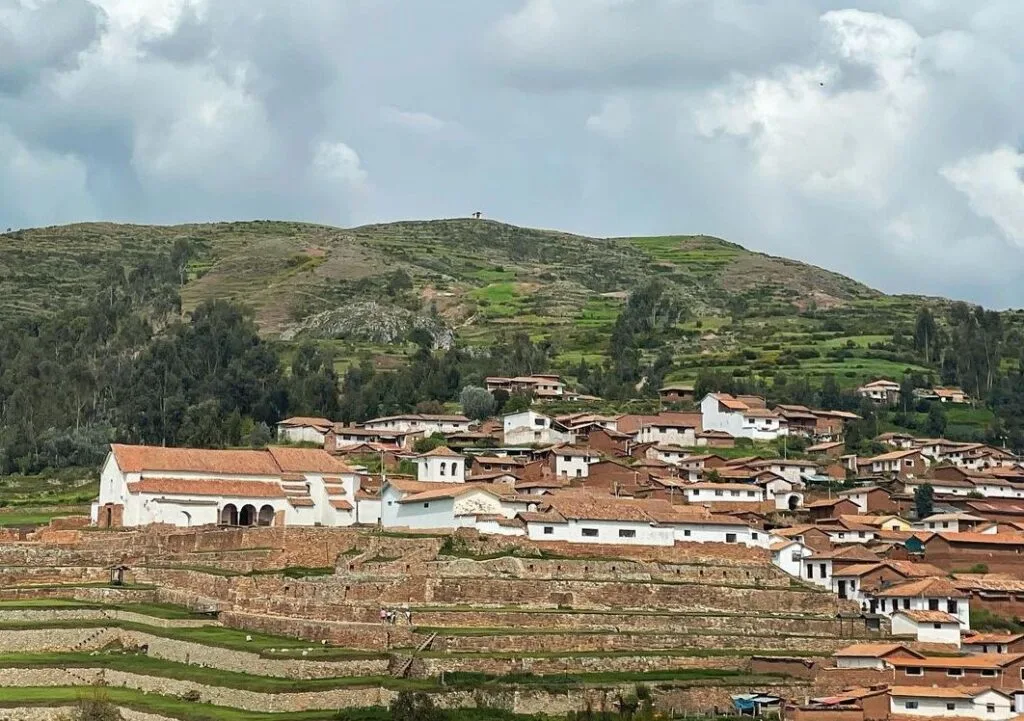
Chinchero is located at 3,762 meters (12,343 feet) above sea level, along the route to the Sacred Valley. During the Inca period, it was an area associated with the Inca Túpac Yupanqui, and today it preserves agricultural terraces, a colonial church built on Inca foundations, and a plaza where bartering still takes place on Sundays. But what has made the town especially famous in recent decades is its textile tradition.
Several associations of women weavers continue a craft here that combines memory and skill. This is not simply a demonstration created for tourists: it is how many families still produce the clothing, blankets, and belts they use in everyday life. When you visit a workshop, you are seeing a real process, not a staged performance.
From Fleece to Yarn: How a Textile Begins
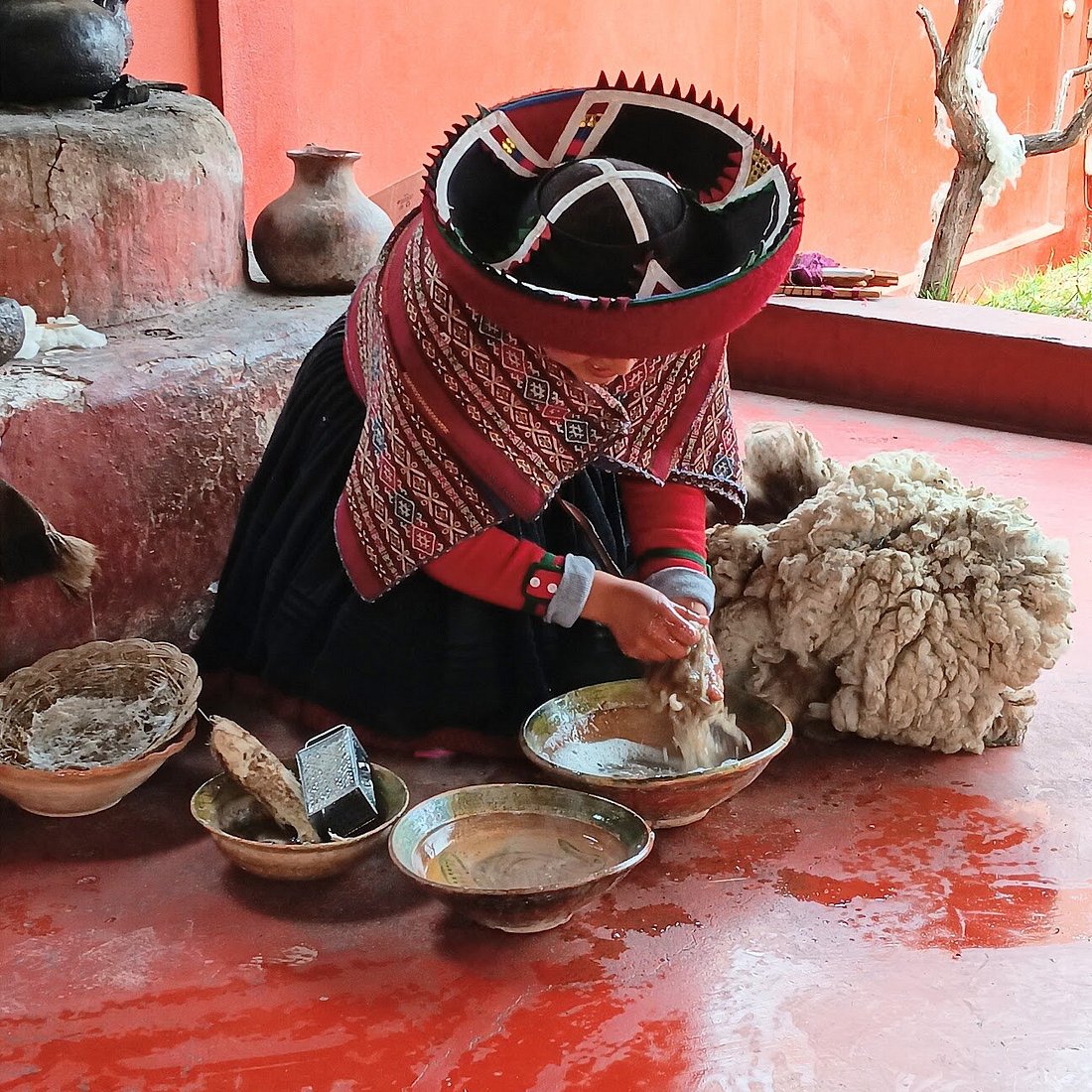
Everything starts with the fiber. In Chinchero, sheep and alpaca wool are used most often, while vicuña fiber, which is finer and rarer, is reserved for special pieces. The first step is cleaning the fleece, which is usually washed with a root called saqta, a plant that produces natural foam and leaves the wool soft and free of grease.
Once clean, the wool is spun into yarn. The weavers use a puchka, a wooden spindle that they turn with their fingers while drawing out the fiber. It may look simple, but producing an even thread requires years of practice. Many women spin while walking or talking, displaying a level of skill that can only be achieved by starting at a young age.
Colors That Come from the Earth
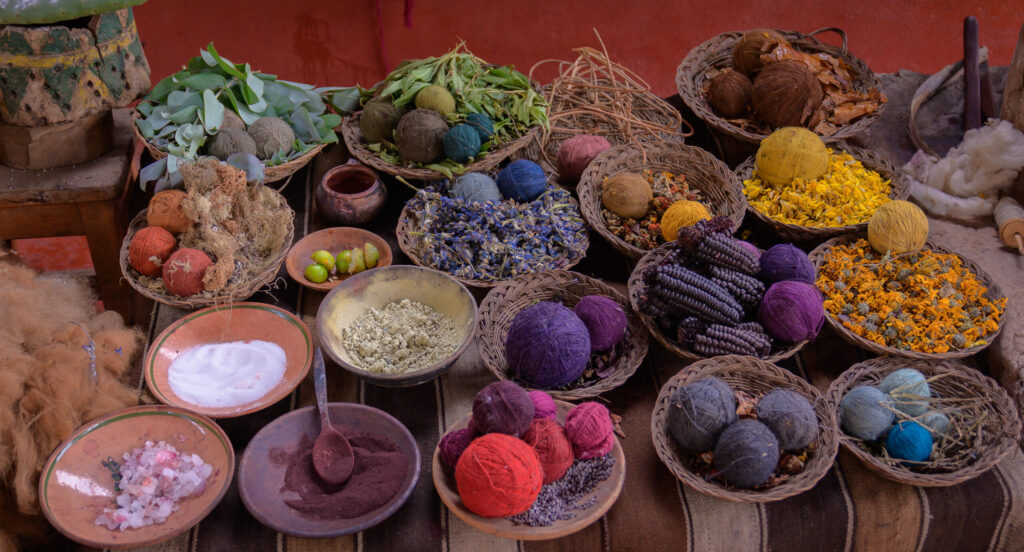
One of Chinchero’s defining features is its use of natural dyes. No chemicals are needed: each color comes from plants, minerals, or insects found in the region. The result is a range of vibrant colors that age beautifully without losing their intensity.
The most striking example is cochineal, a small insect that lives on prickly pear cacti. When ground, it produces a deep red, and when mixed with lemon juice or salt, it can create shades of pink, purple, and orange. Chapi root produces yellow tones, moss provides greens, and the qolle flower creates golden hues. Natural mordants such as salt or even fermented urine are used to set the colors, an ancient method that helps keep the dyes from fading.
For many visitors, watching a weaver boil the wool and demonstrate how a single insect can produce ten different shades is one of the most memorable parts of the experience.
The Loom and Weaving Techniques
The main tool is the backstrap loom, known as a kallwa. One end is tied to a post or tree, while the other is secured around the weaver’s waist, allowing her to control the tension with her own body. The threads are then crossed over this base to gradually create the textile.
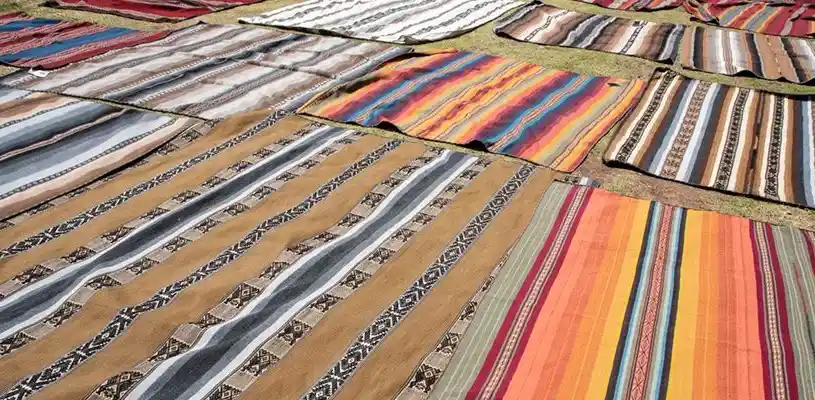
One of the most highly valued techniques is pallay weaving, in which patterns are created by selecting individual threads one by one. This method is used to produce the distinctive designs associated with each community. A complex blanket can take weeks or even months to complete, which explains the value of authentic handmade pieces compared with the industrial imitations commonly found in markets.
What the Symbols Mean
Every woven figure has a meaning. The designs are not merely decorative: they function as a form of visual writing that records the environment, beliefs, and daily life of the person who creates them. Some of the most common motifs include:
The chakana, or Andean cross, represents the connection between the three worlds of Andean cosmology. The river, or mayu, motif represents water and pathways. Designs depicting lagoons, mountains, birds, and flowers reflect the landscape surrounding the community. Even diamonds, which are very common, may refer to eyes, seeds, or the agricultural planting cycle. Each town has its own variations, so an experienced weaver can often identify where a garment comes from simply by looking at it.
Why This Tradition Still Matters
During much of the 20th century, the arrival of mass-produced clothing nearly caused traditional weaving to disappear. Younger generations stopped learning the craft, and many natural dyeing techniques were almost forgotten. Its revival is largely thanks to the work of the weavers themselves, who organized into associations to recover dye recipes, traditional patterns, and ancient spinning methods.
Today, when you buy a textile directly from the women of Chinchero, you are not simply taking home a beautiful object: you are helping ensure that this knowledge continues to be passed down to future generations. It is a form of tourism that provides a real benefit to the community.
What Else to See in Chinchero on a Day Trip from Cusco
Textiles are at the heart of Chinchero, but the town has much more to offer during a single-day visit. These are some of the attractions commonly combined on a trip:
The colonial Church of Our Lady of Monserrat, built over an Inca palace, contains paintings from the Cusco School of Art. Surrounding it are Inca agricultural terraces that are still in use today and offer sweeping views of the valley. The Sunday market, where products were traditionally exchanged through bartering, is another interesting stop if your visit falls on a Sunday.
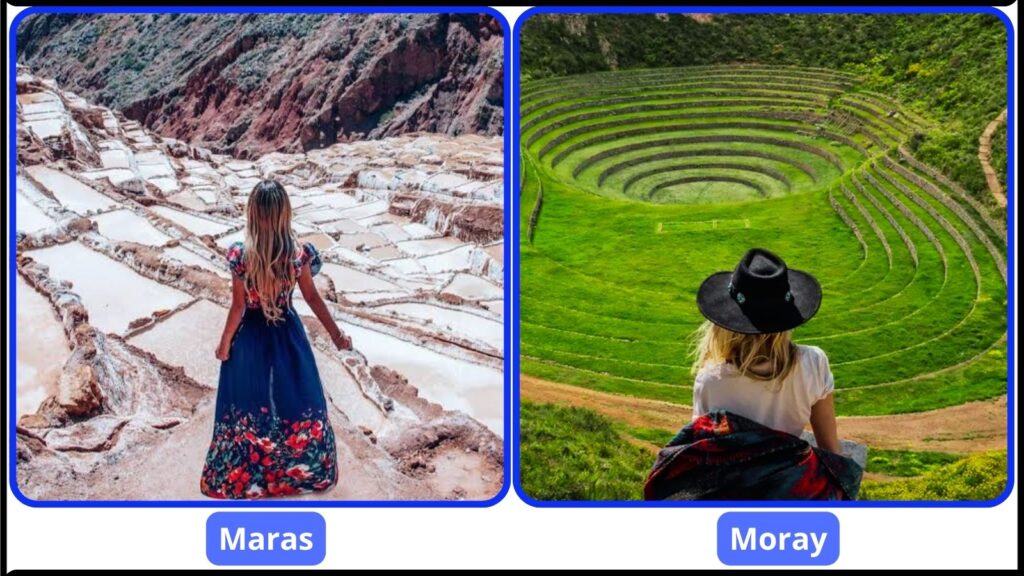
Many travelers also take advantage of the town’s location to visit two must-see attractions nearby: Moray, with its circular terraces believed to have served as an Inca agricultural laboratory, and the Maras Salt Mines, where thousands of white salt pools cascade down the mountainside. Chinchero, Moray, and Maras form a circuit that can comfortably be explored in a single day.
If you’d like to experience Chinchero’s textile tradition along with these two unique destinations in a single outing, take a look at our Chinchero cultural experience with a visit to Moray and the Maras Salt Mines in one day. It’s the most convenient way to see the weaving process up close and complete your day with two of the Sacred Valley’s most photographed landscapes.
Frequently Asked Questions
How Far Is Chinchero from Cusco?
Chinchero is about 28 kilometers (17 miles) from Cusco, approximately a 45-minute drive along the road leading to the Sacred Valley.
Can You Buy Textiles Directly from the Weavers?
Yes. At Chinchero’s textile centers, you can purchase blankets, chullos, scarves, and other handmade pieces, with the payment going directly to the women in the association.
Is There a Fee for the Weaving Demonstration?
Most centers offer an explanation and demonstration of the weaving process free of charge, since their income comes from selling the finished products. Purchasing a piece is one of the best ways to support their work.
What Other Places Can I Visit on the Same Day?
Chinchero is commonly combined with Moray and the Maras Salt Mines, creating a one-day circuit that brings together traditional textiles, archaeology, and spectacular landscapes.


