
Chinchero is often overshadowed by more famous destinations in the Sacred Valley, and that is exactly part of its appeal. Less than an hour from Cusco, you’ll find a peaceful town with Inca terraces, a colonial church, and some of the best views in the valley, without the crowds of Pisac or Ollantaytambo. If you’re looking for a place that combines history, scenery, and living traditions in a single day, this town deserves a spot on your itinerary.
In this guide, we’ll go over what to see in Chinchero, how to get there from Cusco, and which nearby attractions are best to combine with your visit to make the most of your day.
Where Is Chinchero and Why Visit?
Chinchero sits at 3,762 meters (12,343 feet) above sea level on the plateau separating Cusco from the Sacred Valley. According to tradition, it was a retreat for the Inca Túpac Yupanqui, and the walls and terraces he ordered to be built can still be seen today. Its elevation, higher than Cusco’s, provides sweeping views: on clear days, you can see the snowcapped peaks of Salkantay and Verónica rising along the horizon.
It is a small, walkable town where colonial architecture stands directly on top of Inca foundations. This combination of historical layers, along with the peaceful atmosphere of its streets, makes it a very different stop from the Sacred Valley’s busier destinations.
Chinchero’s Colonial Church
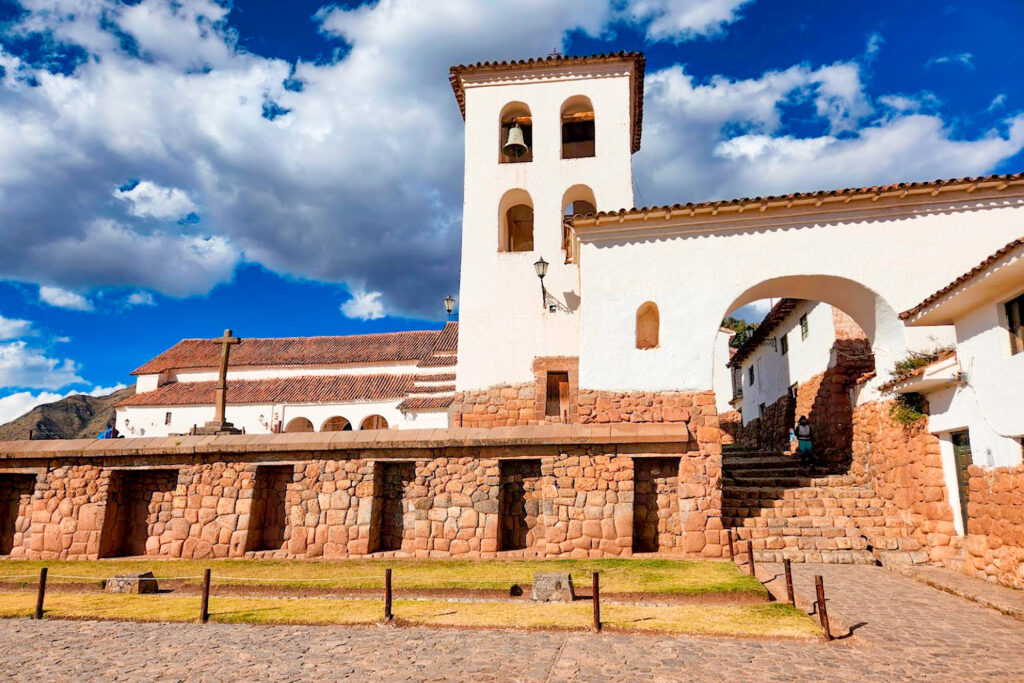
The main attraction is the Church of Our Lady of the Nativity, built in the early 17th century on the foundations of an Inca palace. From the outside, it looks like a simple colonial church, but the interior is striking: nearly every inch of its walls and ceilings is covered with paintings from the Cusco School of Art, featuring religious scenes framed by colorful floral decoration.
The fact that the church stands on Inca foundations is no coincidence. The Spanish often built churches over sacred Andean sites as a way of imposing the new religion, and in Chinchero this layering is especially easy to see. It is one of the best-preserved colonial complexes in the region.
The Inca Terraces and Archaeological Complex
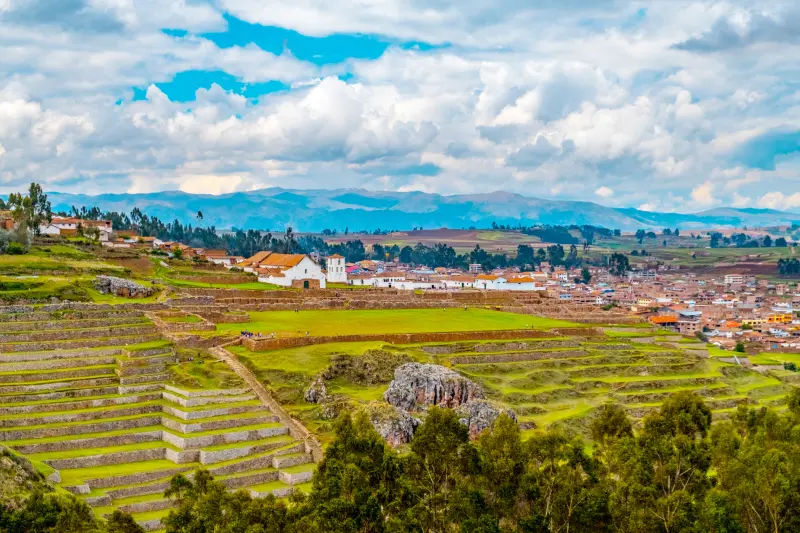
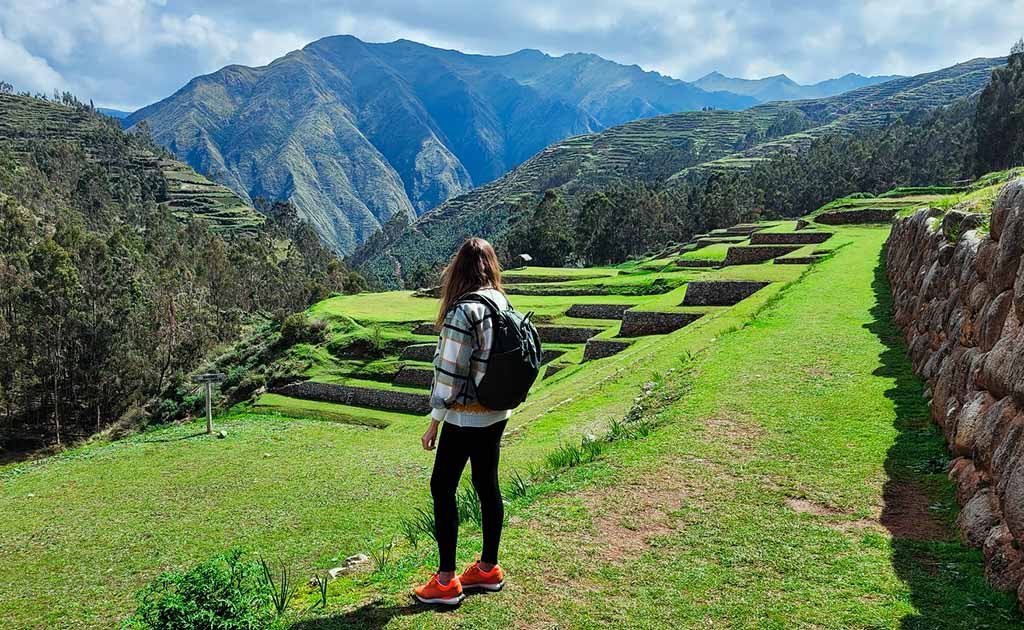
Surrounding the plaza and church are extensive Inca terraces, stepped agricultural platforms that are still used for farming today. Walking among them gives you a sense of how the Incas adapted steep hillsides for agriculture, creating usable land and managing water with precisely fitted stone walls.
At the upper part of the complex, you can still see remains of walls and trapezoidal niches typical of Inca architecture. These natural viewpoints offer some of the best panoramic views of the town and surrounding valley. If you enjoy hiking, there are trails that descend from Chinchero toward the Sacred Valley through the terraces, offering a less crowded trekking route.
The Plaza and Sunday Market
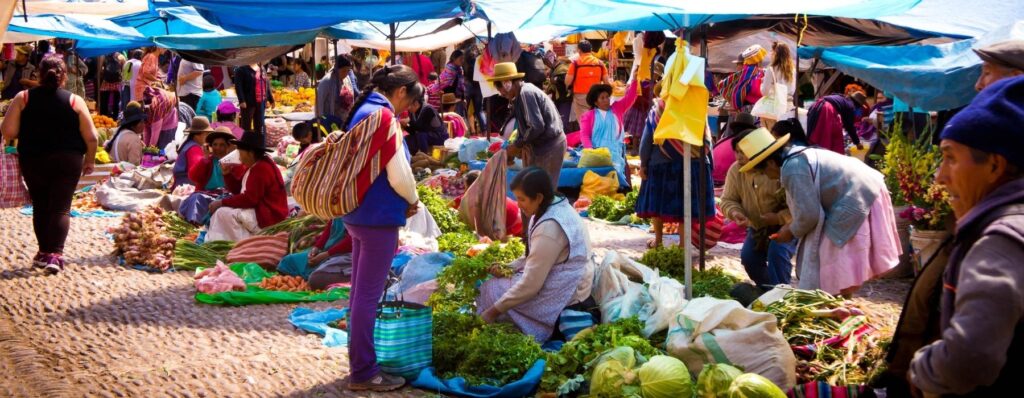
The main plaza, surrounded by stone arcades, is the gathering place of the town. On Sundays, it comes alive with a traditional market where, in addition to regular sales, bartering is still practiced. Residents from highland communities exchange products without using money, continuing a custom that dates back to pre-Hispanic times.
If your visit falls on a Sunday, you’ll see the market at its most authentic and lively. On other days, there are still handicraft and textile stalls, although the atmosphere is quieter.
The Textile Centers
Chinchero is famous for its textile tradition, preserved by associations of women weavers who work with alpaca wool and natural dyes. At their textile centers, you can see how the wool is washed, spun with a puchka, and dyed using plants and insects such as cochineal, eventually becoming the colorful blankets and garments for which the area is known.
It is a highly recommended stop, especially if you are interested in buying authentic textiles directly from the people who make them. The demonstration is usually free, and the weavers earn their income from selling their finished pieces.
How to Get to Chinchero from Cusco
Chinchero is about 28 kilometers (17 miles) from Cusco, roughly a 45-minute drive along the paved road to Urubamba. You have several transportation options. By public transportation, you can take a colectivo or minibus heading to Urubamba from the stop on Grau Street in Cusco and ask to be dropped off in Chinchero. A taxi is more comfortable and direct. The most convenient option, however, is an organized tour that includes transportation and a guide.
Keep in mind that you need the Cusco Tourist Ticket to enter the archaeological complex and the church. The same ticket also provides access to several other attractions in the Sacred Valley.
What to Combine with Chinchero in One Day
A visit to Chinchero is even more worthwhile when combined with nearby attractions. The two that fit best into the same itinerary are Moray and the Maras Salt Mines, both located just a short drive away.
Moray is famous for its circular terraces carved into the landscape, which are believed to have functioned as a type of Inca agricultural laboratory: each level has a slightly different microclimate, allowing the Incas to experiment with crops. The Maras Salt Mines, meanwhile, consist of thousands of salt pools cascading down a mountainside, creating a spectacular white landscape that has been used for salt production since pre-Hispanic times. Chinchero, Moray, and Maras form a classic circuit that can comfortably be explored in a single day.
If you’d rather have everything arranged for you, take a look at our one-day Chinchero tour with Moray and the Maras Salt Mines. It includes transportation, a guide, and a visit to the textile centers, allowing you to experience the best of the area without worrying about logistics.
Frequently Asked Questions
How Much Time Do You Need to Visit Chinchero?
Visiting the church, the terraces, and a textile center takes about two to three hours. That is why Chinchero is often combined with Moray and Maras to create a full-day itinerary.
What Is the Best Day to Visit Chinchero?
Sunday is the day of the traditional market and bartering, making it ideal if you want to experience the town at its liveliest. During the rest of the week, the visit is quieter and there are fewer people.
Do You Need a Ticket to Enter?
Yes. Admission to the archaeological complex and the church requires the Cusco Tourist Ticket, which also covers several other attractions in the Sacred Valley.
Is Chinchero Suitable for Travelers Who Have Just Arrived in Cusco?
Because Chinchero is located at a higher elevation than Cusco, it is best to allow one or two days to acclimate before visiting, especially if you plan to walk through the terraces.


